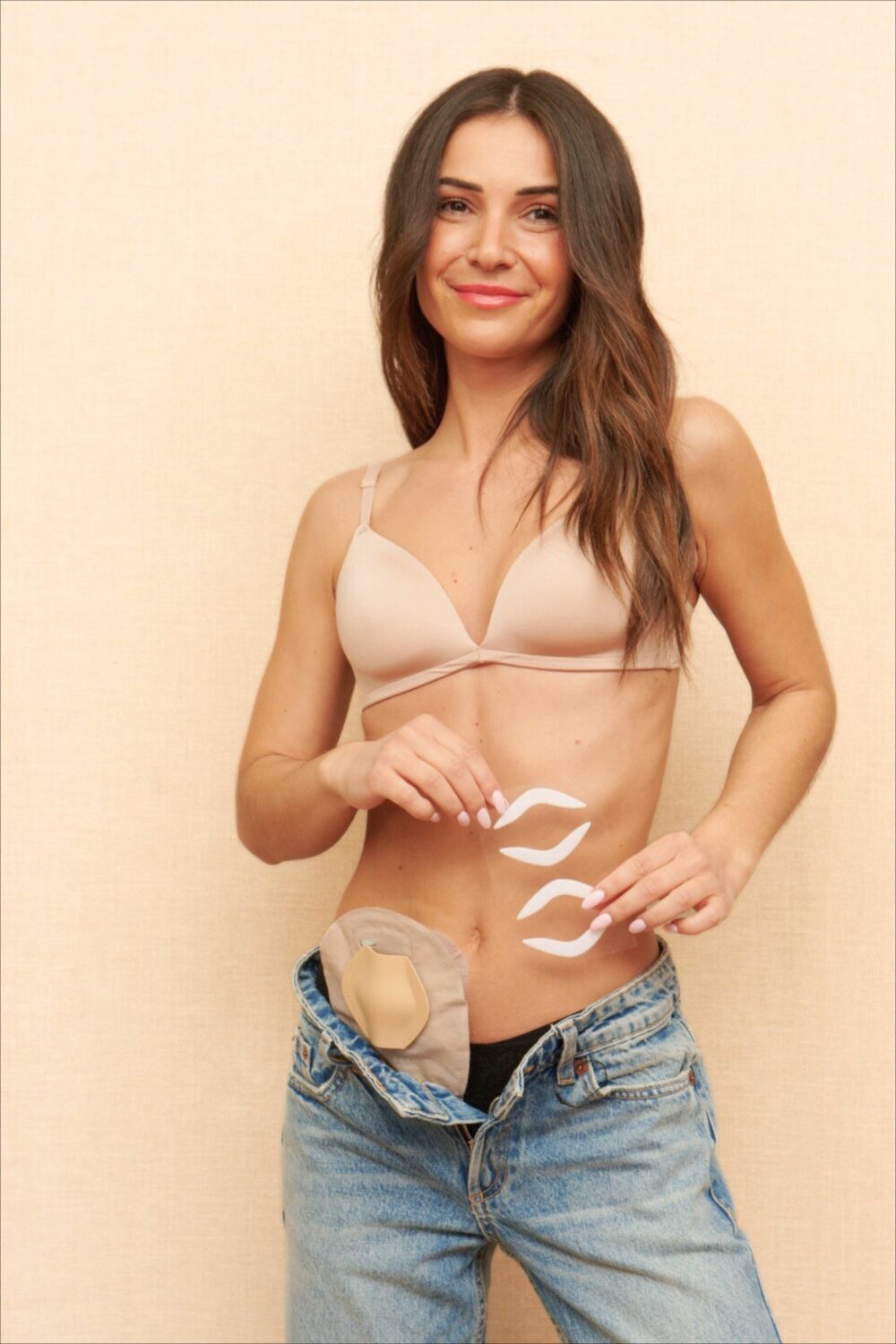

Ostomy Belt: The Honest UK Guide to Support with a Stoma
Quick answer: An ostomy belt (called a stoma belt by most people in the UK) is a band of fabric worn around your middle to keep a colostomy, ileostomy or urostomy bag from swinging, sagging or tugging when you move. The useful ones feel closer to supportive underwear than a hospital strap, sit flat under clothes, and take strain off the wafer so you are not chasing leaks all day. A belt will not rescue a poor seal on its own — but for a lot of us, it is a genuine game changer.
If you are here, something is probably pulling. The bag swings when you walk. The barrier starts lifting at the edges after a few hours. You sat in the car for forty minutes and now the pouch has folded into a weird shape. Or you simply do not want a beige elastic strap showing as a ridge under a shirt. All of that is ordinary. Whether you live with a colostomy bag, an ileostomy bag or a urostomy bag, the job of an ostomy belt is the same: hold the pouch still so the adhesive is not doing all the work, and do it in a way you will actually wear on a Tuesday.
- A belt holds the bag against the body; it does not replace a good wafer seal, a well-cut hole, or a barrier ring that fits.
- Colostomy, ileostomy and urostomy bags all benefit — the “why” is slightly different, which is why one comparison is enough.
- Fashion-style belts, simple brand straps, wraps and high-waisted underwear each win at something. Borrow what works.
- If it rolls, digs in, or announces itself under clothes, it is the wrong belt — not a personal failing.
What an ostomy belt actually does (and what it will not)
 Stoma BeltHernia support & leak prevention. Trusted by 50,000+ ostomates worldwide.Discover →

Here is the honest version. When an ostomy bag starts to fill, it gets heavier. That weight hangs off the wafer. Walking, bending over the dishwasher, sitting at a desk, a long queue at Tesco — the pouch swings, tugs, and slowly peels from the bottom or the side. People in support groups say it without drama: the barrier popping off, changing the bag numerous times a day, defeated with leakage. A belt’s real job is mechanical. It pins the bag to your body so the adhesive is sealing, not load-bearing.
That is why so many of us call a belt a game changer once the fit is right. It is not magic. It will not fix a hole cut too big, a wafer that never quite sat, or a flush or inverted stoma that needs a different barrier. Plenty of people still use a thick barrier ring, a bit of stoma paste, heat to activate the adhesive, the whole ritual — and then add a belt so that work is not wasted the first time they lean forward. Hold and seal are two different jobs. Do both, or the belt just holds a leak in place.
You will also hear ostomy belt and stoma belt used interchangeably. In UK groups, “stoma belt” is the phrase that comes out of people’s mouths. Search boxes still say ostomy belt. Same object. Same problem: keep the bag quiet so you can forget it for a stretch of the day.
Worth keeping open
The first-weeks stoma guide nobody hands you on discharge day
Clothes, bags, the small practical stuff that actually gets you out of the house — written like a friend, not a leaflet. Keep it open on your phone for the messy early questions.
Colostomy, ileostomy or urostomy: one comparison, not three articles
Search results love to split this into “ostomy belt with a colostomy” and then the same piece again for ileostomy. That is padding. The belt is doing one job — holding a pouch still — and the bag is what changes. A loop ileostomy, a loop colostomy, a urostomy bag: different output, same need for the pouch not to swing.
| Stoma type | How the bag usually behaves | What the belt is doing |
|---|---|---|
| Colostomy | Output is thicker. As the bag fills it gets bulky, and a “full” pouch has real weight and swing — the thing people grimace about on a long afternoon. | Stops the sag so a heavier bag is not dragging the wafer south. Especially useful sitting, in the car, or walking any distance. |
| Ileostomy (including loop ileostomy) | More liquid, often fills faster after meals. The bag can get heavy quickly and slosh when you move. | Keeps a heavier, more mobile bag close to the body so it is not bouncing against the seal every time you take a step. |
| Urostomy | Urine. The pouch sits differently and is prone to folding when you sit, bend or sleep on your side. | Holds the bag in a shape where it can actually drain, rather than kinking against a waistband or a crease. |
If you are still sorting out which bag system suits you — one-piece, two-piece, Coloplast, Hollister, Convatec, Salts — that is a separate decision. A belt works with all of them. Get the hold right, then worry about which stoma bags feel kindest on your skin.
How to choose an ostomy belt you will still wear in six months
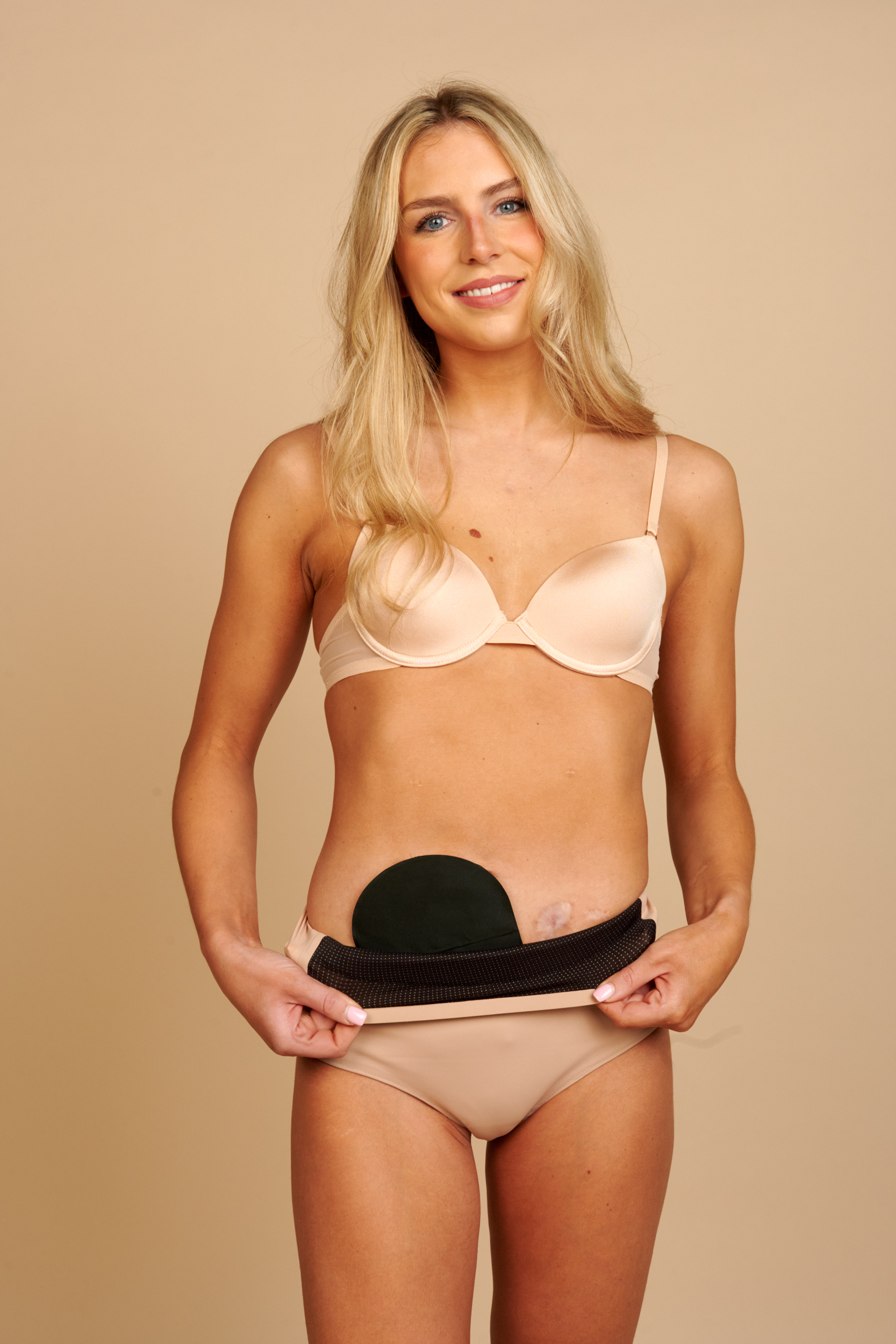
Most belts fail for boring reasons, not dramatic ones. Too narrow, so they roll. Too tight, so they leave a mark and you take them off after lunch. Too “medical”, so you will not wear them to work. Start with the stoma’s position, not the marketing.
- Height and stoma position. A high stoma wants a belt that sits higher; a low or off-to-the-side stoma needs the support band actually covering the pouch, not floating above it. If the bag peeks out below the fabric when you sit, the belt is too short or sitting too high.
- Width. A wider band usually stays put and feels less like a rubber band. Narrow elastic straps from the big bag brands have their place (more on that below), but they are the ones that roll when you sit at a desk.
- Compression, not crushing. Snug enough that the pouch cannot swing. Loose enough that you can breathe, eat, and sit for a film. If you are adjusting it every twenty minutes, it is wrong.
- Fabric against skin. Sweat under a synthetic strap is how irritation starts. Something that feels like decent underwear wins for all-day wear. Sport-wrap styles win for a run and then come off.
- What you will put on in the morning. The best ostomy belt is the one that does not make you feel like you are dressing a wound. If it looks like clothing, you will wear it. If it looks like kit, it lives in a drawer.
UK practicality: your stoma care nurse can often get you sample belts from Coloplast, Hollister or Salts to try against your usual bag. Use those to learn what height and tension you like. Then decide whether you want to live in a strap, or in something that behaves like stoma clothing.
If you already know you want the fashion-first version — a stoma belt that sits under ordinary clothes rather than on top of them — that is the collection built for exactly this: hold without the hospital look.
Belt, wrap, strap or high-waisted underwear?
There is no single winner, and anyone ranking “most popular colostomy belts 2025” as a league table is selling something. Different tools. Here is where each one genuinely wins.
- Fashion stoma belts (the SIIL kind of thing). Win on all-day wear, discretion, and the fact they look like shapewear rather than supplies. Best when you want to go to work, sit in meetings, and not think about a strap. Not the heaviest compression on the market — and that is the point.
- Coloplast Brava and Hollister Adapt-style elastic straps. Win on simplicity and being easy to get through a stoma nurse. Light hold, no fuss, useful as a starter or as a backup in the bag kit. They offer less stability when you are moving, and they can roll. If you only need a gentle reminder for the pouch to stay put, they are honestly enough.
- Sport wrap belts (the Stealth Belt type). Win for running, the gym, anything with lateral movement. Heavier, warmer, more “kit”. Plenty of athletes swear by them. Plenty of other people find them too much for a desk day.
- Hernia-style support belts. Win when you want firm, wide abdominal compression — a solid, almost braced feeling. They are bulkier and harder to hide under a fitted top. Useful for some; overkill for others. They are not the same object as a slim ostomy belt, even if shops lump them together.
- Stoma wraps. Win when you want coverage you can adjust — smoothing the pouch, adding a layer under clothes, or giving yourself a bit of hold without committing to a full belt. Have a look at stoma wraps if a belt feels like too much structure on a quiet day.
- High-waisted underwear. Win for everyday life. A good high waist holds the bag the way decent shapewear holds everything else. Many people wear underwear as the base and add a belt only for sport, travel, or days the bag is playing up.
You do not have to pick a camp. Underwear at home, a belt for a walk, a wrap under a dress, a simple Coloplast strap in the hospital bag. That is how most of us actually live.
Work, the gym, swimming and going out
The social bit is the bit product pages skip. A belt is not a lifestyle. It is what lets you have one without spending the afternoon checking your waistband.
Work and commuting. Sitting is harder than walking. The pouch folds, the waistband of trousers fights the bag, and a cheap elastic strap rolls by 11am. A wider, clothing-like belt or high-waisted bottoms stop that quiet tug you only notice when you stand up. Dark, smooth fabrics under a shirt. No ridges, no rustle.
The gym and walking. This is where people who “didn’t think they needed a belt” change their minds. Jumping, twisting, a parkrun, a weights session — the bag will swing. Sport wraps excel here. A fashion belt is enough for brisk walking and most classes. Empty before you start, because no belt in the world makes a full pouch feel elegant on a treadmill.
Swimming. A dedicated ostomy belt under a swimming costume or trunks can work, but most of us get a cleaner line from purpose-made stoma swimwear with a high waist and a pocket. The costume does the holding; you are not adding another strap that shows when it is wet. Rinse everything after chlorinated water. Salt water is kinder to fabric than a heavily treated pool.
Nights out and fitted clothes. The fear is outline. A bulky hernia belt under a dress will show. A slim belt or a wrap, plus a stoma bag cover if you want the pouch itself to look like fabric rather than plastic, is the combination that actually gets worn. Empty before you leave. That is not defeat. That is organising the evening so you can forget the bag until you mean to think about it.
None of this is about being grateful you can still go out. You can go out. The kit should catch up with that fact.
Looking after the belt — and knowing when it is done
Treat it like decent underwear, not like a device. Hand wash in cool water with a mild soap. Rinse properly — leftover soap against stoma skin is a quiet way to get sore. Lie it flat to dry. Heat from a tumble dryer wrecks the stretch, and once the stretch is gone the belt rolls, which is how you end up back at square one.
It is done when it no longer does the job, not on a calendar. Signs: it rolls when you sit, the fabric has gone baggy, the pouch has started swinging again, or it leaves a lasting mark that was not there when it was new. Have a spare. Belts live in washing cycles, gym bags and overnight stays; one is not a system.
Keep the belt and the bag job separate in your head. A tired belt cannot save a wafer that is already lifting. Change the bag when the seal is going, wash the belt when it needs it, and do not punish either of them for the other’s job.
Want the belt to feel like clothing, not kit?
SIIL stoma belts are cut like fashion support — high, smooth, meant to disappear under ordinary clothes — so the bag stays put and you get on with the day.
Ostomy belt questions people ask next
Is a stoma belt the same as a hernia support belt?
No. A slim ostomy belt is there to hold the pouch still and sit under clothes. A hernia-style belt is a wider, firmer brace for the abdomen — more compression, more bulk, harder to hide. Some people use both on different days. If a shop assistant treats them as the same product, try both on; your waist will tell you in thirty seconds.
Can I wear an ostomy belt in bed?
Plenty of people do, especially with a urostomy bag or an ileostomy that fills overnight. Others find any waistband annoying to sleep in and prefer to go without. If you try it, go looser than your daytime fit so you are not waking up to marks, and make sure the pouch can still lie in a position where it drains rather than kinks. There is no badge for sleeping in one.
Will airport security stop me if I am wearing a stoma belt?
A fabric belt does not usually set anything off. What can draw a conversation is the bag itself, or a metal buckle if you have chosen a very ‘kit’ style strap. Wear a smooth clothing-style belt, carry your usual spare supplies in your hand luggage, and say you have a stoma if someone asks. It is ordinary. You do not owe anyone a tour.
Do I still need a belt if I already wear high-waisted stoma underwear?
Not always. High-waisted underwear does a lot of the holding for desk days, housework and ordinary walking. Add a belt when the day has more movement, when the bag is playing up, when you are in fitted clothes, or when you simply want a second layer of calm. Many of us treat underwear as the default and the belt as the extra, not the other way round.
Can I use a belt with a loop ileostomy or a two-piece bag?
Yes. Loop ileostomy, end stoma, one-piece, two-piece — the belt does not care. It is holding a pouch against a body. With a two-piece, just check the belt is not sitting exactly on the flange edge in a way that lifts it; a slightly wider band that covers the whole pouch is usually kinder. Same rule for a loop: cover the bag, do not pinch it.
What if the belt rolls down every time I sit?
That is a width and fabric problem, not a you problem. Narrow elastic straps roll; that is their reputation. Size up the width, try a style that behaves like shapewear rather than a rubber band, and check you are not wearing it on top of a slippery bag cover. If it still rolls, it is the wrong design. Put it in the drawer and try something that stays put when you sit on the sofa for an hour.