
Stoma Skin Care: The Honest UK Guide to Happy Skin Around Your Stoma
Quick answer: Good stoma skin care is mostly about keeping things simple: clean the skin around your stoma with warm water and let it dry fully before your bag goes back on. Skip soaps, lotions, oils and baby wipes with additives — they leave a film that stops your bag sticking. Get the fit of your baseplate right so nothing leaks onto the skin, and the vast majority of soreness sorts itself out. Persistent irritation, or anything that looks like a rash, is worth a chat with your stoma nurse.
Let's be real: nobody warns you that the skin around your stoma can become the main event. The stoma itself does its own thing quietly — it's the patch of skin under your baseplate that decides whether your week is smooth or spent peeling, wincing and reapplying. If you've landed here with sore, red, itchy skin and a bag that won't behave, take a breath. This is common, it's fixable, and the fixes are usually simpler (and cheaper) than the internet would have you believe.
Here's the honest version, from people who've been through the peeling-plaster phase and come out the other side with calm, boring, brilliantly uneventful skin.
Key takeaways
- Warm water and a good dry beats any fancy product — most soreness starts with a poor seal, not a lack of lotion.
- The skin under your baseplate should look like the skin everywhere else. Red, weepy or itchy means something's getting through.
- Cut your baseplate to the right size — too big lets output onto skin, too small digs in.
- Ostomy powder and barrier films are your friends for genuinely broken skin; soaps, oils and creams are not.
What "healthy" skin around your stoma actually looks like
 Stoma BeltHernia support & leak prevention. Trusted by 50,000+ ostomates worldwide.Discover →
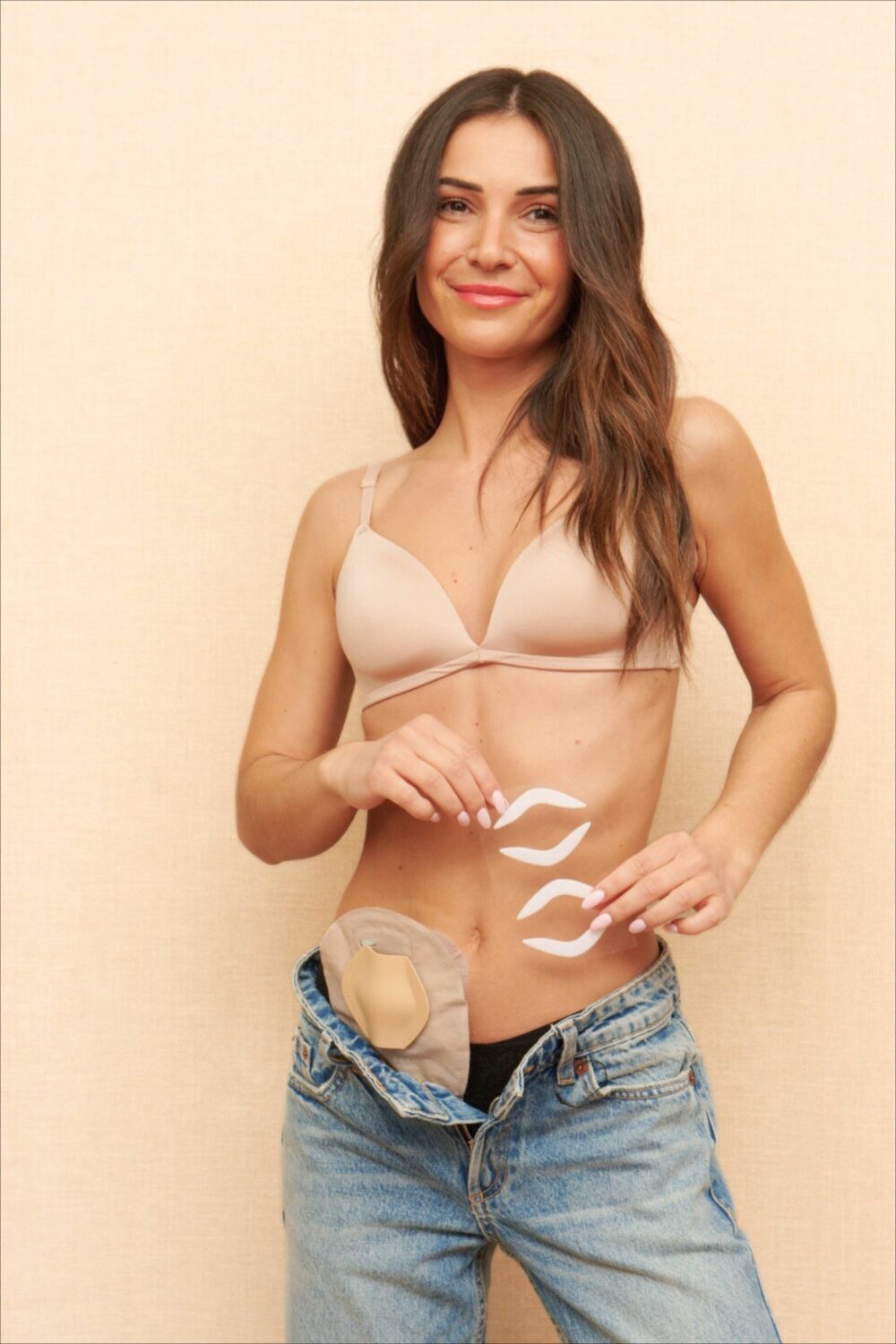
Quick recap for anyone newer to all this: a stoma is the part of your bowel or bladder brought to the surface of your tummy so output can leave the body into a stoma bag. The stoma itself is that reddish-pink, slightly shiny bit — it has no nerve endings, so it doesn't hurt if you touch it (it can bleed a little when cleaned, which is normal). The skin around it, though, has all its usual feelings intact, and that's the bit we're protecting.
Healthy peristomal skin — the fancy word for "skin around your stoma" — should look exactly like the skin on the rest of your belly. Same colour, no rash, no weeping, no stinging when the bag comes off. When it starts going red, itchy, sore or weepy, your body's telling you something is getting past the seal or reacting to something on the skin. The good news: it heals fast once you remove the cause. If you want the full grounding on what a stoma is and how it all works, our guide to what a stoma is covers the basics without the medical jargon.
The simple daily routine (this is 90% of it)
The number one thing ostomates say in the support groups, over and over: keep it simple. You do not need a shelf of products. Here's the routine that keeps most people out of trouble:
- Clean with plain warm water. A soft cloth, kitchen roll or plain dry wipes and warm water. That's genuinely it. You can shower with the bag off — water won't hurt your stoma.
- Avoid soaps, shower gels, oils, lotions and creams on that patch of skin. Even "gentle" ones leave a residue that stops your baseplate sticking, and moisturisers are the worst offenders. If you must use soap, pick a plain unscented bar and rinse thoroughly.
- Dry properly. This is the step everyone rushes. Pat the skin fully dry, then give it another minute in the air. A damp surface is why baseplates lift early.
- Only remove hair if it's causing lifting — clip with scissors or an electric trimmer rather than a wet razor, which can nick and irritate.
- Change on a routine, not an emergency. Peeling the bag off gently (support the skin, don't yank) and swapping before a leak beats scrambling after one.
That's the whole ritual. If you're doing all of that and skin's still grumpy, the problem is almost always the fit — which we'll get to.
Free from SIIL
The New Stoma Patient Guide — everything nobody tells you after surgery
From your first bag change to getting your confidence (and wardrobe) back, we've put the whole lot in one honest, no-nonsense guide. Skin care, kit, dressing well — all in plain English.
Sore, irritated skin: why it happens and what to do
When skin goes red and sore, there's usually one of a handful of culprits behind it. Knowing which one you're dealing with saves you a lot of guesswork. Here's the honest cause-and-fix rundown:
| What you're seeing | Likely cause | What tends to fix it |
|---|---|---|
| Redness in a ring where output touches skin, sometimes weepy | Baseplate hole cut too big, or output leaking under the seal | Re-measure your stoma and cut the hole closer; consider a convex baseplate or seals/rings if your stoma sits flat or dips |
| Red, sore patch matching the shape of the adhesive | Adhesive reaction or removing the bag too roughly | Try a different brand/baseplate, use a gentle adhesive remover, peel slowly supporting the skin |
| Itchy, sometimes with tiny spots or a spreading redness | Trapped moisture, often a fungal-type flare in a warm damp spot | Dry more thoroughly; this one is worth showing your stoma nurse for the right treatment |
| Weepy, broken skin that won't hold a bag | Ongoing leaks and irritation left too long | Ostomy powder + barrier film "crusting", and a proper fit review |
For genuinely broken, weepy skin, the trick ostomates swear by is ostomy powder: dust a thin layer over the sore area, brush off the excess, then dab a barrier film or spray over the top. Repeat once or twice if needed — this "crusting" gives you a dry surface the bag can actually stick to while the skin heals underneath. What you're avoiding: piling on thick barrier creams, coconut oil, tea tree, greasy ointments or anything oily. It feels soothing for a minute and then your bag slides straight off. If soreness sticks around for more than a few days, don't tough it out alone — your NHS stoma nurse has seen it all and can sort a fit or product change quickly.
Getting the fit right — where most skin problems really start

Here's the thing nobody says loudly enough: sore skin is usually a fit problem wearing a skin-care costume. If output is creeping under the baseplate — even a tiny bit you can't see — the skin will react. So before you buy another tube of anything, run through the fit.
Measure your stoma each time in the early weeks (it changes shape as swelling settles) and cut the baseplate so the hole hugs the stoma with just a millimetre or two to spare. Too big and output pools on skin; too tight and it rubs. If your stoma sits flush or in a dip, a convex baseplate or a moldable seal can make a night-and-day difference. Most of the major appliance makers offer convex options and barrier rings, and it's worth asking your nurse for samples to find your match rather than assuming the first thing you were given is the only choice. Our rundown of the best stoma bags talks through the honest trade-offs.
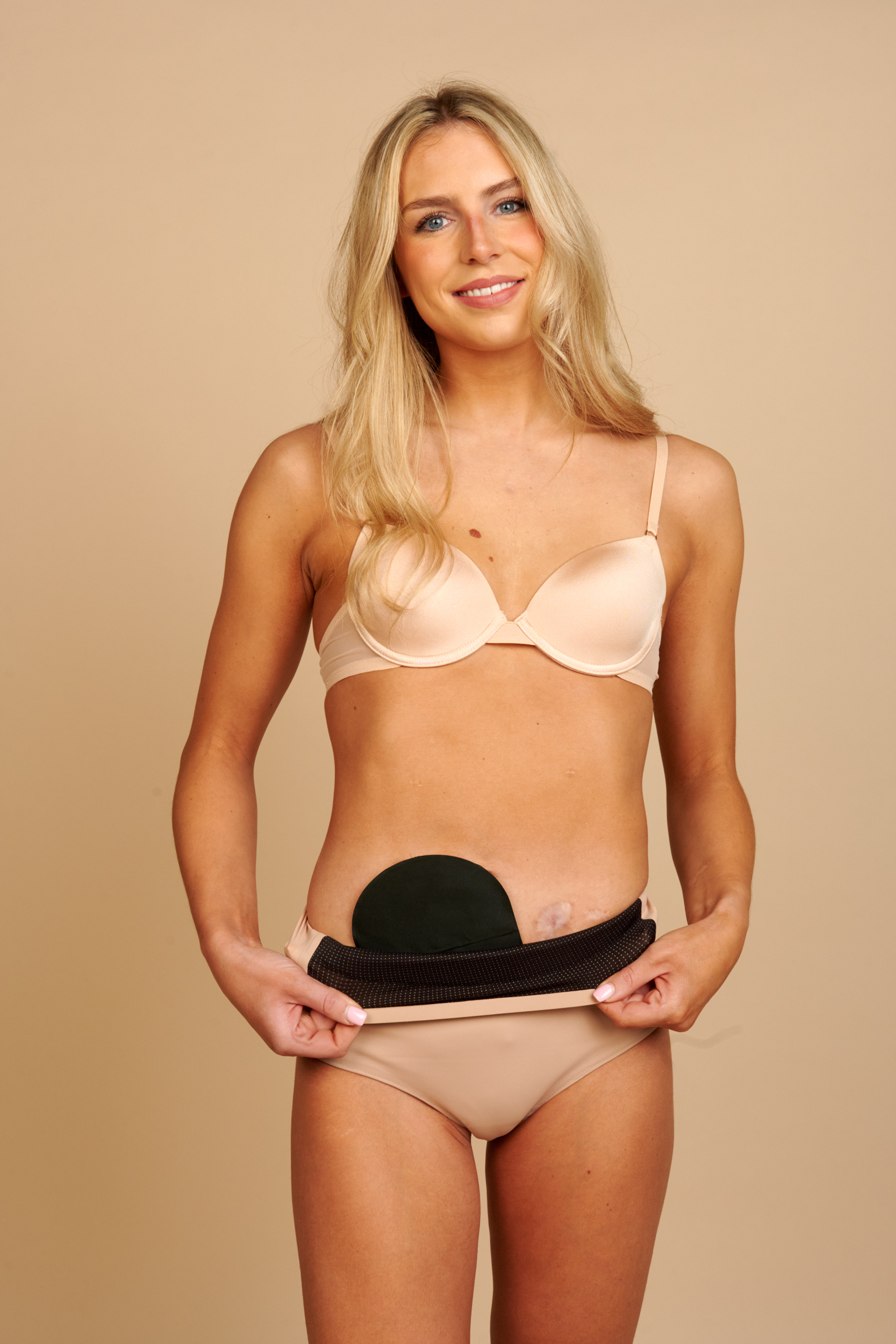
Support garments help here too — and not in a medical way. A gentle stoma wrap or belt holds your bag flat against the body so it moves with you rather than dragging on the seal every time you bend, twist or sit down. Less tug on the baseplate means fewer micro-lifts, which means less chance of output sneaking onto skin. It's the quiet win most people don't clock until they try it.
Give your skin a break — literally.
Our stoma wraps hold everything gently in place so your baseplate stops fighting gravity all day. Comfortable, flattering, and kind to sore skin.
Skin care in real life: showers, swimming, sweat and sunshine
Good news first — a stoma barely limits any of this once your skin's happy. A few honest pointers for the situations that actually come up:
- Showering and baths: water on the stoma is completely fine, bag on or off. Just skip the shower gel over the baseplate area and dry well afterwards.
- Swimming: your bag is waterproof and stays put. Warm chlorinated pools and salt water won't harm your skin. The trick is drying the edge of the baseplate afterwards and, if you swim a lot, wearing something that keeps the bag flat. A well-cut stoma swimming costume does that job and means you're thinking about the water, not the waistband.
- Sweat and hot weather: heat is the enemy of adhesive. In summer or during exercise, expect to change a little more often, and pat sweat away from the edges. A breathable stoma bag cover can stop the plastic sitting sticky against skin.
- Sun: keep the skin around your stoma out of direct strong sun where you can — it's skin like any other and doesn't love burning.
Plenty of people live very public, very active lives with a stoma — you'll spot ostomates swimming, running marathons and posting holiday photos without a second thought. The point isn't showing off; it's that looking after your skin properly is what makes all of it — the pool, the party, the holiday — genuinely easy.
The clothing angle: what you wear affects your skin too
It's easy to forget that fabric touches this area all day. Rough waistbands that fold across the baseplate, jeans that dig in exactly on the stoma, seams that rub — all of it can tug the seal and irritate the skin at the edges. High-waisted, soft-seam stoma clothing sits above or well below the appliance so nothing catches on it. It's not about hiding your stoma; it's about not fighting it. Comfortable skin and feeling like yourself in your clothes tend to arrive together — and if you're figuring out where a stoma leaves you legally and practically, our piece on whether a stoma counts as a disability in the UK is a useful read.
Frequently asked questions
Can I use baby wipes to clean around my stoma?
Most baby wipes contain lotions, oils or fragrance that leave a film on the skin and stop your baseplate sticking — so they're best avoided. If you want the convenience of wipes, look for plain dry wipes you wet with water, or the fragrance-free "no additives" ones made for stoma care. Plain warm water and a soft cloth still does the job best.
How long does irritated skin around a stoma take to heal?
Once you remove the cause — usually a leak or a fit issue — mild redness often settles within a few days. Broken or weepy skin treated with ostomy powder and a barrier film can take a week or two to fully calm down. If it's not clearly improving after that, or it's spreading, book in with your stoma nurse rather than waiting it out.
Is it normal for my stoma to bleed a little when I clean it?
A tiny bit of spotting when you wipe the stoma is common and usually nothing to worry about — the stoma has a rich blood supply and can bleed on contact, a bit like your gums. Persistent bleeding, or bleeding from inside the stoma rather than the surface, is worth mentioning to your nurse.
Do I need a special barrier cream for my stoma skin?
Not for everyday skin. Regular barrier creams are greasy and interfere with adhesion, so they're the wrong tool here. What ostomates actually use are barrier films or sprays — they dry to a thin protective layer that the bag still sticks to. On healthy skin you often don't need anything at all beyond clean and dry.
Why does my skin only get sore in hot weather?
Heat and sweat loosen adhesive and trap moisture at the edges of the baseplate, which lets tiny leaks and irritation creep in. In summer, change your bag a little more frequently, dry thoroughly, and consider a breathable bag cover or wrap to keep sweat off the plastic. It's not you doing anything wrong — heat is just harder on the seal.
Can I go back to normal skincare after a stoma reversal?
Once you've had a reversal and any wound has properly settled, the area is just skin again and normal routines apply — though the scar itself may want gentle treatment for a while. Our guide to life after a stoma reversal walks through what to expect.