

Stoma bag accessories UK: the short list that actually earns a drawer
Quick answer: In the UK, stoma bag accessories sit in two drawers. Pouch-side bits from your usual bag brand help the bag stay put. Clothing-side bits — bag covers, high-waisted knickers, wraps and swimwear — make the whole setup feel like getting dressed. You do not need a catalogue. Get the seal as honest as you can, then add the fashion layer that stops the bag rustling, swinging or printing through a shirt. Ileostomy accessories are not a separate universe; it is the same kit, with more emptying and often a bit more hold.
If you have just stared at a delivery note, a Salts or Coloplast box, and a Facebook thread recommending fifteen extra products, you are in the right place. Half of what gets sold as stoma bag accessories UK shoppers “must have” is for a problem you do not have. The other half can quietly change how a Tuesday feels. This is the clothing-first map: what belongs in the kit, what the bag brands still do better, and what you can actually wear to work, the pool and a night out.
Key takeaways
- Split the kit: pouch-side for the seal, clothing-side for how you look and move.
- A belt, a wrap or high-waisted knickers will do more for “the bag swung all morning” than another gadget.
- Ileostomy, colostomy and urostomy change output and emptying — not the whole wardrobe.
- Covers, swimwear and support pieces are the bit you choose yourself; pouches still come from the usual brands.
What stoma bag accessories actually are in the UK
 Stoma BeltHernia support & leak prevention. Trusted by 50,000+ ostomates worldwide.Discover →
People use “stoma accessories” to mean two very different things, and the internet lumps them together. One pile lives next to the bags: barrier rings, paste, adhesive remover, a spare wafer. That pile is still Coloplast, Hollister, Convatec, Salts and whoever already supplies your pouches. The other pile looks like clothing — a fabric cover over the bag, a support belt, a wrap with a pocket, high-waisted knickers or trunks, a swimming costume that does not leave the bag floating about.
If your pouches arrive on an NHS prescription, that first pile is mostly handled. The second pile is something you pick, try on and keep if it earns the drawer space. That is the useful distinction. A ring is there so the barrier stops lifting. A cover is there so you are not sitting in a meeting with plastic against a shirt. Both matter. They are not the same job.
What actually earns a place, once the novelty catalogue has been ignored:
- Whatever gives you a better seal on a normal Wednesday — often a barrier ring, sometimes paste, sometimes a different shape of bag. Get samples. Every long-term ostomate says it because it is true.
- One hold layer for movement: a belt, a wrap, or high-waisted knickers. Plenty of people call a belt a game changer and they are not being dramatic; they mean the bag stopped swinging.
- One fabric layer over the bag, so clothes behave like clothes.
- A swim option that was designed for a bag, not a hope and a plaster.
- A small going-out kit: spare bag, wipes, a dark spare T-shirt. Not twelve products. Five things in a washbag.
You can enjoy a fitted jumper, a swimming costume, a desk job and a long walk. The kit is there so those things stay ordinary, not so your life shrinks to “safe outfits”.
A gift from SIIL
The new-stoma guide we wish someone had handed over
Clothes, the first weeks, and the practical bits nobody puts in a leaflet — written with our community, not from a waiting-room poster.
Pouch-side versus clothing-side: two jobs, one kit
If you only remember one split from this page, make it this. Pouch-side accessories try to keep output where it belongs. Clothing-side accessories try to make the bag feel like part of getting dressed. Mixing them up is how people buy a third paste and still hate their shirt.
| Type | What it is actually for | When people reach for it |
|---|---|---|
| Barrier rings, paste, brand belts | A better seal; filling dips; stopping the edge lifting | After a leak week, a shape change, or a wafer that will not last the day |
| Support belt | Holds the bag still; takes the swing out | Walking, the gym, a long commute, anyone who is done with the bag bouncing |
| Wrap | Softer hold, often with a pocket for the pouch | Everyday wear under clothes, days you want support without a rigid strap |
| Bag cover | Fabric between bag and skin or shirt; quieter; less like kit | Work, dates, anywhere the rustle or the outline is the actual problem |
| High-waisted knickers or trunks | A clothing layer that parks the bag instead of a waistband cutting across it | Daily. This is the quiet one people keep buying. |
| Swimwear | Hold in water, a shape that looks like a swimming costume or trunks | Pool, holiday, the lido on a warm Saturday |
Notice what is missing: a ten-step gadget stack. If the barrier is lifting, more clothing will not invent a seal. If the seal is fine and you still feel “on show”, another ring will not fix the shirt. Match the tool to the annoyance.
Ileostomy accessories versus the rest — one comparison
Search results love to split this into three near-identical pages. You do not need that. Output is different; the wardrobe logic is not. Use this once, then stop treating your stoma type as a personality.
| Ileostomy | Colostomy | Urostomy | |
|---|---|---|---|
| The lived difference | Looser output, emptying more often, bag can sit fuller between visits | Firmer output, fewer empties; ballooning and filters come up more in conversation | Urine; night bags for some; lying down is the real test |
| What people add first | A ring that actually lasts; a belt or wrap so a heavier bag does not swing; a cover that still looks neat | A hold layer for peace of mind; clothing that does not print the outline | Extra stillness overnight; a cover that does not cling if the bag feels damp |
| What you can still do | Same high waist, same swimwear, same office shirts — just plan the bathroom stops | Most days the kit is light; dress like yourself | Long meetings, sleep, swimming — the hold layer is what makes them ordinary |
So no, ileostomy accessories are not a different shopping aisle in the UK. You may empty more. You may want a slightly firmer hold on a full afternoon. You still wear a jumper. You still go to the pub. The win is a kit you can reset after a bathroom stop without turning it into a project.
Covers, knickers and looking like yourself
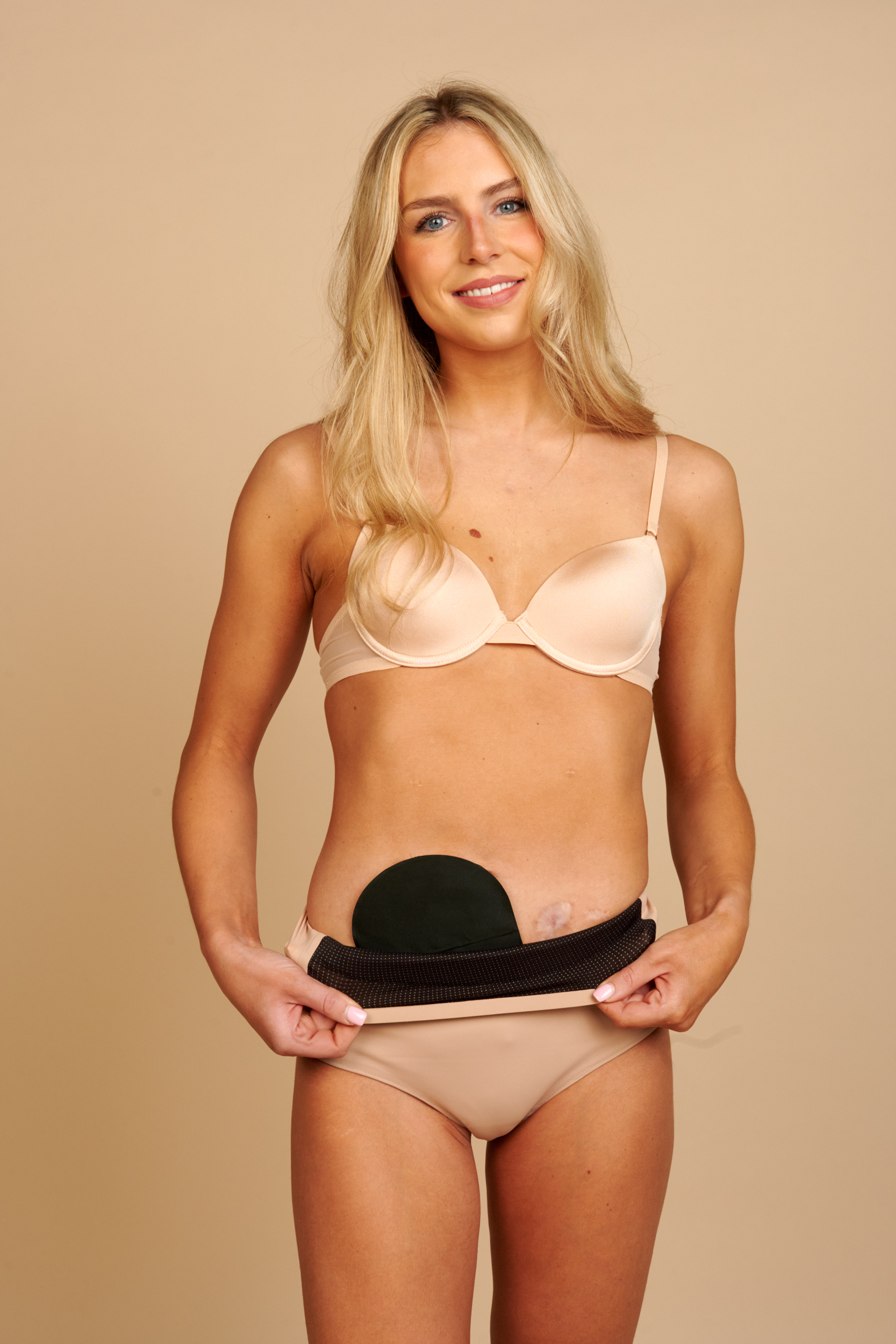
Here is the clothing-side, which is where a fashion brand actually belongs. The bag is doing its job. You still do not want the rustle, the warm plastic on skin, or the outline under a fitted top. That is not vanity. That is wanting your clothes to behave.
A fabric cover slips over the bag so the thing against your jumper is cloth. High-waisted stoma clothing — knickers, briefs, trunks — parks the pouch below a waistband that would otherwise slice across it. A stoma wrap adds a soft pocket of hold for days you want support without a firm strap. None of this replaces a wafer. It replaces the feeling that you got dressed around a piece of kit.
What you can wear: ordinary high-street shirts, a tucked-in blouse if the waist is high enough, mid-rise jeans with the bag sitting in the pocket of the underwear rather than under the zip, a blazer to the office, a dark dress that no longer clings to the plastic. Start with the layer closest to the bag. If that layer looks like clothing, the rest of the outfit usually follows.
If the rustle against a shirt is the bit that is wearing you down, skip another wafer experiment and put fabric on the bag. Our stoma bag covers are the clothing-side fix — not a new pouch, just something that looks as if it belongs in a wardrobe.
Work, the pool, the gym, a night out

Real life is not a product category, but it is why you opened this tab. Desk day: high waist, a cover so the shirt stays quiet, spare bags in a pouch in the desk drawer rather than a carrier bag under the chair. Gym: this is where a stoma belt earns the “game changer” line — running, weights, a reformer class, anything that makes a free bag bounce. Empty first if you can. Tight waistbands on cycling shorts are a known nuisance; a higher, wider hold works better than a skinny elastic.
Water: a dedicated piece of stoma swimwear beats a fashion swimming costume with a prayer. Look for a pocket or a firm enough front that the bag stays against you in the pool, the sea and the hotel spa. Quick-drying fabric helps on the sunlounger. You can swim. You can stand in the shallow end and talk. You can do the holiday photos. The accessory is there so the water is the story, not the bag.
Night out: darker fabrics, a cover, empty before you leave, one spare in a small bag. That is the whole trick. Nobody needs a “going out ostomy system”. They need the same kit they already trust, in clothes they already like.
Where the bag brands still win
Honesty, because a clothing brand that pretends it replaced Coloplast is not a friend. The big pouch makers — Coloplast, Hollister, Convatec, Salts in the UK — still win at the wafer, the filter, the outlet, the shape, the bits that either seal or do not. If you need a different hole size or a drainable with an outlet you can manage one-handed, that is their job. Samples still beat a shopping spree. That conversation is not fashion. (If you are still choosing the pouch itself, start with a straight comparison of the bags people actually wear.)
Where they are weaker is everything that happens after the bag is on: how it looks under a white shirt, how it feels on a hot Tube, whether you want to take a swimming costume off in a public changing room. That is clothing. Use both. Do not make one do the other’s work.
What to leave on the shelf: anything promising a miracle seal in a social-media advert, mystery “ostomy patches” with no brand you recognise, and a drawer of duplicates “just in case” that you will never finish. Keep spares of what you already trust. Skip the rest. Quiet confidence is a short list you actually use.
The bag can look like part of the outfit.
Soft fabric covers — the clothing-side layer, not another clinical-looking extra. Made to sit under real clothes, on ordinary days.
Questions people ask once the kit is on the dresser
Is a stoma wrap the same thing as a stoma belt?
No. A belt is usually a firmer, narrower hold — the thing people mean when the bag has been swinging on a walk or at the gym. A wrap is softer, often wider, often with a pocket, and it reads more like a clothing layer under a jumper. Plenty of people own both and grab the wrap on a desk day and the belt when they are actually moving.
Will a bag cover stop a leak?
That is asking the wrong job of it. A cover is fabric. It will not invent a seal, and it should not be treated as a backup wafer. If output is getting under the barrier, that is a pouch-side problem — rings, paste, a different pouch, or a quieter morning routine. The cover is for rustle, outline and how the bag feels against skin and clothes, which is still a real problem, just a different one.
Can I put a fabric bag cover in the shower?
Most people take it off. Showering with the pouch on is normal; soaking a fabric cover every morning is just extra laundry. Save the cover for dressed hours. For actual swimming, use swimwear designed around a bag rather than hoping a cover will behave in the pool.
Do high-waisted knickers replace a belt at the gym?
Sometimes for an easy day; rarely for a session that involves bouncing. Knickers park the bag and stop a waistband cutting across it. A belt holds it still when you run, lift or twist. If you have tried to do burpees in ordinary high-waist briefs, you already know the answer. Wear both if you want to, or keep the belt for training days.
What about sleeping — do I need a different set of stoma accessories at night?
Not a whole second kit. Empty before bed, wear a soft high waist or a wrap if the bag wandering wakes you, and if you use a night bag (more common with a urostomy) keep that connection as you already do. A stiff sports belt in bed is usually overkill. Comfort first; hold if the bag migrates.
How soon after surgery do people start using clothing-side accessories?
Whenever getting dressed is no longer a negotiation with sore skin and a very new routine. Some people want a high waist in the first weeks because elastic on a fresh abdomen is grim. Covers and swimwear can wait until you care about a shirt again. There is no badge for rushing it, and no prize for staying in hospital gowns longer than you need.