

 ES
 EN
 GB
 DE
 FR
No products in the basket.
The Emotional Side of Living With a Stoma: What’s Normal and What Helps
Quick answer: Grief, anger, relief, shame and fear are all normal after stoma surgery, often in the same week. Reviews of many studies suggest that around 4 in 10 people with a stoma have symptoms of depression and nearly half have symptoms of anxiety at some point, yet most people adjust and go on to a good quality of life. What helps most: a well-fitting bag you can trust, moving again, talking to other people who have a stoma too, honest information about sex and intimacy, and feeling like yourself in your clothes. Knowing the bag is held securely in a SIIL Ostomy stoma belt or underwear also eases the fear of leaks or a visible bulge and reduces anxiety, including after surgery, so it is easier to go out and feel like yourself again. If low mood lasts more than two weeks, tell your stoma nurse or GP. If you feel you can't go on, call Samaritans free on 116 123, day or night.
Free guide · A gift from SIIL
The SIIL Stoma Diet Guide — yours, free
Practical information on food and hydration for everyday life with a stoma.
Prefer it as a PDF in your inbox? Get it by email.
It's normal to feel a lot
A stoma changes your body, your routine and, for a while, how you see yourself. Some people wake up from surgery relieved that the pain of Crohn's, colitis or a blockage is finally over. Others wake up with a stoma they never planned for. Many feel both, and then feel guilty for not being grateful enough. None of this means you are coping badly. It means you are adjusting to something big.
You are also not alone in finding it hard. Reviews that pooled dozens of studies estimate that roughly 4 in 10 people with a stoma have symptoms of depression, and nearly half have symptoms of anxiety, at some point. The same research shows the other side: in a large UK study, almost two thirds of people with a stoma had a consistently good quality of life, and the hardest times clustered in the first two years. For most people, it gets easier.
The feelings people talk about most
Grief for your old body and your old life
Missing the body you had, the clothes you wore without thinking and the spontaneity you used to have is a real loss, and grieving it is healthy. Many people find that the grief softens once the stoma becomes routine: once you know your output, your bag and your plan for a day out.
"I hate my stoma"
Hating it, refusing to look at it, wishing it gone: people say all of this, especially in the first months. It doesn't make you ungrateful, and it doesn't mean it will always feel this way. Small steps help: looking at the stoma during a bag change, learning its normal colour and size, giving it a name if that makes it feel less clinical. If the feeling is still strong after a few months, it is worth talking it through with your stoma nurse or a counsellor.
Body image and the mirror
In one survey, 38% of people with a stoma said it had given them a negative body image. The bulge of a full bag under a T-shirt, a scar, a new shape around the waist: they all change how you see yourself. Body image tends to improve as you find clothes and routines that work, and people who kept their usual style of clothing were much more likely to report a positive body image.
Constant worry about leaks and smell
Leaks are the worry people mention most. In a large international study, 91% of people with a stoma worried about leakage to some degree, and 69% said its consequences were their main worry. That worry can be exhausting: checking your bag, scanning for toilets, saying no to plans. The good news is that it usually eases when the cause is fixed. Our guide to why a stoma bag keeps leaking covers what to check.
Avoiding people and places
The Ostomy Life Study found that 62% of people with a stoma avoid some physical or social activities. Avoiding things feels safer in the moment, but the world gets smaller each time. Going back step by step works better than waiting until you feel completely ready: a short walk, then a coffee, then dinner out, with a spare kit in your bag.
Waking up with a stoma you didn't plan for
After emergency surgery there was no time to prepare, meet a stoma nurse or say goodbye to your body as it was. Shock, anger and flashbacks to the hospital are common. Research suggests that how much someone tends to worry about their health predicts how hard the adjustment feels more than the emergency itself, which also means support can make a real difference. Ask for a stoma nurse appointment even if you missed the pre-surgery visit.
Intimacy and dating
In a 2025 study, 61% of people with a stoma had ongoing concerns about sex and intimacy, and 68% had never been given information about it. If nobody has talked to you about sex yet, that gap is the system's, not yours. Bring it up with your stoma nurse, and know that many people go on to date, marry and have a full sex life with a stoma.
For the practical side of daily life, from work and travel to your first year after surgery, see our guide to living with a stoma.
Stoma and depression: when it's more than a bad week
Bad days are part of it. But if for two weeks or more you feel low most of the day, lose interest in things you used to enjoy, can't sleep or sleep all the time, feel hopeless or worthless, or can't stop worrying, that may be depression or anxiety, and both are treatable.
- Tell someone on your care team: your stoma nurse, GP or surgeon. They see this often and can refer you for counselling or treatment.
- Talking therapy works: a counsellor or psychologist, ideally one who works with people after surgery or with long-term conditions, can help with grief, body image and anxiety. In England you can also refer yourself to NHS Talking Therapies.
- If you feel you can't go on, call Samaritans free on 116 123, day or night, or call 999 or go to A&E if your life is at risk. For urgent help that isn't an emergency, contact your GP or NHS 111. Outside the UK, call your local emergency number.
What actually helps
- A bag you can trust. Because leaks drive so much of the worry, a fit review with your stoma nurse is mental health care too. Your stoma changes size in the first weeks and your body changes over the years, so ask for a review whenever things stop sealing.
- Moving again. UK stoma nurse guidance from 2025 recommends gentle core exercises from the first days after surgery and staying active long term. Low activity is one of the things most linked to a lower quality of life with a stoma, so even short walks count.
- People who get it. Talking to other people with a stoma makes your experience ordinary. In the UK, Colostomy UK, the Ileostomy and Internal Pouch Association (IA) and the Urostomy Association offer phone support and local groups, and many people find their first role models in celebrities who have shared life with a stoma bag.
- Information, especially about the awkward things. Sex, dating, swimming, work and travel are easier when someone has told you what to expect. Asking is normal.
- Going back to your own life, in steps. Pick one thing you used to do and plan it: what you will wear, where the toilet is, what is in your spare kit. Then do the next one.
- Feeling like yourself in your clothes. More on this below.
On a tough day
Some days your stoma feels like too much, even months after things have settled down. A bad day does not mean you are going backwards. What people say helps:
- Talk to yourself the way you would talk to a friend. "This is a hard day, not a hard life." "I'm allowed to be tired of this." "I've got through days like this before."
- Let the anger be there. Being angry or fed up with your stoma is a normal reaction to a big change, and it usually passes faster when you stop fighting it.
- Drop the blame. A leak or a heavy output day is your body being unpredictable, not you failing at something.
- Do the minimum. Rest, eat something simple, change what needs changing and leave the rest for tomorrow.
Small routines that build confidence
Confidence often comes back through routine before it comes back as a feeling. Predictable habits mean fewer surprises:
- Check your bag and seal in the morning, so the day starts without doubts.
- Empty at regular times, before the bag gets heavy, and always before you go out.
- Keep a small spare kit in your bag, car or desk drawer: a stoma bag, wipes, a disposal bag and spare underwear.
- Plan one new outing a week, and afterwards notice what went well, not only what went wrong.
Clothes, confidence and feeling like yourself
Clothes are not therapy, but they are part of how you meet the world, and research takes them seriously. In a survey of more than 1,400 people with a stoma, keeping your usual style of clothing went with a much more positive body image, and a positive body image went with greater life satisfaction. In a UK study of support garments, one person said wearing one made them feel "part human again". UK and Canadian stoma nurse guidance names comfort, security, discretion and aesthetics as real reasons to choose support wear.
That is why SIIL makes clothes for your body as it is now:
- High-waisted stoma underwear that sits over the bag, holds it flat and looks like underwear, not a medical device.
- A stoma belt that carries the weight of a filling bag and keeps it still, so you check it less when you sit, bend or play with your kids.
- Soft stoma wraps that smooth the line under fitted clothes, and stoma lingerie that covers the bag so intimacy is about the two of you.
- Stoma swimwear with a pocket that holds the bag flat, because the pool and the beach are still yours.
None of this replaces your stoma nurse, a good bag or support when you are struggling. It just makes it easier to get dressed, leave the house and feel like you again.
For partners, family and friends
If someone you love has a new stoma, you may feel helpless, or worried about saying the wrong thing. What helps most is simple:
- Listen without fixing. "That sounds really hard" helps more than "at least you're alive".
- Follow their lead on how much they want to talk about the stoma, look at it or tell other people.
- Help with the practical things: a spare kit in the car, a lift to the stoma clinic, a quiet word with the host before a dinner.
- Notice when it's more than a bad week, and encourage them to talk to their care team. Look after yourself too: carers carry a lot.
Frequently Asked Questions
Is it normal to feel depressed after stoma surgery?
Yes, it is common. Reviews of many studies suggest that around 4 in 10 people with a stoma have symptoms of depression at some point. Feeling low in the first weeks is part of adjusting, but if it lasts more than two weeks or stops you from functioning, tell your stoma nurse or GP. Depression is treatable.
How long does it take to accept a stoma?
There is no fixed timeline. Many people say the first three to six months are the hardest and that things feel very different after a year, once the stoma is routine. Research shows the lowest quality of life tends to cluster in people whose stoma is less than two years old, and most people go on to a good quality of life.
I hate my stoma. Will that change?
For most people, the feeling softens with time, routine and a bag they trust. Looking at the stoma during changes, learning what is normal for it and getting back to things you enjoy all help. If the feeling stays strong after a few months, talk it through with your stoma nurse or a counsellor.
How do I stop worrying about leaks all the time?
Fix the cause first: ask your stoma nurse for a bag fit review, empty your bag when it is about a third full and carry a spare kit. Support wear that holds the bag's weight close to your body can add a feeling of security. If the worry stays high even when leaks are rare, it is worth talking to someone, because anxiety can outlast the problem.
Where can I find support from other people with a stoma?
In the UK, Colostomy UK, the Ileostomy and Internal Pouch Association (IA) and the Urostomy Association offer phone support and local groups. Your stoma nurse or hospital may run groups too, and many people find online communities helpful, especially at night when worries feel biggest.
Can clothes really help with body image after stoma surgery?
They can help, though they are not a treatment. In a survey of more than 1,400 people with a stoma, those who kept their usual style of clothing were much more likely to report a positive body image. Clothes that hold the bag flat and feel like your style make it easier to get dressed and go out.
How can I support someone who is struggling with their stoma?
Listen without trying to fix it, follow their lead on how much they want to talk, help with practical things like a spare kit or a lift to appointments, and encourage them to talk to their care team if low mood lasts more than two weeks.
Sources
- Tang WSW, et al. Prevalence of depression in patients with enterostomy: a systematic review and meta-analysis. Front Psychiatry, 2022.
- Farahani MA, et al. Prevalence of anxiety and depression in patients with ostomy: a systematic review and meta-analysis. Psycho-Oncology, 2022.
- Goodman W, et al. Quality of life profiles in people with a stoma. Qual Life Res, 2022.
- Menier M, Nichols T. Life satisfaction and body image perception in people with an ostomy. WOCN, 2013.
- Nafees B, et al. The Ostomy Leak Impact tool (reporting the Ostomy Life Study). Health Qual Life Outcomes, 2018.
- Jeppesen PB, et al. Impact of stoma leakage in everyday life: data from the Ostomy Life Study 2019. Br J Nurs, 2022.
- Fourie S, et al. Patients' unmet sexual wellbeing needs after ostomy formation. Colorectal Dis, 2025.
- Taylor C, et al. Experiences of wearing support garments by people living with a urostomy. Br J Nurs, 2019.
- ASCN UK. Exercise and Physical Activity After Stoma Surgery: Best Practice Recommendations (EXPASS), 2025.
- NSWOCC. Canadian best practice recommendations on parastomal hernia (support garments), 2023.
Written by María G. · hola@siilostomy.com · Last updated: __DATE__. This guide is for information only and does not replace advice from your doctor, stoma nurse or a mental health professional.
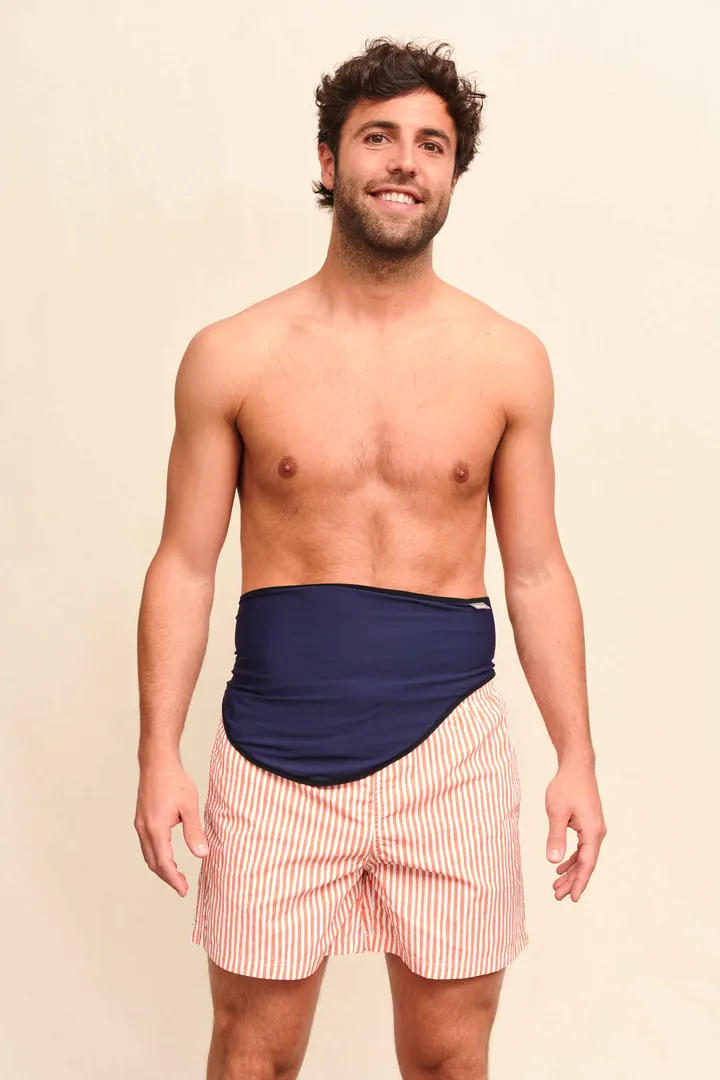 Stoma BeltHernia support & leak prevention. Trusted by 50,000+ ostomates worldwide.Discover →
Keep reading
More from the SIIL journal

Living with an Ostomy
Best Stoma Belt for Exercise, Running & Gym in the UK (2026)
Best UK stoma belts for running, gym, cycling, and yoga in 2026: breathable pocket support vs. neoprene, sweat protection, and par…
5 min read

Living with an Ostomy
Best Stoma Belt for Sleeping in the UK (2026): Help Prevent Night Leaks & Sleep Better
Choose the best stoma belt for sleeping in the UK (2026): zip-free breathable pocket belts vs. soft wraps, side-sleeping tips, and…
5 min read

Living with an Ostomy
Best Stoma Recommendations (UK 2026): Complete Buying Guide by Lifestyle & Stoma Type
Complete 2026 UK stoma recommendations: best belts, wraps, clothing, bag covers & accessories for sleep, gym, swimming, work, inti…
4 min read
Welcome offer
Join the SIIL family.
Get 20% off your first order.
Stories, tips and exclusive drops — once a month, never spam. Your code lands in your inbox the moment you subscribe.
By subscribing you accept our privacy policy. Unsubscribe in one click, anytime.
Welcome — check your inbox for the code.
£49.99
£49.99
£41.99
£52.99
£76.99
£92.99
£102.99
£41.99
£76.99
£39.99
£76.99
£52.99