

Managing Stoma Bag Odour: Complete UK Guide (NHS 2026)
If you wear a stoma pouch, you know that odour is one of your biggest concerns. The good news is that this is completely manageable. You're not alone in this situation, and there are proven strategies that work. With the right approach, you can eliminate unwanted odours and regain your confidence.
Why does my stoma pouch smell?
 Stoma BeltHernia support & leak prevention. Trusted by 50,000+ ostomates worldwide.Discover →
Stoma pouch odour comes from several factors:
- Bacterial breakdown: Natural gut bacteria break down food, releasing foul-smelling gases.
- Intestinal gases: The digestive process produces carbon dioxide, methane, and hydrogen sulphide (which smells like rotten eggs).
- Certain foods: Some foods like garlic, onions, eggs, and fish amplify odour significantly.
- Leaks and poor sealing: Inadequate sealing allows odours to escape.
- Accumulation of waste: If the pouch isn't changed regularly, odours concentrate.
The key is addressing these factors from multiple angles.
Free guide · A gift from SIIL
The SIIL Ostomy Diet Guide — yours, free
What to eat, what to skip and how to feel confident at every meal — written with our community of 50,000+ ostomates.
Prefer it as a PDF in your inbox? Get it by email.
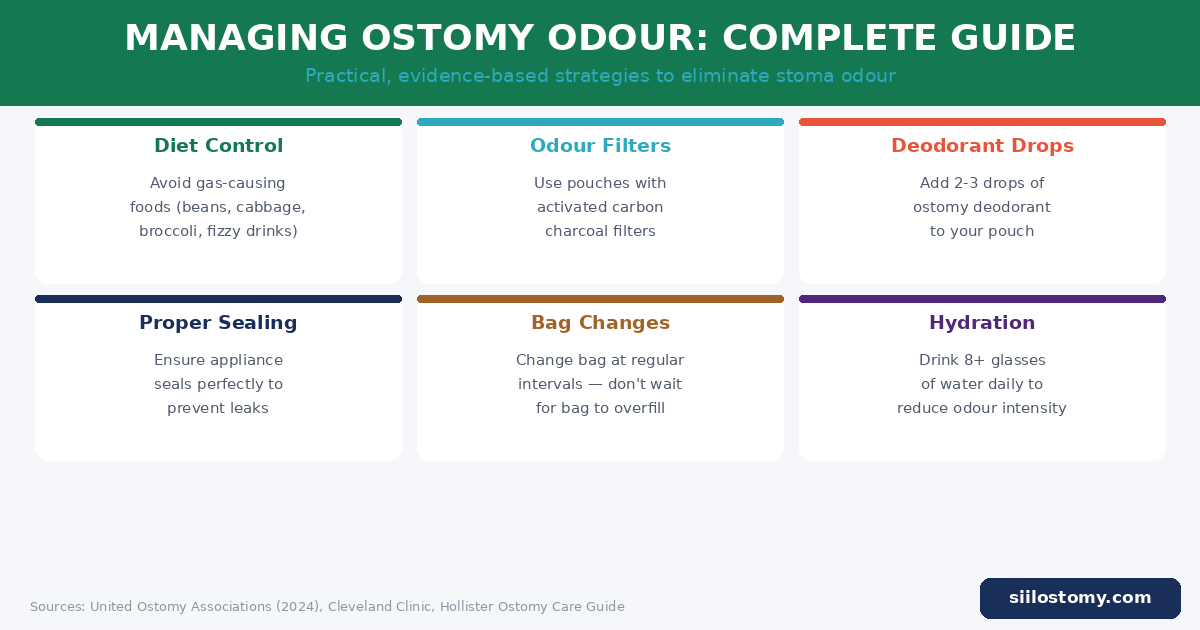
The 6 proven strategies for eliminating odour
1. Modify your diet
What you eat directly affects your stoma pouch's odour. Avoiding certain foods can significantly reduce the problem.
Foods to avoid:
- Garlic and onions (greatly increase odour)
- Fish and shellfish
- Eggs (especially hard-boiled)
- Asparagus
- Beer and strong alcoholic drinks
- Cabbage and broccoli (produce gas)
Beneficial foods:
- Natural yoghurt (with live probiotics)
- Parsley (neutralises odours naturally)
- Blueberries (rich in antioxidants)
- Spinach and other leafy greens
- Apples and pears (soluble fibre)
- Chicken and turkey (gentle proteins)
2. Use charcoal filter pouches
Activated charcoal filters are the most effective defence against odours. These filters capture gases before they escape from the pouch.
- Many modern pouches already include these filters.
- If yours doesn't, look for a pouch with activated charcoal filter technology.
- The filter should allow gases to escape while preventing leaks.
- Some filters have an additional odour-neutralising layer.
Reliable brands: Hollister, Coloplast, Convatec, and Nu-Hope offer excellent pouches with charcoal filters.
3. Deodorant drops and products
Specialist liquid deodorants for stoma pouches are designed to neutralise odours effectively.
Recommended products:
- Hollister M9: Alcohol-based drops that evaporate gases and neutralise odours. Very popular and effective.
- Coloplast Brava Deodorant Drops: Gentle formula that doesn't damage the pouch material.
- Nu-Hope Odor Eliminator: Affordable and reliable alternative.
How to use:
- Add 1–2 drops to the pouch when you change it.
- Some ostomates add extra drops mid-day.
- Don't use too much; a little is very effective.
4. Proper pouch sealing and skin care
Poor sealing is a common source of odours.
- Change your wafer regularly: The seal degrades over time.
- Clean the skin around your stoma thoroughly: Moisture and debris encourage leaks.
- Let your skin dry completely: Apply the pouch to dry skin.
- Press for 30 seconds: Ensures a firm, long-lasting seal.
- Consider a protective powder: On irritated skin, gentle powder can improve adhesion.
5. Regular pouch changes
A consistent change schedule prevents odour buildup.
- Most ostomates change every 3–5 days.
- If you notice odour after 2 days, change every 3 days.
- Always change in the morning or evening, when your stoma is less active.
- Dispose properly: Roll up, seal in a bag, and put in the bin.
6. Proper hydration
Water helps maintain the correct consistency of output.
- Drink 8+ glasses of water daily.
- Better consistency = less odour.
- Dehydration produces concentrated, foul-smelling output.
- Avoid excessive alcohol, which dehydrates.
Food table: Low odour vs High odour
| RECOMMENDED FOODS (LOW ODOUR) | FOODS TO AVOID (HIGH ODOUR) | ||
|---|---|---|---|
| Cooked chicken | Low | Fresh garlic | Very high |
| Turkey | Low | Onion | Very high |
| White fish (cod) | Low–medium | Oily fish (smoked salmon) | Very high |
| White rice | Low | Hard-boiled eggs | High |
| White bread | Low | Beer | High |
| Apples | Low | Cabbage | High |
| Bananas | Low | Broccoli | High |
| Blueberries | Low | Cauliflower | High |
| Natural yoghurt | Low | Asparagus | Medium–high |
| Parsley | Low | Red wine | Medium–high |
When odour signals a more serious problem
Sometimes, unusual odour can indicate a health issue that needs attention.
- Very strong, putrid odour: May indicate a bacterial infection.
- Sudden change in odour: Especially if accompanied by pain.
- Frequent leaks: Check that sealing is correct or that you don't have skin irritation.
- Blood or pus in output: Seek medical attention immediately.
- Fever with unusual odour: Possible infection; see your doctor soon.
Most odour changes are due to diet or hygiene, but it's better to be safe.
Product recommendations and next steps
If you're still experiencing odour problems after applying the strategies above, consider investing in specialist products:
- Stoma belts: Provide support and prevent leaks. View SIIL belts
- Compression clothing: Reduces movement and keeps the pouch in place. Discover our clothing range
- Premium pouches with filters: Investing in quality makes a significant difference.
Every person is different. What works for one may not work for another. Try different strategies and find your winning combination.
Ready to take control?
We have everything you need to manage your stoma with confidence.
Explore stoma accessories View UK stoma clothingFrequently asked questions about stoma odour
How do I stop my stoma pouch from smelling?
Use a combination of these strategies: modify your diet by avoiding garlic, onions, and fish; use pouches with activated charcoal filters; apply deodorant drops; ensure proper sealing; change your pouch regularly (every 3–5 days); and stay properly hydrated. Most ostomates find that 2–3 of these measures are sufficient.
Do stoma pouches always smell?
No. With the right strategies, odour is drastically reduced. Modern charcoal filters and proper sealing techniques mean that most ostomates notice no perceptible odour in their daily life. If something smells strong, there's probably something to adjust.
What foods cause the most stoma odour?
The worst culprits are: fresh garlic, onions, fish and shellfish, hard-boiled eggs, and strong alcoholic drinks like beer. Cruciferous vegetables (cabbage, broccoli) also produce gas. Try eliminating them for a week and you'll see the difference.
Are there deodorant tablets for stoma pouches?
"Tablets" as such don't exist, but there are alternatives: liquid drops (such as Hollister M9), deodorant powders, and even dietary supplements with zinc and probiotics. Liquid drops are the most popular and effective. Ask your stoma nurse which is best for you.
Can other people smell my stoma pouch?
With a modern pouch that has activated charcoal filters and is properly sealed, most people won't notice anything. Odour is only noticeable if there's a leak or if the pouch hasn't been changed in several days. For most ostomates with the right measures in place, this is never an issue in social situations.
Sources: This article is based on recommendations from the UK's Colostomy Association, NHS guidance on stoma care, Hollister Incorporated, Coloplast A/S, and protocols from specialist stoma nurses. Always consult your doctor or stoma care nurse for personalised advice.
More from the SIIL journal

Living with an Ostomy
How to clean a stoma and the skin around it, how to clean a drainable stoma or colostomy bag, whether to rinse the bag and what ne…

Living with an Ostomy
Is a prolapsed stoma dangerous? What it looks like, why it happens, what helps at home, when to call 999, plus stoma bag, clothing…

Living with an Ostomy
Is stoma bleeding normal? Why stomas bleed, how to stop it, blood in the bag vs bleeding from the skin around it, and when to call…
Welcome offer
Stories, tips and exclusive drops — once a month, never spam. Your code lands in your inbox the moment you subscribe.
By subscribing you accept our privacy policy. Unsubscribe in one click, anytime.
£72.99
£52.99
£92.99
£41.99
£72.99
£52.99
£44.99
£122.99
£92.99
£41.99
£44.99
£72.99