
 ES
 EN
 GB
 DE
 FR
No products in the basket.
Parastomal Hernia UK: Signs, Causes, Treatment and Living Well With One
Quick answer: A parastomal hernia is a bulge next to your stoma, where bowel or fat pushes through the weakened tummy wall around it. It is common: depending on how it is measured, studies find that somewhere between a quarter and more than half of people develop some bulge within a few years, and many cause few or no symptoms. Severe pain, vomiting, a dark stoma or no output is an emergency: go to A&E or call 999. Core exercises come first, and support wear can help too: it holds the weight of your stoma bag and supports the tummy wall around the stoma. When a UK hospital combined the two, about 40% fewer people developed a hernia. The SIIL Ostomy stoma belt and wraps hold the weight of the bag in an inner pocket and support the tummy wall around the stoma during daily activity and exercise.
Free guide · A gift from SIIL
The SIIL Stoma Diet Guide — yours, free
Practical information on food and hydration for everyday life with a stoma.
Prefer it as a PDF in your inbox? Get it by email.
What is a parastomal hernia?
A parastomal hernia (also called a peristomal hernia) is an abnormal bulge of tissue, usually bowel and fat, through a weak spot in the tummy wall around your stoma. Unlike incisional hernias, which form along an operation scar, a parastomal hernia develops right next to the opening where your bowel comes through the abdominal wall.
To form a stoma, the surgeon brings part of your bowel through an opening in the abdominal muscles. That opening weakens the natural barrier of the tummy wall. Over time, pressure inside your abdomen (from coughing, straining, heavy lifting or simply the weight of your organs) can push tissue through the weak area and create a visible bulge beside the stoma.
In the early stages the hernia is often painless, though some people notice discomfort or a feeling of fullness. More importantly, it can change how your stoma bag fits, leading to leaks, sore skin and a poorer quality of life.
Stoma hernia: is it the same as a parastomal hernia?
Yes: a stoma hernia and a parastomal hernia are the same thing. It happens when part of the bowel pushes through the weakened muscle around the stoma, creating a bulge under the skin next to or around it. It is one of the most common stoma complications in the UK and can develop months or even years after surgery. Most stoma hernias are managed without an operation, with a support garment or stoma belt that helps prevent the hernia growing and keeps the pouch sitting securely. Get urgent help if the bulge becomes hard, painful or discoloured, or if you feel sick and your stoma stops working.
How common are parastomal hernias?
Very common, and the exact figure depends on how a hernia is counted: a bulge you can see, one found on a scan, or one that causes symptoms. The European Hernia Society estimates more than 30% at 12 months and more than 40% at two years, rising with longer follow-up. In a Danish national study, 55% of people had a bulge at a median of 4.4 years. At the other end, a Swedish registry found that only 7.7% had a hernia that caused symptoms or needed surgery within five years. Many hernias never need an operation.
The risk varies by stoma type. End colostomies carry the highest risk (reported from about 4% to 48%), while loop ileostomies carry the lowest. A hernia can appear many years after surgery, so it is worth knowing the signs even if your stoma is not new.
A well-fitted hernia support belt for a stoma can help prevent a parastomal hernia, especially when lifting or exercising. Your stoma care nurse can tell you when to start wearing one.
Risk factors for parastomal hernia
Anyone with a stoma can develop a parastomal hernia, but some factors make it more likely. Reviews of the research keep pointing to these:
- Higher body weight and a larger waist: more pressure inside the abdomen pushes on the weak spot around the stoma.
- Older age: tissue loses elasticity and muscles lose strength over time.
- Smoking and a chronic cough: COPD, asthma or a smoker's cough create repeated pressure surges.
- Diabetes, steroids and poor nutrition: they slow healing and weaken connective tissue.
- The type of surgery: an end colostomy, emergency surgery, a larger opening, or a stoma placed outside the rectus muscle.
- Wound infection after the operation.
Warning signs: normal findings vs emergencies
Typical signs of a parastomal hernia: a visible or palpable bulge around your stoma that is more noticeable when you stand or strain. Some people have mild discomfort or a feeling of fullness. Your bag may fit less reliably and leak more often, because the shape of the skin around the stoma changes.
EMERGENCY warning signs: some symptoms suggest that trapped bowel may be losing its blood supply (strangulation), a serious complication.
Get emergency help straight away if you have:
- Severe, sudden pain around the stoma.
- Nausea and vomiting: these may mean a blockage.
- A change in stoma colour: dark red, purple or black means poor blood flow and is a surgical emergency.
- No output, especially together with pain and nausea.
If you have any of these signs, go to A&E or call 999. Do not wait to see whether it settles.
Can you lower your risk of a parastomal hernia?
Not every hernia can be prevented, but some things clearly help, and some long-standing advice has changed.
Before surgery: if your operation is planned, ask for stoma siting with a specialist stoma care nurse, which lowers complications overall. With an end colostomy, some surgeons place a mesh at the time of surgery to reduce the chance of a hernia. The latest European guidance recommends it case by case, most strongly for people at high risk, so it is a question for your surgeon.
Core exercises, early: the 2025 UK stoma care nurse consensus on exercise after stoma surgery (ASCN UK EXPASS) recommends gentle, structured core and pelvic floor exercises for everyone with a stoma, starting within 24 hours of surgery or as soon as you can, guided by your team. A stronger, better-coordinated core may lower the risk of a hernia and helps you feel less vulnerable around the stoma. Older advice to wait months before any core work is no longer what the experts recommend.
Lifting: the same guidance says there is no evidence for a blanket ban on lifting or a fixed weight limit for a set number of weeks. Instead, learn how to lift: breathe out, engage your core, keep the load close. Your team will tailor this to you, especially in the first weeks.
Weight, smoking and coughing: a healthy weight, not smoking and getting a chronic cough treated all take pressure off the tummy wall.
Support wear: studies suggest it may lower the risk. When a UK hospital introduced a prevention programme of core exercises, patient education and a support belt for heavy work during the first year after surgery, about 40% fewer people developed a parastomal hernia (Thompson and Trainor, 2005, confirmed three years on in 2007). In a 2024 Italian study of 238 people, 6.7% of those who wore a support belt from hospital discharge developed a hernia, against 21.4% of those who did not, a statistically significant difference. The likely reason is simple: a garment that holds the weight of your stoma bag takes the pull off your skin and adhesive and supports the tummy wall around the stoma.
Neither study was a randomised trial, and two of the Italian authors work for a belt maker. UK stoma care nurse guidance (EXPASS 2025) says the evidence is not yet strong enough to give every patient a garment for prevention, so wear it alongside core exercises, not instead of them, and decide with your stoma care nurse. The next section explains what support wear can do.
What support wear can and can't do
UK and Canadian stoma nurses describe the everyday benefits of support wear in plain terms: comfort, security, discretion and aesthetics. EXPASS puts it this way: support wear has a place for some people, with the focus on "comfort, security, and aesthetic".
- What it can do: carry the weight of your stoma bag as it fills, so it doesn't pull on your skin and adhesive; keep it close so it doesn't swing or drag; support the tummy wall around the stoma; smooth the line under your clothes; and give you a feeling of security when you move, lift or exercise.
- What it can't do: treat or heal a hernia you already have, promise that you will never get one, or replace a well-fitted bag, core exercises and a review with your stoma care nurse.
- If you already have a hernia: for a large or uncomfortable hernia, EXPASS says some form of support wear will likely add comfort and support, especially during exercise. It should be measured and fitted by an experienced specialist, so ask your stoma care nurse which support level you need.
- How it should fit: firm but comfortable, never so tight that it restricts breathing, movement or your stoma's output. Leave room for the bag to fill. EXPASS does not recommend garments with a hole cut around the stoma, because the hole removes support where you need it.
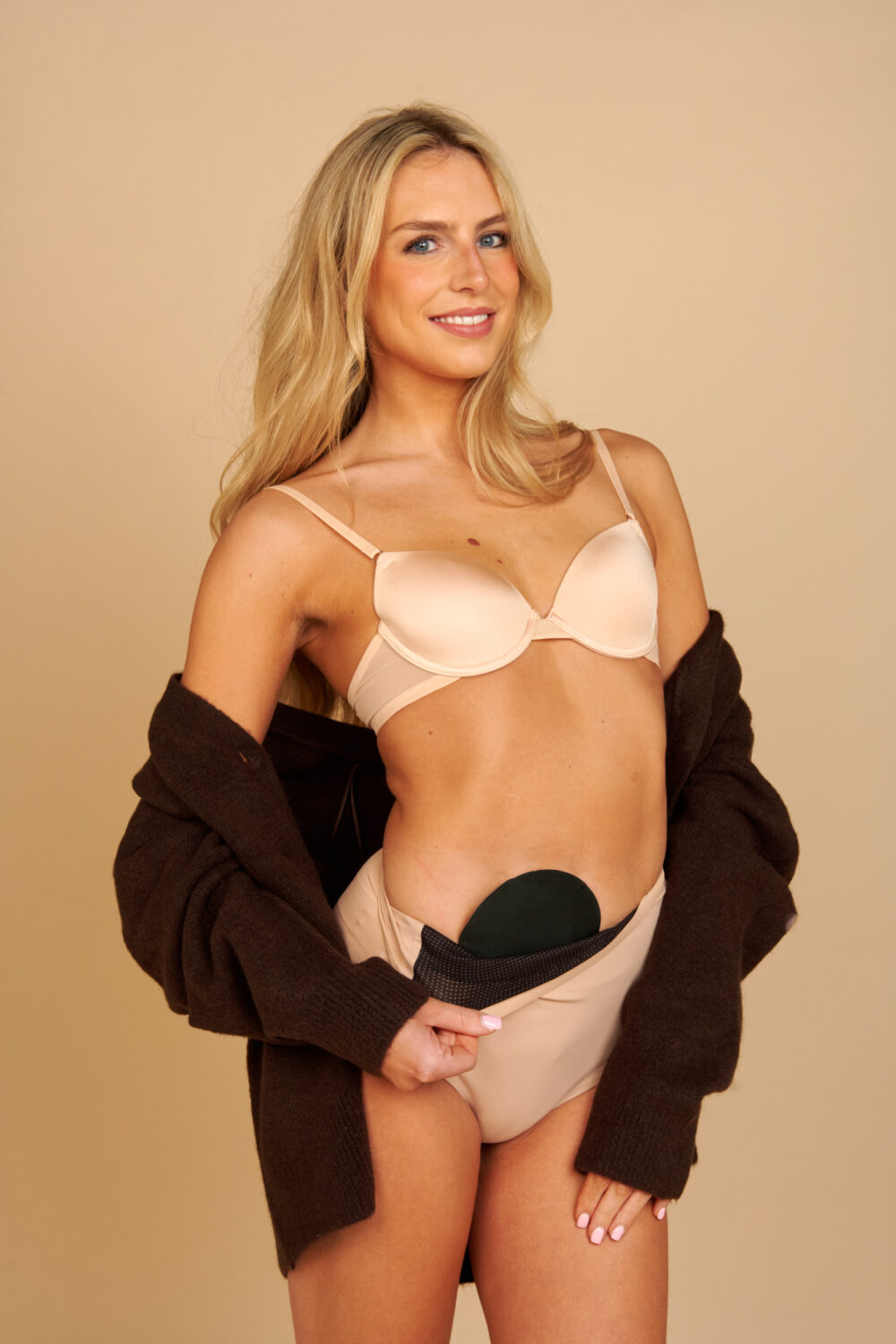
Where SIIL fits: a stoma belt with a pocket holds the bag flat against your body and carries its weight, so the bag doesn't drag on your skin and adhesive, and high-waisted stoma underwear or soft stoma wraps add gentle, even pressure across the tummy under everyday clothes. That is light-to-moderate everyday support, the kind Canadian nurse guidance describes for stoma support belts and underwear. It is not a firm medical hernia garment.
Exercise with a parastomal hernia
A hernia is not a reason to stop moving. EXPASS states that the benefits of exercise are likely to outweigh the risk of making a hernia worse, and recommends staying active and continuing appropriate core exercises even with a suspected or diagnosed parastomal hernia. Pilates or similar classes two to three times a week are highly recommended, and a small Scottish study found a Pilates-based programme safe for people who already had a hernia.
- Build up gradually and keep breathing through each effort rather than holding your breath.
- Weight training and harder sport are possible, alongside proper core training and pressure management. A physiotherapist or exercise professional who knows stomas can guide you.
- Support wear during exercise is your choice: wear it if it makes you feel more comfortable and confident. You don't need it to be allowed to exercise.
Clothes, confidence and leaks
A hernia changes the shape of your tummy, and that can feel like a second change on top of the stoma itself. Studies of people living with a stoma find that a hernia is one of the things most linked to a lower quality of life, together with a recent stoma and low activity. You are not imagining it, and it is worth getting support.
Clothes: in a large survey of people with a stoma, those who kept their usual style of clothing were much more likely to report a positive body image (the odds were about three times higher). A bulge often shows most at the waistband, so high-waisted knickers or briefs, leggings or a soft wrap that smooths the area can make your usual clothes work again. EXPASS also notes that everyday clothing such as high-waisted leggings, tights or vests can provide comfortable support.
Leaks: a hernia can stretch and reshape the skin around the stoma, so a bag that sealed well before may start to lift. If you are leaking more since a bulge appeared, ask for a fit review: a different flange, shape or accessory often fixes it. Our guide to why a stoma bag keeps leaking covers what to check.
Feelings: if worry about the hernia is stopping you from going out, exercising or being close to someone, tell your stoma care nurse or GP. Peer support from Colostomy UK, the IA (Ileostomy and Internal Pouch Association) or a local stoma support group can help too, because talking to people who have the same bulge makes it ordinary again.
Treatment options for parastomal hernia
Treatment depends on your symptoms, the size of the hernia and how much it affects your life. Your colorectal surgeon and stoma care nurse will help you decide.
Conservative management: many hernias that cause few symptoms are managed without surgery:
- Core exercises and staying active
- Support wear for comfort and security, fitted to your hernia
- A bag fit review when the shape around your stoma changes
- Weight management and treating a chronic cough
- Knowing the emergency signs and acting on them
Surgical treatment: surgery is considered when a hernia causes significant symptoms, stops your bag from sealing, affects your quality of life or risks strangulation. Options include:
- Laparoscopic (keyhole) mesh repair: a minimally invasive approach using mesh to reinforce the weakened area, with small incisions and usually a shorter recovery.
- Open mesh repair: a larger incision to repair the hernia directly and place a mesh.
- Stoma relocation: sometimes the stoma is moved to a new site on the tummy wall.
Hernias can come back after repair, and mesh lowers that risk compared with simple stitching. Recovery time depends on the operation, so ask your surgeon what to expect for your return to normal activity.
Frequently Asked Questions
What does a parastomal hernia look like?
A parastomal hernia appears as a bulge or swelling next to your stoma. It is usually more noticeable when you stand, cough or strain, and may get smaller when you lie down. Some are barely visible; others create a large swelling. The skin over it usually looks normal.
Is a parastomal hernia dangerous?
Most are not immediately dangerous, but they need watching. The main risk is strangulation, when trapped bowel loses its blood supply. Severe pain, nausea or vomiting, a stoma that turns dark red, purple or black, or no output with pain is an emergency: go to A&E or call 999.
Does a parastomal hernia always need surgery?
No. Many stay stable for years and are managed with core exercises, staying active, support wear for comfort and a good bag fit. Surgery is considered when the hernia causes significant symptoms, stops your bag from sealing or risks strangulation.
Can a stoma belt prevent a parastomal hernia?
It may lower the risk, but no belt can promise that you will never get one. When a UK hospital combined core exercises, patient education and a support belt for heavy work in the first year after surgery, about 40% fewer people developed a parastomal hernia. In a 2024 Italian study of 238 people, 6.7% of those who wore a support belt from hospital discharge developed one, against 21.4% of those who did not. These were not randomised trials, so UK stoma care nurse guidance (EXPASS 2025) does not yet recommend a garment for every patient. A well-fitted stoma belt holds your bag's weight close to your body, takes the pull off your skin and adhesive and makes you feel more secure when you move. Wear it alongside core exercises, not instead of them.
Can I exercise with a parastomal hernia?
Yes. UK guidance says the benefits of exercise are likely to outweigh the risk of making the hernia worse, and recommends staying active and continuing core exercises. Build up gradually, breathe through each effort, and get advice from a physiotherapist or exercise professional who knows stomas before heavy lifting or intense sport.
Can I lift things after stoma surgery?
The 2025 UK guidance says there is no evidence for a blanket lifting ban or a fixed weight limit for a set number of weeks. Learn to lift safely instead: breathe out, engage your core and keep the load close. Your team will adapt the advice to your surgery and recovery.
Will a hernia make my stoma bag leak?
It can. A hernia changes the shape of the skin around your stoma, so your usual flange may not sit flat any more. If you notice more leaks since the bulge appeared, ask your stoma care nurse for a fit review. A different flange shape, a seal or a belt often solves it.
What should I wear with a parastomal hernia?
Whatever you feel comfortable and like yourself in. High-waisted underwear, leggings or a soft wrap smooth the bulge under clothes and add gentle support. If your hernia is large or uncomfortable, ask your stoma care nurse to measure you for a firmer support garment.
Sources
- ASCN UK. Exercise and Physical Activity After Stoma Surgery: Best Practice Recommendations (EXPASS), October 2025, including the Support Wear position statement.
- Colostomy UK. Parastomal Hernias, December 2025.
- NSWOCC. Parastomal hernia prevention, assessment and management: Canadian best practice recommendations, 2023.
- Thompson MJ, Trainor B. Incidence of parastomal hernia before and after a prevention programme. Gastrointestinal Nursing, 2005; and Prevention of parastomal hernia: a comparison of results 3 years on. Gastrointestinal Nursing, 2007. Summarised in Thompson MJ, Parastomal hernia: incidence, prevention and treatment strategies. Br J Nurs, 2008.
- Sarritzu G, et al. Ostomy support belt in preventing parastomal hernia development: a retrospective monocenter cohort study. Nursing and Health, 2024.
- North J. Early intervention, parastomal hernia and quality of life: a research study. Br J Nurs, 2014.
- Haas R, et al. Hernia support garments for parastomal hernia (CADTH rapid review). Can J Health Technol, 2024.
- Antoniou SA, et al. European Hernia Society guidelines on prevention and treatment of parastomal hernias. Hernia, 2018; and the 2023 EHS rapid guideline update.
- Krogsgaard M, et al. Impact of a parastomal bulge on quality of life. Ann Surg, 2021.
- Tivenius M, et al. Swedish registry study of parastomal hernia. Int J Colorectal Dis, 2019.
- Niu N, et al. Risk factors for parastomal hernia: systematic review and meta-analysis. Int J Colorectal Dis, 2022.
- Munro J, et al. HALT feasibility study of a Pilates-based programme. Pilot Feasibility Stud, 2023.
- Goodman W, et al. Quality of life profiles in people with a stoma. Qual Life Res, 2022.
- Menier M, Nichols T. Life satisfaction and body image perception in people with an ostomy. WOCN, 2013.
Written by María G. · hola@siilostomy.com · Last updated: 25 October 2026. This guide is for information only and does not replace advice from your surgeon or stoma care nurse.
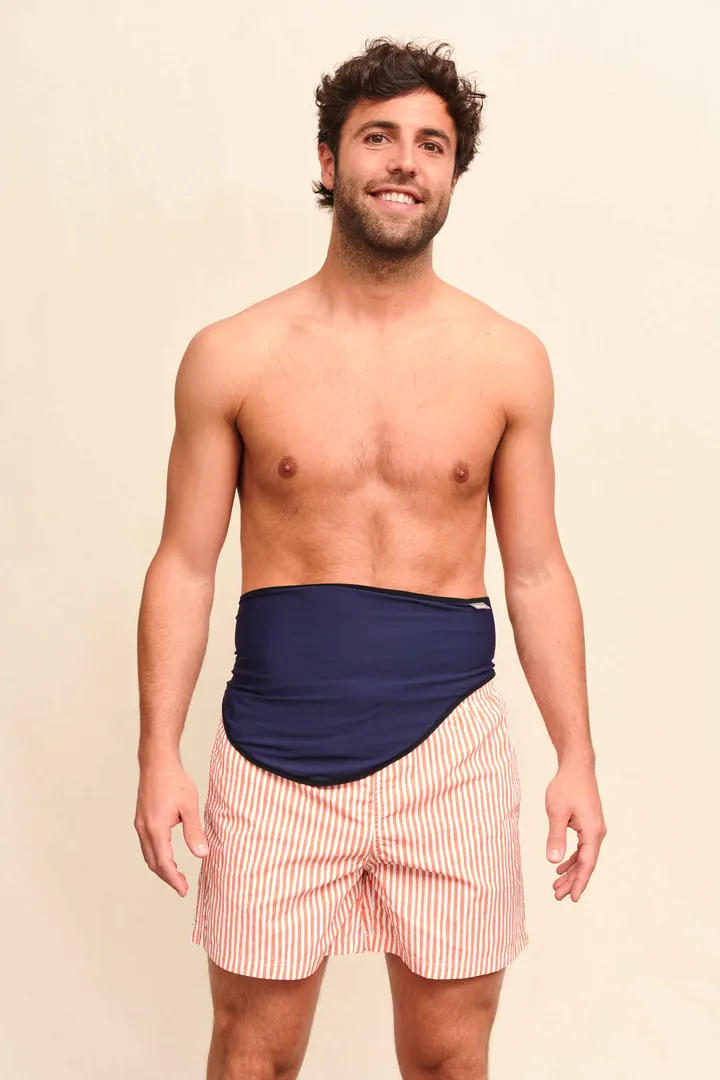 Gentle Everyday Abdominal & Stoma SupportEven, breathable support around your abdomen that holds the bag comfortably without pinching.See support belt →
Keep reading
More from the SIIL journal

Living with an Ostomy
How Often to Change a Stoma Bag & Baseplate UK: Wear-Time & Monthly Order Calculator
Free UK stoma bag & flange change calculator: check NHS-aligned wear times for 1-piece and 2-piece colostomy, ileostomy, and urost…
4 min read

Living with an Ostomy
Flat vs. Convex Stoma Flange & Baseplate Selector UK (+ NHS Nurse Fitting Sheet)
Free UK interactive flat vs. convex stoma baseplate selector: compare flat flanges, soft convexity, deep convexity, and mouldable …
4 min read

Living with an Ostomy
Stoma Measuring Guide & Flange Aperture Calculator UK (mm + 1:1 Printable Template)
Free UK interactive stoma measuring guide & flange hole size calculator: calculate your exact cut-to-fit baseplate size in mm (+2 …
3 min read
Welcome offer
Join the SIIL family.
Get 20% off your first order.
Stories, tips and exclusive drops — once a month, never spam. Your code lands in your inbox the moment you subscribe.
By subscribing you accept our privacy policy. Unsubscribe in one click, anytime.
Welcome — check your inbox for the code.
£19.99
£76.99
£72.99
£39.99
£41.99
£41.99
£49.99
£92.99
£44.99
£52.99
£41.99
£44.99