

Foods to Avoid With a Stoma: The Honest UK Guide
Quick answer: In the first weeks after surgery, the foods most stoma folk go carefully with are stringy, fibrous or tough-skinned ones — sweetcorn, mushrooms, nuts, celery, raw leafy greens, orange pith and dried fruit — because they can bunch up near the stoma. There's no universal "banned" list, though: it's about timing, chewing well, and reintroducing things one at a time. Ileostomies tend to need more caution than colostomies, and almost everything can come back onto your plate eventually.
If you've just come home and you're staring at your fridge wondering what on earth is safe to eat, take a breath — you're not alone, and you haven't broken any rules yet. Nearly every ostomate has had that first cautious meal, that "am I allowed this?" moment, and that quiet panic the first time the bag fills faster than expected. The honest version is this: there's far less on the "never again" list than the internet would have you believe. Most of the caution is temporary, most of it is about how you eat rather than what, and the salad-lovers among us usually get their salad back. Let's sort the real from the scaremongering.
Why some foods cause trouble (and why it's rarely permanent)
The whole thing comes down to how food travels and how it looks by the time it reaches your stoma. Anything tough, stringy or high in insoluble fibre doesn't always break down fully — sweetcorn kernels, mushroom skins, celery strings, the pith on a satsuma. On its own that's usually harmless. The issue is when a lot of it arrives at once and clumps, which is where that dreaded word "blockage" comes from. Ileostomates hear this warning more loudly because there's a bit less digestion happening downstream, so fibrous bits arrive more intact and the opening is narrower.
Here's the part nobody tells you at discharge, though: this is a phase, not a life sentence. In the early weeks after surgery things are still a bit swollen and settling, so caution genuinely makes sense. Give it a few months and most people are reintroducing foods they'd written off. The support groups are full of "I ATE SALAD" posts for a reason — it feels like winning a trophy, and it's completely normal to get there. Your job now isn't to memorise a banned list; it's to reintroduce slowly and pay attention.
- Chew like you mean it. The single biggest tip going. Food broken down in your mouth is food that won't bunch up later. Aim to chew everything to mush.
- Small portions of anything new. A teaspoon of sweetcorn tells you more than a full corn on the cob and a rough night.
- One new food at a time. If something disagrees, you want to know exactly which culprit it was.
- Reintroduce foods according to your recovery plan, in small amounts and well chewed. Follow your own fluid plan. Little or no output with abdominal pain, swelling, nausea or vomiting needs urgent medical advice; do not delay assessment to try food or drink remedies.
Foods to go carefully with — by stoma type
The differences between an ileostomy and a colostomy matter here, so rather than repeat myself three times, here's the whole picture at a glance. This is about caution and timing, not permanent bans.
| Food group | New stoma (first 6–8 wks) | Settled ileostomy | Settled colostomy |
|---|---|---|---|
| Sweetcorn, peas, mushrooms | Skip for now | Small amounts, chew well | Usually fine, chew well |
| Nuts, seeds, popcorn | Skip for now | Careful, small amounts | Reintroduce gently |
| Raw leafy salad, celery, coleslaw | Cooked veg instead | Reintroduce slowly, chew | Usually fine |
| Orange pith, dried fruit, apple skin | Peel & avoid pith | Follow your individual fluid plan. | Usually fine |
| Fizzy drinks, beans, onions (gas) | Moderate | Personal tolerance | Personal tolerance |
| Spicy food, rich curries | Ease back in | May loosen output | Personal tolerance |
Notice the pattern: the "new stoma" column is the strictest, the colostomy column is the most relaxed, and by the time you're settled almost everything is back on the menu with a bit of chewing. If you want a proper week's worth of ideas to build on, our stoma diet guide on what to eat and avoid is a good next read, and the 7-day menu gives you actual meals rather than just theory.
Foods that help thin runny output
Sports drinks and broth do not replace the oral rehydration solution prescribed for high output. Use the product, recipe and amount your team specifies. Contact the team promptly if output increases or becomes unusually watery, especially with less urine, thirst or dizziness; do not wait for a fixed volume threshold.
- Thickeners: white rice, white bread and toast, mashed potato, oats/porridge, ripe bananas, plain pasta, marshmallows (an old ostomate trick, genuinely), smooth peanut butter.
- Fluid and salt needs depend on your stoma, output and health. Follow your team's individual plan; there is no daily number of glasses suitable for everyone. With a high-output ileostomy, large amounts of plain water can increase losses. Do not restrict drinks or add salts on your own.
- Eat little and often: smaller, regular meals often steady output better than two big ones.
Reintroduce foods according to your recovery plan, in small amounts and well chewed. Follow your own fluid plan. Little or no output with abdominal pain, swelling, nausea or vomiting needs urgent medical advice; do not delay assessment to try food or drink remedies.
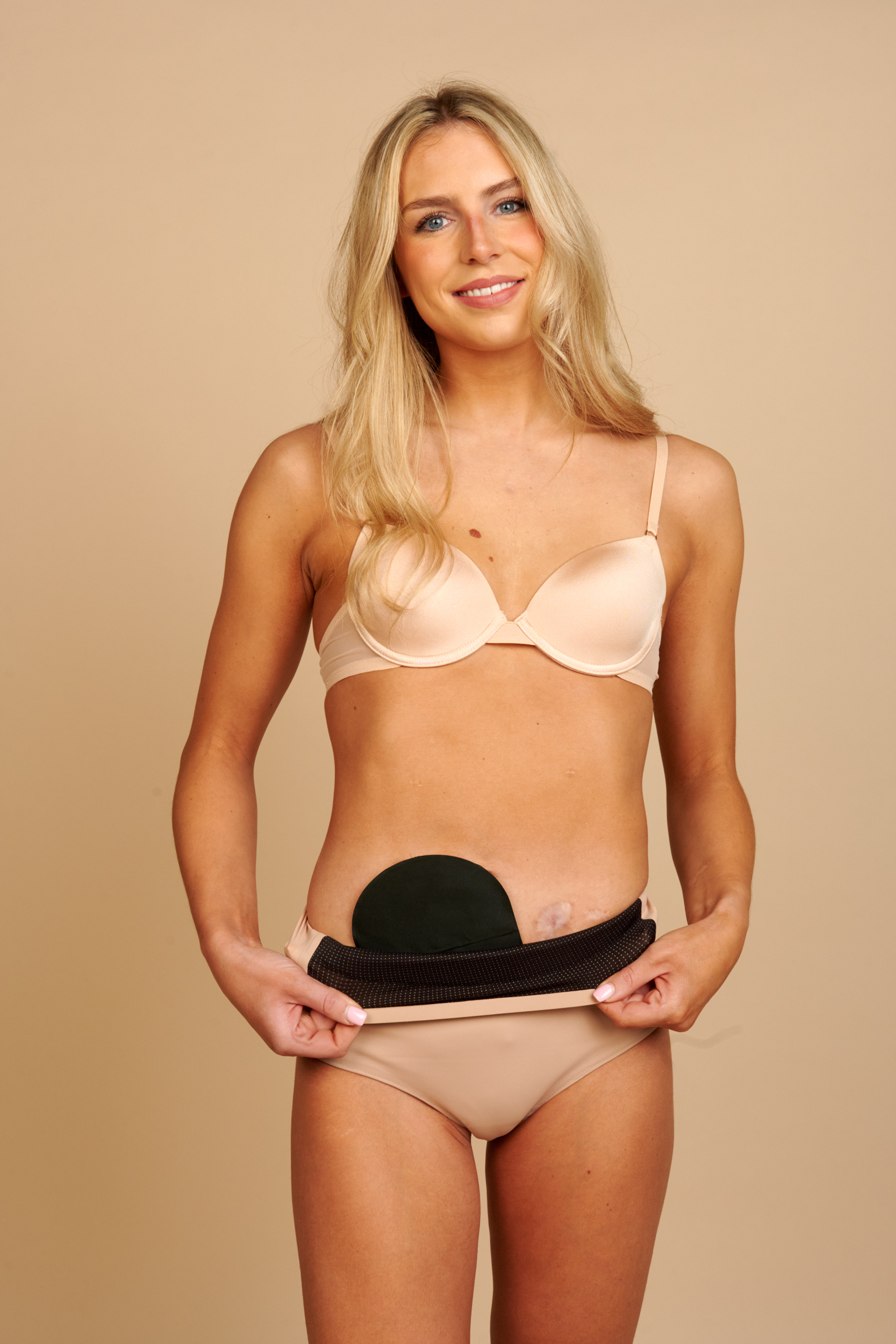
While you're getting your food routine sorted, it's worth having clothing that isn't part of the stress. A soft, supportive stoma wrap holds everything gently in place through a big meal or a windy-tummy day, so you're thinking about your dinner and not your waistband.
The "new stoma" first-weeks approach

Right after surgery your gut is still settling, so the sensible move is a lower-fibre, gentle diet for the first six to eight weeks, then a slow reintroduction. This isn't forever — it's a runway. Think plain, easy-to-digest foods: white toast, eggs, well-cooked chicken and fish, mashed or peeled potatoes, ripe banana, smooth soups, tinned peaches. Cook your veg soft rather than eating it raw, and peel skins off fruit and veg where you can.
Keep a little notes app or scrap of paper going: what you ate, what happened. It sounds fussy but within a month you'll have your own personal map — far more useful than any generic list, because everyone's stoma has opinions of its own. If you want the full lie-of-the-land for these early weeks, our new stoma patient guide walks through what to expect beyond just food. And if a reversal is on your horizon, life after stoma reversal has its own eating rhythm too.
One honest warning: the classic blockage triggers — a big pile of sweetcorn, a handful of nuts, stringy mushrooms, undercooked veg eaten in a rush — are worth genuine respect early on. Chewing well and small portions defuse almost all of it. If you ever have cramping, no output, and swelling around the stoma, that's the moment to contact your stoma nurse or the NHS rather than tough it out.
The bit that actually matters: you're not on a "restricted diet" forever
It's easy to read a list like this and feel like life just got beige and boring. It doesn't have to. The ostomates I know eat curries, roast dinners, cheese boards, the lot — they just learned their own limits and got their salad back one leaf at a time. The "foods to avoid" list shrinks the longer you've had your stoma. What starts as a short menu of safe things becomes, before long, nearly everything you loved before, minus a couple of personal troublemakers.
So treat this as your starting point, not your ceiling. Reintroduce with curiosity. Celebrate the small wins — genuinely, the first successful salad is a lovely feeling. And build the rest of your confidence around it, because feeling good in your clothes makes the whole thing easier to carry.
Eat what you fancy — dressed how you like.
Our high-waisted, stoma-friendly underwear and wraps hold everything gently in place through any meal, so a full plate never means a fiddly outfit.
Frequently asked questions
How long after surgery can I start eating salad and raw veg again?
Most people ease raw veg and salad back in from around six to eight weeks, once things have settled — but it varies. Start with softer options like peeled cucumber or a little lettuce, chew thoroughly, and build up. Plenty of ostomates report getting their beloved salads back completely; it just takes a gradual approach rather than diving into a big bowl of coleslaw on day one.
Is it true marshmallows can help slow down my output?
Sports drinks and broth do not replace the oral rehydration solution prescribed for high output. Use the product, recipe and amount your team specifies. Contact the team promptly if output increases or becomes unusually watery, especially with less urine, thirst or dizziness; do not wait for a fixed volume threshold.
Can I still drink alcohol and fizzy drinks with a stoma?
Coffee and alcohol may loosen output; beer and fizzy drinks can also increase gas. Alcohol is not suitable for everyone, particularly after surgery or with some medicines. Ask your team what fits your situation, and follow your fluid plan rather than automatically adding water.
What should I do if I think I've eaten something causing a blockage?
Reintroduce foods according to your recovery plan, in small amounts and well chewed. Follow your own fluid plan. Little or no output with abdominal pain, swelling, nausea or vomiting needs urgent medical advice; do not delay assessment to try food or drink remedies.
Are the "avoid" foods different for a colostomy versus an ileostomy?
Broadly yes. Ileostomates usually need more caution with fibrous, stringy foods and more focus on hydration, because output is looser and the opening narrower. Colostomates typically tolerate a wider range once settled. That said, everyone's different — your own trial-and-error list will always beat a generic one.
Do I need a special stoma diet plan long-term?
Most people don't need a permanent "special diet" — just an awareness of their own few triggers and good habits like chewing well and staying hydrated. If you'd like structure while you find your feet, a ready-made week of meals is handy to build confidence before you branch out on your own.
Foods such as eggs, fish, garlic and onions can change pouch odour. Yoghurt or parsley may help some people, but no food guarantees odour control. Test changes within your diet plan and avoid unnecessary restrictions.
Sources: CUH NHS
When can I eat after new stoma surgery, and is a soft diet the same as low fibre?
Your surgical team decides when you can start and advance food. Early options may include white rice, pasta, eggs and tender fish, according to your plan. Low fibre describes fibre content; a soft diet describes texture. Ask which you need, particularly if swallowing is difficult. Reintroduce foods gradually when your team advises.
Can I eat wholemeal bread, corn or black-eyed peas?
Wholemeal bread contains more fibre; corn kernels and black-eyed peas also need consideration, particularly with a new ileostomy or a prescribed low-fibre diet. They are not permanently forbidden for every person. Follow your current restrictions, then try small amounts separately and chew thoroughly. Peas and other pulses may also increase gas.
Sources: NHS; CUH NHS; CUH NHS
What about lettuce and raspberries with an ileostomy?
Raw lettuce and raspberry seeds can be harder to manage during a low-fibre recovery phase. A food being soft does not remove its seeds or fibre. Ask when these foods fit your plan; when reintroducing them, test one at a time and observe your output rather than assuming they are safe for everyone.
Sources: CUH NHS; CUH NHS; CUH NHS
Can I have cooked eggplant, sweet potato, broccoli or other vegetables?
Preparation matters: peeled, well-cooked eggplant or sweet potato can be easier to fit into some lower-fibre plans than tough skins or raw vegetables. Check your own food list, especially with high output. Broccoli and other cruciferous vegetables may cause gas; they are not automatically banned. Introduce portions gradually and chew well.
Are American cheese and lunch meat suitable for a new ileostomy?
Cheese and tender meat can provide protein, but this is not approval of every processed product. For American cheese or lunch meat, check added seeds, tough casings, spicy ingredients and your discharge advice. Choose a texture you can chew well, and discuss foods that repeatedly increase symptoms rather than removing whole food groups.
Can chimichurri or wasabi make my pouch leak?
There is no blanket yes-or-no rule for these sauces. Chimichurri recipes vary in herbs, garlic, oil and chilli; wasabi is pungent. Spicy or fatty foods can loosen output in some people. A leak also needs a pouch-fit check: do not assume a sauce is the only cause or rely on changing food to fix a leaking seal.
Sources: CUH NHS
Should I thicken output or change foods to prevent pancaking?
Rice, pasta or ripe banana may help thicken loose output, but do not aim for hard stool. Pancaking can involve thick, sticky output and a vacuum inside the pouch. Review your usual foods, fluid plan and pouch with your stoma nurse; adding large amounts of fibre or water is not a universal remedy.
Sources: CUH NHS; Coloplast; CUH NHS
What changes if I also have Parkinson's disease?
Ask your stoma team and Parkinson's team or dietitian to agree one plan. Swallowing difficulties, weight changes, constipation, medicines and the type of stoma can change what is appropriate. Do not increase fibre or change food texture from a generic ostomy list; swallowing problems may need specialist assessment.
What should I eat after a stoma reversal?
Follow the plan for your operation: the remaining bowel and its recovery affect tolerance. Small, regular meals and a temporary lower-fibre diet may be advised before gradual reintroduction. A diet written for someone still using a pouch is not a complete reversal plan. Ask your surgical team about persistent symptoms or difficulty eating.
Sources: RUH NHS
More from the SIIL journal

Living with an Ostomy
Colostomy surgery in plain words: why it's done, how to prepare, loop vs end colostomy, keyhole or open surgery, your hospital sta…

Living with an Ostomy
What counts as a high output stoma or ileostomy, the signs of dehydration, the food and drinks NHS teams suggest, and when to call…

Living with an Ostomy
How to clean a stoma and the skin around it, how to clean a drainable stoma or colostomy bag, whether to rinse the bag and what ne…
Welcome offer
Stories, tips and exclusive drops — once a month, never spam. Your code lands in your inbox the moment you subscribe.
By subscribing you accept our privacy policy. Unsubscribe in one click, anytime.
£19.99
£52.99
£122.99
£41.99
£49.99
£41.99
£102.99
£41.99
£44.99
£52.99
£41.99
£31.99