

A 7-Day Colostomy Diet Menu: What Real Ostomates Actually Eat
Quick answer: A colostomy diet menu isn't about restriction — it's about reintroducing foods slowly, chewing well, drinking enough, and learning what your own body likes. Most people with a colostomy end up eating close to a normal, varied diet: eggs and toast, chicken and rice, pasta, fish, cooked veggies, and yes — eventually salad again. The 7-day plan below is a gentle template you can adapt, not a set of rules.
If you just landed here, you're probably somewhere between "what on earth am I allowed to eat now" and "I miss my old dinners." Both feelings are completely normal. Here's the honest version: there's no single official colostomy diet menu handed out at the door, because bodies are different and stomas are different. What there is is a smart, low-drama way to rebuild your plate one meal at a time — so you get back to eating what you love with confidence instead of anxiety.
This isn't a medical plan. It's a lived-experience template built around how ostomates in real support groups actually talk about food: chew well, hydrate, watch the blockage foods, reintroduce slowly, and celebrate the day you eat salad again (people genuinely post about it — it's a rite of passage).
Key takeaways
- The first weeks are the cautious phase — plain, cooked, easy-to-digest foods — then you widen the menu.
- Chewing thoroughly and sipping fluids do more for you than avoiding any single food.
- A few "blockage risk" foods deserve caution (mushrooms, popcorn, corn, raw celery) — but most foods come back.
- Colostomy output is usually thicker and more predictable than ileostomy output, so hydration is a little more forgiving.
How a colostomy changes your relationship with food (and how it doesn't)
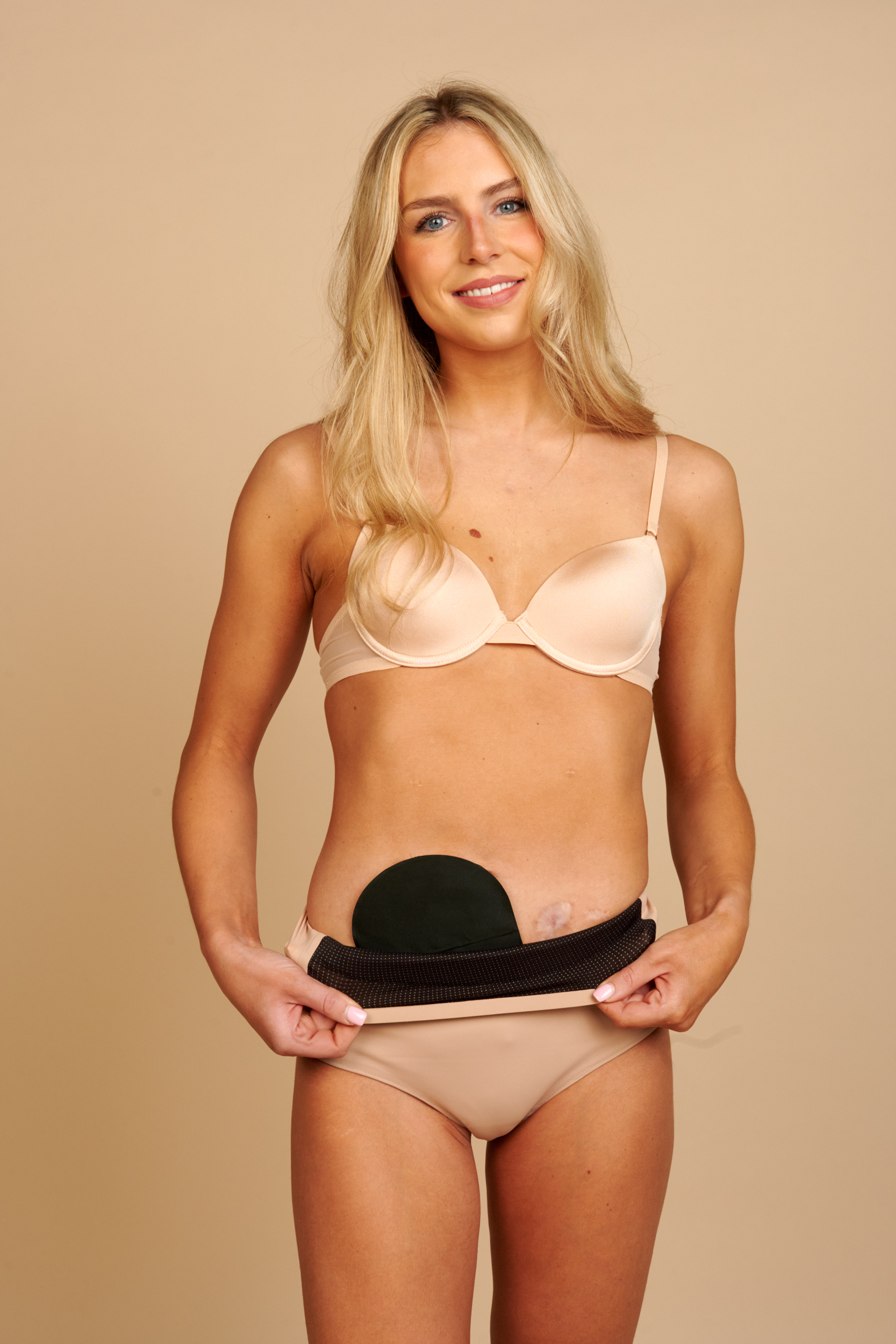
Quick grounding, because a lot of people arrive here fuzzy on the basics. A colostomy is a surgically created opening (a stoma) where part of the colon is brought to the surface of the belly, and output collects in a pouch worn on the outside. It's sometimes done as a loop colostomy (often temporary) and sometimes as an end colostomy. Compared with an ileostomy, a colostomy typically sits further along the digestive tract, so output tends to be thicker, more formed, and less frequent — which means hydration and salt are usually a bit less demanding than they are for ileostomates. If you're weighing the difference, our guide on ileostomy vs colostomy breaks it down honestly.
Here's the reassuring part: a colostomy doesn't hand you a permanent list of banned foods. In the early weeks after colostomy surgery you'll eat cautiously while everything settles, but most people gradually return to a full, varied diet. The goal of any colostomy diet menu is confidence — knowing what your body does with a given food so nothing surprises you at the worst possible moment.
The reintroduction stages: cautious → widening → normal
Instead of one rigid list, think in phases. This is where most "colostomy diet" articles go generic — they just list foods. What actually matters is timing and portion.
| Stage | What's on the plate | The mindset |
|---|---|---|
| Cautious (early weeks) | White rice, pasta, eggs, plain toast, chicken, fish, bananas, cooked carrots, smooth peanut butter | Plain, cooked, low-fiber, easy to digest. Small portions, more often. |
| Widening (a few weeks on) | Cooked veggies, softer fruits, cheese, yogurt, ground meat, well-cooked beans in small amounts | Add ONE new food at a time so you can tell what did what. |
| Normal (settled) | Salads, raw veg, whole grains, nuts, spicy food, most of your old favorites | Chew well, stay hydrated, keep a mental note of the few things that don't agree. |
The "add one new food at a time" trick is the single most useful habit ostomates share. If you throw a whole raw salad, a new curry, and a fizzy drink at your stoma on the same night, you'll never know which one caused the fireworks.
The 7-day colostomy diet menu (a widening-phase template)
This sample week sits in the "widening" zone — gentle but not boring. Adjust portions to your appetite, and swap anything you already know disagrees with you. Aim to sip water across the day and chew everything more than feels necessary.
- Day 1: Scrambled eggs + white toast · chicken and rice with cooked carrots · baked fish with mashed potato · banana.
- Day 2: Oatmeal (smooth) with banana · turkey sandwich on white bread · pasta with a light tomato sauce · yogurt.
- Day 3: Greek yogurt + soft berries · rice bowl with ground beef and zucchini · roast chicken, potatoes, green beans · crackers with smooth peanut butter.
- Day 4: Eggs + cheese omelet · tuna pasta salad · salmon with couscous and cooked spinach · applesauce.
- Day 5: Pancakes with a little maple syrup · chicken noodle soup · shepherd's pie with soft veg · cheese and crackers.
- Day 6: Smoothie (banana, yogurt, a little oats) · grilled cheese + tomato soup · stir-fried chicken with well-cooked veg and rice · rice pudding.
- Day 7 (test day): Eggs + toast · a small mixed salad with soft leaves (your "salad again" trial) · pasta bolognese · fruit of choice.
Notice Day 7. Reintroducing salad is a genuine milestone — people literally celebrate it in support groups ("I CAN EAT SALAD NOW!!!"). The move is to start small, chew leaves thoroughly, and see how you feel before going full Caesar-with-croutons.
Somewhere in your first weeks, comfortable clothing makes eating and living easier too. When your waistband isn't fighting your pouch, you actually relax at the table. Our high-waisted ostomy panties sit smoothly over the bag so a full pouch after a good meal never announces itself.
Foods worth respecting (not fearing)

A short list of foods that ostomates commonly find need extra chewing or a cautious first try — these are the usual suspects behind that "my first obstruction" story nobody wants to live. It's about awareness, not a lifetime ban.
- Chew-with-care: mushrooms, corn, popcorn, raw celery, nuts, coconut, dried fruit, fruit and veg skins.
- Gas and odor culprits (varies wildly): onions, garlic, cabbage, broccoli, beans, eggs, fizzy drinks.
- Thickeners if output is loose: white rice, bananas, plain pasta, smooth peanut butter, applesauce.
- Looseners if things are sluggish: more fluids, prune juice, softer fruits.
The golden rule around blockage-risk foods: cut small, chew to mush, and drink water alongside. Most obstructions people describe come from swallowing something fibrous in a hurry, not from the food itself being forbidden. If gas or smell is your main worry, we go deeper in our guide to managing ostomy odor.
Hydration and high output: the part most menus skip
Food is only half the story — fluids are the other half. With a colostomy, output is usually thicker and more predictable than an ileostomy, but you can still hit stretches of high output (looser, more frequent) after certain meals, a stomach bug, or a hot day. The fix is rarely drama; it's usually:
- Sipping steadily through the day rather than chugging occasionally.
- Leaning on thickening foods (rice, bananas, pasta) when output is loose.
- Adding a little salt to meals and considering an oral rehydration drink on very high-output days.
- Not skipping meals — an empty gut can actually make output more watery and gassy.
Practical bag logistics matter too. Knowing when to empty (before it's a colostomy bag full to bursting) keeps leaks and stress low — our piece on how often to empty and change your pouch pairs neatly with any eating plan.
The bigger picture: reversal, longevity, and living well
A couple of questions hover behind every food search, so let's name them. If your colostomy is temporary (common with a loop colostomy), a colostomy reversal may be on the table down the road — and eating well in the meantime keeps you strong for whatever comes. If it's permanent, here's the honest, un-dramatic truth: a colostomy is a way of living, not a countdown. People with a colostomy travel, run, swim, date, raise kids, and eat well for decades. It's a redirect, not a full stop. For the emotional side of that, our roundup of public figures living with stoma bags is a good confidence boost.
And the wardrobe follows the appetite. Once you're back to enjoying big dinners and pool days, you want clothes that move with you — which is exactly what SIIL was built for.
Eat the meal. Wear the outfit. Forget the pouch is there.
SIIL ostomy underwear is designed to sit smoothly over your bag so a full pouch after dinner never shows — comfort and confidence in one.
New to all of this? Start with our new ostomy patient guide — it walks you through the first weeks without the medical jargon.
Frequently asked questions
How long after colostomy surgery can I eat a normal diet again?
Most people move through the cautious phase over the first several weeks, then keep widening from there. There's no fixed date — go by how your body responds, adding one new food at a time. Many ostomates are back to a broad, everyday diet within a couple of months, salads included.
Can I drink coffee, alcohol, and fizzy drinks with a colostomy?
Generally yes, once you've settled. Coffee and alcohol can loosen output for some people, and fizzy drinks add gas — so introduce them one at a time and watch what happens. Plenty of ostomates enjoy all three; it's just about knowing your own thresholds.
What should I eat the night before a colostomy reversal or a procedure?
Follow whatever specific prep instructions you're given for the procedure, since those override any general plan. On ordinary days leading up, sticking to low-residue, easy-to-digest foods keeps output calm. Anything procedure-specific should come from the team handling it.
Is a colostomy diet the same as an ileostomy diet?
They overlap a lot, but not exactly. Ileostomates usually watch hydration and salt more closely because output is looser and more frequent, and blockage foods can be a bigger concern. Colostomy output is typically thicker and more predictable, so the diet tends to feel a little more forgiving.
Why is my output really watery some days and thick on others?
It usually tracks what you ate and drank, plus things like stress, heat, or a passing bug. Loose days respond well to thickening foods like rice, bananas, and pasta; thick days call for more fluids. A rough food-and-output note for a week or two makes the patterns obvious.
Do I need special supplements or a strict meal plan forever?
Most people don't need a rigid plan long term — the goal is a varied, balanced diet you actually enjoy. The 7-day menu above is a starting scaffold, not a life sentence. Once you know your body, you cook and eat much like you always did.
More from the SIIL journal

Living with an Ostomy
What counts as a high-output ileostomy or stoma, the signs of dehydration, the food and drinks hospital teams suggest, and when to…

Living with an Ostomy
What is an ileostomy? The small bowel brought out through a stoma: which part of the bowel, why it is done, loop vs end ileostomy,…

Living with an Ostomy
Colostomy surgery in plain words: why it is done, how to prepare, loop vs end colostomy, keyhole or open surgery, the hospital sta…

Welcome offer
Stories, tips and exclusive drops — once a month, never spam. Your code lands in your inbox the moment you subscribe.
By subscribing you accept our privacy policy. Unsubscribe in one click, anytime.
$19.99
$52.99
$92.99
$41.99
$44.99
$52.99
$42.99
$49.99
$41.99
$52.99
$72.99
$44.99