

Stoma travel insurance UK: what actually covers you
Quick answer: You can absolutely get travel insurance with a stoma — you just have to declare it as a pre-existing condition, along with the reason you have it. Most standard UK policies will cover a stoma at little or no extra cost; where premiums climb is usually the underlying condition, not the bag itself. Insurance covers emergencies, cancellation and lost luggage — it does not deliver your regular supplies abroad, so those still travel with you, in your hand luggage.
The first holiday after surgery is the one that lives in your head for weeks. Not the beach bit — the paperwork bit. The screening questions. The bit where you say the word "ileostomy" down the phone to a stranger in a call centre and wonder whether the price is about to double. Here's the honest version: for most people it's a five-minute conversation and a very ordinary policy. But there are a few things worth knowing before you click "buy", because the gap between what people assume travel insurance does and what it actually does is where holidays go sideways.
Key takeaways
- Declare the stoma and the reason behind it — non-disclosure is what actually voids claims.
- Insurance is for the unexpected. Your routine supplies are your job: pack double, split them between bags.
- A GHIC and a travel policy do different jobs — carry both for Europe.
- Ileostomy, colostomy, urostomy: the screening questions are near-identical. The differences show up in what you pack, not what you pay.
What "declaring your stoma" actually means
 Stoma BeltHernia support & leak prevention. Trusted by 50,000+ ostomates worldwide.Discover →
Medical screening sounds far more dramatic than it is. You'll be asked, in some order: do you have a stoma, why do you have it, have you been in hospital in the last however-many months, are you waiting for any appointments or procedures, and are you taking anything regularly. That's it. You answer honestly, the system does its thing, and you get a price.
The important part — and this is the bit people get wrong — is that the stoma is rarely the expensive item on the form. It's the reason you have it, and how recently things have been eventful, that moves the number. Someone five years down the line from a settled ileostomy often pays a completely unremarkable premium. Someone six weeks post-surgery with follow-ups still in the diary will pay more, and may find some insurers decline altogether, which is when a specialist medical travel broker earns their keep.
Two things that genuinely matter:
- Declare everything, even the boring bits. If you don't mention something and later claim for something connected to it, that's the claim gone. Insurers are not hunting for a stoma — they're hunting for undeclared history.
- Re-screen if anything changes before you fly. Bought the policy in January, had a new appointment in March? Ring them. It takes ten minutes and keeps the cover intact.
What a policy covers — and what it will never do
This is the table worth having in front of you before a first trip abroad. Cover varies by insurer, so read your own wording, but the shape of it is consistent across the UK market.
| Situation | Typically covered | Not covered — plan for it yourself |
|---|---|---|
| Emergency treatment abroad | Yes, if the condition was declared | Anything relating to a condition you didn't declare |
| Cancelling before you go | Yes, for unforeseen medical reasons | Cancelling because you've simply lost your nerve |
| Lost or delayed luggage | Yes — including reimbursement for essentials you have to buy | Someone physically sourcing your exact wafer in a Greek pharmacy |
| Routine supplies | — | Never. Your prescription supplies are a UK matter, not a holiday one |
| Repatriation home | Yes, on most decent policies | Upgrading your seat because you'd be more comfortable |
| Leak, sore skin, ordinary bad day | — | Not an insurable event. Spare kit is the answer |
That last row is the one to sit with. Travel insurance is a safety net for the rare and expensive. It does nothing at all for the ordinary Tuesday-afternoon stuff, which is exactly why the packing side of this matters as much as the policy.
GHIC versus travel insurance: you want both
A UK Global Health Insurance Card gets you state-provided care in EU countries on the same terms as a local. It's genuinely useful, it costs nothing to apply for through the official NHS route, and — crucially — there's no medical screening, so your stoma is entirely irrelevant to getting one. That's where it genuinely wins.
Where it doesn't: it isn't insurance. It won't fly you home, it won't cover a cancelled trip, it won't replace a suitcase that went to Malaga without you, and it doesn't apply everywhere. Private clinics — including the one the hotel rings first — often sit outside it entirely. Carry the card, buy the policy, and think of them as belt and braces rather than either/or.
Ileostomy, colostomy, urostomy: what actually differs
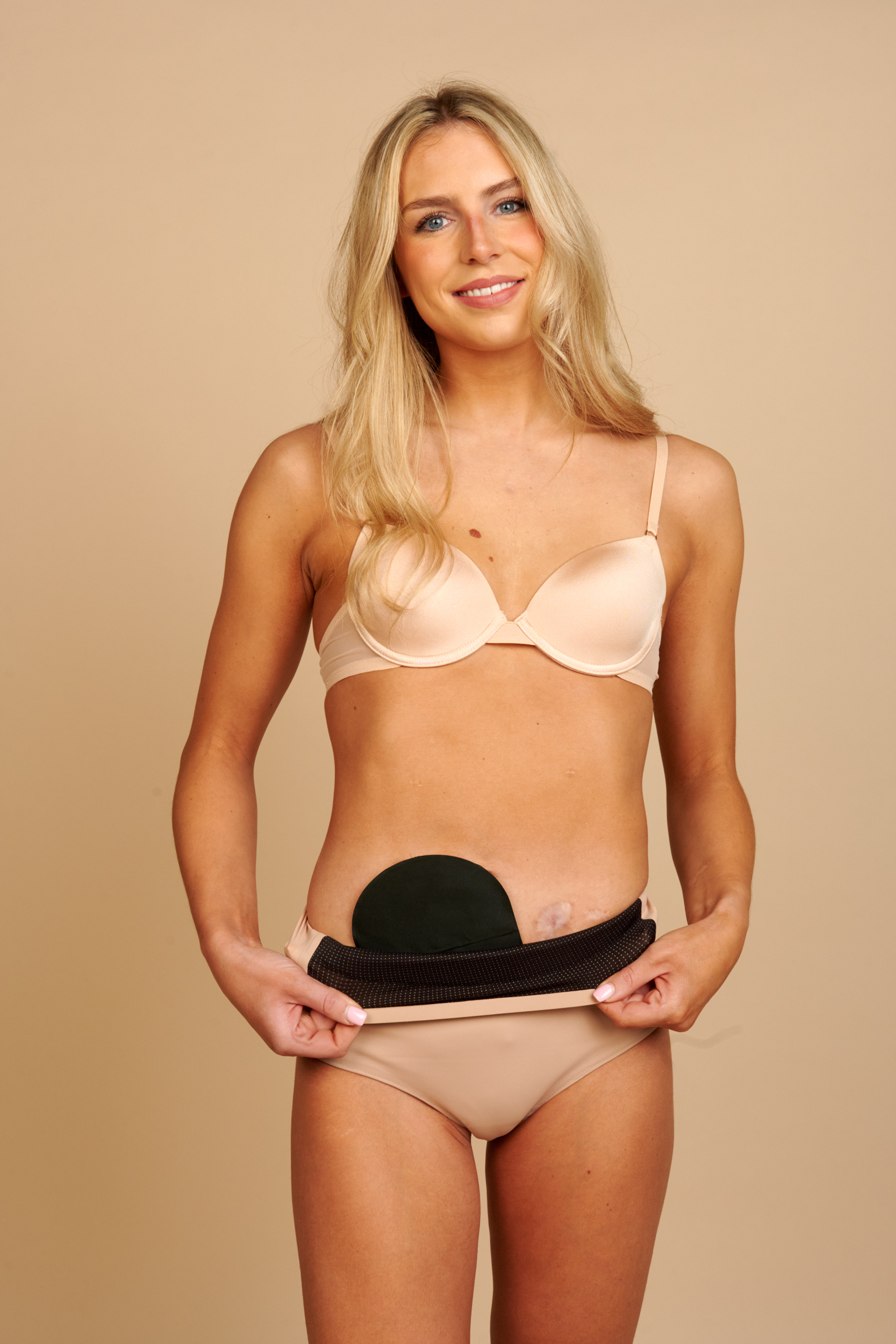
The screening questions are near enough identical whichever type you have, and insurers price on your medical history rather than the type of stoma. Where the difference shows up is in the practical planning — how much output you're managing, how quickly a hot climate catches up with you, and how much spare kit you sensibly carry. It's worth being clear-eyed about that before you book somewhere with triple-digit temperatures and no shade.
| Type | What tends to matter on holiday | Sensible planning |
|---|---|---|
| Ileostomy | Higher output, so heat and long transfers hit harder; more frequent emptying | Aisle seat, drinks on you at all times, more spare bags than you think you need |
| Colostomy | Often more predictable, but new food and a different routine can shuffle the timings | Familiar breakfast, kit in your day bag, don't gamble on the first day's excursion |
| Urostomy | Night bags and tubing add bulk to the packing; connectors matter | Night kit split across two bags, spare connector, extra straps |
Notice what isn't in that table: a reason not to go. If you're still finding your feet with any of this, our guide for new stoma patients covers the day-to-day groundwork that makes travel feel routine rather than heroic.
The airport bit insurance won't help with

Security is the part people lose sleep over and it's almost always the least eventful bit of the journey. Supplies go in your hand luggage — all of them, or at minimum enough for the whole trip if hold luggage decides to have an adventure without you. Scissors for cutting wafers are the classic sticking point at UK airports, so cut your bases at home before you leave and you've removed the argument entirely. Adhesive removers and sprays over 100ml still get pulled, so decant or buy travel sizes.
If the scanner picks something up, you'll usually be offered a hand search or a swab, and you can ask for a private room without explaining yourself in a queue. Many people carry a multilingual travel certificate from one of the UK stoma charities — a card that says, in several languages, why you're carrying what you're carrying. It's not a legal document, but it turns a conversation into a nod.
And a genuinely nice thing worth saying out loud: plenty of people come back from airports across Europe pleasantly surprised by the accessible loo — a shelf, a hook, sometimes a hand shower. It isn't something you can count on, so plan as though it won't be there. It's just as well worth knowing it sometimes is. If you want the context on rights and assistance in the UK, we've written about whether a stoma counts as a disability.
Long flights and coach transfers are where a bit of gentle support earns its keep — a stoma wrap or support belt keeps everything held close through a five-hour flight and a seatbelt that sits in exactly the wrong place, and stops you thinking about it every twenty minutes.
How to make the screening call go smoothly
Ten minutes of prep and this becomes admin rather than an ordeal. Before you ring or fill in the online form, have to hand:
- The reason for your stoma, in plain words, and roughly when surgery was.
- Dates of any hospital stays in the last year or two.
- Anything you take regularly, and anything you're waiting on.
- Your destination, exact dates, and whether a cruise is involved (cruises are usually a separate tick box and genuinely do change the price).
Then compare properly. Get a quote from a mainstream comparison site, and get one from a broker who specialises in medical travel cover — the second is not automatically dearer, and they tend to ask better questions. If a policy is annual multi-trip, check the maximum length of a single trip, because that's where people get caught out on a long summer away.
If something does go wrong abroad
Ring the insurer's emergency line before you commit to anything private, unless it's a genuine emergency. Most policies want authorisation first, and that single phone call is the difference between a settled claim and a very awkward invoice. Keep every receipt, take photos of them, and note the name of whoever you spoke to.
For lost luggage, the same logic applies: report it at the airport before you leave the terminal, get the reference number, and keep receipts for whatever you have to buy in the meantime. That's the scenario where a policy genuinely earns its money — and the scenario a packed carry-on makes far less painful in the first place.
The policy is sorted. Now the fun part.
High-waisted swimming costumes and trunks cut to sit above the bag — designed to look like swimwear first, because that's exactly what they are.
The part nobody puts in the small print
People with stomas go camping in the Lake District. They do Disneyland Paris in August with three children. They go on cruises, snorkel in Tenerife, do long-haul to see family, and come home with the same slightly smug tan as everyone else. The stories that get shared most in the community aren't about disasters — they're about the moment someone realised the holiday was just a holiday again.
What makes that possible is almost never the insurance. It's the boring preparation: double the supplies, split across two bags; a small "spare kit" that lives in the car or the day bag with a change of clothes, wipes and a roll of paper towels; a change done before you leave the hotel rather than in a beach hut; and clothes you don't have to think about. A support belt for active days, a bag cover so the bag isn't the first thing you see in swimwear, and pieces from our stoma clothing range that fit the way your clothes fitted before. If you're still tinkering with your setup for hot weather, our rundown of the best stoma bags is a sensible place to start.
Buy the cover, carry the card, pack twice what you need. Then go.
Pack for the holiday, not for the stoma.
Wraps, belts, covers and everyday pieces cut to sit where you need them — flat in a carry-on, easy on a hot day, and nothing that announces itself.
Stoma travel insurance: your questions answered
Does declaring a stoma make the whole policy more expensive, or just the medical bit?
Medical screening affects the price of the policy as a whole rather than adding a separate line item. But the stoma on its own is often a very small factor — insurers weight recent hospital stays, pending appointments and the underlying condition far more heavily. Plenty of people with a settled stoma pay the same as anyone else their age.
I've had a reversal — do I still need to declare it?
Yes. Screening questions ask about your history, not just your current situation, so surgery and any related hospital stays still go on the form even if the stoma is gone. It usually costs little or nothing to declare, and it's the thing that keeps a future claim watertight.
Is a cruise treated differently from a normal holiday?
It's usually a separate option you have to select, because treatment at sea and getting someone ashore is expensive. Tick the box — a policy bought without cruise cover can be worth very little on a ship. Otherwise, cruising with a stoma is one of the easier trips: your cabin, your bathroom, your routine, all in one place.
If my luggage is lost, will insurance pay for replacement supplies?
Most policies reimburse essential items bought because of delayed or lost baggage, within a limit and against receipts. What no policy does is find your exact product abroad — which is why supplies belong in your hand luggage, with a second stash in a different bag if you're travelling with someone.
How far in advance should I buy the policy?
When you book the trip, not when you pack. Cancellation cover only works if it's in place before the thing that causes the cancellation. Buying at the same time as the flights is the simplest habit to get into.
Do I need travel insurance for a trip within the UK?
You don't need medical cover at home, but a UK policy can still cover cancellation, lost baggage and a cottage booking that falls through. For a week camping or a weekend away, most people skip it — just take more supplies than the trip technically needs.