
 ES
ES EN
EN GB
GB DE
DE FR
FRNo products in the basket.
When someone you love gets a stoma: a partner and family guide
Quick answer: When someone you love gets a stoma, stay practical and present without taking over. Learn the bag routine they actually use, keep the bathroom stocked, talk about smell and clothes out loud, and treat intimacy, swimming and ordinary nights out as still on the table. You are not there to fix their body. You are there to keep their life looking like their life.
Here is the honest version. Someone you love has come home with a stoma bag, and you are standing in the kitchen wondering whether to hover, joke, cry, or start searching at 1am. You want to help. You also do not want to treat them like a patient in their own house. That tension is normal. This is a real-life guide for partners, family and anyone quietly dating someone with a stoma bag — written the way ostomates actually talk, not the way a leaflet talks.
The first weeks: what it actually feels like from the other side of the bed
 Stoma BeltHernia support & leak prevention. Trusted by 50,000+ ostomates worldwide.Discover →
Their world shrinks for a bit. Not forever, and not because they are dramatic — because a new bag, a new seal and a new way of using the loo take up a surprising amount of brain. They will clock every gurgle. They will disappear to the bathroom “just to check”. You will hear the clip. You will see spare bags on the bedside table. If you have never lived with a stoma before, that can feel bigger than it is.
What helps in week one is boring, and that is the point. Put a small lidded bin in the bathroom with nappy sacks beside it. Keep kitchen roll, spare bags, adhesive remover wipes and a dry flannel where they can reach them at 3am without turning the big light on. You are the person who makes tea, answers the door, and does not flinch when the bag rustles under a jumper.
Do not turn the house into a shared science project. Do not narrate every output. Do not say “at least they caught it early” or “look on the bright side”. They already know the bright side. What they need is the same person they had before, plus a slightly better-stocked bathroom.
For the first weeks
A calm, practical read you can send them — or keep for yourself
Bag changes, getting dressed, and the stuff nobody thinks to mention until Thursday night. Treat it as a genuine gift, not homework.
Caring for someone with a stoma without taking over
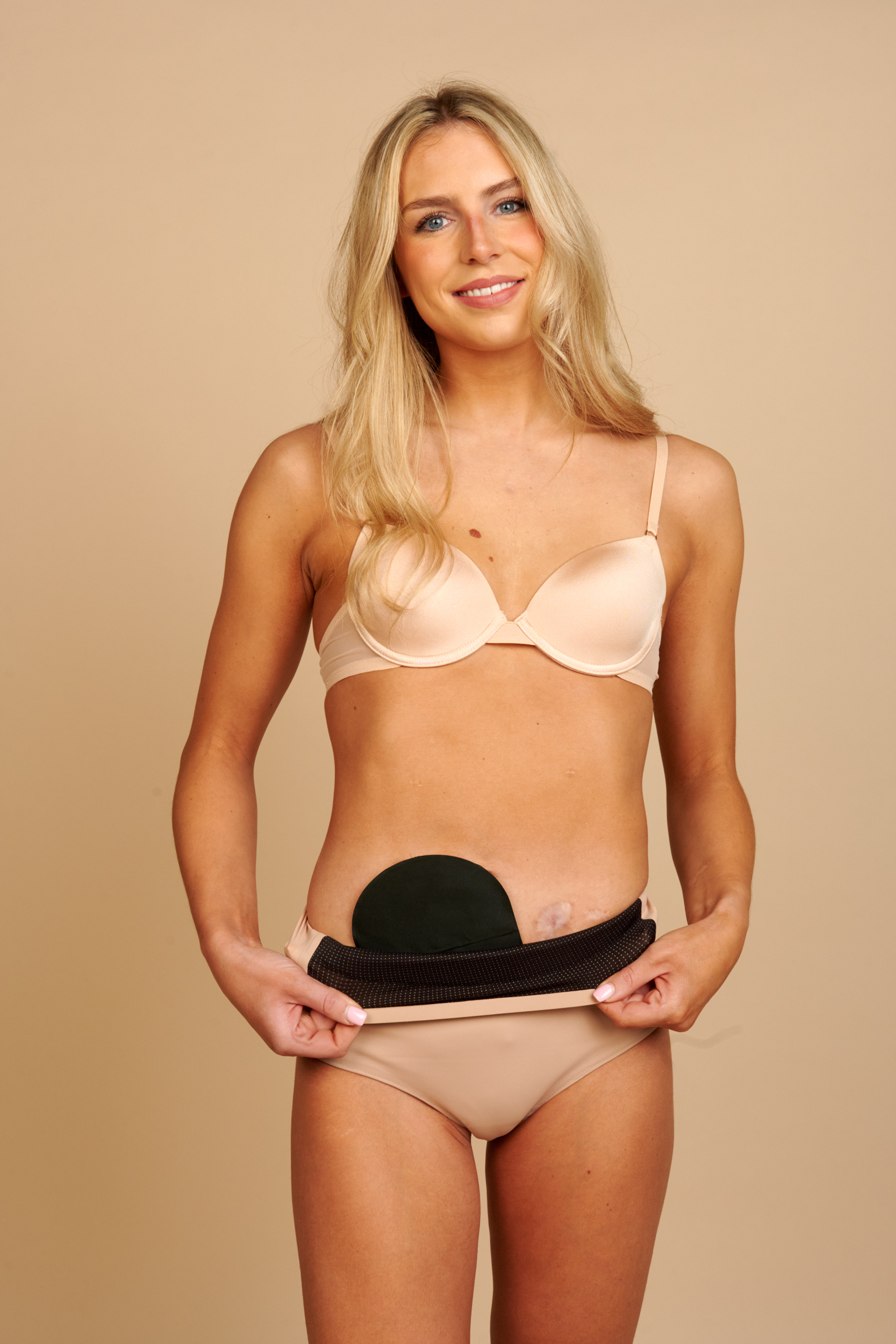
Caring for someone with a stoma is mostly logistics and tone. Taking the bags out of the delivery box and lining them up by the sink can feel like love to you and like a takeover to them. Ask once: “Do you want me in the bathroom, or shall I stay out unless you call?” Then honour the answer. Some people want a witness the first few changes. Plenty want the door shut and a podcast on.
If they do want a second pair of hands, be useful rather than supervisory. Hold the bag, pass the wipe, give the adhesive a moment to settle. Do not critique how they stick it. Which bag they use is their call — if they later want to compare options, that is their project, not a family committee.
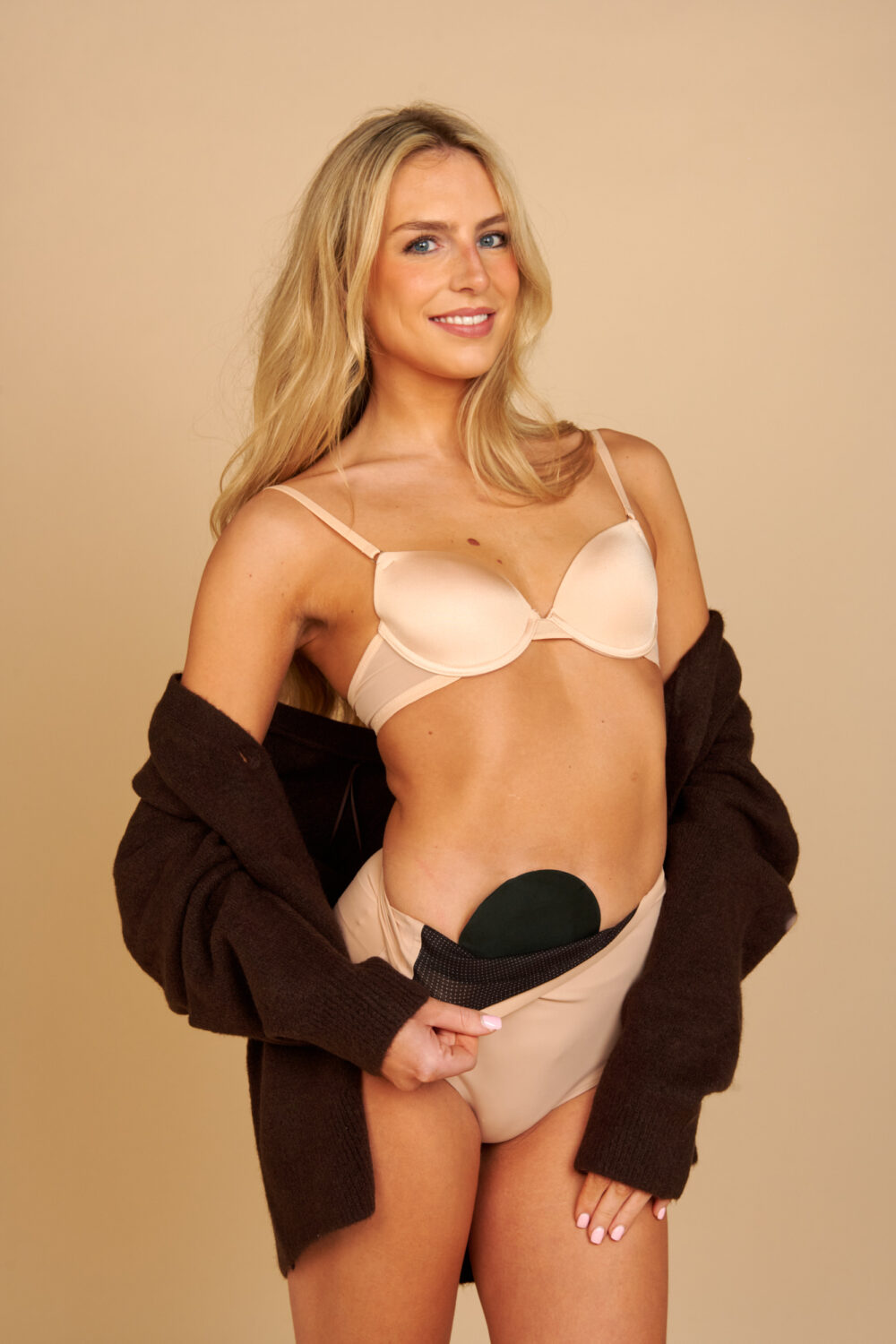
The same rule applies to clothes. Buying them a stack of high-waisted bits without asking can land as “I can see the bag”. Asking “want me to pick up some higher-waist knickers while I am at M&S?” lands as backup. Ordinary high-street high-waist pants genuinely work for a lot of people, especially at home. Specialist stoma clothing tends to win when they want a pouch held still under a dress or a shirt that has to survive a long day — that is the honest split, not a sales pitch.
| What you are trying to do | What tends to help | What tends to land badly |
|---|---|---|
| Help with the bag | Ask once, then follow. Hold things. Keep supplies topped up. | Taking over the change “to do it properly”. Commenting on output. |
| Talk about smell | “Shall I crack a window?” said neutrally. Keep a spray in the bathroom without a speech. | Pulling a face. Pretending you cannot smell anything when they clearly can. |
| Protect intimacy | Empty first, lights they choose, a wrap or high-waisted pants so the bag is not the only thing in the room. | Waiting for them to “feel ready” indefinitely. Making the bag a third person in bed. |
| Go out again | A spare kit in the glove box. A restaurant with a proper loo. Clothes they already like. | Cancelling plans “to be safe”. Choosing venues as if they are fragile. |
| Tell other people | Their story, their timing. A one-line version if they want you to field nosy relatives. | Updating the family WhatsApp group. Explaining their abdomen at Sunday lunch. |
The smell conversation you both keep putting off
Every household living with a stoma bag gets to smell eventually, because pretending otherwise is exhausting. Bags can have a faint plastic note, especially a fresh one. Output has a smell — of course it does. Filters can wet out. None of this means anyone has done anything wrong. It means you share a bathroom.
Addressing odour works best when it is practical, not moral. Keep a window habit. Empty on a schedule that suits their day, not your nose. Some people put a few drops of ostomy deodorant in the bag; some prefer a bathroom spray; some just change a bit sooner. You need a shared, slightly boring system: nappy sacks, a lidded bin, a spare bag in every washbag, and permission to say “I can smell the bag, want me to grab a new one?” the same way you would mention burnt toast.
If you are the partner who notices first, do not wait until resentment does the talking. If you are the person with the stoma who is braced for disgust, say so. “I am worried you can smell it” is a kinder sentence than three weeks of going to bed angry. Once it is allowed to be an ordinary topic, most houses find a rhythm.
Intimacy, dating, and the “do they still fancy me?” question
If you are already together, the fear is rarely the bag. It is whether desire survived hospital. Plenty of couples have slightly awkward first nights, and then the bag becomes furniture. Empty beforehand. A soft wrap or high-waisted pants keeps things from swinging about. Humour helps if it is their humour, not a joke at the stoma’s expense. If they want the lights lower for a while, that is taste, not tragedy.

A stoma belt is one of those quiet gifts that says you thought about their Tuesday, not just the hospital — useful under clothes, useful in bed if they want the bag held still, and easy to leave in a drawer if they do not.
Dating someone with a stoma bag is a different conversation because you do not yet have a shared bathroom. There is no single “right time” to mention it. Some people say it when they would mention any other practical fact about their body. Others wait until clothes are likely to come off. What helps is not making it a speech. “I wear a stoma bag — it is not a big production, I just empty it first” is enough. Curiosity is fine. A face full of pity is not. If you are the one with the bag, none of a demo on night three is a complete answer.
If you are the one with the stoma and wondering when to say it, our guide to dating with a stoma walks through the three ways people handle it, from telling early to a simple “not there” on a casual night.
Parents, take a different lane. If the person with the stoma is your adult child, do not take over their bag changes unless they ask. If they are your partner and you also have children at home, keep the language simple: “Dad has a bag on his tummy that collects poo, and we empty it in the loo.” Kids usually move on faster than the adults. The school-gate version can be one sentence, or no sentence at all.
Clothes, swimming costumes and getting back out of the house

Confidence after a stoma is often a wardrobe problem dressed up as an emotional one. Low-rise jeans sit on the bag. A clingy dress shows the outline. A cheap waistband rolls and then everyone is in a bad mood before you have left the house. The fix is not “just be grateful you are here”. The fix is a higher waist, a bit of hold, and clothes they would have worn anyway.
Start with what they already own. High-waisted knickers from the high street. A longer top. A wrap they can throw on for the first restaurant if they want the bag quiet against the body — stoma wraps exist for that in-between stage, when a belt feels like too much kit and a bare bag feels like too little. Bag covers are the small vanity item people underestimate: fabric instead of plastic against the skin, and something that looks chosen rather than issued.
Swimming is the thing families cancel first, and it is one of the least necessary cancellations. A higher-waist swimming costume or trunks, emptied beforehand, a spare bag in the locker, and they can do the lido, the holiday pool, the sea. Purpose-made stoma swimwear earns its place when they want a pocket and a waist that does not fight the bag; a well-cut high-street costume still wins for plenty of people on a quiet afternoon. Pack the same way you pack sun cream: not as a drama, as kit.
What you can still do together is the longer list. Sunday lunch. A wedding, with a spare bag in your pocket. The cinema. A night in a Premier Inn. Cornwall, Center Parcs, a mate’s barbecue. Sex. Work dos. The school run in a fitted coat. They may want a quieter week after a leak, the same way anyone wants a quieter week after a stomach bug. That is a pause, not a new personality. If a reversal is even on the cards, do not put life on hold until then.
Want the clothes to do some of the heavy lifting?
High-waisted pieces designed around a stoma bag — underwear, layers, the quiet hold — so they can get dressed like themselves, not like a patient.
Questions families ask next
Should I offer to empty or change their bag, or wait to be asked?
Ask once, clearly, then follow the answer. Some people want a second pair of hands for the first week and never again. Some never want anyone else in the bathroom. Offering is care. Repeating the offer every evening is pressure. If they say no, keep the supplies stocked and stay out unless they call.
How long until a weekend away actually feels doable?
There is no official timetable. Plenty of people manage a night in a hotel once they can change a bag without thinking. Pack a washbag with extras, choose a room with a decent bathroom, and treat the first trip as a test run rather than a performance. A short break still counts as a real holiday, even if more surgery is later on the cards.
Is having a stoma bag considered a disability in the UK?
Families often ask this when work, travel or paperwork appears. It is not a label you should apply for them, and it is not automatic just because there is a bag. For a plain-English walk-through rather than guesswork, read our guide on whether a stoma bag is considered a disability in the UK, and let them decide how much of that language they actually want to use.
What about shapewear, belts and tight jeans — will those still work?
Tight waistbands that sit on the stoma are the usual villain, not denim itself. Higher-rise jeans, a belt worn above or below the bag rather than across it, and skipping compressive shapewear over the pouch is the common workaround. Some people go back to their old skinny jeans with a longer top. Others never do, and that is taste, not failure.
Is dating someone who has had a stoma for years different from supporting a partner just out of hospital?
Yes. A new stoma is a household adjustment: bins, night changes, clothes that suddenly do not work. Someone who has worn a bag for years has already built their system. Your job then is closer to ordinary dating — believe them when they say it is not a big deal, do not make them educate you from scratch every time, and do not treat a settled life as a tragedy you arrived too late to prevent.
What do we do with used bags in a shared flat?
Empty into the loo, wrap in a nappy sack, lidded bathroom bin, empty that bin often. That is the whole system for most shared houses. A scented candle is optional and, honestly, some people find it more conspicuous than the bag. If housemates need a one-line explanation, “used bags go in that bin, please leave it” is enough.
Keep reading
More from the SIIL journal

Living with an Ostomy
Retracted Stoma: What It Is, Why Your Bag Keeps Leaking and What Helps (UK)
A retracted stoma sits level with or below the skin, so bags leak. Causes, how convex flanges, seals and a belt help, and when to …
7 min read

Living with an Ostomy
Barbie Bum Surgery UK: Recovery, Sitting Down and Life With a Permanent Stoma
Barbie bum surgery explained for the UK: what the operation is, why it is done, how the wound heals, sitting down, getting back to…
9 min read

Living with an Ostomy
Stoma Travel Bag: What to Pack in Your Kit (UK)
What goes in a stoma travel bag: the UK kit checklist, how many bags to take, NHS supplies before you go, RADAR key, travel certif…
16 min read
Welcome offer
Join the SIIL family.
Get 20% off your first order.
Stories, tips and exclusive drops — once a month, never spam. Your code lands in your inbox the moment you subscribe.
By subscribing you accept our privacy policy. Unsubscribe in one click, anytime.
Welcome — check your inbox for the code.
£72.99
£39.99
£41.99
£44.99
£92.99
£72.99
£52.99
£41.99
£41.99
£72.99
£52.99
£39.99