

Preparing for Stoma Surgery: What to Expect + a Practical Checklist (UK)
Quick answer: Preparing for stoma surgery is mostly about sorting the practical bits early and easing your head into it. Pack a comfy hospital bag, arrange help at home for the first couple of weeks, get loose high-waisted clothing ready, and write down your questions for the stoma nurse. It's normal to feel scared — thousands of us have stood exactly where you are, and the honest version is that life carries on, often better than before.
If you're reading this with a surgery date circled on the calendar, first: breathe. Whether the stoma was your only option or a choice you weighed up (the classic "j-pouch vs stoma, is it worth it?" spiral so many of us know), the fear you're feeling right now is completely normal. The good news nobody tells you clearly enough beforehand: most people say the biggest surprise afterwards was how much better they felt, not worse. Let's get you sorted — practically and mentally — so the day itself feels like something you've prepared for rather than something happening to you.
What actually happens in the run-up
 Stoma BeltHernia support & leak prevention. Trusted by 50,000+ ostomates worldwide.Discover →
Before the operation you'll usually have a pre-op assessment appointment — bloods, a general once-over, and the practical logistics. The part worth grabbing with both hands is the stoma nurse (your specialist stoma care nurse, sometimes called an SCN on the ward). They'll often mark the spot on your abdomen where the stoma will sit, sitting you up, lying you down, checking where waistbands land. This "stoma siting" matters more than people realise: a well-placed stoma is easier to manage and far kinder to your wardrobe later, so speak up if you have concerns about where you like your trousers to sit.
Use that appointment. Write your questions down beforehand, because nerves have a habit of wiping your memory blank the moment someone in scrubs walks in. Good ones to ask:
- Will this be permanent or is a reversal on the cards later?
- Where exactly will the stoma be sited, and can we check it against my usual waistband?
- Which pouch brand will I start with (Coloplast, Hollister, ConvaTec)?
- How long is the expected hospital stay, and what's recovery like week by week?
- Who do I contact once I'm home if something doesn't look right?
If you want to properly understand what a stoma is before the day, our plain-English explainer on what a stoma actually is is a calm place to start — no jargon, no scare tactics.
Your free companion for day one and beyond
The New Stoma Patient Guide — everything nobody quite explains before surgery
From the first pouch change to eating, showering and getting back out there — written by people who've done it, for people about to.
Your hospital bag: the honest packing list
Hospitals give you a list, but ostomates know the extras that make the difference. Pack a bag you can carry easily and don't overthink it — you can top up later. Here's the version worth having.
| What to pack | Why it earns its place |
|---|---|
| Loose, high-waisted knickers or boxers | Sit comfortably above the stoma, no waistband pressing on a fresh site |
| Baggy joggers or a soft dress | Nothing tight on your tummy while everything settles |
| A couple of button-up tops | Easier than pulling things over your head early on |
| Slip-on shoes or slippers | Bending down is not your friend for a while |
| Phone charger with a long cable | Sockets are never where you need them |
| Lip balm, dry shampoo, own toiletries | Small comforts do a lot for morale |
| Notebook and pen | Jot down what the stoma nurse teaches you |
| Something to do | Downloaded shows, a book, headphones |
One thing people wish they'd known: you'll be shown how to change your own pouch before you go home, and it feels clumsy the first time for everyone. That's the point of doing it while a nurse is a metre away. You are not expected to be good at it yet.
Sorting home before you go in

The recovery weeks are far smoother if home is ready for a slower version of you. Lifting is off the table for a while, and getting up from low sofas is genuinely annoying at first, so a little organising beforehand pays off hugely. Do the boring jobs now, while you feel well.
- Stock the freezer. Easy meals for the first fortnight when you won't feel like cooking or lugging shopping.
- Set up a "station." Keep spare pouches, wipes, disposal bags and a mirror in one accessible spot, ideally at waist height so you're not crouching.
- Line up a helping hand. Someone for the first week or two — school runs, shopping, the wheelie bin. Ask now, not on day one.
- Sort your seating. Firm chairs with arms are far easier to get out of than a squashy sofa.
- Get comfy clothing in. Nothing that digs into your waistline. High-waisted and soft is the whole brief.
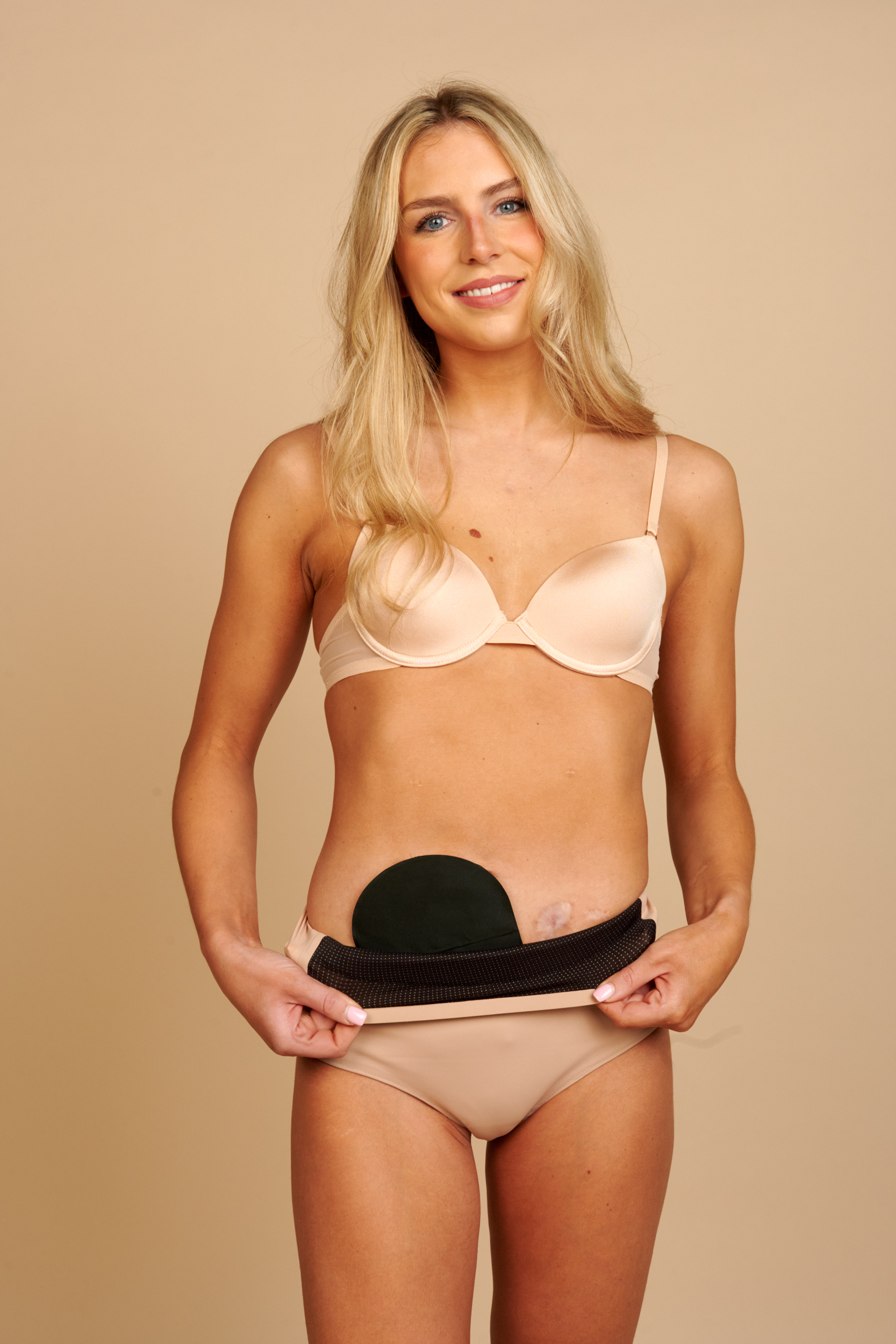
This is where a bit of forward planning on clothing genuinely helps. Waistbands that press on a healing tummy are the number-one gripe of the early weeks. A gentle stoma support wrap and some proper high-waisted stoma clothing means you can dress like yourself instead of living in the same two baggy items.
Kit yourself out before the date, not after.
Soft, high-waisted pieces that sit above the stoma and support without squashing — so recovery feels like you, not like a patient.
How the surgery differs by type — the quick version
You may hear "colostomy," "ileostomy" or "urostomy" thrown around, and the day itself is broadly similar. The differences that actually matter to you are in the day-to-day afterwards, not the fear of the operation. Here's the honest at-a-glance.
| Type | What it means for you day-to-day | Reversal possible? |
|---|---|---|
| Colostomy | Often firmer output, sometimes less frequent emptying | Sometimes, depending on your situation |
| Ileostomy | More liquid output, staying hydrated matters more | Sometimes — the "temporary" loop kind often is |
| Urostomy | Drains urine; usually a night bag for sleeping | Usually permanent |
If you're weighing a temporary stoma against a j-pouch — the exact dilemma so many people wrestle with before surgery — that's a conversation for your surgical team, who know your specifics. What we can honestly say is that plenty of people who dreaded a stoma later described it as the thing that gave them their life back. If a reversal is on your horizon, our piece on life after a stoma reversal lays out what that road looks like.
The mental prep nobody schedules for you
Being scared before surgery isn't a sign you're not coping — it's a sign you're human and paying attention. The "is it worth it?" wobble hits almost everyone. A few things that genuinely help settle the head:
- Talk to someone who's actually got one. Online stoma communities are full of people who were exactly this nervous last year and are now swimming, dating and travelling. Real stories beat worst-case imagination every time.
- Name the specific fear. "Will it smell?" "Will people know?" "Will I ever wear my clothes again?" Written down, most of them have straightforward, reassuring answers.
- Reframe the timeline. The hard bit is a few weeks, not forever. The clumsy first pouch changes become muscle memory faster than you'd believe.
- Plan one thing to look forward to. A trip, a meal out, a beach day. Having a "when I'm recovered, I'm doing X" gives the whole thing a direction.
And the wardrobe worry is more real than people admit — but it's also one of the easiest to solve. You can still wear fitted dresses, go swimming, wear a proper swimming costume or trunks. Our stoma swimwear exists precisely so that beach day stays on the list. A stoma genuinely doesn't put your life on hold.
Your full pre-surgery checklist
- ☐ Written list of questions for the stoma nurse
- ☐ Stoma site checked against your usual waistband
- ☐ Hospital bag packed (see the list above)
- ☐ Freezer stocked / meals sorted for a fortnight
- ☐ Someone lined up to help week one and two
- ☐ Supplies station set up at home
- ☐ Comfortable high-waisted clothing ready
- ☐ A support wrap or two for gentle security
- ☐ Contact number for your stoma nurse saved in your phone
- ☐ One thing to look forward to on the other side
If you're wondering how a stoma sits alongside work, benefits and daily rights, our honest read on whether a stoma is considered a disability in the UK covers it without the runaround.
Frequently asked questions
How long before surgery should I start getting things ready?
If you can, sort the practical bits — hospital bag, freezer meals, comfortable clothing, help at home — a week or two before your date, while you still feel well and clear-headed. Leaving it to the last day just adds stress you don't need.
Will I be able to change my own pouch before I leave hospital?
Yes — your stoma nurse will teach you and watch you do it before you're discharged. It feels awkward the first few times for absolutely everyone, so don't worry if it's fiddly. That clumsiness fades within a couple of weeks at home.
Can I still eat normally after stoma surgery?
In the early days you'll likely be steered towards simple, easy-to-digest foods while everything settles, then you gradually reintroduce your usual meals. Most people get back to eating a wide range of things — you just learn which foods your own stoma prefers. Your stoma nurse or dietitian will guide the specifics.
How soon can I get back to swimming or the gym?
Gentle movement like walking is encouraged early, but proper exercise, heavy lifting and swimming come later once you've healed — usually a matter of weeks, guided by your team. Plenty of ostomates swim, run and lift happily afterwards, so it's a "not yet," not a "never."
What if my stoma looks or behaves differently to what I expected right after surgery?
A brand-new stoma is often swollen and settles over the first few weeks, so it may look larger at first. If anything genuinely worries you once you're home — the colour, the skin around it, or how it's working — that's exactly what your stoma nurse contact number is for. Never sit on a concern.
Is it normal to feel this scared beforehand?
Completely. The pre-op nerves and the "is it worth it?" question hit nearly everyone. The most common thing people say afterwards is that the reality was far less frightening than the wait — and that connecting with others who've been through it made the biggest difference.