

Can You Swim with a Stoma?
Quick answer: Yes — you can swim with a stoma. A modern stoma bag copes with water and stays sealed in the pool, the sea and the hot tub. Empty it just before you get in, give the baseplate at least an hour to bond, cover the filter if you have one, and wear a high-waisted swimming costume, swimming trunks or a snug swim belt so the bag sits flat. Nobody in the water will have a clue unless you tell them.
If you have recently come home with a stoma, swimming is probably one of the first things you quietly wondered about — and quite possibly one of the things you have been putting off. Hotel pools. The leisure centre. A week in Cornwall. School swimming with the children. Here is the honest version: the water is not the problem. The worry is. Once you understand what actually happens to a stoma bag in water, and you have a simple routine, getting in becomes ordinary again. If you are still getting your head around what a stoma is in the first place, start there and come back — this guide assumes the bag is already part of your day.
- Yes, you can swim — chlorinated pools, salt water, lidos, hot tubs and waterparks included.
- The routine that works: bonded baseplate, empty bag, filter covered, something snug over the top.
- High-waisted swimwear or a swim belt holds the bag flat; that is the real confidence upgrade.
- Pack a spare in a zip pouch and get in. You will almost never need it — and that is the point.
What actually happens to a stoma bag in water
 Stoma BeltHernia support & leak prevention. Trusted by 50,000+ ostomates worldwide.Discover →
Stoma bags cope with showers, baths and swimming. The adhesive baseplate (you may hear it called the flange or wafer) is meant to stay stuck in chlorinated leisure-centre water and in salt water. Water does not go into the bag. A properly stuck-down bag does not float off your body, however vivid that picture is at 2am.
What long sessions in the water can do is soften the edges of the adhesive slightly. That is the whole game: give the seal time to bond before you get in, and keep the bag still against your body so water is not constantly tugging at those edges. Two other details matter more than people admit.
First, the charcoal filter. If your bag has one, cover it with the little filter stickers that come in the box. A waterlogged filter can let water creep in and it stops venting properly afterwards, which is how you end up with a ballooning bag on the sun lounger. Second, barrier strips. Picture-framing the baseplate with flange extenders or half-moon strips is optional — plenty of swimmers never bother — but it can buy peace of mind for a full day at the beach. A heads-up from the community, though: some barrier strips soak up water, go white and turn mushy. If that has happened to you, you are not doing it wrong. Skip them for swimming and rely on a well-bonded baseplate plus a snug layer over the top, or try a different waterproof tape. Neither camp is wrong.
Start here
The new-stoma guide we wish someone had handed us
First weeks, first clothes, first time back in the water — the practical version, written like a friend. No lectures, no scare stories.
The pre-swim routine that actually works
You do not need a military operation. You need seven small habits, most of which take seconds.
- Put the bag on at least an hour before you swim. Adhesive bonds with warmth and time. A baseplate applied five minutes before you jump in has not fully settled; one applied that morning — or the night before — is a different story.
- Empty just before you get in. A nearly empty bag sits flat, weighs nothing and disappears under swimwear. This is the single most useful thing you can do, every time.
- Check the edges of the seal. Run a finger round the baseplate. If an edge is lifting, change it before you swim, not afterwards on a windy beach.
- Cover the filter. Stickers on. Leave them on until you are dry and dressed again.
- Decide on extra tape — or don’t. Flange extenders, barrier strips or waterproof tape if you like the insurance. Skip them if they have let you down in the water before.
- Pack a dry-change kit. Spare bag, wipes, a disposal bag, in a small zip pouch in your swim bag. You will almost never need it. Having it there changes how you feel on the poolside.
- Wear something that holds the bag flat. High-waisted swimming costume, supportive trunks, a swim belt or a wrap. This is the confidence upgrade. Everything else is supporting cast.
Pool, sea, hot tub or waterpark — does it change anything?
The bag does not much care which water you choose. Your afternoon might.
- Leisure-centre pools and lidos. Chlorine at normal swimming exposure does not wreck stoma bags or adhesive. Rinse when you shower off, like everyone else. If you are doing lengths, empty first and wear a supportive layer so the bag is not swinging on the turn.
- The sea — Cornwall to the Costas. Salt water is fine. Sand is the real nuisance. Rinse round the baseplate edges when you shower off and pat dry; grit under a lifting edge is how a good seal becomes a beach-day problem.
- Hot tubs. Prolonged heat softens adhesive faster than cool water, so keep sessions moderate and check the seal when you get out. Same honest rule as a long bath.
- Waterparks, diving and slides. Go for it. Impact and drag are what shift a bag, not the soaking. This is exactly where a firm inner layer or a stoma belt earns its keep.
- Wild swimming. Same waterproofing rules. Cold British water does not bother the bag. Getting changed behind a towel on a riverbank is the bit that wants a spare and a plan, not a different pouch.
After any of the above: towel off, peel the filter sticker when you are dry, empty if you need to, and do not sit around in a wet bag against your skin all afternoon if you can help it. That is comfort, not a crisis.
What to wear so the bag stays put — and nobody sees it

Here is the honest version of the clothing question. You can swim in ordinary high-street swimming costumes or trunks if the waist sits above the stoma and the fabric is firm enough to keep the bag from floating out. Plenty of people do exactly that, especially with a belt underneath. Specialist stoma swimwear exists because the details are annoying to hunt down on a regular rail: a waistband that clears the stoma instead of cutting across it, an inner panel that holds the bag flat, opaque fabric that does not turn see-through when wet, and a cut that looks like it came from a fashion shop rather than a catalogue.
Women’s swimming costumes use ruching and panelling that camouflage without shouting about it. Men’s swimming trunks do the same job with a supportive inner band. The fashion-first route is pieces you would wear even if nobody knew there was a bag underneath — the same thinking behind the rest of SIIL’s stoma clothing.
A swim-friendly belt or a stoma wrap is the other option, and for some people it is the better one. Wear it under ordinary board shorts or a bikini and skip specialist swimwear altogether. It stops the bag swinging when it is wet and protects the seal in rough sea or on a long swim. A fabric stoma bag cover is a smaller, quieter upgrade: it puts a stop to that cold wet plastic against your skin when you climb out, and it dries quickly. Tiny thing. Surprisingly big difference on a beach day.
Ready to stop overthinking the outfit? Have a look at SIIL’s high-waisted stoma swimwear for women and men — cut to hold the bag flat, in fabrics that look like summer clothes, because that is what they are.
Colostomy, ileostomy or urostomy — the swimming differences in one place
The waterproofing rules above apply to every stoma type. The small differences are about output and emptying, not about whether you are “allowed” in. You are.
| Colostomy | Ileostomy | Urostomy | |
|---|---|---|---|
| Before you get in | Closed bag? Change or empty so it sits flat. Mini bags are popular for swimming days. | Empty the drainable bag just before you walk to the water. | Empty well. If you use a bung or cap, check it is secure. |
| How the bag behaves | Often the quietest in the water — output tends to be less frequent. | Can be more active. Keep sessions realistic and empty again when you get out. | Urine continues at its usual pace. A well-emptied bag still sits flat for a normal swim. |
| Filter sticker | Cover it if your bag has a charcoal filter. | Cover it — ileostomy bags balloon fast with a waterlogged filter. | Many urostomy bags have no charcoal filter. Still check yours and cover it if it does. |
| What helps most | A high waist and a nearly empty bag. That is often enough. | A supportive inner layer or belt, so a more active bag cannot swing. | Same supportive layer. Drain as soon as you are out, before you sit in the sun. |
None of this is a restriction list. It is so you can pick the version that matches your bag and then get on with the swim.
Changing rooms, holidays, and whether anyone actually notices
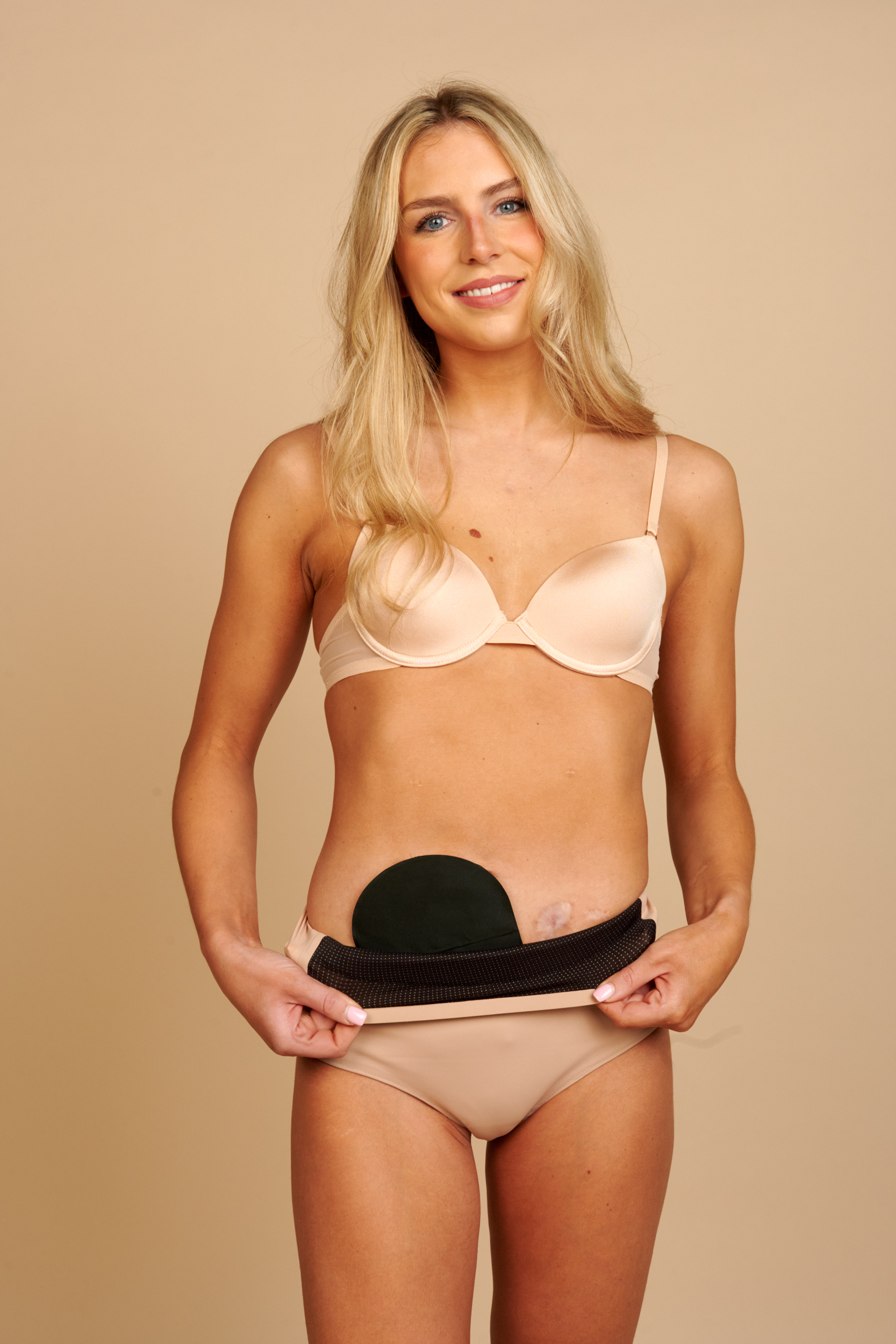
The etiquette questions everyone googles and nobody asks out loud: will people stare in the changing room? Will the bag show in the pool? What do I say if someone asks?
A high-waisted costume or trunks plus an empty bag is, in practice, invisible in the water. Wet fabric clings, which is why opacity and a holding layer matter more than a print. In the changing room, a cubicle is your friend if you want one; a quick empty at the loo before you swim is ordinary, not a performance. If someone clocks a bag and asks, a short honest line — “it’s a stoma bag, it’s fine in the water” — ends it. Most people are more awkward than curious, and then they move on.
Holidays are where this gets good again. A week by a hotel pool is not a special category of swimming. Same checklist, same spare in the suitcase, same high waist. You can eat, drink, sit in the sun and go in and out of the water like the rest of your group. Output does not stop because you are on holiday, which is why emptying before each swim stays non-negotiable — but that was already true at your local baths. The win is not that you have “overcome” anything. The win is that swimming becomes boring again, in the best way.
The bag can handle the water. Your swimwear should handle the rest.
High-waisted, fast-dry stoma swimwear for women and men — cut to hold the bag flat and look like it came from a fashion rail, because it did.
Swimming with a stoma: quick answers
Can I swim in an ordinary high-street swimming costume, or do I need specialist kit?
You can swim in ordinary costumes or trunks if the waist sits above the stoma and the fabric is firm and opaque when wet. A belt or wrap underneath often makes high-street pieces work perfectly well. Specialist stoma swimwear is worth it when you want the inner holding layer and the waist height done for you, not because ordinary swimwear is forbidden.
How long after I put a new bag on should I wait before getting in?
Give the baseplate at least an hour. Warmth and time are what bond the adhesive. A bag you have been wearing since the morning, or overnight, is the most relaxed option. A change on the poolside five minutes before you swim is how edges lift.
Do I have to change my stoma bag after every swim?
No. If the seal is still sound, dry the skin around it, take the filter sticker off once you are dry, and carry on. Change if an edge has lifted, if sand has got underneath, or if you would have changed anyway. A swim is not an automatic bag change.
Will the bag fill up or balloon while I am in the water?
Output continues at its usual pace — water does not switch it off — which is why you empty first. Ballooning is usually a waterlogged filter, not the bag magically filling from the pool. Cover the filter, keep the session to a normal swim, and empty again when you get out if you need to.
What about children’s swimming lessons and the school pool?
Same rules: empty first, bonded bag, filter covered, a snug swimming costume or trunks. A spare in a labelled wash bag in the school swim kit takes the edge off for everyone. Teachers do not need a lecture; a one-line note that the bag is waterproof and the child can join in is enough.
Is a stoma bag cover the same as a swim belt?
No. A bag cover is a fabric sleeve over the pouch — comfort against the skin, less rustle, less cold plastic when you get out. A swim belt or wrap is a supportive band that holds the whole bag still against your body. Plenty of people wear both; plenty wear one or the other. They solve different jobs.