
 ES
ES EN
EN GB
GB DE
DE FR
FRNo products in the basket.
Stoma skin barriers, rings and powders explained
Quick answer: A stoma skin barrier is the sticky base that sits on your tummy, keeps output off the skin around the stoma, and holds the bag on. Rings, paste and powder are extras for dips, creases or slightly weepy skin — not a different system. Most people settle on a small, boring kit that works for their body rather than chasing one magic product. Get the seal right and clothes, swimming and a long day out become ordinary again.
If your kitchen drawer looks like a chemist’s back room — rings in three thicknesses, a tub of powder you are not quite sure about, paste gone a bit stiff — you are in ordinary company. Nobody hands you a clear map on day one. You try things, you leak once at the worst moment, you drop what did not work. This is stoma skin barriers without the brochure: what they are, what the extras actually do, and how people in the UK build a kit that survives a real Tuesday.
What a stoma skin barrier actually is
 Stoma BeltHernia support & leak prevention. Trusted by 50,000+ ostomates worldwide.Discover →
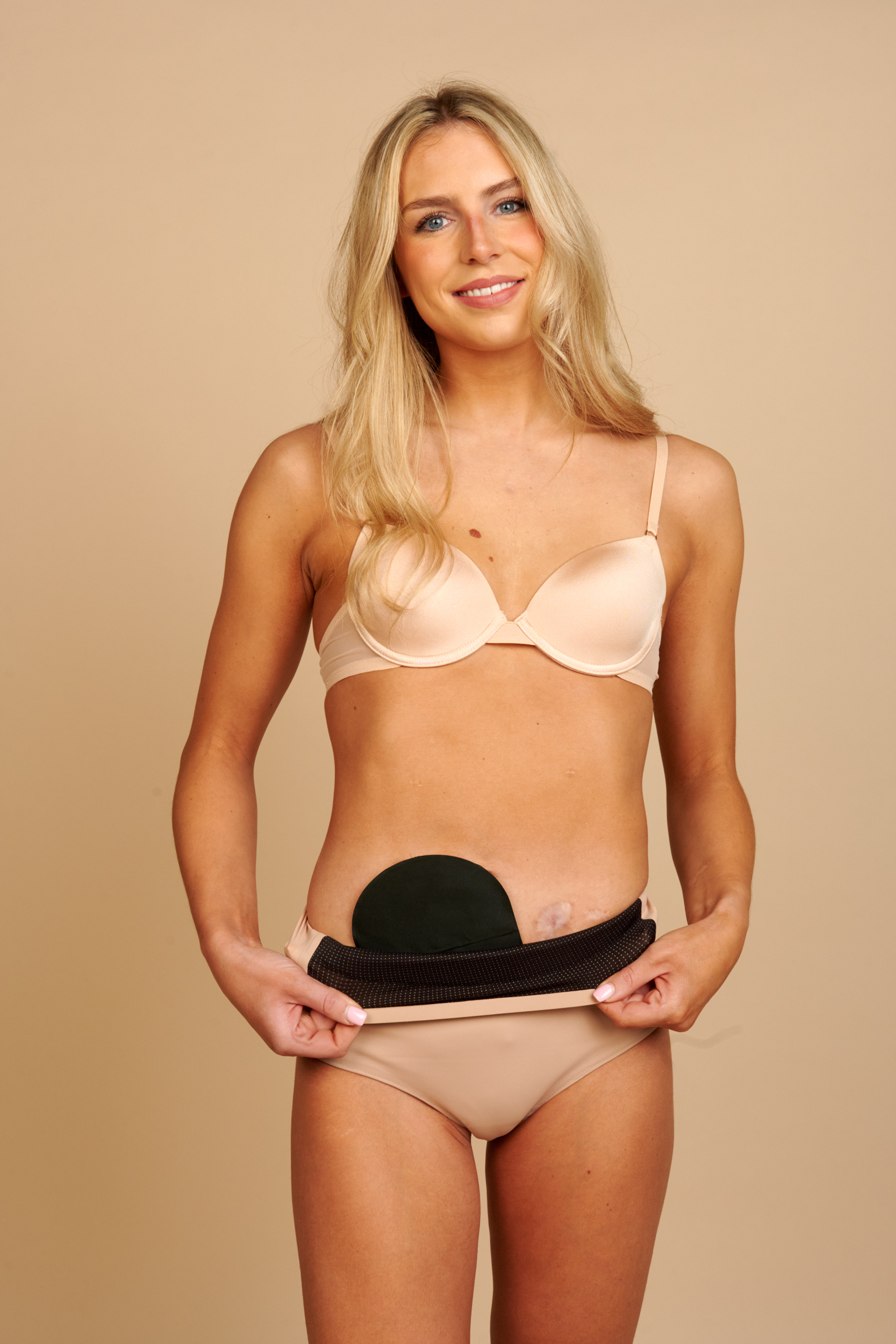
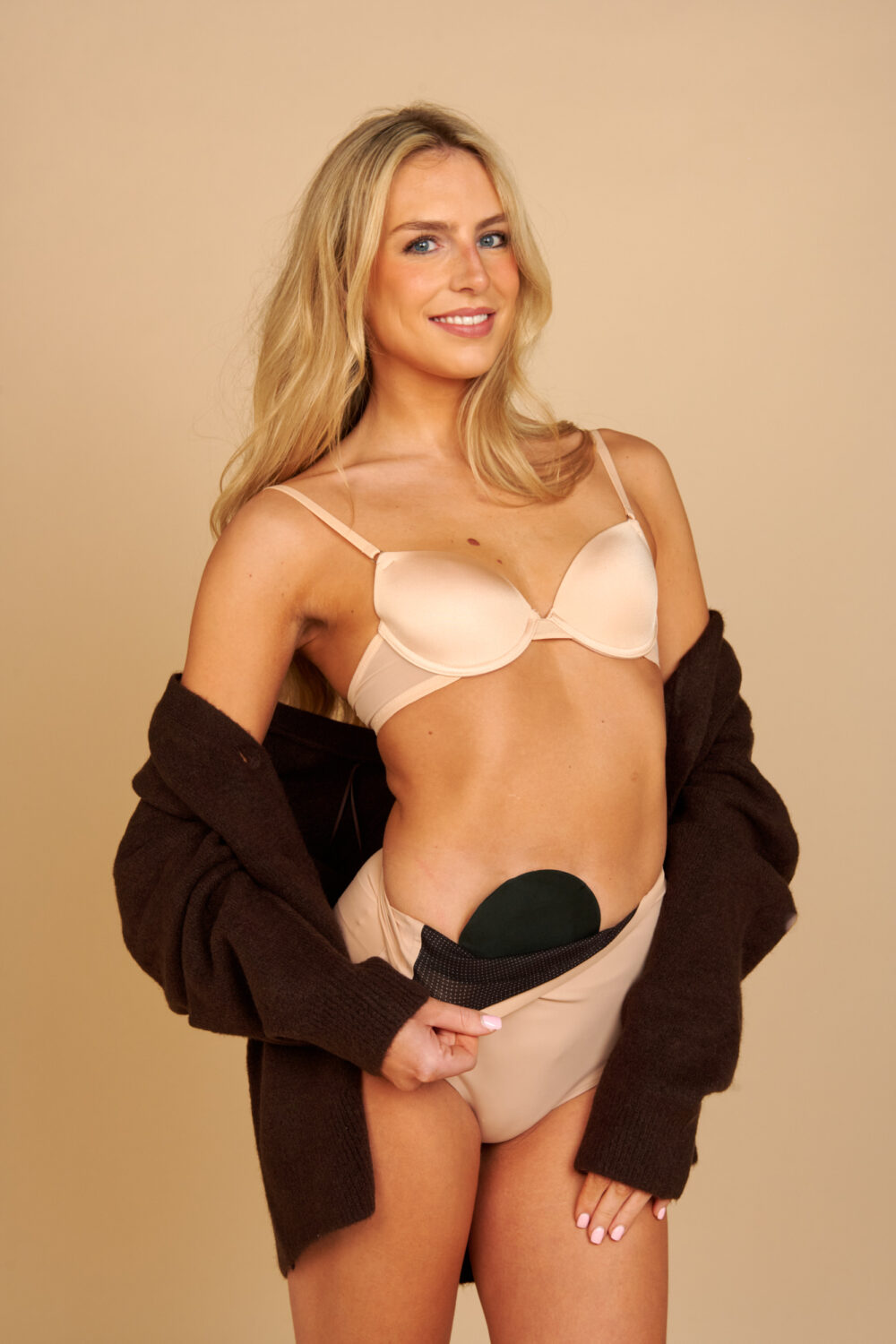
The barrier is the bit that touches your skin. On a two-piece it is the baseplate you click or stick the bag onto; on a one-piece it is built into the bag. You will also hear ostomy barriers — same job, slightly broader shop-aisle name. Hydrocolloid is the sticky stuff most of them are made from. It grips, it has a bit of give, and it sits around the stoma for a day or several days depending on your output and your tummy.
What it is not: a plaster you slap on in five seconds, and not a fashion problem. If you are still getting your head around what a stoma is, start there and come back. The barrier’s only real job is boring — keep output where it belongs and keep the bag where you put it. Everything else, from a fitted jumper to a swimming costume, sits on top of that.
Newly home, the temptation is every accessory on the list. Skip that. A well-cut wafer on dry skin is enough for a lot of days. Rings and powder earn their keep for creases, a tummy that changes shape, or skin too damp to hold. If you need the wider first-weeks map, the new stoma patient guide stays practical.
Coloplast, Hollister, Convatec, Eakin and Salts all make barriers that genuinely work; which one lasts on your tummy is personal. Try two, keep the one that survives a Tuesday. Once the base layer is behaving, a soft stoma wrap is what a lot of us put on next — a smooth layer over the bag takes the mental load out of bending, the train, or tucking a shirt in.
Wafers, rings, paste, powder and sprays — which is which
This is the drawer, decoded. Spend your energy here once, then stop treating every product as a separate system.
| Product | What it actually is | When people reach for it | Where it quietly loses |
|---|---|---|---|
| Wafer / flange / baseplate | The main sticky barrier the bag lives on | Every change, always | Needs a reasonably dry, fairly even patch of skin |
| Barrier ring or seal (Eakin, Brava, Adapt and similar) | A doughnut of hydrocolloid you place round the stoma | Dips, creases, extra cushion, liquid output | Can add bulk under very slim waistbands |
| Paste | A filler you put in gaps before the wafer goes on | Uneven tummies, old scars, a stoma in a fold | Messy; some formulas sting on broken skin |
| Stoma powder | A fine hydrocolloid dust, not talc, not baby powder | Weepy or wet skin that will not let anything stick | If you leave a layer sitting there, the wafer will not hold |
| Barrier spray or wipe | A thin film on the skin before the wafer | Extra hold, or easier, kinder removal | Will not rescue a wafer that was the wrong shape |
| Flange extender / tape strips | Extra sticky edges around the wafer | Lifting corners, heat, a very active day | Not a substitute for a ring if the leak is at the stoma hole |
Output type changes how hard the barrier works, not the kit itself. Liquid output finds every gap, so rings and a snug hole matter more. Convex wafers win when the stoma sits in a dip or flush to the skin — a fashion belt will not replace that geometry. Flat wafers win when the stoma already stands proud. If you are still choosing bags rather than extras, start with the bags people actually live in, then add rings only if the edge keeps letting go.
A change that actually holds
There is no ceremony. There is a sequence that saves you doing the whole thing again at 4pm.
- Warm the wafer in your hands for half a minute. Cold hydrocolloid is sulky; body heat makes it grab.
- Cut for the stoma you have today, not last Wednesday. A couple of millimetres of clearance is the usual lived rule of thumb — close, not nipping.
- Skin has to be dry. Pat, wait, pat again. If it is shiny-wet, a light dusting of powder, then brush the excess until the surface looks matt, not caked.
- Hairs are the underrated leak. A beard trimmer on a short setting, used on dry skin, beats a wet razor that nicks.
- If you use a ring, warm that too. Stretch it, roll it into a thin sausage for a crease, or leave it as a doughnut. No tunnel from stoma to the outer edge.
- Paste goes into gaps, not as icing. Centre the wafer, press from the stoma outwards, hold a warm hand over it for thirty to sixty seconds. Get dressed after that, not during it.
Removal is the same job in reverse. Adhesive remover wipes or spray mean you are not peeling your own skin off with the wafer. Slow, hold the skin down, do not rip.
Wear time is personal. Some people change every day; some get three or four days and stop there on purpose. A quiet three-day average you can trust beats a heroic week that fails on night four.
The awkward bits: hair, heat, creases and water
Heat is a rascal. A packed Tube, a radiator, a feverish night — wafers soften and edges lift. Extender strips help. So does fabric that holds the bag still. You will not out-glue a heatwave with a thicker ring alone.
Creases that appear when you sit are not the same creases you have standing at the mirror. Check sitting down before you call the change finished. If a fold opens a channel next to the stoma, that is a ring-as-rope job, or a different shape of wafer, not “press harder”.
Swimming is fine if the seal was good before you got in. Give a fresh change time to settle, empty first so the bag is not buoyant and pulling, and put a costume over the top that actually holds things still. A dedicated stoma swimming costume or trunks with a higher waist does more for an afternoon at the lido than a second coating of spray.

Exercise is the same logic. The barrier fails when the bag can swing or the waistband rolls over the wafer edge. Support next to the body beats more sticky stuff. For a normal week, a fashion-first belt or wrap is usually enough and looks like clothes.
Life on top of the barrier: clothes, belts and getting dressed without a debate
The positive counterpart is not “just be grateful it sticks.” Once the seal is ordinary, you can wear ordinary things. High-waisted pants that sit above the wafer, not on the sticky edge. A waistband that is smooth rather than a sharp jean button parked on the stoma. None of that requires a beige pouch on show or a wardrobe full of tents.
High-waisted cuts are the unglamorous hero. They do not treat the bag; they ignore it, which is the point. A bag cover is the other small dignity a lot of people like — fabric against your skin instead of plastic, and a cleaner line under a T-shirt. Neither replaces a failing wafer. They make a working wafer liveable.

When the seal is sorted, the belt is what you actually feel all day.
A smooth, high-waisted stoma belt keeps the bag still under clothes without looking like equipment. Fashion-first, made for real tummies, meant to be worn and forgotten.
Support belts and wraps sit in a useful middle. A belt can hold a bag still during a long shift or a walk; a wrap smooths the outline. SIIL makes those as fashion pieces — close to the body, meant to be worn as clothes, not issued as kit. What you can do, in plain terms: go to work, swim, sit in a pub garden, sleep on your side, wear white if you want to, pack a spare in a washbag and then not need it. The barrier is the boring foundation. The outfit is the bit that belongs to you.
Stoma skin barrier questions people ask next
Can I mix a ring from one brand with another brand’s wafer?
Yes. Plenty of people do. The ring fills the gap at the stoma; the wafer sticks to the rest of the tummy. If an Eakin or Brava ring sits nicely on another brand’s baseplate, that is a kit, not a crime. Stacking three extras because none quite fitted is what fails.
Will a barrier ring show under a fitted dress?
A thick doughnut under a slim waistband can ridge. A thinner ring, or one rolled into a crease, sits flatter. High-waisted cuts that rest above the wafer hide more than extra pressing. A wrap then makes the line look like clothes.
Can I shower with only the wafer on?
Yes — that is one reason people like two-piece systems. Unclip, shower, dry the wafer and the skin around it, clip a bag back on. Water will find an edge that was already lifting; a shower does not rescue a tired seal.
How close should the hole in the barrier be?
Close enough that output cannot sit on skin, not so close it nips as the stoma moves. A couple of millimetres is the lived rule. Recheck as swelling settles. Cut-once-and-forget is how gaps creep in.
If the wafer already sticks, do I need barrier spray?
No. Sprays and wipes are extra hold or kinder removal, not a second barrier. If your seal already lasts the day you want, skip them. They will not rescue a hole cut too wide or a crease you have not filled.
Do I need a convex wafer if I already use a ring?
Not automatically. A ring fills a small dip; convex changes the shape so a flush stoma is directed into the bag. If output still sneaks under after a ring, convex is the next variable — not a thicker ring forever, and not a tighter belt.
The seal is the foundation. The clothes are the point.
High-waisted, smooth pieces made for a bag underneath — look like clothes, wear like clothes, forget about the outline.
Keep reading
More from the SIIL journal

Living with an Ostomy
RADAR keys, stoma-friendly toilets and what to pack: going out with a stoma in the UK
Going out with a stoma in the UK: how to get a RADAR key, where to find stoma-friendly toilets, which toilet card to carry, what t…
12 min read

Colostomy
Colostomy surgery
Colostomy surgery in plain words: why it's done, how to prepare, loop vs end colostomy, keyhole or open surgery, your hospital sta…
12 min read

Ileostomy
High output stoma
What counts as a high output stoma or ileostomy, the signs of dehydration, the food and drinks NHS teams suggest, and when to call…
11 min read
Welcome offer
Join the SIIL family.
Get 20% off your first order.
Stories, tips and exclusive drops — once a month, never spam. Your code lands in your inbox the moment you subscribe.
By subscribing you accept our privacy policy. Unsubscribe in one click, anytime.
Welcome — check your inbox for the code.
£122.99
£72.99
£72.99
£52.99
£52.99
£52.99
£44.99
£52.99
£41.99
£92.99
£72.99
£44.99