FREE DELIVERY IN USA OVER $120
We Are Covered by Insurances & Medicare
FREE DELIVERY IN UK / EUROPE OVER $100


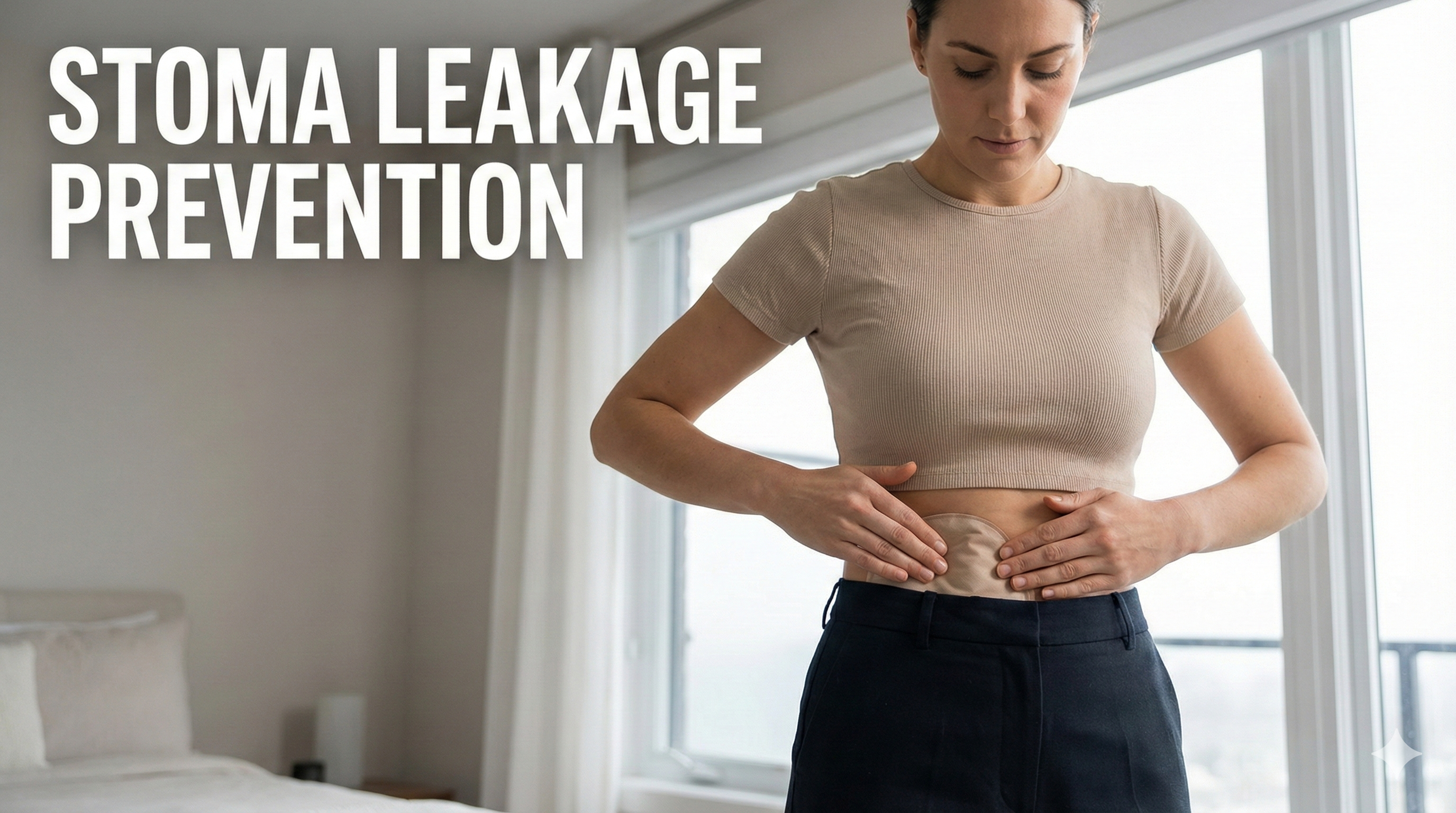
Stoma leakage prevention is one of the biggest concerns for ostomy patients and caregivers. Leaks can happen unexpectedly, disrupt daily life, and cause both physical discomfort and emotional stress. Whether you are new to living with a stoma or have had one for years, preventing leaks is essential for comfort, skin health, and confidence.
Effective stoma leakage prevention does not rely on one single product or trick. Instead, it involves understanding why leaks occur, making small adjustments to fit and routine, and using the right level of support for your lifestyle. This guide focuses on practical, real-world steps that help reduce leaks and make daily life more predictable.
Leaks usually begin when output finds a pathway under the wafer. Small gaps, uneven skin, or changes in body position allow stool or urine to undermine the adhesive seal.
Bending, sitting, and twisting all place stress on the appliance. Over time, repeated movement can weaken adhesion and increase the risk of leaks.
Stomas can change size and shape due to healing, weight changes, or muscle activity. These changes often explain why leaks appear even when nothing else seems different.
Accurate sizing is a cornerstone of stoma leakage prevention. A wafer opening that closely matches the stoma helps protect the surrounding skin and maintain a strong seal.
Uneven or jagged cuts create weak points. Taking time to cut smoothly or using pre-cut options improves consistency and reliability.
Yes. A pouch that pulls downward or sideways creates constant tension, slowly lifting the wafer and increasing leak risk.
Healthy, intact skin holds adhesive better. Addressing redness or irritation early is essential for long-term stoma leakage prevention.
Sweat and humidity soften adhesives. Allowing the skin to fully dry before application helps maintain a stronger seal.
Some soaps, wipes, or creams leave residue that interferes with adhesion, even when the skin looks clean.

Movement of a filling pouch places strain on the seal. Support garments help keep the appliance close to the body, reducing pull and sagging.
Support only works when sized correctly. Proper fit distributes pressure evenly and contributes to effective stoma leakage prevention.
Many people use an ostomy belt during sleep, exercise, or long days. You can explore options on the ostomy belt page.
Changing your appliance when output is lowest improves adhesion and reduces early seal breakdown.
Regularly checking the wafer edges allows you to address small issues before they become leaks.
If leaks continue despite adjustments, a stoma nurse can help assess fit and routine. Trusted guidance is also available from the NHS, Mayo Clinic, and Crohn’s & Colitis Foundation.
In most cases, yes. With proper fit, skin care, and support, leaks can often be greatly reduced.
Sometimes small adjustments are enough, but some people benefit from additional support or accessories.
Not always. Reviewing fit and routine first is usually the best approach.

Ostomy Bag Covers for Anxiety Relief: How SIIL Helps You

Best Ostomy Belt in Germany – Secure, Comfortable Support for

Temporary vs Permanent Ostomy: How Long, Reversal and the Hartmann