FREE DELIVERY IN USA OVER $120
We Are Covered by Insurances & Medicare
FREE DELIVERY IN UK / EUROPE OVER $100


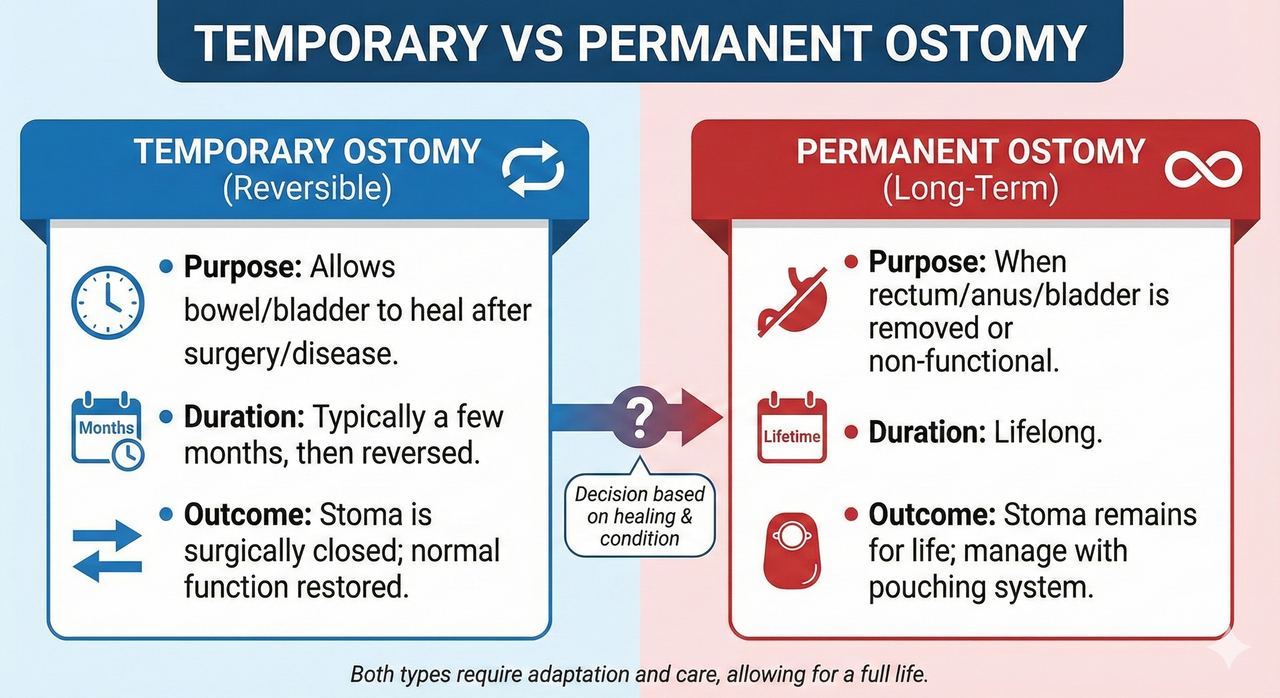
Temporary vs Permanent Ostomy is one of the most common questions patients ask when facing bowel surgery. Understanding whether an ostomy is temporary or permanent helps reduce anxiety and allows people to plan for recovery and long-term life.
In many cases, an ostomy is created to protect healing tissue or bypass a damaged section of bowel. In other situations, a permanent ostomy is the safest option for long-term health.
The decision between a temporary vs permanent ostomy depends on the underlying condition, the extent of bowel damage, and the patient’s overall health.
A temporary colostomy is often used to allow the bowel to heal after inflammation, infection, or surgery. A permanent colostomy is created when reconnection of the bowel is not possible or would be unsafe.
Medical guidance from the NHS explains when colostomies may be temporary or permanent: https://www.nhs.uk/conditions/colostomy/
Yes. Many people have a temporary ostomy as part of treatment for bowel cancer, diverticulitis, inflammatory bowel disease, or bowel injury.
A temporary stoma is an opening created in the abdomen to divert waste away from a healing section of bowel. It is intended to be reversed once healing is complete.
A temporary ostomy bag collects waste while the bowel heals. Modern bags are designed to be discreet, secure, and comfortable during recovery.
Yes. In many cases, the ostomy bag is used only for a limited period before reversal surgery is performed.
A temporary ostomy may last anywhere from a few weeks to several months. The exact length depends on healing, absence of complications, and overall health.
The Hartmann procedure is a specific type of bowel surgery often discussed in conversations about temporary vs permanent ostomy.
A Hartmann procedure is commonly performed in emergency situations such as bowel perforation, severe diverticulitis, or cancer. The diseased section of bowel is removed, and a colostomy is created.
Clinical information from the Mayo Clinic explains colostomy procedures in detail: https://www.mayoclinic.org/tests-procedures/colostomy
In some cases, a Hartmann procedure can be reversed after recovery. However, reversal depends on healing, absence of complications, and patient fitness for surgery.
Some patients may be candidates for internal pouch surgeries, such as ileoanal pouches, which allow waste to pass without an external bag.
Alternatives may not be suitable if there is extensive bowel damage, poor healing potential, or risk of serious complications.
Open communication with your surgeon and stoma care nurse is essential. They can explain whether your ostomy is likely temporary or permanent and what recovery will involve.
Planning includes learning ostomy care, arranging support at home, and using supportive garments to improve comfort and confidence.
A temporary ostomy can last from a few weeks to several months, depending on healing and medical advice.
No. While many temporary colostomies are reversed, some become permanent if reversal is not safe.
The Hartmann procedure removes a diseased section of bowel and creates a colostomy, often in emergency situations.
Alternatives include internal pouch surgeries, but they are not suitable for every patient.
Your surgeon will assess healing potential, overall health, and surgical risks to determine if reversal is possible.
Explore ostomy support products here: ostomy belt support options

Waterproof Ostomy Bag Covers | Safe Shower & Swimming Guide
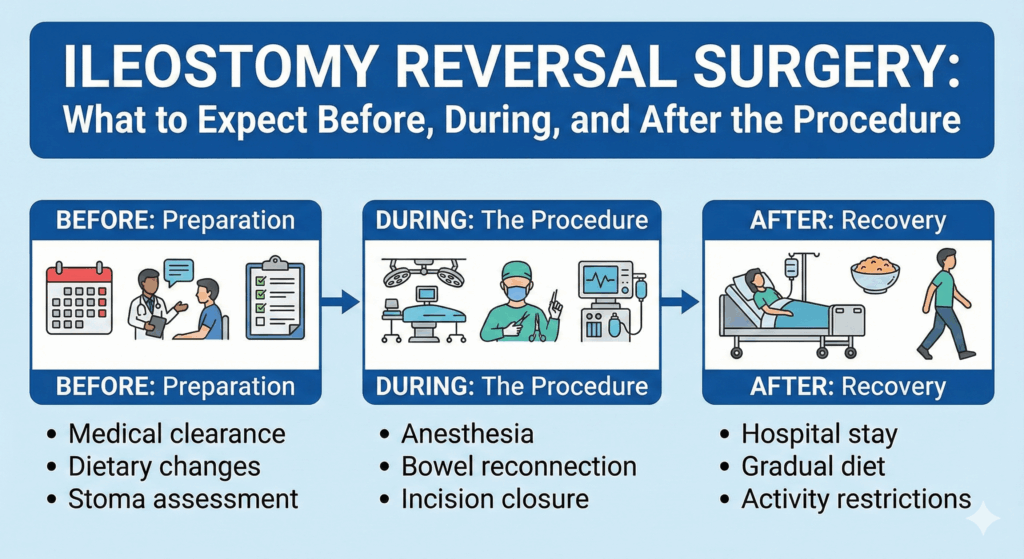
Ileostomy Reversal Surgery, What to Expect Before, During, and After

Best Ostomy Belt in Ireland – Reliable Support Belts for