
 ES
ES EN
EN GB
GB DE
DE FR
FRNo products in the cart.
Coloplast Ostomy Supplies: Bags, Barriers, and What Holds Up in Real Life
Quick answer: Coloplast ostomy supplies are the pouches, barriers, and extras most people know as Sensura Mio, the older Assura line, and Brava accessories — plus a tab-style Coloplast ostomy belt. One-piece or two-piece Click, drainable or closed. A solid, widely used option, not magic: the bag that stays put on your skin is the right one, and it sits quieter under clothes when you pair it with high-waisted underwear or a wrap.
If you typed “Coloplast ostomy” into a search bar, you probably already have a box with that name on it. Maybe they sent you home with it. Maybe you are comparing it to Hollister or ConvaTec because the pouch lifts by lunch. Honest version, from someone who wears a bag: Coloplast makes a real everyday pouching system. It is not the only good one. And the pouch is only half of what shows under a pair of jeans.
What is actually in Coloplast ostomy supplies
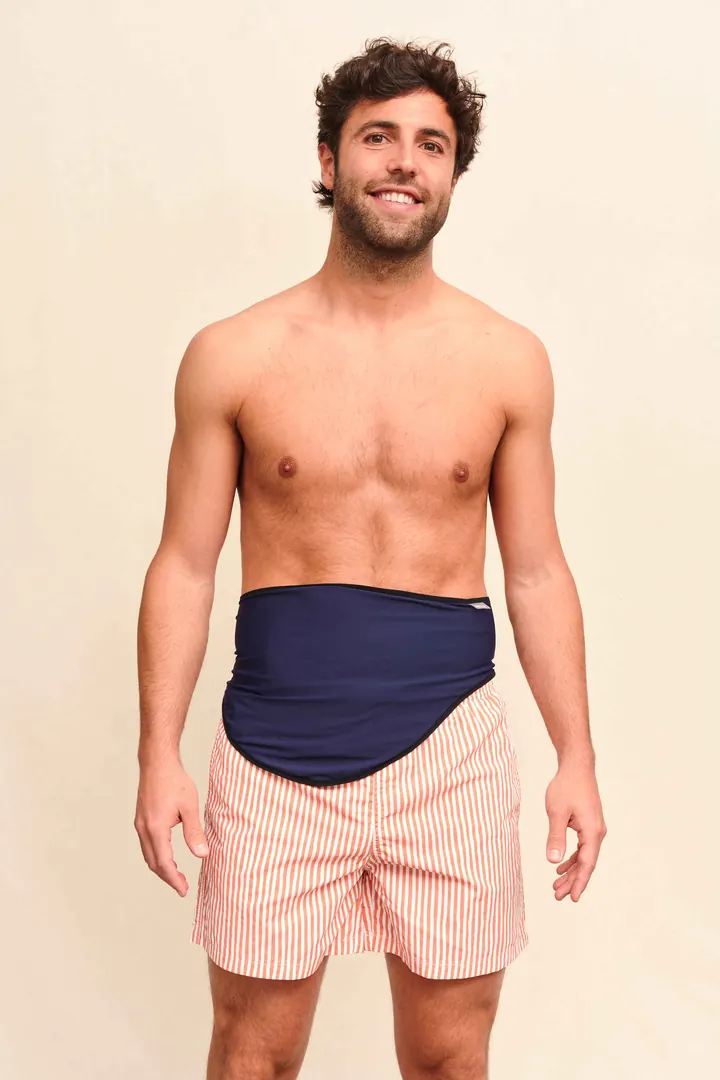 Ostomy BeltHernia support & leak prevention. Trusted by 50,000+ ostomates worldwide.Discover →
“Coloplast ostomy” is a brand, not a single bag. When people say Coloplast ostomy supplies, they usually mean four piles on the counter: the pouch, the barrier (the part that sticks), the extras that help the seal, and a belt if the pouch has tabs. That is the kit. Everything else is a variation of those four.
The pouch line most of us see now is Sensura Mio — one-piece, or two-piece Click. Closed bags sit next to drainable pouches you empty into the toilet. The older Assura line is still around; some people never switched. Brava is the accessory family: rings, paste, powder, elastic tape, adhesive remover. None of that is fashion. It is the hardware. For how pouches compare across brands, the best ostomy bags breakdown is the cleaner place to start — this page stays on Coloplast.
| What you will see on the box | What it actually is | People usually reach for it when… |
|---|---|---|
| Sensura Mio pouch (one-piece or Click) | Current Coloplast ostomy bag + barrier, drainable or closed | They want the stretchy Mio adhesive and a fabric-looking front |
| Assura pouch | Older Coloplast pouch line | Mio did not agree with their skin, or that is what they learned on |
| Sensura Mio Click barrier | Two-piece wafer with the Click coupling | They like swapping pouches without pulling the barrier off |
| Closed Coloplast bags | Change-and-toss pouches, no drain | Output is firmer and they prefer a fresh bag over emptying |
| Brava rings, paste, powder, tape | Seal and skin extras, not a pouch | The wafer alone leaves a gap, or the edge needs backup |
| Coloplast ostomy belt | Narrow belt that hooks onto pouch tabs | They want the bag pinned closer to the body while they move |
Ileostomy, colostomy, urostomy — Coloplast makes a version for each, but the decision that changes your day is output and how often you empty, not the surgery label. Closed bags are a colostomy habit for a lot of people; drainable is the default if you empty several times a day; a tap is a urostomy thing. Still sorting which kind of stoma you have? Ileostomy vs. colostomy is the plain-language version. Do not buy three systems at once. Get samples, wear them at home, then commit.
Ostomy guide
The new-ostomy guide we wish someone had handed us
Clothes, packing a bag, and getting dressed without the brochure voice. Keep it open on your phone the week everything still feels new.
Sensura Mio, Assura, and Click — three names, not three lifestyles
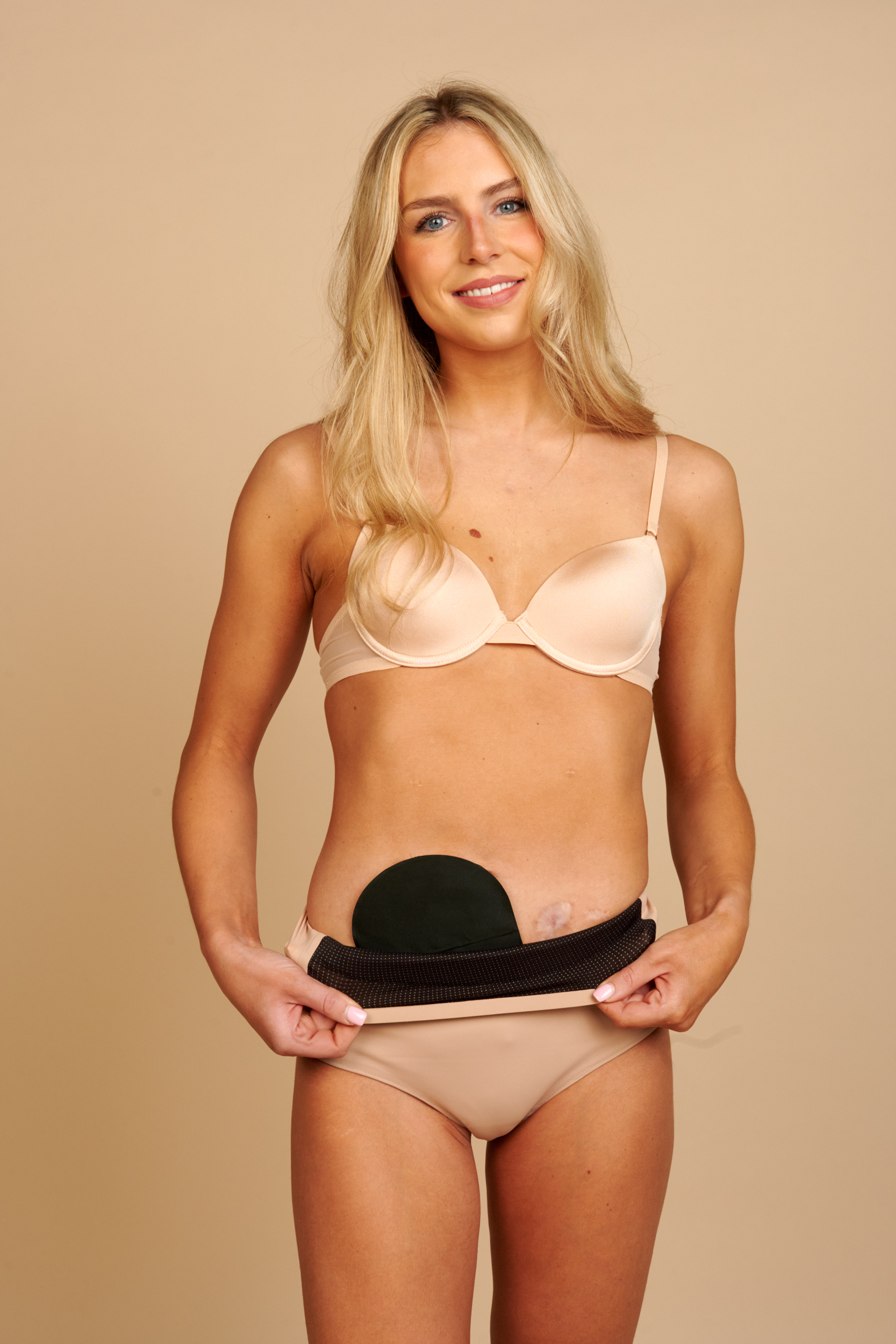
Sensura Mio is the Coloplast ostomy bag most suppliers send now. You will recognize the soft gray textile front — it looks less like a plastic pouch against a white t-shirt. The adhesive is stretchy, which is the point: it moves when you sit, twist, or laugh. For a lot of people that is a better seal than a stiff wafer that fights every bend. For some people it is not. If Mio lifts at the edge, that is information, not a personal failure.
Assura is the older Coloplast line. It never vanished. If you learned on Assura and your skin is calm, there is no prize for switching. If a supplier swapped you to Mio without asking and the new bag started leaking, it is fair to ask for the product number you actually wore home from the hospital.
One-piece vs. the Sensura Mio Click barrier
One-piece is peel-and-stick: barrier and pouch are already joined. Fewer parts, fewer decisions at 6 a.m. Two-piece Click means the barrier stays on your skin and the pouch snaps on and off. People who empty a lot, or who like to swap a closed bag during the day without a full change, tend to like Click. People who hate the extra bulk of a coupling tend to stay one-piece.
- One-piece: simpler, lower profile under a waistband, full change every time.
- Click two-piece: swap the pouch, leave the barrier; coupling sits a little proud under thin fabric.
- Not interchangeable: a Coloplast Click pouch will not snap onto a Hollister or ConvaTec barrier. Couplings are brand-specific.
Drainable, closed, or a tap
Drainable pouches are the everyday Coloplast ostomy bag for anyone emptying more than once or twice a day. Closed bags are the change-and-toss option — common if output is firmer. A urostomy pouch has a tap. Same brand family, different job. Convex vs. flat is the other fork: if the regular wafer keeps leaking, convex (sometimes with a matching belt) is what people try next. That is a body decision, not a catalog upgrade.
Small, useful habit: when you do a change, write the day of the week on the flange with a marker. You stop guessing how long this one has been on.
Coloplast vs. Hollister vs. ConvaTec — the honest version
Search “Coloplast ostomy” long enough and you will land in a brand war. Skip it. All three make bags that work for a huge number of people. The winner is the one that does not leak on your skin, in your clothes, on a Tuesday when you actually have plans.
| Brand | What people tend to like | Where it can lose |
|---|---|---|
| Coloplast (Sensura Mio / Assura) | Textile-looking front, stretchy adhesive, Click swap without a full change | Edge lift for some; Click coupling can show under a thin shirt |
| Hollister | Familiar two-piece systems; plenty of people get a calmer seal and longer wear | The pouch front can read more “pouchy” under light fabric |
| ConvaTec | Moldable barriers you shape by hand; solid one-piece options | Coupling and openings are their own system — no mixing with Click |
Hollister wins for a lot of ostomates on wear time. ConvaTec wins when someone wants to mold the opening instead of cutting a perfect circle. Coloplast wins when the stretchy Mio adhesive and the fabric front make the bag quieter on the body. None of that is universal. Get samples of all three. Wear each one at home, in the clothes you actually put on, before you reorder a month of anything.
Brava extras and the Coloplast ostomy belt
When the wafer alone does not get a better seal, Brava is the extras drawer: barrier rings, paste, powder, elastic tape, adhesive remover. A thick barrier ring is what a lot of people reach for now — warm it in your hands, mold it around the stoma, then the wafer goes on. Powder shows up when skin is weepy and nothing wants to stick. Elastic tape around the edge is backup for a wafer that lifts at the rim. Extra hardware for a body that does not come in catalog shape.
The Coloplast ostomy belt is a narrow belt that hooks onto the tabs on certain pouches. It keeps the bag from bouncing. It is not the same thing as a wide support wrap. The brand belt is a thin, tab-hook tool. A wrap is clothing: smoother under a shirt, more hold around the abdomen, less “medical accessory” in the mirror. If your pouch has tabs and you want the bag pinned closer while you walk, lift, or commute, a dedicated ostomy belt does that job without asking the rest of the outfit to become a uniform.
How a Coloplast ostomy bag actually sits under clothes

Here is the part Coloplast cannot solve, no matter how good the textile front is. A pouch is still a pouch. Under skinny jeans, a fitted dress, or a wet swimsuit, you feel it — and sometimes you see it. That is not you being dramatic. That is fabric meeting a bag.
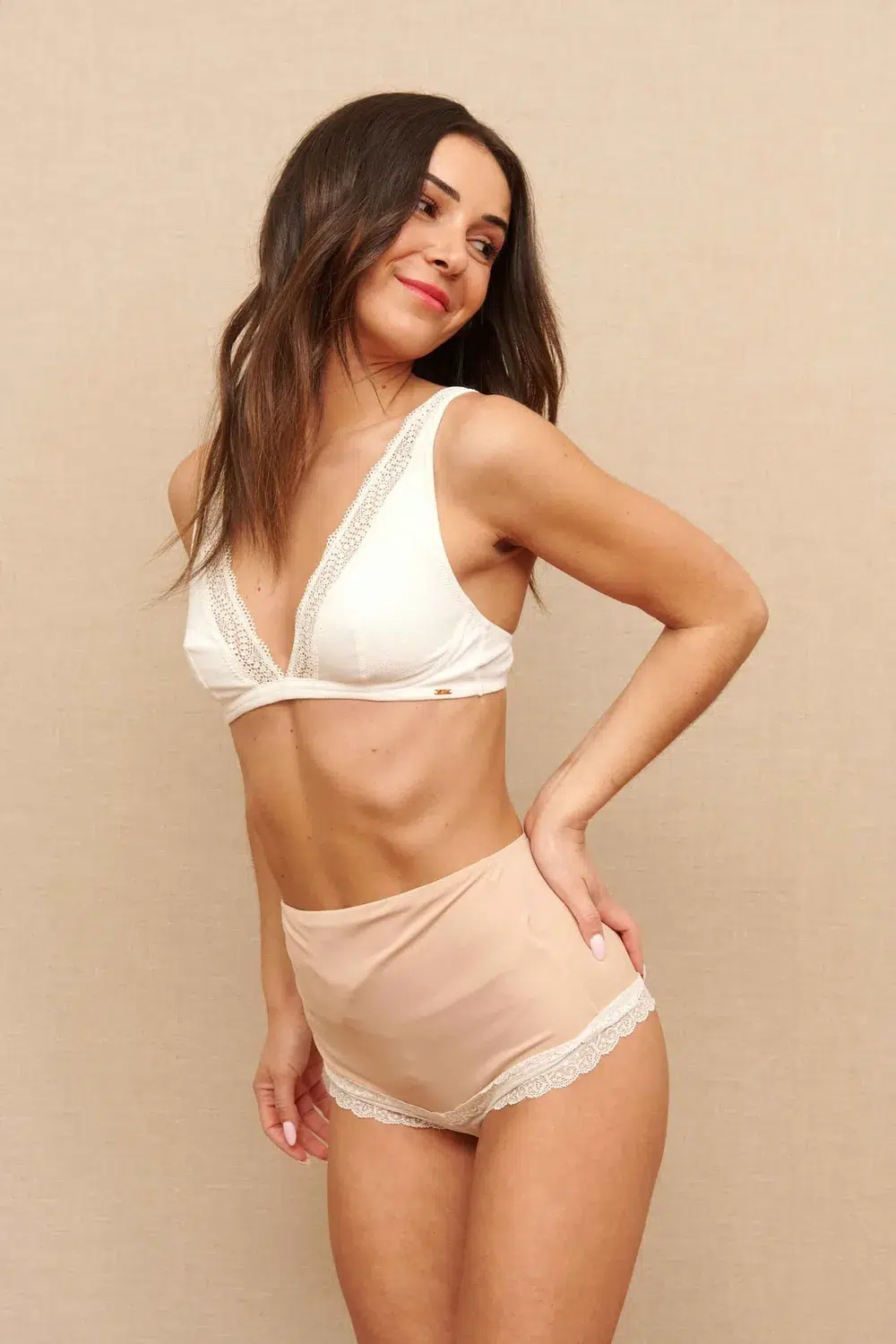
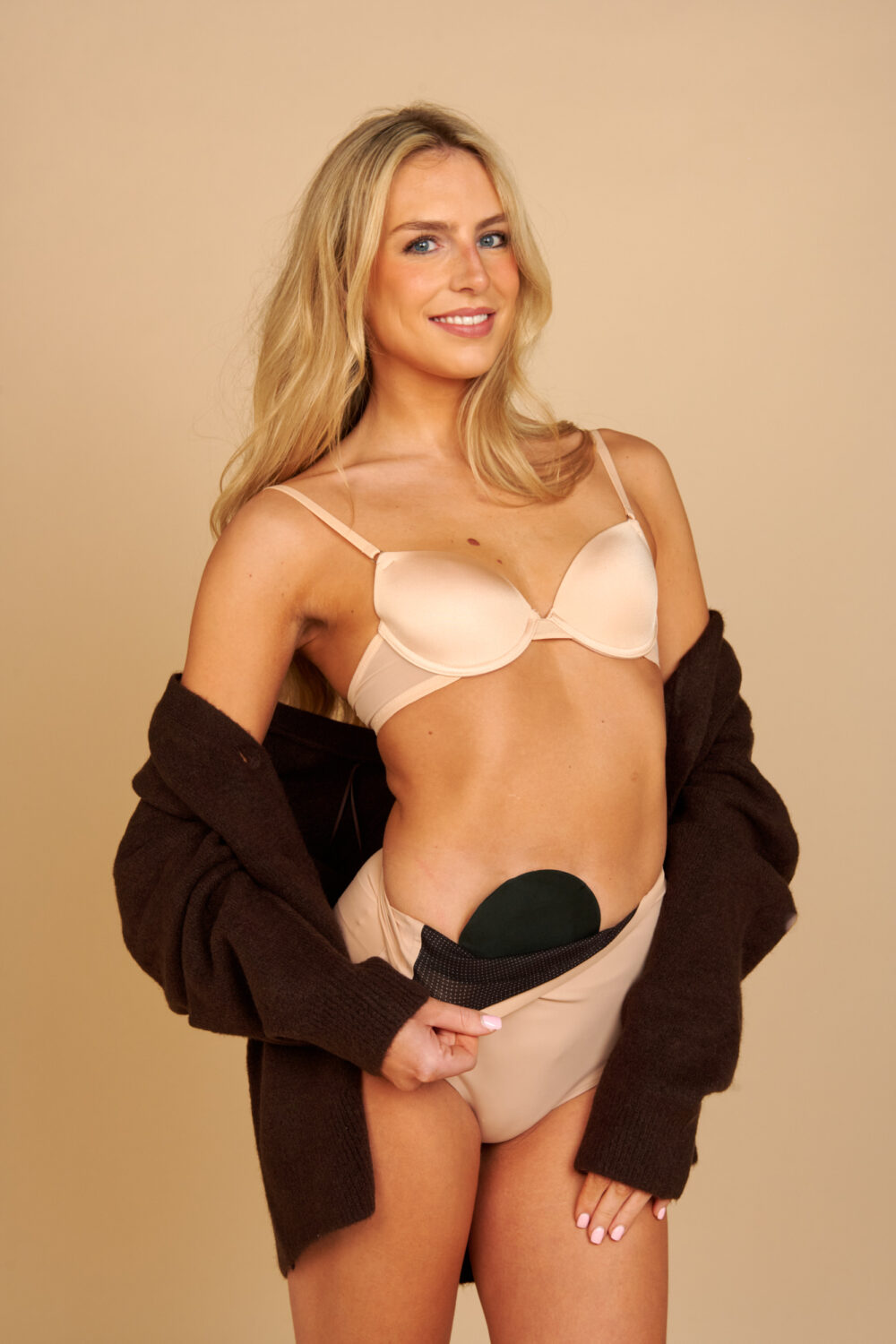
What you can wear is the useful list. High-waisted ostomy underwear or ostomy panties that sit above the wafer, not on the coupling. A soft wrap when you want the bag held close without a skinny tab belt. An ostomy bag cover when you want the front quieter against a pale shirt. Regular jeans if the rise is high enough — what pants are best for ostomy patients goes deeper on rises. A swimsuit with a wider waistband, or purpose-built ostomy swimwear. You do not owe anyone a tent of a shirt.
- Do: let the waistband live above the barrier. Pulling a low rise across the wafer is how edges roll.
- Do: empty before you get dressed for something fitted. A half-full bag prints. An emptied one mostly does not.
- Don’t: expect the Mio fabric front to replace a cover or a high waist. It helps. It is not camouflage.
- Don’t: treat a leak as proof you cannot wear the outfit. Change the seal, change the layer, try the outfit again.
Shape changes are the quiet villain. Weight up or down, swelling, a stoma that looks different than it did six months ago — the same Sensura Mio that was perfect in March starts leaking in September. Cut size, ring thickness, convex vs. flat, or a different brand sample are the next moves. The clothes layer stays the same: high waist, wrap if you want hold, cover if you want the front to look like fabric instead of a bag.
Product numbers, samples, and “Coloplast ostomy supplies near me”
The search “Coloplast ostomy supplies near me” usually means: I am low, I do not want to guess the box, and I need this week to keep working. Coloplast pouches come from medical suppliers and some pharmacy counters — not from a fashion closet. Mail-order is how most of us actually stay stocked.
Copy the product number off the box before you are down to two pouches. Barrier size, pouch length, drainable vs. closed, convex vs. flat — those details live in that code. If you only remember “the gray Coloplast ones,” you will get a starter kit that is not yours.
Samples are the other half. Ask for Coloplast, and ask for the other two brands too. Wear them through a normal day: car seat, desk chair, a walk, a meal you know is talkative. The bag that stays put is the one you reorder. How long a pouch lasts on you is its own question — how often to change and empty your ostomy pouch is the lived version. SIIL does not sell Coloplast ostomy bags. We make the layer that goes over them — because a good seal still has to live under real clothes.
The bag is Coloplast. The outfit is yours.
High-waisted cuts, soft holds, and pieces that look like actual clothes — so the pouch stays your business, not the room’s.
Coloplast ostomy questions people ask next
Can I snap a Coloplast Click pouch onto a Hollister or ConvaTec barrier?
No. Click is Coloplast’s own coupling. A Mio Click pouch will not lock onto another brand’s wafer, and mixing systems is how people end up with a bag that looks attached and then is not. If you like a Hollister or ConvaTec barrier, stay in that brand’s pouches. If you like Click, stay in Click. Samples of a full system beat mixing leftovers from two boxes.
Where do I actually get Coloplast ostomy supplies when I am running low?
From your usual medical supplier, a local supply shop, or some pharmacy counters — then mail-order once you know the product number. Copy the code off the box before you are down to two pouches. “The gray Coloplast ones” is not a reorder. SIIL does not stock the bags; we make the clothes and wraps that go over them.
Can I swim with a Coloplast ostomy bag on?
Yes. A well-stuck barrier is the requirement, not a special “swim pouch.” Empty first, press around the edges, give the adhesive a minute, then get in. A snug high-waisted swimsuit, swim brief, or ostomy swimwear keeps the bag from floating up and peeling. Afterward, dry the wafer as best you can and watch the edges. If water always lifts your particular Mio, that is a seal problem to solve on land — not a reason to skip the pool.
Do I still need a bag cover if Mio already has a fabric front?
Sometimes yes, sometimes no. The Mio textile front is already quieter than a clear plastic pouch, especially under a darker shirt. A separate cover still helps with pale fabric, with the crinkle, and with the simple fact that some of us do not want to look at output all day. It is comfort, not a rule. Try the bag as-is, then add a cover only if you still see or hear it.
Will a Click coupling show under high-waisted underwear?
It can, under thin fabric, because the coupling sits a little proud. High-waisted cuts that live above the wafer — not on the ring — hide more of that bulk than a low rise ever will. If you feel a ridge under a pale shirt, add a wrap or a cover rather than sizing the underwear down. One-piece Mio is the lower-profile Coloplast option if the Click ring is the thing you keep seeing.
Is a Coloplast ostomy belt the same as a support wrap?
No. The Coloplast belt is a narrow strap that hooks onto pouch tabs and tugs the bag toward the body. A support wrap is a wider clothing layer — smoother under a shirt, more hold around the abdomen, no tabs required. Some people use both: tabs plus a wrap for a long day. Some only want the wrap because it looks like clothes. If your pouch has no tabs, the brand belt is not the tool; a wrap or high-waisted underwear is.
Keep reading
More from the SIIL journal

Ostomy Clothing & Accessories
Hollister Ostomy Clothing: What to Wear Over Your Pouch
Hollister makes pouches, wafers, and clip-on ostomy belts — not everyday outfits. If you searched “Hollister ostomy clothing,” you…
10 min read

Ostomy Clothing & Accessories
SIIL vs Joe & Bella: Ostomy Clothing Compared
SIIL vs Joe & Bella. SIIL wins with ostomy belt, swimwear, and integrated system. Comparison 35/40 vs 19/40.
4 min read

Ostomy Clothing & Accessories
SIIL Ostomy Review: Belt, Underwear and Swimwear Tested
Complete SIIL Ostomy review. Rating 4.8/5. Detailed analysis of belt, underwear and swimwear.
4 min read

Welcome offer
Join the SIIL family.
Get 20% off your first order.
Stories, tips and exclusive drops — once a month, never spam. Your code lands in your inbox the moment you subscribe.
By subscribing you accept our privacy policy. Unsubscribe in one click, anytime.
Welcome — check your inbox for the code.
$52.99
$72.99
$44.99
$52.99
$72.99
$52.99
$44.99
$44.99
$52.99
$41.99
$41.99
$44.99