


What is Ostomy Reversal Surgery?
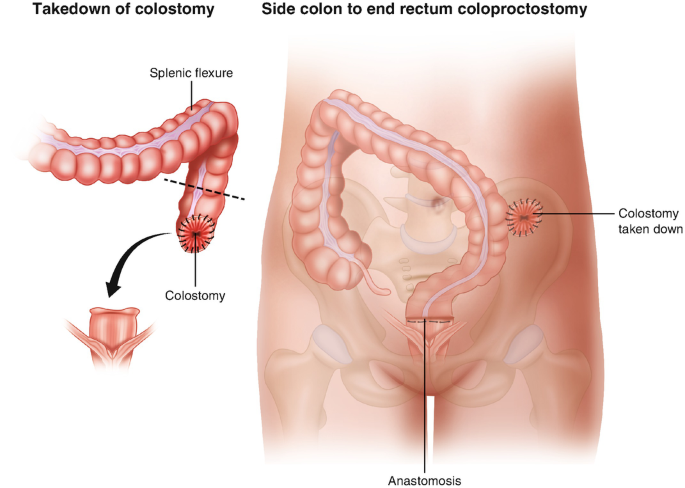
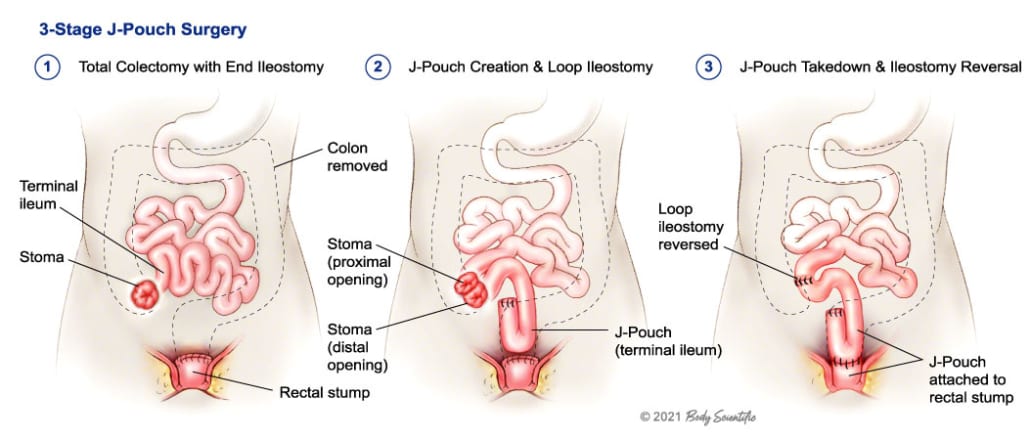
Ostomy reversal surgery (also called stoma closure or takedown) is a procedure to reconnect the bowel or urinary system and close the stoma, restoring natural waste elimination through the anus or urethra.
Not all ostomies are reversible. Only temporary ostomies created to protect a downstream anastomosis (e.g., after cancer resection or diverticulitis) are candidates for reversal.
Permanent ostomies (e.g., after abdominoperineal resection) cannot be reversed due to removal of the rectum and anus.
According to the American Society of Colon and Rectal Surgeons (ASCRS), ~60–70% of temporary ostomies are successfully reversed within 6–12 months. Source: ASCRS
Types of Ostomy Reversal
| Type | Reversible? | Typical Use | Reversal Rate |
|---|---|---|---|
| Loop Ileostomy | Yes (95%) | Protect low rectal anastomosis | High |
| End Ileostomy | Sometimes (60%) | After total colectomy | Moderate |
| Loop Colostomy | Yes (85%) | Diverticulitis, obstruction | High |
| End Colostomy (Hartmann’s) | Yes (50–70%) | Emergency surgery | Variable |
| End Colostomy (APR) | No | Low rectal cancer | Permanent |
| Urostomy | Rarely | Bladder cancer | Very Low |
Who Qualifies for Ostomy Reversal?

Not everyone with a temporary ostomy is a candidate. Surgeons assess:
- Healing of downstream bowel: Confirmed by contrast enema or colonoscopy
- No active disease: Cancer in remission, no Crohn’s flare
- Good sphincter function: Ability to control bowel movements
- Overall health: No severe comorbidities (heart, lung, obesity)
- Nutrition status: Albumin >3.0 g/dL
High-risk patients may need pre-reversal optimization (weight loss, smoking cessation, pelvic floor therapy).
The Ostomy Reversal Surgery

Reversal is typically performed 8–12 weeks after initial surgery, but may be delayed up to 6–12 months.
Surgical Techniques
- Laparoscopic: 3–4 small incisions, faster recovery
- Open: Larger incision, used in complex cases
- Hand-assisted: Hybrid approach
Procedure duration: 1.5–3 hours. Hospital stay: 2–5 days.
Recovery Timeline After Reversal
Risks of Ostomy Reversal Surgery
- Anastomotic leak: 2–5% (most serious)
- Infection: Wound or intra-abdominal
- Bowel obstruction: Adhesions
- Incontinence: Temporary or permanent
- Incisional hernia: 10–15%
Early detection and intervention prevent long-term issues.
Success Rates of Ostomy Reversal
- Loop ileostomy: 95% success
- Hartmann’s reversal: 70–80%
- High-risk patients: 50–60%
Success = stoma closed + normal bowel function without major complications.
Life After Ostomy Reversal
Most patients regain near-normal bowel function within 6 months. Common adjustments:
- Frequent bowel movements (5–10/day initially)
- Urgency or clustering
- Diet modification (low residue first 6 weeks)
- Pelvic floor exercises for continence
SIIL Ostomy’s post-reversal underwear helps manage leaks during adaptation. Shop Now
Ostomy Reversal Surgery FAQs
Can every ostomy be reversed?
No. Only temporary ostomies (loop ileostomy, Hartmann’s) are reversible. Permanent ostomies after APR cannot be reversed.
How long after ostomy surgery can reversal happen?
Typically 8–12 weeks, but may be 6–12 months depending on healing and disease status.
Will I have normal bowel movements after reversal?
Eventually, yes. Initial frequency and urgency improve over 3–6 months.
Is ostomy reversal painful?
Moderate pain for 1–2 weeks, managed with medication. Laparoscopic is less painful.
Can reversal fail?
Yes — 5–10% require re-ostomy due to leak or incontinence.