

 ES
ES EN
EN GB
GB DE
DE FR
FRNo products in the cart.
Published on: 09/12/2025
Ileostomy Reversal Surgery: Complete Guide to Recovery
Author: John Rainier Yumang
For many patients who have lived with a temporary ileostomy, the possibility of reversal marks an important milestone. Ileostomy reversal surgery restores bowel continuity by reconnecting the small intestine to the colon or rectum, allowing stool to pass naturally again. This decision often brings hope, questions, and understandable apprehension. This guide provides a clear, clinical overview of what to expect before, during, and after ileostomy reversal surgery, based on current recommendations from the Cleveland Clinic, Mayo Clinic, and the United Ostomy Associations of America (UOAA).
What Ileostomy Reversal Surgery Involves
 Ostomy BeltHernia support & leak prevention. Trusted by 50,000+ ostomates worldwide.Discover →
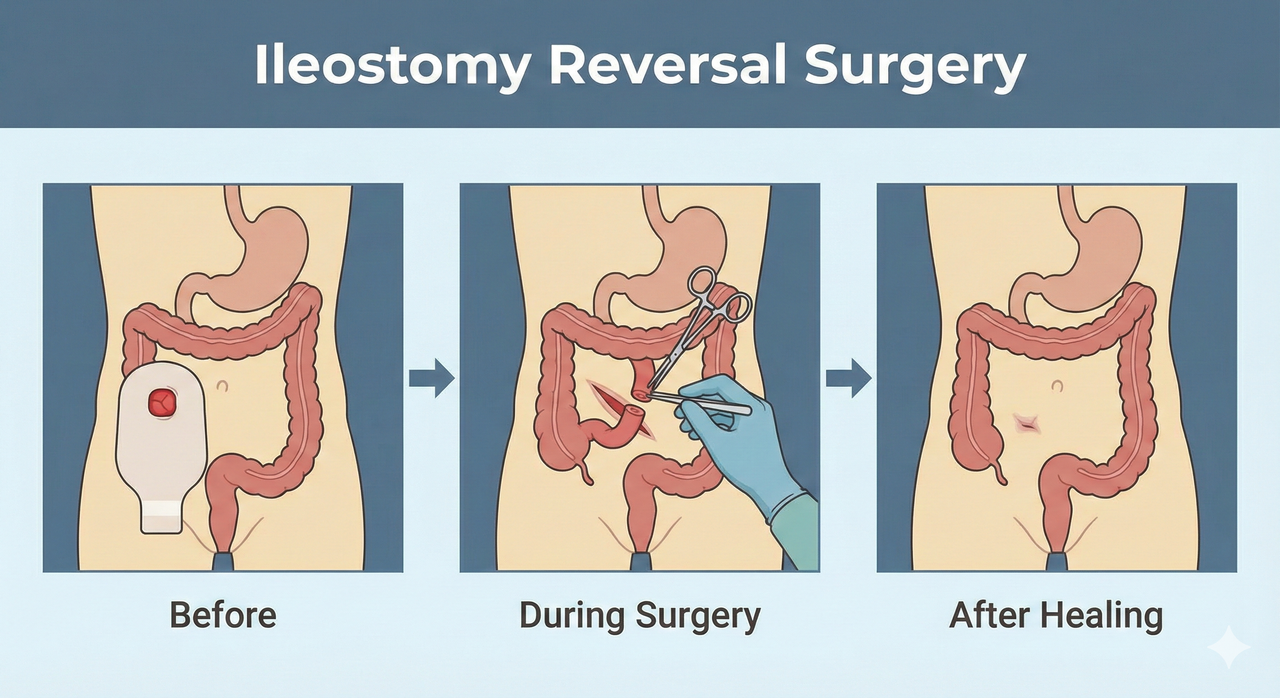
The goal of ileostomy reversal surgery is to reestablish normal stool flow. During the initial operation—the creation of the ileostomy—the small intestine was brought to the surface of the abdomen to form a stoma. During reversal, the surgeon reconnects the intestine internally and closes the stoma site. This procedure is typically shorter and less invasive than the original surgery, though recovery still requires careful attention.
Free guide · A gift from SIIL
The SIIL Ostomy Diet Guide — yours, free
Practical information on food and hydration for everyday life with a stoma.
Prefer it as a PDF in your inbox? Get it by email.
Who Is a Candidate for Ileostomy Reversal Surgery?
Not all patients are eligible immediately. Surgeons assess factors such as:
- Healing of the bowel after the original surgery
- Absence of infection or inflammation
- Stable nutritional status and hydration
- Good control of underlying conditions such as Crohn’s disease or ulcerative colitis
- Strength and healing of any surgical reconnections (anastomoses)
According to the Mayo Clinic, a reversal is typically considered several months after the initial surgery, once the surgeon confirms that the bowel and surrounding tissues have healed safely.
Preparing for Ileostomy Reversal Surgery
Preparation plays a central role in lowering risks and supporting recovery. Patients undergoing ileostomy reversal surgery may receive guidance that includes:
- A preoperative colonoscopy or imaging scan to assess healing
- Nutrition recommendations to strengthen the body
- Temporary medication adjustments
- Bowel preparation (varies by surgeon)
Patients are also advised to stay active and maintain hydration in the weeks leading up to surgery.
What Happens During the Procedure
Although each case is unique, ileostomy reversal surgery usually follows a consistent sequence:
- General anesthesia is administered.
- The surgeon reopens the area around the stoma.
- The small intestine is reconnected to the colon or rectum.
- The stoma opening is closed with sutures.
- The abdomen is cleaned and closed.
The duration is often shorter than the original ileostomy surgery, though hospital stays may vary from 2–5 days depending on recovery progress.
Recovery After Ileostomy Reversal Surgery
One of the most important phases of ileostomy reversal surgery is recovery. Since the bowel must learn to function again in its natural pathway, it is common to experience:
- Loose stools or increased bowel frequency
- Gas, urgency, or occasional leakage
- Temporary abdominal discomfort
- Skin irritation around the anus due to frequent movements
These changes are expected and usually improve over several weeks. According to the Cleveland Clinic, full adjustment may take months, with gradual stabilization of bowel habits.
Managing Daily Life After Reversal
Returning to everyday routines requires patience and small adjustments. After ileostomy reversal surgery, doctors commonly recommend:
- A gradual return to normal foods
- High hydration to prevent dehydration
- Protective creams to prevent irritation
- Pelvic floor exercises for bowel control (as advised)
Some patients continue to wear supportive garments temporarily during healing. SIIL Ostomy offers comfortable options that help with confidence as the body transitions:
Related guide: stoma reversal surgery problems
Keep reading
More from the SIIL journal

Ostomy life & care library
Hartmann’s Procedure: Why It’s Done, Life With the Colostomy, and Reversal
Hartmann's procedure explained: why it's done for diverticulitis and emergencies, life with the end colostomy, recovery, and when …
9 min read

Ostomy life & care library
J-Pouch vs Ileostomy: How People Choose and What Life Looks Like With Each
J-pouch vs permanent ileostomy: how J-pouch surgery works, the stages, bathroom trips, pouchitis, who is a candidate, and what dai…
11 min read

Ostomy life & care library
Retracted Stoma: Why It Happens, How to Stop the Leaks and Live Comfortably
A retracted stoma explained: why it happens, how convex pouches, seals and belts help stop leaks, when to call your nurse and what…
12 min read

Welcome offer
Join the SIIL family.
Get 20% off your first order.
Stories, tips and exclusive drops — once a month, never spam. Your code lands in your inbox the moment you subscribe.
By subscribing you accept our privacy policy. Unsubscribe in one click, anytime.
Welcome — check your inbox for the code.
$52.99
$52.99
$52.99
$44.99
$72.99
$50.00
$72.99
$41.99
$39.99
$52.99
$41.99
$72.99









Free Guide
The most complete Ostomy Quick Fix Guide
Leaks, skin care, hernia prevention, intimacy and the everyday issues nobody warns you about — solved.
Sent. Check your inbox in a minute.

Free · Gift Inside
New Ostomy Patient Guide
Everything we wish someone had given us in the first weeks. Pouching, skin care, diet, sleep, travel, intimacy — written warmly for real people.
Sent. You are not alone.

Connecting securely...
Just a moment