FREE DELIVERY IN USA OVER $120
We Are Covered by Insurances & Medicare
FREE DELIVERY IN UK / EUROPE OVER $100


Many patients preparing for reversal surgery ask the same question: how complicated is stoma reversal? The answer depends on multiple factors, including the condition of the bowel, the reason for the original surgery, and the overall health of the patient. Although stoma reversal is a common procedure, the level of complexity varies from person to person.
This guide explains how complicated stoma reversal is, covering surgical challenges, bowel recovery, lifestyle expectations, and risk factors. Clinical guidance is based on information from the Mayo Clinic, Cleveland Clinic, and insights from the United Ostomy Associations of America. Further preparation support is available through the SIIL Ostomy Reversal Hub: SIIL Ostomy Reversal Guide.
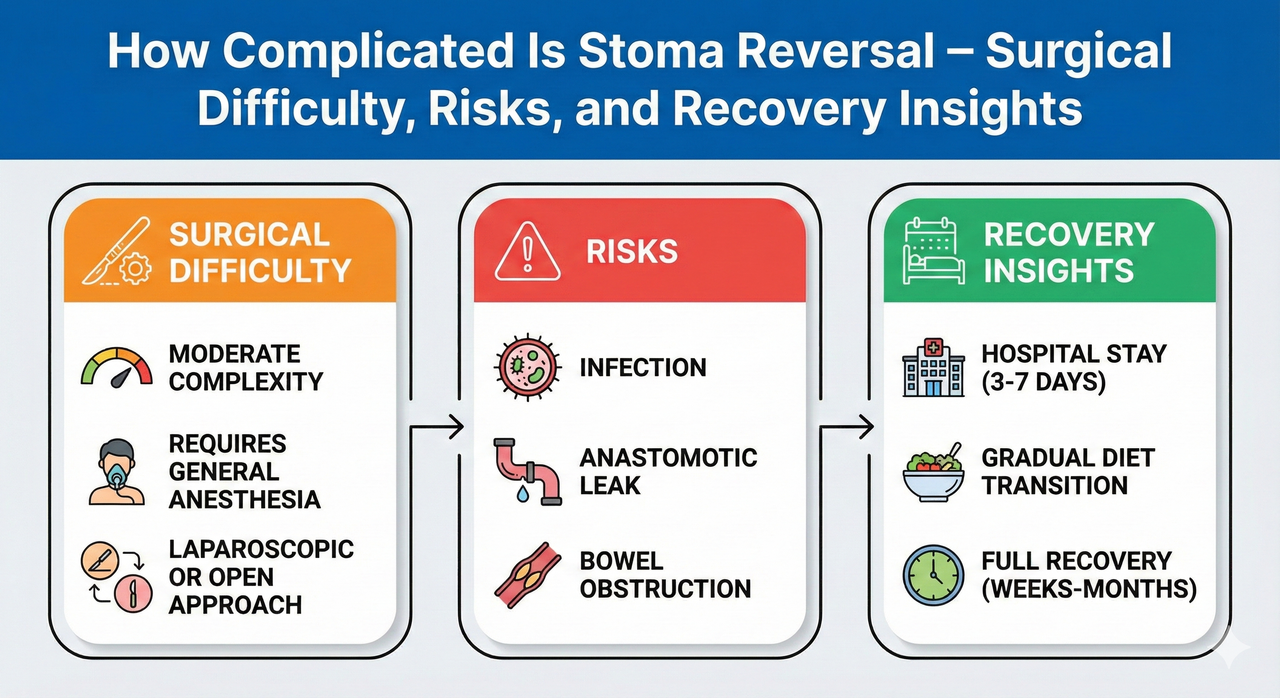
Medically, how complicated stoma reversal is depends on the patient’s anatomy, healing, and bowel readiness. Even though the surgery is common, it requires reconnecting the bowel and closing the abdominal wall, which classifies the procedure as major abdominal surgery.
The answer to how complicated stoma reversal is varies depending on scar tissue, prior abdominal infections, inflammatory bowel disease, and the quality of the bowel segment that must be reconnected. Conditions such as Crohn’s disease or diverticulitis may increase complexity.
Anatomical factors such as adhesions, narrowed bowel segments, or difficulty locating the bowel ends can increase how complicated stoma reversal is. Surgeons must carefully mobilize tissue to reconnect the bowel without tension.
Yes. The longer a stoma remains in place, the more surrounding tissues adapt and reorganize. This can significantly increase how complicated stoma reversal is and may lead to longer surgery times.
Common complications include infection, bleeding, bowel obstruction, and delayed healing. These issues directly influence how complicated stoma reversal is and may prolong recovery, although most can be managed effectively.
An anastomotic leak—where the bowel reconnection does not seal properly—is a significant factor in evaluating how complicated stoma reversal is. While rare, it requires rapid treatment to avoid serious complications.
Bowel function plays a major role in understanding how complicated stoma reversal is. Many patients experience loose stools, urgency, and irregular patterns for several weeks. Full digestive regulation may take months.
The bowel section that was inactive must restart its normal function. Hydration, diet, and pelvic floor strength all determine how complicated stoma reversal is during the adjustment period.
Post-surgery dietary needs greatly impact how complicated stoma reversal is. Low-fiber foods, slow food reintroduction, and avoiding common triggers help minimize discomfort during early recovery.
Proper hydration reduces post-surgery diarrhea and dehydration, both of which worsen how complicated stoma reversal is for many patients. Former ileostomy patients are especially prone to fluid imbalance.
Recovery influences how complicated stoma reversal is on a personal level. Most patients regain strength within 2–6 weeks, but bowel predictability may require a longer period of adjustment.
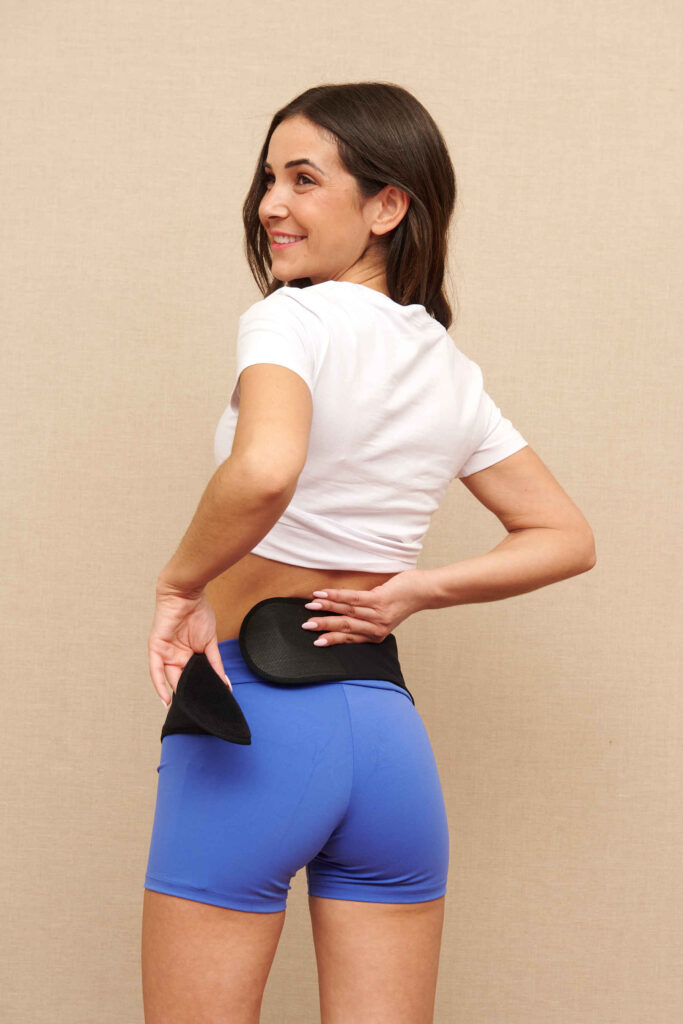
Support garments can ease discomfort and provide abdominal stability during healing:
A well-healed stoma, minimal inflammation, good nutrition, and stable bowel disease reduce how complicated stoma reversal is. Surgeons evaluate imaging and bowel health before approving the procedure.
Yes. Strengthening the pelvic floor, optimizing diet, improving hydration, and following surgical instructions lower how complicated stoma reversal is. Detailed preparation support is available through the SIIL Ostomy Reversal Hub.
Yes. Its complexity depends on scar tissue, bowel condition, and underlying disease.
Most people recover strength within 2–6 weeks, but bowel regulation may require months.
Risks include infection, obstruction, and anastomotic leak.
Yes. Irregularity and urgency are common early after reversal.
The SIIL Ostomy Reversal Hub offers extensive preparation and recovery support.

Changing My Ostomy Pouch, A Practical Guide for Comfort, Safety,

Highly-Reviewed Ostomy Bag Covers | Trusted by 40,000 Ostomates Highly-Reviewed