

 ES
 EN
 GB
 DE
 FR
No products in the cart.
Ostomy Reversal Risks – What Patients Should Know Before Surgery
Ostomy reversal is an important milestone for many people who have been living with a temporary ileostomy or colostomy. However, even though reversals are common, it is essential to understand the main ostomy reversal risks before committing to surgery. The bowel must readjust, the abdominal wall must heal, and the body goes through a significant transition period.
This guide outlines the most important ostomy reversal risks, based on medical insights from the Mayo Clinic, Cleveland Clinic, and the United Ostomy Associations of America. For detailed preparation guidance, the SIIL Ostomy Reversal Hub provides step-by-step resources: Ostomy Reversal Support Center.
Understanding the Most Common Ostomy Reversal Risks
 Ostomy BeltHernia support & leak prevention. Trusted by 50,000+ ostomates worldwide.Discover →
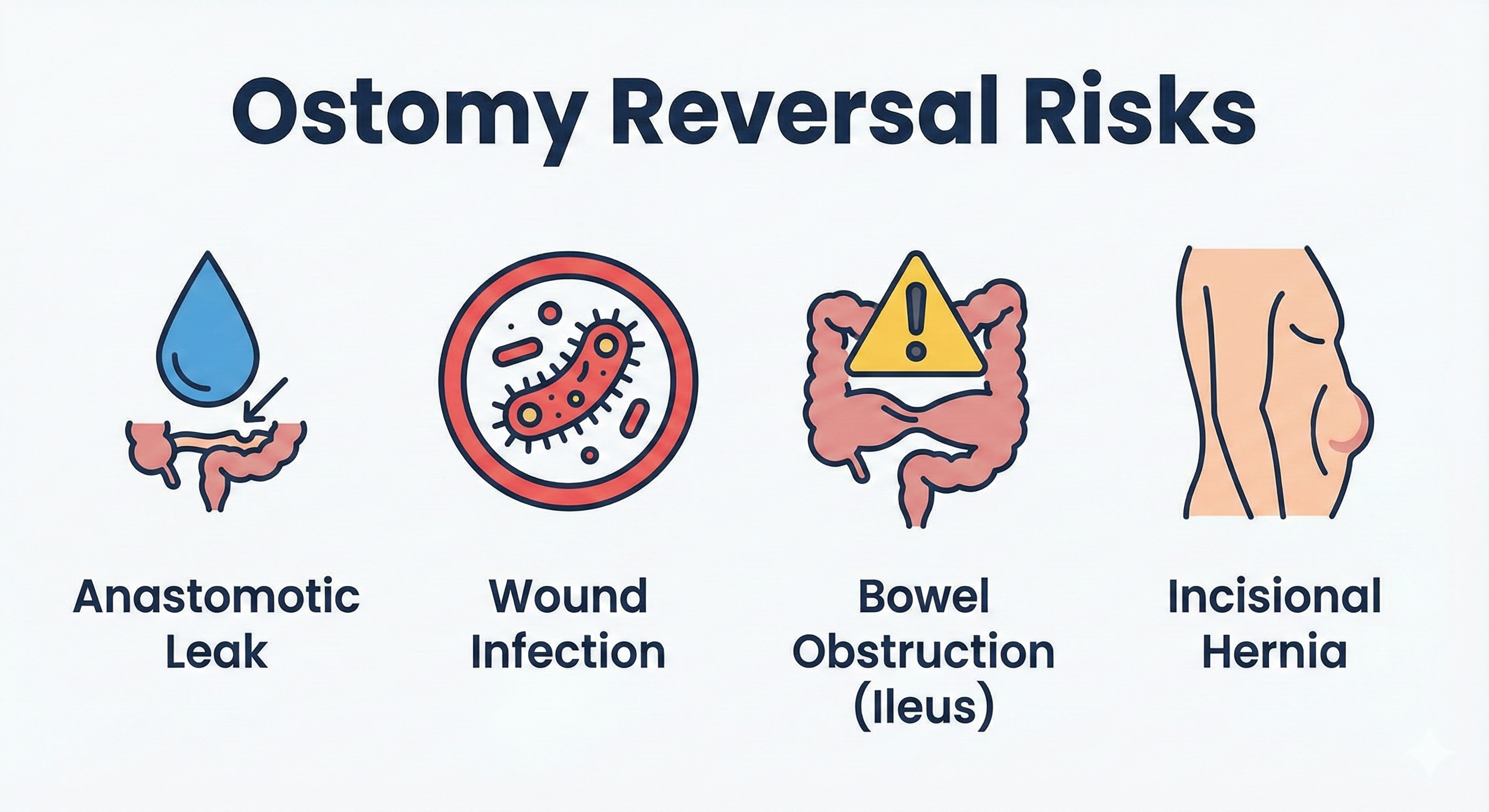
The most common ostomy reversal risks are infection, bowel obstruction, slow bowel regulation, leakage at the reconnection site and dehydration. They vary with the type of ostomy, how long it was in place and your general health.
According to the Cleveland Clinic, minor complications occur in up to 30% of reversals, while serious complications are much less common. Good preparation and careful post-operative care lower the risk considerably; our Pre-Reversal Checklist can help you get ready.
Free guide · A gift from SIIL
The SIIL Ostomy Diet Guide — yours, free
Practical information on food and hydration for everyday life with a stoma.
Prefer it as a PDF in your inbox? Get it by email.
Risk 1: Anastomotic Leak
An anastomotic leak, when the join in the bowel doesn’t heal properly, is one of the most serious ostomy reversal risks. Signs include fever, severe abdominal pain, a rapid heart rate or signs of infection; although leaks are rare, they need immediate medical attention. To prevent them, surgeons use imaging before the operation, check that the bowel has healed and make sure no inflammation remains: healthy tissue and good nutrition lower this risk significantly.
Risk 2: Infection at the Surgical Site
Infection where the stoma was closed is among the most frequent risks. Most infections are mild and respond well to antibiotics or proper wound care. You can help by keeping the incision clean, avoiding strenuous activity and watching for redness or discharge; our Post-Reversal Care Tips cover more aftercare steps.
Risk 3: Bowel Obstruction
Scar tissue (adhesions) can narrow or block parts of the bowel, soon after surgery or later in recovery. Severe bloating, vomiting, abdominal pain and being unable to pass gas or stool are warning signs that need prompt medical evaluation.
Risk 4: Irregular Bowel Function
After a reversal, loose stools, urgency, gas and unpredictable bowel movements are common, and the bowel can take weeks or months to settle. Gradual diet changes, hydration and pelvic floor strengthening support recovery, and supportive clothing such as ostomy underwear and stability belts can make this adjustment period more comfortable.
Risk 5: Dehydration (More Common After Ileostomy Reversal)
The bowel needs time to reabsorb fluids efficiently, which makes dehydration a key risk, especially if you had an ileostomy. To prevent it, sip electrolyte drinks regularly, watch the color of your urine and go easy on caffeinated drinks early on.
Risk 6: Changes in Bowel Control
Temporary leakage, urgency and small accidents are among the most common effects, and pelvic floor exercises help a great deal in restoring control. Most people notice improvement within a few weeks, although some need several months of bowel retraining.
Diet and Sensitivity Risks After Ostomy Reversal
Spicy foods, high-fiber meals, carbonated drinks and dairy often trigger symptoms early in recovery; these sensitivities usually improve as bowel function settles, and not everyone has them. Reintroduce foods slowly, one at a time, while watching how your body reacts. Recipes and tips are in our guide to Diet After Reversal.
For full preparation steps and recovery tools, visit the Ostomy Reversal Support Center.
Ostomy BeltHernia support & leak prevention. Trusted by 50,000+ ostomates worldwide.Discover →Keep reading
More from the SIIL journal

Ostomy life & care library
Ostomy Wafer Wear-Time, Bag Change Schedule & Monthly Supply Calculator
Free interactive ostomy bag & wafer change frequency calculator: find optimal wear time (1-piece vs 2-piece, ileostomy, colostomy,…
4 min read

Ostomy life & care library
Flat vs. Convex Ostomy Wafer Selector (Flush, Retracted & Creased Stoma Guide)
Free interactive flat vs. convex ostomy wafer selector: check budded, flush, or retracted stoma profiles, soft vs. firm convexity …
4 min read

Ostomy Diet & Nutrition
Ostomy Medication & Pill Absorption Checker (Ileostomy, Colostomy & Urostomy)
Free interactive ostomy medication & tablet absorption guide: check ER/XR, enteric-coated, liquid, birth control, and diuretic con…
6 min read

Welcome offer
Join the SIIL family.
Get 20% off your first order.
Stories, tips and exclusive drops — once a month, never spam. Your code lands in your inbox the moment you subscribe.
By subscribing you accept our privacy policy. Unsubscribe in one click, anytime.
Welcome — check your inbox for the code.
$41.99
$76.99
$52.99
$92.99
$76.99
$76.99
$76.99
$44.99
$92.99
$76.99
$44.99
$52.99