

 ES
ES EN
EN GB
GB DE
DE FR
FRNo products in the cart.
Stoma Skin Irritation: How to Spot It, Calm It, and Stop It Coming Back
Quick answer: Stoma skin irritation is almost always a leak-and-friction problem, not a "you did something wrong" problem. The skin around your stoma should look like the rest of your belly — same colour, no soreness. When it turns red, itchy, weepy or broken, it's usually output creeping under the barrier or a bad fit. The fastest fix: clean with plain warm water (skip soaps and creams), get the wafer opening cut to the right size, and give the skin a dry, sealed surface to heal on. Persistent or spreading irritation is worth showing your stoma nurse.
If you've ever peeled off a wafer to find angry pink skin staring back at you, you're in good company — sore skin around the stoma is one of the most talked-about things in every ostomy group going. The reassuring part: it's rarely serious, and it's almost always fixable once you know what your skin is trying to tell you. Let's walk through it the honest way — what irritation actually looks like, why it happens, and the small changes that break the cycle for good.
Key takeaways
- Healthy peristomal skin looks like the rest of your abdomen — no redness, no soreness, no weeping.
- Most irritation is a fit-and-leak issue: correct your wafer opening and the seal, and the skin usually follows.
- Clean with plain warm water. Soaps, wipes with lotion, and creams can leave a film that stops your barrier sticking.
- Ostomy powder + a barrier film is the go-to combo for weepy, broken skin.
In this guide
What Healthy Skin Looks Like vs. When Something's Off
 Ostomy BeltHernia support & leak prevention. Trusted by 50,000+ ostomates worldwide.Discover →
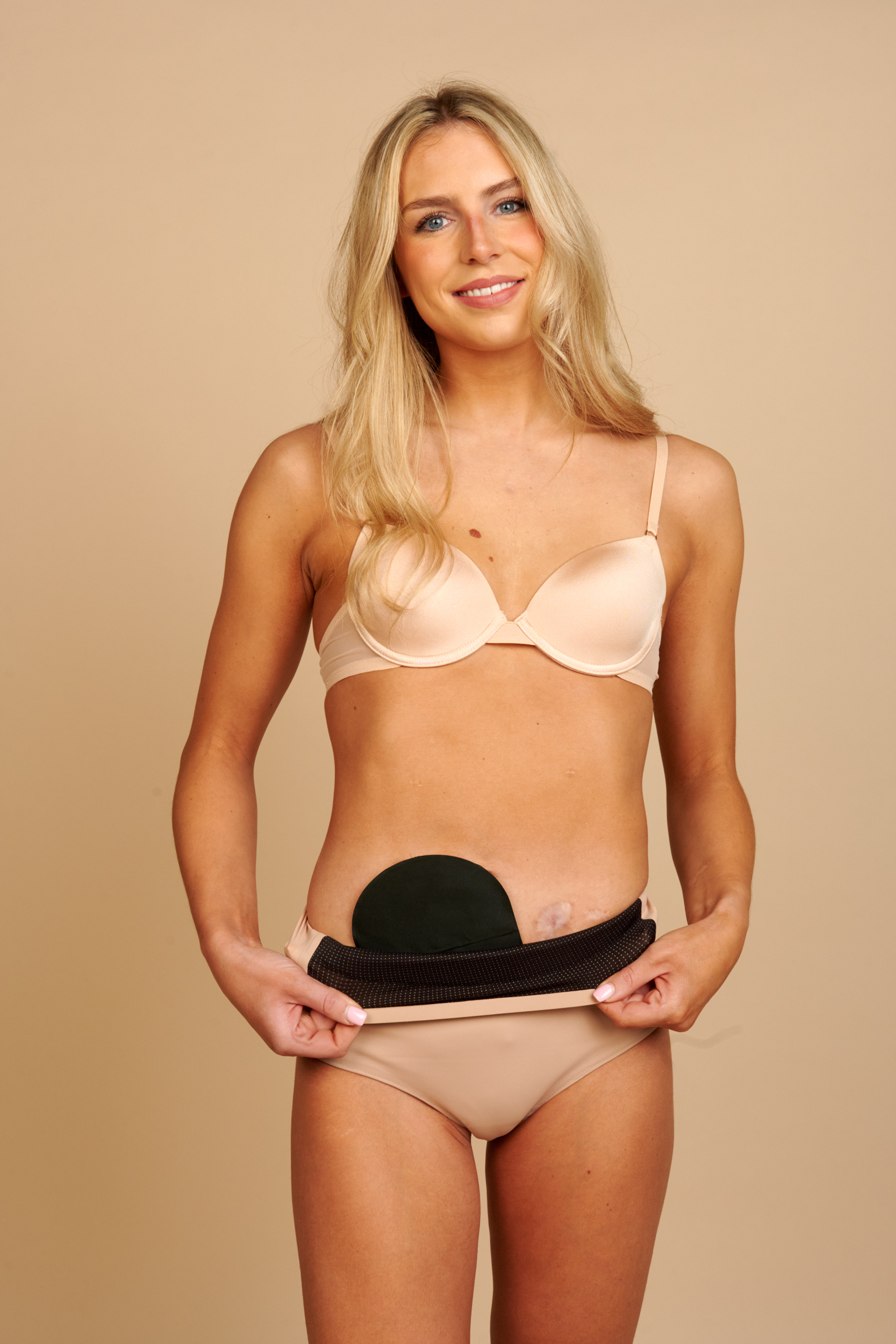
The simplest benchmark: the skin around your stoma should match the skin everywhere else on your belly. Smooth, intact, the same colour, no stinging when you touch it. A lot of people search for "healthy stoma pictures vs unhealthy" hoping for a magic reference photo — but honestly, the best photo is your own mirror on a good day. Once you've seen your skin looking calm, you'll spot changes fast.
A quick word on the stoma itself, because people mix the two up. The stoma (the pink/red part) is meant to look moist and beefy-red, a bit like the inside of your cheek. It has no nerve endings, so it doesn't hurt, and it can bleed a tiny bit when you wipe it — that's normal. The skin around it is what should stay quiet and pale. If you're worried about the colour of the stoma itself — dusky, very pale, or an odd shade — that's a different conversation; our guide to what your stoma colour means covers it. This article is about the skin.
Here's how the common irritation types tend to show up, so you can tell them apart at a glance:
Swipe across the table to see every column.
| What you see | Likely cause | First move |
|---|---|---|
| Red, sore, weepy skin exactly where output touched it (often a matching-shape patch) | Leakage / output sitting on skin | Recut the wafer opening; powder + barrier film |
| Redness in the shape of the adhesive itself — itchy, sometimes bumpy | Reaction to an adhesive or product | Switch product; patch-test a small area |
| Small pimple-like bumps, sometimes with itching, spreading outward | Fungal (yeast) type irritation in the warm, damp area | Keep it drier; ask your nurse about antifungal powder |
| White, soggy, over-soft skin | Too much trapped moisture (overhydration) | Change more promptly; check the seal isn't undercut |
| Raw or grazed patches after removal | Friction / pulling the wafer off too roughly | Use an adhesive remover; peel slowly, skin held taut |
Two things worth naming because they scare people: a little bleeding from the skin around the stoma is often just broken, raw skin that's been sitting under output — treat the irritation and it settles. And "white skin around the stoma" usually means it's been damp too long, not something sinister. If bleeding is heavy, keeps coming back, or comes from deeper than the surface, that's one to flag to your nurse rather than manage at home.
Free ostomy starter guide
Everything the first weeks throw at you, in one calm place
From getting the seal right to building a routine that actually sticks — our free new-patient guide is the friend-who's-done-this walkthrough we all wish we'd had on day one.
Why the Skin Gets Irritated in the First Place
Nearly every case comes back to one culprit: output touching skin that isn't meant to touch output. When your pouch leaks, even a slow, invisible seep under the edge of the wafer, that fluid sits against your skin and starts to break it down. Then you get the frustrating loop everyone in the groups describes — irritated skin doesn't hold the barrier as well, a poorer seal means more leaks, more leaks mean more irritation. Breaking that cycle at any point calms the whole thing down.
The common triggers, in the order they tend to bite:
- Wafer opening too big. If there's a gap of exposed skin between the stoma and the barrier, output will reach it. The opening should hug the stoma with barely a millimetre to spare.
- A flat baseplate on a not-flat belly. Creases, scars, dips and folds create leak channels. This is where barrier rings, seals or a convex wafer earn their keep.
- Leaving a full pouch too long. Weight pulls on the seal. Emptying and changing on a sensible rhythm prevents a lot of grief.
- Product reactions. Some skin just doesn't love a particular adhesive, spray or wipe. Redness in the exact outline of the product is the tell.
- Friction. Rough removal, or a waistband/belt rubbing right on the edge, grazes the skin.
- Heat and moisture. The warm, sealed area is a happy home for the fungal-type irritation that shows up as little bumps.
Ileostomy output is more liquid and enzyme-rich, so it tends to irritate skin faster and more aggressively than firmer colostomy output — which is why ileostomates often become the fussiest about a perfect seal. Neither is "worse," they just ask for slightly different attention; if you're weighing up how they compare, our ileostomy vs colostomy piece breaks it down.
How to Treat Irritated Skin Around the Stoma
Here's the honest, no-drama version that mirrors what actually works for most people. The theme is simple: get the skin clean and dry, give it a surface to heal on, then fix whatever caused it.
- Clean with plain warm water. This is the tip that comes up again and again in the community, and it's right. Skip soaps, baby wipes with lotion, and any cleanser — they leave a residue that stops your barrier gripping. Water and a soft cloth or dry gauze is all you need.
- Dry it properly. Pat, don't rub, and give it a genuine minute to air-dry. Adhesives hate damp skin.
- Reach for ostomy powder if the skin is weepy or broken. Dust a light layer on the raw area, then brush off the excess so only a thin film stays in the moist spots. Powder soaks up moisture and gives the barrier something to stick to.
- Seal it with a barrier film. A no-sting protective film over the powder ("crusting," as a lot of people call it) creates a dry, protected layer. Repeat once or twice if it's really raw.
- Now fix the fit. Recut your opening snug, add a barrier ring if you have folds, and consider convexity for a stoma that sits flush or dips inward.

What to leave in the cupboard: creams, lotions, oils and topical steroids. They feel soothing for a moment but they leave your skin greasy, so the barrier slides and you leak again — which is exactly what irritated the skin in the first place. Alcohol-based products sting broken skin and can dry it out too far. The group consensus of "just water, nothing fancy" exists because the fancy stuff so often backfires.
One underrated fix is what your clothing does to that fragile edge. A pouch that swings, or a jeans waistband landing right on the wafer, grinds at the seal all day. Soft, high-waisted layers that hold everything gently in place take the friction out of the equation — worth knowing which pants work best for ostomates so your outfit isn't quietly sabotaging your skin.
Comfort that actually protects your skin.
SIIL's high-waisted ostomy underwear cradles your pouch without pressing on the wafer edge — less friction, fewer leaks, and it looks like underwear you'd wear anyway.
Stopping It From Coming Back
Treating irritation is one thing; not living on a loop of it is the real win. A few habits keep most people's skin quiet for good:
- Re-measure now and then. Stomas change shape in the months after surgery and with weight changes. A template that fit in month two might be loose by month five.
- Match your kit to your body, not the other way round. If you've got folds, a soft ostomy belt or a barrier ring can be the difference between a weekly leak and none.
- Keep the area friction-free. Soft support wraps hold the pouch flat and stop it dragging on your skin as you move.
- Change on a schedule, not just when it leaks. Reacting to leaks means the damage is already done.
- Peel, don't rip. Support the skin with one hand and ease the wafer off with the other, using an adhesive remover if you're stuck.
And the empowering part worth saying out loud: calm peristomal skin is completely normal to have. Loads of ostomates go years without a single sore patch once their routine clicks. It isn't a sign you're "doing ostomy life on hard mode" — it's a fit puzzle, and puzzles get solved. If yours is being stubborn despite a snug fit and a clean routine, a stoma nurse can spot a fungal issue or a product allergy in minutes and point you at the right powder or barrier. That's not failure; that's using your team.
Feeling good in your skin extends past the wafer, too. Plenty of people find their confidence comes back with the right ostomy clothing and even swimwear that lets them get back to the pool without a second thought — because managing your skin well is what makes all of that easy.
Sore skin around the stoma: what it means and how to heal it
Sore skin around a stoma is almost always a sign that something is touching the skin that shouldn't be: output from a small leak, the adhesive itself, or moisture trapped under the wafer. The good news is that most sore skin heals within a few pouch changes once you find the cause. Use this table as a starting point, then talk to your stoma nurse.
Swipe across the table to see every column.
| What you see | Likely cause | What usually helps | Call your nurse if |
|---|---|---|---|
| Red, sore, raw or weepy skin right under the wafer | Output leaking under the seal, or a wafer hole cut too big | Re-measure the stoma and recut; fix the leak first; a dusting of stoma powder on weepy skin, brushed off before the wafer | It's raw and bleeding, or not better after 2–3 changes |
| Itchy red rash with small spots at the edges | Yeast (fungal) infection, more common in heat and after antibiotics | Keep skin dry; your nurse or doctor can recommend an antifungal powder | Always worth a call to get the right treatment |
| Red patch in the exact shape of the wafer or tape | Reaction to the adhesive | Ask for samples of a different barrier | The shape keeps coming back |
| Red bumps around hair follicles | Folliculitis from pulling hair when removing the wafer | Use an adhesive remover; trim hair with scissors or clippers, not a razor | Bumps are painful or full of pus |
| Sore skin plus a bulge around the stoma | Possible parastomal hernia changing the fit | Ask your nurse about the fit and support garments | Always mention a new bulge |
| Hot, swollen, very painful skin, or fever | Possible infection | Don't wait | Call your stoma nurse or doctor the same day |
How to heal sore skin around a stoma, step by step
- Remove the wafer gently with an adhesive remover, pressing the skin away from the wafer rather than pulling.
- Clean with warm water only and pat completely dry. Soaps and wipes with oils or fragrance can stop the next wafer sticking.
- If the skin is weepy, dust a little stoma powder on the raw area, brush off the excess, and seal it with a no-sting barrier film.
- Re-measure the stoma and cut the wafer so it fits snugly, with only a tiny gap.
- Change a little sooner than usual for a few days, so the skin isn't sitting under a lifted seal.
Our guide to ostomy skin barriers, rings and powders explains what each product is for, and why an ostomy bag keeps leaking covers the usual causes of leaks.
Itchy skin around the stoma
Itching usually means moisture or yeast under the wafer, or a mild reaction to the adhesive. Itching that comes with a red rash and small spots at the edges is often yeast, especially in hot weather or after a course of antibiotics, and needs an antifungal treatment your nurse or doctor can recommend. If it itches right where the plastic of the pouch rests on your skin, a soft fabric layer helps: a fabric ostomy bag cover keeps the plastic off your body and absorbs sweat.
Beefy red stoma: is that normal?
Yes. A healthy stoma is meant to be red or pink, moist and shiny, a bit like the inside of your mouth, and many people describe it as "beefy red." What matters is the skin around it, which should look like the rest of your belly. A stoma that turns dark red, purple, grey or black needs a call to your team straight away; our guide to stoma color shows what's normal and what's not.
Is my stoma infected?
Real infections around a stoma are not common, but they need treatment quickly. Watch for skin that is hot, swollen and very tender, pus or a bad-smelling discharge, red streaks spreading out, or a fever. A small amount of bleeding from the stoma itself when you clean it is usually normal; see stoma bleeding for when it isn't.
Frequently Asked Questions
How do I heal sore skin around my stoma?
Find and fix the cause first, usually a small leak or a wafer cut too big. Clean with warm water only, pat dry, dust stoma powder on weepy areas and seal with a barrier film, then re-measure and recut the wafer. Most sore skin improves within a few changes; call your stoma nurse if it doesn't.
Why is the skin around my stoma itchy?
Itching is usually caused by moisture or yeast under the wafer, or a reaction to the adhesive. A red rash with small spots at the edges is often yeast and needs an antifungal from your nurse or doctor.
Is a beefy red stoma normal?
Yes. A healthy stoma is red or pink, moist and shiny. Call your team if it turns dark red, purple, grey or black, or if the skin around it becomes very sore.
Can sweating in summer make the skin around my stoma sore?
Yes. Heat and sweat loosen the wafer and keep the skin damp, which can lead to irritation or yeast. Change a little more often in hot weather, keep the skin completely dry before applying the wafer, and use a fabric bag cover so the plastic doesn't sit on damp skin.
Can a leaking ostomy bag actually cause skin irritation, or is it something else?
Yes — leaking is the number-one cause. Even a slow seep you can't see lets output sit against skin that isn't built to handle it, and that's what turns it red, sore and weepy. Fix the seal and you fix the source. If irritation keeps returning despite a good fit, then it's worth looking at a product reaction or a fungal issue instead.
How long does irritated skin around the stoma take to heal?
Once the cause is sorted, mild redness often calms in a few days, and broken or weepy skin usually settles within one to two pouch changes when you use powder and a barrier film. The key is removing what caused it — if output keeps reaching the skin, it can't heal no matter what you put on it.
Is a little bleeding from the skin around my stoma something to worry about?
Broken, raw skin can bleed a little when it's been irritated — that usually settles once the skin heals. Remember the stoma itself can also bleed a touch when wiped, and that's normal. Bleeding that's heavy, keeps recurring, or comes from deeper than the surface is worth showing your stoma nurse rather than treating at home.
What does yeast irritation around a stoma look like compared to a normal leak rash?
A leak rash tends to sit exactly where output touched, often in a matching shape, and is sore and weepy. Fungal-type irritation usually shows as small pimple-like bumps that itch and spread outward from the edge, thriving in the warm damp area under the pouch. Keeping the skin drier helps, and a nurse can confirm and suggest an antifungal powder if needed.
Should I use barrier cream or lotion to soothe sore peristomal skin?
Better not to. Creams, lotions and oils leave a greasy film that stops your barrier sticking — so you leak again and re-irritate the skin. Ostomy powder plus a no-sting barrier film is the combo that soothes and still lets your wafer grip. Save regular moisturisers for skin nowhere near the wafer.
Can I still swim or exercise while my skin is healing?
Usually yes — a secure, well-fitted pouch with the skin properly protected underneath holds up fine to swimming and movement. If the skin is very raw, give it a change or two to settle first so you're not adding friction or moisture. Supportive underwear or a wrap keeps everything flat and reduces the rubbing that slows healing.
Written by María G. · hola@siilostomy.com · Last updated: October 20, 2026
Keep reading
More from the SIIL journal

Ostomy life & care library
Hartmann’s Procedure: Why It’s Done, Life With the Colostomy, and Reversal
Hartmann's procedure explained: why it's done for diverticulitis and emergencies, life with the end colostomy, recovery, and when …
9 min read

Ostomy life & care library
J-Pouch vs Ileostomy: How People Choose and What Life Looks Like With Each
J-pouch vs permanent ileostomy: how J-pouch surgery works, the stages, bathroom trips, pouchitis, who is a candidate, and what dai…
11 min read

Ostomy life & care library
Retracted Stoma: Why It Happens, How to Stop the Leaks and Live Comfortably
A retracted stoma explained: why it happens, how convex pouches, seals and belts help stop leaks, when to call your nurse and what…
12 min read

Welcome offer
Join the SIIL family.
Get 20% off your first order.
Stories, tips and exclusive drops — once a month, never spam. Your code lands in your inbox the moment you subscribe.
By subscribing you accept our privacy policy. Unsubscribe in one click, anytime.
Welcome — check your inbox for the code.
$52.99
$44.99
$72.99
$50.00
$72.99
$52.99
$72.99
$72.99
$52.99
$72.99
$44.99
$72.99