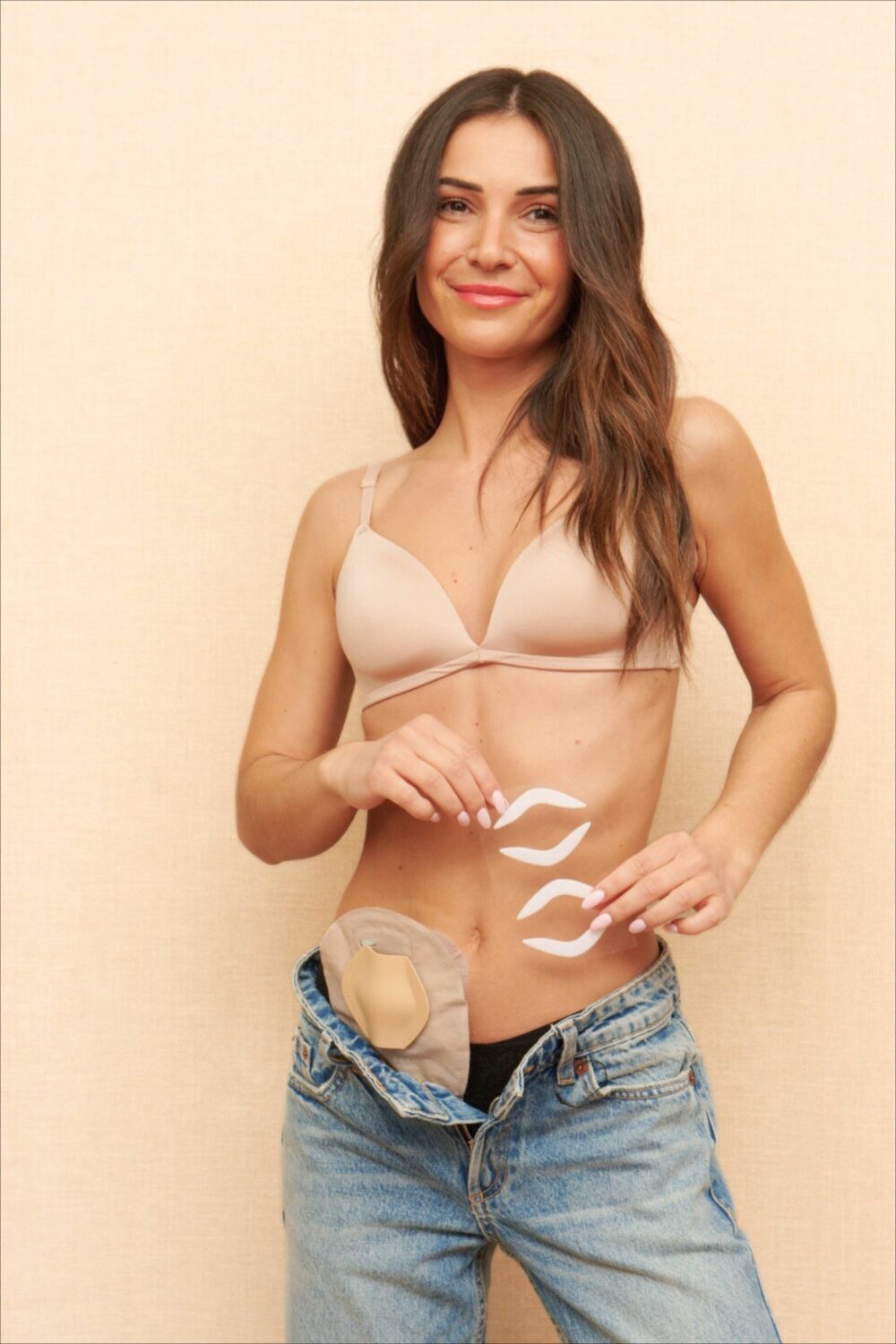

Ostomy Wraps for Men: Hold the Pouch, Keep Your Clothes
Quick answer: An ostomy wrap for men is a wide, clothing-like band you wear over your pouch so an ostomy bag stays close to your body instead of swinging, rustling, or printing through a shirt. It is not a leak fix. Most men wear one under jeans, chinos, or gym shorts the way they would wear a compression waistband, then empty as usual through the bottom of the pouch.
If you have been tugging your shirt down in the elevator, or feeling the pouch bounce on the walk to the car, you are not being dramatic. That is just a bag doing bag things against clothes that were never cut for it. A wrap is one of the quieter fixes — not a personality makeover, just fabric that makes the rest of the day less of a negotiation. Here is the honest version of what ostomy wraps for men actually do, where a belt or high-waisted underwear still wins, and how to wear one without turning a bathroom stop into a project.
Key takeaways
- A wrap holds the pouch still so it does not swing, rustle, or bulge under a shirt. It does not replace a good seal.
- Ileostomy, colostomy, and urostomy bags all work with the same idea; the difference is how often you need access to empty.
- Men usually wear the wrap over the pouch and under pants, like a wide waistband — not as a strap on display.
- Belts, high-waisted underwear, and bag covers each win at different jobs. Pick the job, not the label.
What an ostomy wrap actually does (and what it does not)
 Ostomy BeltHernia support & leak prevention. Trusted by 50,000+ ostomates worldwide.Discover →
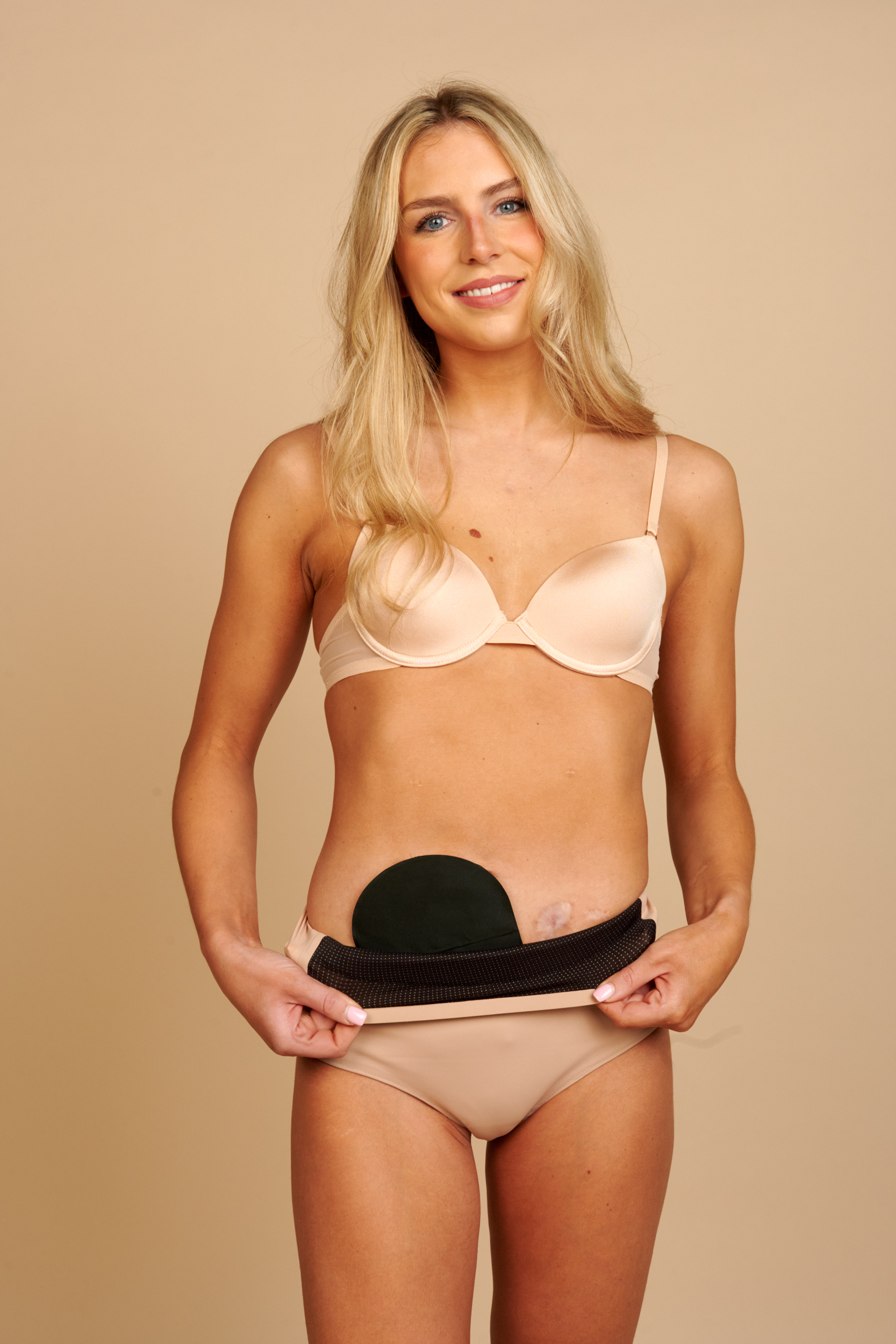
A wrap is a wide band of fabric around your midsection, worn over the pouch. Think less “ostomy supplies aisle” and more “the waistband of compression shorts that decided to become its own piece.” The job is mechanical and unglamorous, which is exactly why it helps.
When you walk, an ostomy bag wants to pendulum. When you sit, it wants to fold and print a shape through a fitted tee. When the plastic hits a leather belt or a stiff jeans button, it rustles. A wrap keeps the pouch against you so those three things calm down. A belt does a narrower version of the same hold. A wrap stretches that idea into something that looks like clothing instead of a strap.
Here is what it will not do, and it is better to hear it now than after you bought one hoping for magic:
- It will not stop a leak. If the pouch is already lifting or the seal is failing, fabric on top of the bag does not fix that. Get the pouch sitting properly first, then use clothing to hold it still.
- It will not replace emptying. A bag that is getting heavy still needs to be emptied. A wrap just keeps that weight from swinging. If you are still mapping a rhythm, how often to empty matters more than any waistband.
- It will not hide a very full pouch under a thin white shirt. Physics still exists. Empty earlier and the wrap has less to disguise.
- It will not cancel odor. If smell is the actual problem, that is filters, emptying, and sometimes a bag cover — not tighter fabric. Same logic as any other ostomy odor fix: clothing is not a filter.
The useful side is equally specific. With the pouch held close, a dark crewneck, an oxford, a merino sweater, and stretch chinos all become ordinary again. You can sit through a dinner without checking your shirt every ten minutes. You can walk a parking garage without the bag slapping your thigh. That is the whole pitch: small, quiet, and real — the same reason people end up in dedicated ostomy clothing instead of inventing a new outfit every morning.
Free guide
The new-ostomy guide we actually wanted someone to hand us
Pouch changes, clothes, the first weeks, and the stuff nobody thinks to mention until you are already standing in a bathroom improvising.
Wrap, belt, or underwear: pick the job, not the label
Search results mash “wrap,” “belt,” “binder,” and “support garment” into one pile. They are not the same piece, and men usually need one job more than the others. If you have been comparing an ileostomy vs colostomy setup, the wrap itself does not change — the emptying rhythm does. Same story for a urostomy bag: the tap at the bottom is the access issue, not a different category of wrap.
| What you want | Better match | Where it genuinely wins | Honest tradeoff |
|---|---|---|---|
| Pouch held flat under shirts and jeans | Ostomy wrap | Wide coverage, looks like a waistband, muffles rustle, less print-through when you sit | You still need a way to empty without a full undress; too tight and it can press on the pouch |
| Simple snugness, easy to throw in with supplies | Ostomy belt | Adjustable, quick to tighten after a change, small enough to live in a bag | Looks more like a strap, narrower hold, can roll if the height is off |
| All-day wear that feels like getting dressed, not suiting up | High-waisted ostomy underwear | Built-in hold plus a real garment; good under chinos, suits, and gym shorts | You are buying underwear sizing, not a separate band — worth it if you already live in briefs |
| Softer sound and fabric against skin | Bag cover | Stops that plastic-on-skin feeling; useful at night or under a wrap | Does not hold the pouch in place on its own |
Ostomy type, once, so we do not pretend three different wraps exist:
- Ileostomy bag: you empty more often. You want a wrap you can slide down or open at the bottom without peeling the whole thing off in a stall.
- Colostomy bag: can sit heavier and rounder when it is filling. The wrap’s value is silhouette — keeping that shape from reading through a shirt — as long as you empty before it becomes a bulge the fabric cannot hide.
- Urostomy bag: the tap needs a clear path. Daytime wrap is fine. Night drain tubing is a different outfit; most people drop the wrap at bed and let the night bag do its job.
The rest of the market is just different jobs with different silhouettes. An adjustable ostomy belt wins on convenience if you only want the bag snug after a change. Sport-cut belts exist if your main life is movement. Longer, wider wraps exist if a standard band rides up on your torso. SIIL’s lane is the opposite of the catalog look: a wrap that reads as clothing. None of those are wrong. They are different jobs.
How to put one on and empty without a wrestling match

The method that actually sticks is boring, which is the point. Pouch on and secure first. Then the wrap over the pouch, sitting high enough to cover the bag but not so high it fights your shirt. Then pants. If you try to trap the pouch under a stiff jeans waistband with no wrap, the bag either folds or creeps. If you put the wrap on like a strap over a tucked-in shirt, it will look like a strap. Clothing order matters.
Emptying is the part men get stuck on in public restrooms. You do not need to take the wrap off. Slide it up or ease the bottom edge down, open the tail of the pouch, empty, wipe, close, slide the wrap back. Ileostomy emptying happens enough that this motion has to be muscle memory; a colostomy bag is less frequent but often heavier, so do it before the wrap is holding a water balloon. Urostomy is the tap — aim, empty, close — same slide of the fabric.
A few lived-in details that save a day:
- Empty around a third full, not when the pouch is dragging. The wrap can only flatten what is already a reasonable size.
- If your abdomen changes shape after a meal (it will), the wrap may feel tighter at 2 p.m. than it did at 8 a.m. That is not a sizing failure. Ease it, do not crank it.
- Do not let the wrap sit as a hard ridge right on the top of the pouch all day. Hold the bag; do not dig a crease into the seal.
- Boxers alone let the bag dangle. Briefs, a wrap, or high-waisted underwear give it a home. Mix them; you do not have to pick a personality.
If you want the hold of a wrap with even less “extra piece” energy, high-waisted ostomy underwear is the same idea built into the garment you were going to wear anyway. A dedicated belt is the stripped-down version when you only want snugness after a pouch change.
If you want the clothing version of that hold — a wrap that sits under real outfits instead of looking like a supply — start with ostomy wraps for men in the SIIL line and treat it as part of getting dressed, not as a separate step.
Work, gym, jeans, and the shirt test
The social side is not a TED Talk about confidence. It is: does this print through my shirt in the standup, and can I empty in a stadium stall without a scene.
At a desk, the problem is sitting. The pouch folds at the belt line, then you stand up and there is a crease in your shirt that was not there at 9 a.m. A wrap keeps the bag from collapsing into that fold. Pair it with pants that have a little give — the same logic as what pants actually work with an ostomy — and the waistband stops acting like a shelf the bag has to climb over.
In a suit, the jacket hides a lot. The tell is the dress shirt when you sit and the fabric pulls across your middle. Darker shirts, a bit of room in the cut, and a wrap under the trousers do more than any “power pose.” Gym is the opposite problem: movement. Running, box drills, even a brisk walk to the train — the pouch slaps. A wrap or compression-style waistband is the difference between finishing the workout and cutting it short to readjust in a locker room. If you want a harder shield for contact rather than fabric hold, that is a different piece — a stoma guard — not a wrap asked to do armor duty.
What you can still wear, because the restriction list is not the whole story:
- Dark crewnecks, oxfords, polos, and merino sweaters — the wrap takes care of the midsection so you are not limited to oversized hoodies.
- Stretch chinos, dark jeans with some elastane, suit pants that are not rigid as cardboard.
- 5-inch gym shorts and joggers, as long as the wrap or high waist is doing the holding under them.
- Pool and sea are a different garment. A daytime wrap is not swimwear; use ostomy swimwear with a real pocket instead of dunking the waistband you wear to work.
Flights, long drives, and weddings are the same principle with worse bathrooms. Empty before you board. Keep the wrap on so the seatbelt is dealing with a flat pouch, not a loose one. Change the bag on your usual rhythm, not because the calendar said so. A wrap does not interfere with that. It just keeps the middle of the outfit from becoming the main character.
What to look for when you shop (without the catalog energy)
Ignore “number one in ostomy care” language. Look at the piece the way you would look at a quality undershirt.
- Width. It should cover the pouch, not just cinch above it. A skinny strap is a belt. A wrap is a band.
- Stretch that recovers. If it bags out by afternoon, it is not holding anything. If it does not give at all, it will fight a meal and a sitting day.
- Height on your torso. Stomas sit in different spots. The wrap has to land over the bag without riding up into your ribs or down onto your hips.
- Color. Black, deep navy, and a skin-close beige under white shirts. Fashion, not leftover-from-the-catalog beige.
- Access. If you cannot empty without undressing, you will stop wearing it by Wednesday.
You do not need a different wrap for a Coloplast pouch versus a Hollister or ConvaTec pouch. The wrap does not care which brand is on the flange. It cares whether the bag is against your body and whether you can reach the tail. If you are still figuring out the pouch itself, that is a separate rabbit hole — start with how the bag actually behaves, not with more fabric. A wrap comes after the bag is sitting still on its own. If you want a wider view of pouches first, that is the ostomy bag question, not the wrap question.
You still have today, whether this is month two or year ten. A wrap is not a statement that anything is permanent. It is a way to wear your own clothes without the bag announcing itself under a t-shirt. Both are valid. Neither requires a lecture.
Want the wrap to look like clothing, not a supply?
SIIL builds ostomy wraps the way a fashion brand builds a waistband — close to the body, quiet under shirts, made to be worn, not explained.
Questions guys actually ask after they get the basics
Will a wrap stop leaks if my pouch is already lifting?
No. A wrap holds a pouch that is already sealed. If the bag is peeling or the seal is failing, fabric over it will not get you a better seal. Sort the pouch first, then use the wrap for hold and discretion.
Can I sleep in an ostomy wrap?
Some men do; a lot take it off. Overnight the pouch is less on display and more about not folding under you. If the wrap feels like a second belt in bed, skip it. A softer bag cover is often enough for plastic-on-skin at night. Urostomy night bags almost always mean the wrap comes off so the tubing can sit naturally.
Is an ostomy wrap the same thing as a hernia belt?
No. A wrap is a clothing-like band to keep the pouch close under shirts and pants. A hernia belt is a firmer, more strap-like support, and it is a different product. They can look similar in a product photo and they are not interchangeable. If what you want is a flatter shirt and less swing, you want a wrap or high-waisted underwear.
Do I need a different wrap for a colostomy bag than for an ileostomy bag?
No. Same wrap, different emptying rhythm. An ileostomy bag needs faster access because you empty more often. A colostomy bag can get bulkier when it is filling, so you empty before the wrap is trying to flatten something it cannot. A urostomy bag just needs a clear path to the tap. Buy for your torso and your clothes, not for the surgery name.
Can I wear one under a dress shirt without a visible line?
Usually yes if the wrap is smooth, the color is close to your skin or shirt, and the pouch is not overfilled. The tell is almost never the wrap itself — it is a full bag plus a thin white shirt. Darker oxfords, a bit of drape, and emptying on time do more than any “invisible” claim on a product page.
Can I still wear boxers with an ostomy wrap?
Yes. The wrap does the holding; the boxers can be whatever you actually like. Plenty of men wear the wrap over the pouch, boxers over or under depending on the rise, then pants. If the boxers are the only layer and there is no wrap or brief, the bag will wander. That is a hold problem, not a style problem.