

 ES
ES EN
EN GB
GB DE
DE FR
FRNo products in the cart.
Flying with a stoma: airports, security and long flights
Quick answer: Yes, people with a colostomy, ileostomy, or urostomy can fly. If surgery was recent, ask your surgical team when travel is appropriate. At U.S. security, tell the TSA officer where the pouch is before screening. Keep essential supplies in your carry-on and leave time to empty the pouch before boarding.
Your first flight with an ostomy may involve more questions about the airport than the destination. That is understandable. A little planning makes room for the ordinary travel problems: a delayed gate, a missing charger, and coffee that somehow costs more than lunch.
What happens at TSA security with an ostomy bag?
 Ostomy BeltHernia support & leak prevention. Trusted by 50,000+ ostomates worldwide.Discover →
Tell the officer where your pouch is before screening. UOAA’s guidance, developed through communication with TSA, says you should be screened without exposing or removing the pouch. Additional screening may include touching the pouch yourself over your clothes and having your hands tested. You can ask for a private screening and a supervisor if you have concerns.
A travel communication card can help you explain discreetly; it does not exempt you from screening. If you want assistance, contact TSA Cares at least 72 hours before travel. Check the current instructions for every country on your route, including the return flight.
Read UOAA’s air-travel and TSA guidance before departure. It also explains declaring medically necessary liquids and the difference between routine carry-on limits and additional screening.
Pack the supplies you cannot afford to lose
Put the essentials for the journey and unexpected delays in your carry-on. Additional supplies can go in another bag, but your ability to manage a pouch change should not depend on checked luggage arriving. Pack the system you know how to use, rather than trying a new product for the first time at the gate.
- Complete pouch changes, including the barrier or baseplate and closures your system needs.
- Your usual accessories, measuring guide, and pre-cut supplies if appropriate.
- Soft wipes, disposal bags, and a small mirror.
- A change of underwear or clothes in an accessible part of the bag.
- Product names, sizes, supplier details, and your care team’s contact information.
Check airline baggage rules and security restrictions for liquids, aerosols, and scissors in advance. Pre-cutting can be convenient if your current fit is stable; ask your nurse if your stoma is still changing. Leave the pouch-change kit where you can reach it without unpacking a suitcase in a tiny bathroom.
What about gas, ballooning, and the flight itself?
A pouch can collect gas during a flight just as it can on the ground. Empty before boarding and use the normal emptying or venting method for your specific system when needed. Do not puncture the pouch or open a coupling in a way the manufacturer has not instructed. Ask your ostomy nurse about persistent ballooning before a long trip.
Use the change routine that already works for you. There is no universal rule to fit a new barrier that morning or exactly one day before departure. Check the seal and take a spare kit. If you have repeated leaks at home, arranging a fitting review before travel is more useful than hoping a tighter garment will solve them.
Colostomy, ileostomy, and urostomy: plan around your own output
Toilet trips depend on your usual output, food and drink, medicines, and the length of the journey. Do not plan around a fixed number of empties for each ostomy type. With an ileostomy, discuss hydration and unusually high output with your care team. With a urostomy, ask how your usual drainage equipment can be used safely while traveling.

Choose clothes that are comfortable in the seat
Try the outfit sitting down before the trip. Look for a waistband that avoids uncomfortable pressure on your stoma and leaves the pouch room to fill. Stretch denim works for some people; others prefer pull-on pants, a dress, or a softer waistband. You do not need an airport uniform.
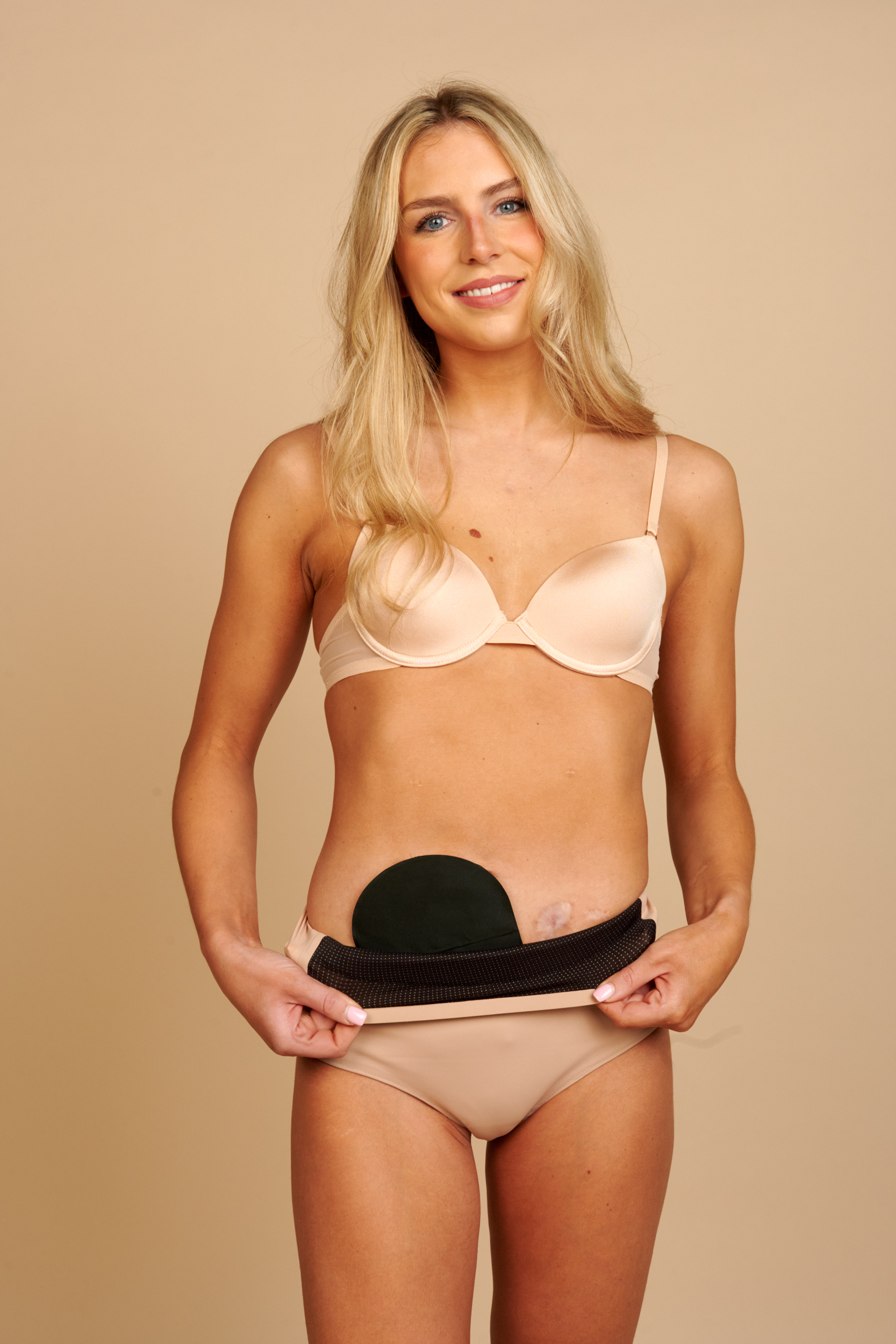
An optional layer of ostomy clothing, a wrap, or a SIIL belt can provide the coverage you prefer. Check access to the outlet while wearing the complete outfit. Clothing is not a substitute for a secure pouching seal.
Wear the aircraft seat belt as the crew instructs. If it is uncomfortable over your stoma, ask the crew for help with an appropriate fit; do not improvise padding or loosen it in a way that compromises restraint.
Long flights and connections: build in a little flexibility
An aisle seat may make bathroom access easier. Let the crew know privately if you need assistance, and use opportunities to empty before a long period with the seat-belt sign on. Access during turbulence remains the crew’s safety decision.
Keep your familiar pouch routine through the journey as far as practical. A delay is a reason to have extra supplies, not to ration fluids or skip necessary care. For medicines, changing time zones, and recent surgery, ask your care team for a plan specific to you.

Your free New Ostomy Patient Guide
Practical questions about routines, clothes, and everyday life to explore with your care team.
Get the free guide →Opens a short email form. Receive the guide and occasional emails; unsubscribe anytime.
Once you arrive
Give supplies a sensible home away from heat and direct sunlight, according to their storage instructions. Put a small change kit in your day bag. Then let the trip be about the trip.
If swimming is on the itinerary, follow your surgical team’s advice about healed wounds and returning to the water. Our swimming guide covers pouch preparation and optional clothing. A hotel pool does not create an exception to your recovery plan.

Questions about flying with a stoma
Will airport security make me remove my ostomy pouch?
UOAA’s TSA guidance says screening should not require removing or exposing the pouch. Explain its location before screening. Ask for privacy or a supervisor if a concern arises.
Should all my ostomy supplies go in checked luggage?
No. Keep essential supplies for the journey and delays in your carry-on. Additional supplies can be split between bags; do not rely on a checked suitcase for your next pouch change.
How soon after ostomy surgery can I fly?
Ask your surgical team. The operation, wound healing, complications, destination, and flight length all matter. The presence of a stoma alone does not set a safe travel date.
Can I change a pouch in an airplane bathroom?
Plan an accessible kit with the items you normally use and prepare what you can before entering. Use the available space without rushing. Practicing a compact change at home can show what you need to pack.
Keep reading
More from the SIIL journal

Ostomy life & care library
Retracted Stoma: Why It Happens, How to Stop the Leaks and Live Comfortably
A retracted stoma explained: why it happens, how convex pouches, seals and belts help stop leaks, when to call your nurse and what…
12 min read

Ostomy life & care library
Colostomy Irrigation: How It Works, Who It Suits and the Freedom It Can Give
Colostomy irrigation explained: who it suits, the kit you need, how to irrigate step by step, how long it takes, what to wear betw…
12 min read

Ostomy life & care library
Loop Ileostomy and Loop Colostomy: What a Loop Stoma Is and How Life With One Works
Loop ileostomy and loop colostomy explained: what a loop stoma looks like, why it is often temporary, loop vs end stoma, pouching,…
14 min read

Welcome offer
Join the SIIL family.
Get 20% off your first order.
Stories, tips and exclusive drops — once a month, never spam. Your code lands in your inbox the moment you subscribe.
By subscribing you accept our privacy policy. Unsubscribe in one click, anytime.
Welcome — check your inbox for the code.
$41.99
$102.99
$122.99
$44.99
$92.99
$39.99
$49.99
$52.99
$52.99
$41.99
$52.99
$44.99