

 ES
 EN
 GB
 DE
 FR
No products in the cart.
Ostomy Barrier Fitting · Interactive Selector + WOC Nurse Sheet
Flat vs. Convex Ostomy Wafer Selector (Flush, Retracted & Creased Stoma Guide)
See how WOC nurses decide between a flat skin barrier, soft/light convexity, and deep convexity for budded, flush, or retracted stomas and seated belly creases—plus print a 1-page fitting sheet for your clinic visit.

Quick answer
WOCN clinical benchmark: A well-budded stoma (protruding >15–20 mm / 3/4 in) on a smooth abdominal plane seals best with a gentle flat skin barrier (wafer). When a stoma sits flush with the skin (0–4 mm), retracts below skin level, or dips into a crease when seated, a convex wafer (soft/light or firm) curves inward to help the stoma lumen empty cleanly into the pouch. Safety rule: always have a WOC nurse evaluate your abdomen before switching to convexity to avoid pressure injury.
- >15–20 mmbudded height suited to a standard flat wafer
- 0–4 mm flushcommon profile for soft/light convexity
- Sit + standessential 2-posture check for belly creases
- 7–14 daysskin re-check window after trialing convexity
Explore flat vs. soft/firm convex clinical guidance by stoma profile
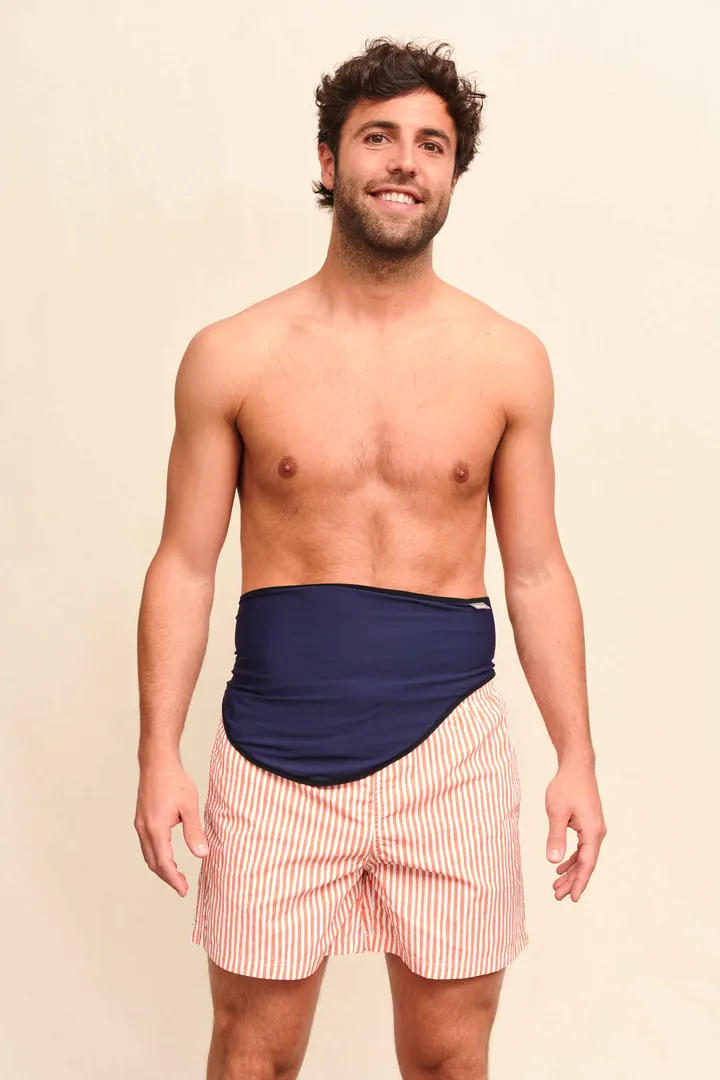 Ostomy BeltHernia support & leak prevention. Trusted by 50,000+ ostomates worldwide.Discover →
Comparing flat wafers, soft convexity, firm convexity & barrier rings
Before assuming a leak requires convexity, double-check that your barrier aperture still leaves a snug 1–1.5 mm gap (+2 mm total) using our interactive 1:1 stoma measuring & wafer size calculator—post-op stoma shrinkage alone causes many early leaks.
| Barrier / Seal Option | When WOC Nurses Consider It | Peristomal Skin Safety Rule |
|---|---|---|
| Flat Skin Barrier (Standard) | Budded stoma (>15–20 mm) on an even abdominal plane | First-line choice whenever it seals reliably—zero peripheral pressure. |
| Soft / Light Convex Wafer | Flush stoma, shallow creases, or firm/active abdomen | Flexible plateau bends with movement; inspect skin at every change. |
| Moderate / Deep Firm Convex | Retracted stoma or deep crease in soft abdominal tissue | Use only after WOC nurse assessment with a 7–14 day skin follow-up. |
| Alcohol-Free Moldable Barrier Ring | Caulking minor dips right at the skin-stoma junction | Sting-free turtle-neck seal; avoid stacking thick rings under deep convex domes unless advised. |
Four checks to run before requesting convex wafer samples
Check your stoma sitting upright in a chair
Lying flat hides waist creases. Sit normally and bend slightly forward in front of a mirror to see whether your stoma disappears into a fold.
Read the back of your removed wafer like a clock
Flip your used wafer over: melted or stained hydrocolloid at 3 o'clock or 9 o'clock pinpoints the exact crease channel where output crept under.
Separate output sting from pressure marks
Raw skin right against the stoma usually means output leakage; redness or soreness along the outer convex rim means too much mechanical pressure.
Keep your barrier layers simple
Crusting only weeping spots and using a single well-fitted barrier beats layering heavy paste, thick rings, and rigid convexity together.
Flat vs. convex ostomy wafer FAQs
Can I switch from a flat wafer to a convex wafer on my own?
Always consult a certified WOC nurse before switching to convexity—especially firm or deep convexity. Excess pressure on a firm abdomen, parastomal hernia, or fresh post-op suture line can cause painful pressure ulcers or mucocutaneous separation.
What is the difference between soft convex and firm convex wafers?
Soft (flexible) convex barriers use a compressible, gentle slope that conforms as you bend and twist, whereas firm/deep convex wafers have a more rigid insert designed to push into soft abdominal tissue around a retracted stoma.
Should I use stoma paste or a moldable barrier ring?
Most WOC nurses prefer alcohol-free moldable barrier rings for everyday sealing because they do not sting irritated skin, resist melting better in liquid output, and peel off cleanly—whereas alcohol-based pastes are mainly used to fill narrow sharp creases.
Does Medicare or US insurance cover convex ostomy wafers?
Yes—convex skin barriers have dedicated HCPCS billing codes when medically necessary for flush, retracted, or creased stomas; your WOC nurse or doctor simply documents the clinical need on your DME prescription.
Clinical stoma care sources: Aligned with the WOCN Society Convexity Consensus Statements, Journal of Wound, Ostomy and Continence Nursing (JWOCN) Characteristics of Convexity, and UOAA Skin Care Guide. Educational selector; always confirm barrier changes with your WOC nurse.


 Ostomy BeltHernia support & leak prevention. Trusted by 50,000+ ostomates worldwide.Discover →
Keep reading
More from the SIIL journal

Ostomy life & care library
Ostomy Wafer Wear-Time, Bag Change Schedule & Monthly Supply Calculator
Free interactive ostomy bag & wafer change frequency calculator: find optimal wear time (1-piece vs 2-piece, ileostomy, colostomy,…
4 min read

Ostomy Diet & Nutrition
Ostomy Medication & Pill Absorption Checker (Ileostomy, Colostomy & Urostomy)
Free interactive ostomy medication & tablet absorption guide: check ER/XR, enteric-coated, liquid, birth control, and diuretic con…
6 min read

Ostomy Diet & Nutrition
Interactive Ostomy Electrolyte, Oral Rehydration (ORS) & 24h Output Calculator
Free interactive ostomy hydration & ORS electrolyte calculator: track 24h ileostomy, colostomy, or urostomy output, compare WHO & …
5 min read

Welcome offer
Join the SIIL family.
Get 20% off your first order.
Stories, tips and exclusive drops — once a month, never spam. Your code lands in your inbox the moment you subscribe.
By subscribing you accept our privacy policy. Unsubscribe in one click, anytime.
Welcome — check your inbox for the code.