

Ileostomy · Everyday life
Living With an Ileostomy: What Daily Life Really Looks Like
The first weeks feel like a crash course. Then an ileostomy becomes a routine you run, not something that runs you. Here is what everyday life really looks like: food, water, sleep, work, sport, travel, love and clothes.

Living with an ileostomy means your small intestine ends at a stoma on your belly, and output collects in a drainable pouch you empty, usually 4 to 8 times a day. The two habits that matter most are drinking more fluid and salt than before, because your colon no longer absorbs them, and chewing food well to avoid blockages. Once you have healed, usually after 6 to 8 weeks, most people return to work, exercise, swimming, travel and intimacy. Call your stoma nurse if you see signs of dehydration, very high output, or no output with cramps.
- 4–8times a day most people empty an ileostomy pouch
- 6–8 weekstypical time for the stoma and output to settle
- 8–10 cupsof fluid a day is a common starting goal
- 0.5–1.2 Ltypical daily output once things settle
What changes with an ileostomy, and what doesn't
An ileostomy brings the end of your small intestine, the ileum, through a small opening in your belly, usually on the lower right side. The colon is bypassed or removed, so food leaves your body earlier in its journey.
That one change explains most of daily life. Output is looser than stool from the colon, anywhere from liquid to the texture of thick porridge, and it arrives more often. So people with an ileostomy wear a drainable pouch and empty it through an outlet at the bottom, usually 4 to 8 times a day. The output also contains digestive enzymes, which is why a snug fit around the stoma matters so much for your skin.
The list of things that stay the same is longer. You still wear your own clothes, go to work, travel, swim, play sport, date and have sex. The stoma has no pain-sensing nerves, modern pouches are odor-proof, and under everyday clothes most people simply can't tell. If you're still getting your head around the different types of stoma, our ileostomy vs colostomy guide explains how the two compare day to day.

Temporary or permanent ileostomy?
A loop ileostomy is often temporary. It gives a join further down the bowel time to heal, for example after rectal cancer surgery, and is closed in a second, smaller operation, often a few months later. An end ileostomy is usually permanent, for example after the colon and rectum have been removed for ulcerative colitis, Crohn's disease or familial adenomatous polyposis. Some people with ulcerative colitis or FAP can later have an internal J-pouch instead; your surgeon will tell you whether that is an option.
Living with a permanent ileostomy uses exactly the same skills as a temporary one. The difference is that you build your routines, wardrobe and confidence for the long run. If your stoma is due to be closed, read what to expect from ileostomy reversal surgery.
Your first weeks at home: a realistic timeline
Recovery is rarely a straight line, but most people pass through the same stages. Use this as a rough map, and always follow the instructions your own surgical team gives you.
- Weeks 1 to 2
Output is often watery and frequent while the bowel wakes up, and the stoma looks swollen and shiny. You practice emptying and changing the pouch, ideally with your stoma nurse beside you. Short walks around the house, plenty of rest, small soft meals.
- Weeks 3 to 6
The swelling goes down, so the stoma shrinks. Measure it every week, or at every change, and cut the barrier opening to match. Output usually thickens. Walks get longer, but keep to the lifting limit your surgeon gave you: no heavy shopping bags, laundry baskets or toddlers yet.
- Weeks 6 to 12
Many people go back to desk work, drive again once they can brake hard without pain, and start gentle exercise. You add fiber back one food at a time and start to learn how your body responds to each one.
- Three months and beyond
The routine starts to feel like yours. Output is more predictable, you know your trigger foods, and exercise, travel and intimacy need far less planning. Keep re-measuring now and then, especially if your weight changes.
Eating with an ileostomy, without being scared of food
There is no single ileostomy diet for life. In the first 6 to 8 weeks most teams suggest softer, lower-fiber food while the bowel heals and the stoma is swollen. After that, the goal is a varied diet that you rebuild one food at a time.
- Little and often. Four to six smaller meals are easier to manage than two big ones.
- Chew until it's almost liquid, especially anything stringy, skinned or fibrous.
- One new food at a time, in a small portion and at home, so you can see how your output reacts.
- Front-load your day. If night-time output wakes you, make lunch your biggest meal.
| Effect | Common examples | How to use it |
|---|---|---|
| Thicken output | White rice, pasta, potatoes, oats, bread, ripe bananas, applesauce, smooth peanut butter, cheese, marshmallows | Lean on these on loose-output days |
| Loosen output | Fruit juice, prunes, spicy food, alcohol, caffeine, sugary drinks, chocolate, greasy food | Not banned; watch portions and timing |
| Chew extra well | Popcorn, nuts, seeds, sweetcorn, celery, coconut, mushrooms, dried fruit, citrus pith, skins | Cook, peel, chop small and add slowly to lower blockage risk |
| More gas | Beans, lentils, onions, cabbage, broccoli, fizzy drinks, beer, chewing gum, drinking through a straw | Eat slowly; a pouch with a filter lets gas out quietly |
| Stronger smell | Eggs, fish, garlic, onions, asparagus, cabbage | Only noticeable when you empty a sealed pouch |

For meal ideas and longer food lists, keep our ileostomy diet guide bookmarked. It is also worth learning the signs of a stoma blockage, so you can act early if something fibrous gets stuck: output that suddenly stops, cramps that come in waves and a swollen stoma.
For your fridge door
Want the full food list where you actually need it?
The free Ostomy Nutrition Guide puts it all in one printable PDF:
- foods that thicken or loosen output
- easy swaps for the high-fiber favorites
- hydration ideas that aren't just more water
Hydration: the ileostomy habit that matters most
Your colon used to soak up a lot of water and salt. With an ileostomy, more of both leaves in your output, so dehydration is the most common problem people run into, especially in hot weather, after exercise or on loose-output days. Being often dehydrated also makes kidney stones more likely.
- Drink steadily through the day. Many teams suggest 8 to 10 cups (about 2 to 2.5 liters), but your own target may be different.
- Sip rather than gulp, and drink between meals as well as with them.
- Include salt: broth, salty crackers, pretzels or a little extra salt on food, unless you've been told to limit it.
- If your output is high, your team may suggest an oral rehydration solution instead of large amounts of plain water, which can pass straight through.
- Carry a bottle when you go out, and drink more in heat, on flights and after sport.
- On trackPale yellow urine, you pee regularly through the day and you don't feel unusually thirsty.
- Top up nowDarker urine, dry mouth, thirst, a headache or more tiredness than usual. Have an oral rehydration drink or something salty, plus a starchy snack.
- Call your team todayVery little urine, dizziness when you stand up, muscle cramps or confusion. Get urgent care if you can't keep fluids down.
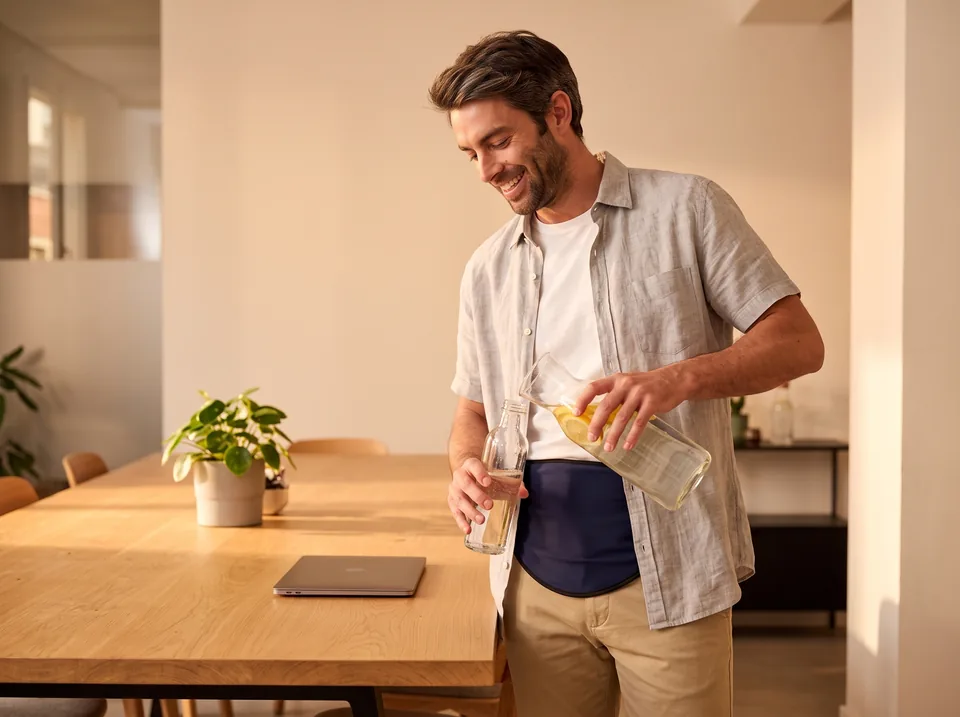
High-output days and how to calm them
Output is usually called high when it goes above roughly 1.5 to 2 liters a day, or when you need to empty much more often than normal, for more than a day. Common triggers are stomach bugs, new medicines, alcohol, very sugary drinks, stress, a flare of Crohn's disease and the early weeks after surgery. A small number of people with a shorter bowel live with higher output long term and follow a plan from a specialist team.
What usually helps
- Eat starchy, thickening foods: rice, pasta, potatoes, bananas and oats.
- Use an oral rehydration solution as advised, and cut back on juice, sugary drinks and alcohol.
- Have drinks between meals rather than with them.
- Ask your doctor or pharmacist about anti-diarrheal medicine such as loperamide. It is often used with an ileostomy, but agree the dose and timing with your team.
- Empty the pouch when it is a third to half full, so the weight never drags on the seal.
When it's more than a bad day
Call your stoma nurse or doctor if high output lasts more than 24 to 48 hours, if you notice the warning signs of dehydration above, or if you also have a fever or belly pain. Our guide to diarrhea and constipation with a stoma goes deeper into loose and slow days.
Sleep and night-time with an ileostomy
Nights are often the last thing to settle. Ileostomy output never completely stops, so a filling pouch can wake you up, or leak if it gets too full.
- Empty just before bed, and keep your largest meal to lunch or early evening.
- If you wake every night, ask your nurse about a larger or high-output drainable pouch for overnight.
- Sleep on your back or on the stoma side, with a small pillow under the pouch so it isn't squashed.
- A waterproof mattress protector and a dark towel turn a leak into a five-minute job instead of a crisis.
- Wear something soft and high-waisted to bed, so the pouch stays flat and doesn't twist when you turn over.

If nights are still wet or broken after a few weeks, our guide to an ileostomy bag leaking at night walks through fit, pouch size and seal problems step by step.
Work, exercise, swimming and travel
Going back to work
Many people return to desk work around 6 to 8 weeks after surgery, and to physical jobs later, once their surgeon is happy. You don't have to share details with anyone. Keep a spare-supplies kit in your bag or desk drawer, keep water within reach and know where the nearest restroom is. In the US, the Americans with Disabilities Act can support reasonable adjustments such as restroom access or extra breaks; see whether an ostomy counts as a disability.
Exercise and your core
Walking is the best place to start. Build up gradually, and wait for your surgeon's go-ahead before heavy lifting or hard core work, which is often around three months, because the area around a stoma can develop a parastomal hernia. A physiotherapist can show you gentle core and pelvic-floor exercises. When you move, a wide supportive ostomy belt holds the pouch close so it doesn't swing or tug on the seal.

Swimming
Yes, you can swim with an ileostomy once your wounds have healed. Pouches are waterproof: empty yours first, and if the edges worry you, a waterproof barrier strip adds extra security. High-waisted swimwear with an inner pocket keeps the pouch close and out of sight. Our guide to swimming with a stoma covers the details, and you can browse ostomy swimwear for women and men.

Travel
Pack at least twice the supplies you expect to use, keep them in your carry-on and pre-cut a few barriers at home, because scissors can be a problem at security. Drink more on flights and in hot places, and be careful with tap water and street food where travelers' diarrhea is common. An ostomy travel certificate explains your supplies at security, and in the US you can ask TSA for private screening.

Clothes that make an ileostomy easier to live with
You don't need a whole new wardrobe. You need a few pieces that keep the pouch flat and close to your body, so it doesn't shift, bulge or pull on the seal as it fills. That is exactly what SIIL designs, for women and men.
| Moment | What helps | Where to start |
|---|---|---|
| Everyday, under jeans or dresses | High-waisted underwear with an inner pocket for the pouch | Ostomy underwear |
| Gym, running, dancing | A wide belt that holds the pouch snug while you move | Ostomy belt |
| Fitted outfits and nights | A soft wrap that smooths the line of the pouch | Ostomy wraps |
| Beach and pool | High-waisted swimwear with an inner pocket | Ostomy swimwear |
| Seatbelts, kids, contact sport | A guard that takes the knock instead of your stoma | Stoma guard |
| Date night | Lingerie designed around the pouch | Ostomy lingerie |
For outfit ideas that work with what's already in your closet, see how to hide an ostomy bag under clothes.
Relationships, intimacy and confidence
It is completely normal to grieve the body you had, even when the ileostomy is what made you well again. Most people feel self-conscious at first, and then discover the pouch matters far less to the people who love them than they feared.
- Talk before you undress, in your own words. A simple "I have a stoma, here's what that means" takes the mystery out of it.
- Empty the pouch first, and use a smaller or opaque pouch, or a soft ostomy bag cover, if you prefer.
- Wear something that makes you feel like you. Lingerie and wraps designed around a pouch help many people feel sexy again.
- Mention changes to your doctor. Pain, erection problems or vaginal dryness after pelvic surgery are common and treatable.

Many people with an ileostomy go on to have children; talk to your team before you try, because the stoma changes shape as the belly grows. And you don't have to do any of this alone. The UOAA support group finder connects you with people who have been there, and our stories from IBD warriors and life with no colon are full of hard-won tips.
Long-term health habits worth knowing

- Medicines. Some tablets, especially slow-release or enteric-coated ones, can pass through before they are absorbed. Tell every doctor and pharmacist you have an ileostomy; a liquid or a different form may work better. If you see whole tablets in your pouch, mention it.
- Vitamin B12. If the last part of your ileum was removed, you may absorb less B12, so your doctor may check your levels from time to time.
- Kidney stones and gallstones. Both are more common with an ileostomy, mostly because of dehydration. Drinking enough is the best prevention you have.
- Skin. Ileostomy output is harsh on skin, so a barrier cut to the right size really matters. Our skin care around your stoma hub covers redness, itching and soreness.
- Discharge from your bottom. If you still have your rectum, it keeps making mucus, and passing some from your bottom now and then is normal. Tell your team if it is bloody, painful or smells unusual.
- Check-ups. Keep your follow-up appointments, and re-measure your stoma whenever your weight changes.
When to call your stoma nurse or doctor
- signs of dehydration that don't improve with fluids, or very little urine;
- output above about 1.5 to 2 liters a day for more than a day;
- no output for 6 hours or more with cramps, bloating or nausea, which could be a blockage;
- a stoma that turns dark red, purple, gray or black;
- bleeding from the stoma that doesn't stop with gentle pressure;
- a stoma that becomes much longer or pushes out, known as a prolapsed stoma, or a new bulge around it;
- sore, broken skin under the barrier, or leaks that keep happening.
Go to the emergency room or call 911 if you have severe belly pain, repeated vomiting, a hard swollen belly or you feel faint.
Living with an ileostomy: common questions
Can you live a normal life with an ileostomy?
Yes. After recovery, most people work, travel, exercise, swim, date and sleep well with an ileostomy. It takes a few routines, like emptying the pouch, drinking enough and chewing well, plus a few weeks of practice. Many people say they feel better than they did before surgery, especially after years of bowel disease.
How long can you live with an ileostomy?
An ileostomy itself does not shorten your life. Life expectancy depends on the condition that led to surgery and your general health, not on the stoma. Our guide to living with an ostomy explains this in more detail.
How often do you empty an ileostomy bag?
Usually 4 to 8 times a day, whenever the pouch is about a third to half full. Expect to empty more often in the first weeks after surgery and on loose-output days.
Does an ileostomy bag smell?
Not while it is sealed. Modern pouches are odor-proof, and most have a charcoal filter that releases gas without smell. You will notice odor mainly when you empty it; emptying promptly and using a pouch deodorant help. Read more about why stoma output smells.
Can I drink alcohol with an ileostomy?
Usually yes, in moderation, once you have recovered from surgery. Alcohol can loosen output and dehydrate you, so alternate with water or an electrolyte drink, go easy on fizzy drinks if gas bothers you, and check with your doctor if you take medicines that interact with alcohol.
Can you have children with an ileostomy?
Yes. Many people with an ileostomy have healthy pregnancies. Talk to your surgeon and stoma nurse before you try, because the stoma changes shape as your belly grows and your pouching may need adjusting.
Why do I still have discharge from my bottom with an ileostomy?
If your rectum is still in place, its lining keeps producing mucus, so passing some from your bottom now and then is normal. Sitting on the toilet regularly helps it pass. Tell your team if it contains blood, smells foul or causes pain.
What counts as a high-output ileostomy?
Output above roughly 1.5 to 2 liters a day, or needing to empty much more often than usual, for more than a day. It can cause dehydration quickly, so call your stoma nurse if it lasts more than a day or two and use an oral rehydration solution in the meantime.
Can you shower and swim with an ileostomy?
Yes. Water does not get into the stoma and pouches are waterproof. You can shower with the pouch on, or off on change days. For swimming, empty the pouch first and wear high-waisted swimwear that holds it close.
Sources and further reading
- NHS: Recovering from and living with an ileostomy
- United Ostomy Associations of America: Ileostomy
- Cleveland Clinic: Ileostomy
- MedlinePlus: Ileostomy, discharge
Written by María G. for SIIL Ostomy. Your own surgical and stoma care team knows your situation best; follow their advice where it differs.


More from the SIIL journal

Ileostomy
How to clean a stoma and the skin around it, how to clean a drainable ostomy or colostomy bag, whether to rinse the pouch and what…

Ileostomy
A prolapsed stoma explained: what it looks like, why it happens, what helps at home, emergency signs, pouching and clothing tips, …

Ileostomy
Is stoma bleeding normal? Why stomas bleed, how to stop it, blood in the pouch vs bleeding around the edge, and when to call your …

Welcome offer
Stories, tips and exclusive drops — once a month, never spam. Your code lands in your inbox the moment you subscribe.
By subscribing you accept our privacy policy. Unsubscribe in one click, anytime.