

Hernia Support Belt for Ostomates: Complete Guide
Parastomal hernia is one of the most common complications after ostomy surgery, affecting between 30% and 50% of ostomates at some point in their lives. A well-chosen hernia support belt can make a significant difference — both in preventing hernias from developing and in managing them once they appear.
What is a Parastomal Hernia?
A parastomal hernia occurs when part of the intestine or other abdominal tissue pushes through the weakened muscle wall surrounding the stoma. It appears as a bulge or lump around the stoma, typically more visible when standing, coughing or straining.
Most parastomal hernias are asymptomatic in the early stages, but can cause: difficulty getting a secure bag seal (frequent leaks), discomfort or pain around the stoma during physical activity, a feeling of pressure in the abdominal area, and in severe cases, bowel obstruction requiring urgent care.
Risk Factors
- Obesity: excess weight increases intra-abdominal pressure
- Older age: reduced muscle tone weakens the abdominal wall
- Intense physical activity without adequate support post-surgery
- Chronic cough (bronchitis, COPD, smoking)
- Chronic constipation causing repeated straining
How a Support Belt Helps
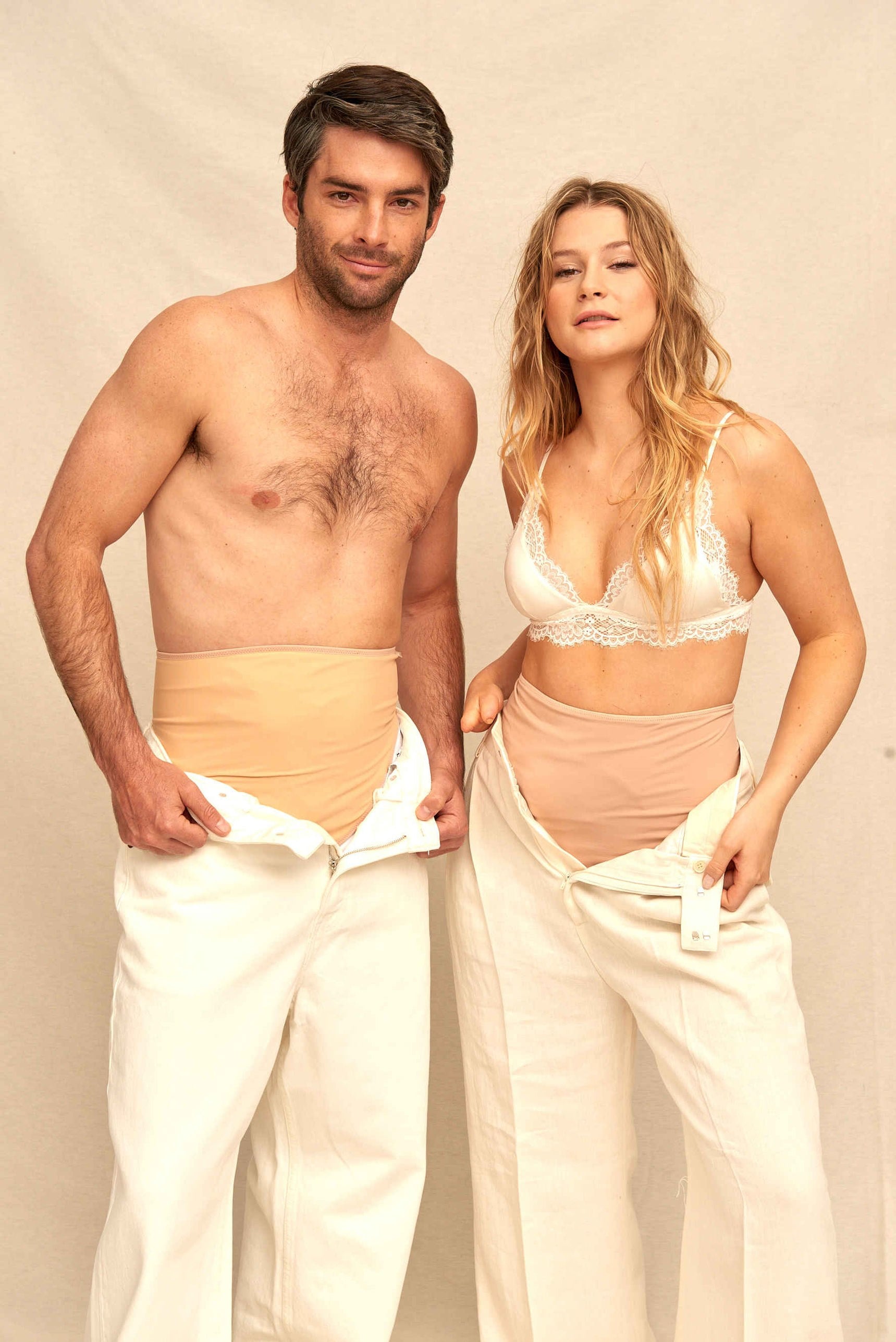
An ostomy support belt provides compression and support to the abdominal wall. Key benefits include prevention (reducing intra-abdominal pressure during exercise, coughing or lifting), containment (for existing hernias, keeping tissue in position), better bag adhesion, and improved confidence for daily life and sport.
Types of Ostomy Support Belts
Standard Ostomy Belt: Elastic, breathable fabric providing general pouch support and moderate compression. Ideal for everyday use, sport and hernia prevention.
Hernia Support Belt (Firm Panel): Incorporates a firm support panel over the stoma for stronger containment. Recommended by stoma nurses for diagnosed hernias.
When Should I Start Using a Support Belt?
Most specialists recommend starting as soon as your doctor approves — typically 4-8 weeks after surgery. Early use is key for prevention.
Choosing the Right Belt
- Compress without restricting breathing or leaving pressure marks
- Stoma opening for easy, pressure-free bag access
- Breathable materials for continuous wear
- Compatible with your one or two-piece bag system
At SIIL, our ostomy belts are designed with all these factors in mind — stoma opening, breathable European materials and optimal support. Compatible with Coloplast, Hollister and Convatec systems.
Safe Exercise with a Parastomal Hernia
Exercise is not contraindicated but should be adapted. Recommended with support: walking, swimming, low-impact yoga and Pilates, cycling. Approach with caution: heavy weightlifting, high-impact contact sports, exercises significantly increasing intra-abdominal pressure.
When to See Your Doctor
- A new or growing bulge around your stoma
- Sudden or severe pain around the stoma
- The stoma changes colour (particularly darkening)
- Nausea, vomiting or no output — seek urgent medical attention
Protect your stoma with the right support
The SIIL ostomy belt provides comfortable compression and secure support for daily life and sport — made in Europe from premium materials.
More from the SIIL journal

Stoma Care tips
How to clean a stoma and the skin around it, how to clean a drainable ostomy or colostomy bag, whether to rinse the pouch and what…

Stoma Care tips
A prolapsed stoma explained: what it looks like, why it happens, what helps at home, emergency signs, pouching and clothing tips, …

Stoma Care tips
Is stoma bleeding normal? Why stomas bleed, how to stop it, blood in the pouch vs bleeding around the edge, and when to call your …

Welcome offer
Stories, tips and exclusive drops — once a month, never spam. Your code lands in your inbox the moment you subscribe.
By subscribing you accept our privacy policy. Unsubscribe in one click, anytime.
$122.99
$52.99
$92.99
$72.99
$41.99
$102.99
$44.99
$52.99
$52.99
$39.99
$41.99
$41.99