

 ES
 EN
 GB
 DE
 FR
No products in the cart.
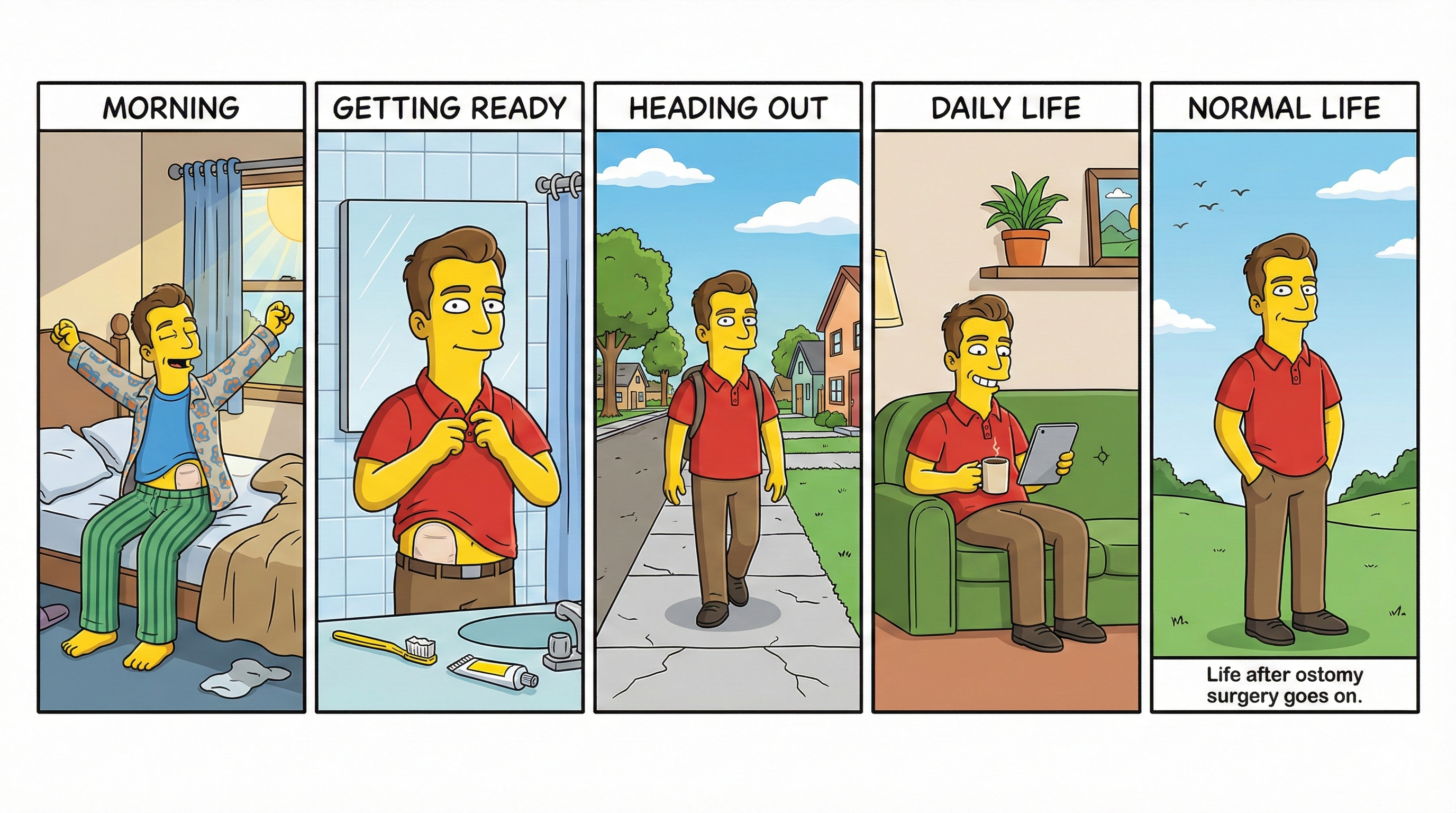
Life After Ostomy Surgery: Recovery, Daily Life and Long-Term Adjustment
Quick answer: Start with the discharge plan for your operation: how to empty and change the pouch, what to eat and drink, which symptoms need a call, and how to reach the team after hours. Keep supplies accessible and ask for help early if the pouch will not seal or the routine is difficult.
Life after ostomy surgery can feel uncertain at first. Many people wonder how their body will change, what daily routines will look like, and whether they will ever feel like themselves again.
While the early recovery period can be challenging, most people find that life after ostomy surgery becomes more stable and manageable with time. For many, surgery brings relief from pain, urgency, or chronic illness and opens the door to a better quality of life.
Before you settle in at home: five things to have written down
 Ostomy BeltHernia support & leak prevention. Trusted by 50,000+ ostomates worldwide.Discover →
- Your contact plan: the ostomy nurse, surgical team, and after-hours contact.
- Your exact supplies: product names and sizes, how to reorder, and when the first delivery should arrive.
- Your pouch routine: the steps you were shown and who can demonstrate them again.
- Your food, fluid, and medicine plan: follow the instructions for your own operation; ask about anything unclear.
- Your restrictions and follow-up: wound care, driving, lifting, activity, and appointment dates.
Keep this on paper or your phone. Recovery already brings enough new information; you do not have to remember every product code while tired.
The first weeks of life after ostomy surgery
What does recovery feel like after ostomy surgery?
In the first weeks, your body is healing from major surgery. Fatigue, soreness, swelling, and changes in digestion are common, and learning stoma care while recovering can feel overwhelming.
How long does recovery take?
Initial recovery usually takes several weeks, while full recovery and confidence may take a few months. Everyone heals at a different pace.
Is it normal to feel emotional after surgery?
Yes. Emotional reactions such as anxiety, sadness, frustration, or grief are very common. These feelings are part of adjusting to a major life change.
NIDDK’s after-surgery guide describes the education and support an ostomy nurse can provide as you settle into daily care.
Daily routines in life after ostomy surgery
What does daily life look like after ostomy surgery?
Emptying, changing, checking the skin, and organizing supplies become part of the day. Early on, allow extra time and ask for another demonstration if you need one. There is no speed test to pass before you deserve to go home comfortably.
Can you return to work and normal activities?
Most people return to work and daily activities once recovery progresses. Desk jobs, physical work, and light exercise are often possible with guidance.
Can you travel and go out socially?
Travel, social events, and holidays are all possible. Planning ahead and carrying extra supplies helps reduce stress.
Emotional adjustment and confidence
How does ostomy surgery affect confidence?
Confidence often dips initially, especially in social or intimate situations. Over time, confidence usually improves as routines become familiar.
How does body image change after ostomy surgery?
Body image concerns are common. Support garments, time, and self-compassion help many people feel comfortable again.
Where can emotional support be found?
Support groups and peer communities provide reassurance and shared experience.
Helpful resources are available through the Crohn’s & Colitis Foundation: https://www.crohnscolitisfoundation.org/

Know when to call, before you need to
Follow the warning signs in your discharge instructions. Seek prompt medical advice for vomiting, increasing abdominal pain, a marked change in output, dehydration symptoms, concerning bleeding, or an unusual change in the stoma’s color. Severe symptoms need urgent medical care; do not wait for a routine appointment.
Ask your team to explain what counts as “too much” or “no output” for your ostomy. The same number of hours does not apply to every bowel or urinary diversion. Reference: NIDDK on bowel ostomy complications.
Common challenges in life after ostomy surgery
How do you manage leaks?
If output leaks under the barrier, change the system and follow the skin-care routine you were taught. Contact your nurse about repeated leaks or sore skin. Our leakage guide helps you record the pattern for a fitting review.
How do you protect the skin around the stoma?
Keeping the skin clean, dry, and protected is essential. Correct appliance fit and barrier products help prevent irritation.
Do ostomy bags smell?
Pouches are designed to contain odor when closed and sealed; not every system uses the same filter. Odor during emptying is different from persistent odor while wearing a closed pouch. Check the closure and seal, and ask for help if the issue continues. See our odor guide.
Does life after ostomy surgery get easier?
When does life start to feel normal again?
For many people, life begins to feel normal within a few months as confidence and routine develop.
Is quality of life better after ostomy surgery?
Many people report improved quality of life compared to living with chronic symptoms before surgery.
Your own team can help you judge recovery in the context of the operation you had. New or worsening symptoms deserve a call even if they do not match someone else’s experience.
Tips for living well after ostomy surgery
What products help support recovery?
Your pouching system and reliable supply access are the essentials. Clothing such as a belt or wrap is optional; ask your nurse about fit near healing wounds. A garment does not replace wound care, pouch fitting, or medical follow-up.
Why patience and self-care matter
Adjustment is not linear. Giving yourself time and prioritizing rest makes life after ostomy surgery much easier.
Explore supportive options here: ostomy belts and support options
Questions about the first weeks at home
How long does it take to adjust after ostomy surgery?
There is no single timetable. Surgical healing, learning pouch care, and emotional adjustment can move at different speeds. Your team can help you set practical goals for your recovery.
What if I cannot change the pouch on my own yet?
Tell your ostomy nurse or discharge team. Ask for another demonstration and discuss what help can be arranged. If you want a partner or caregiver involved, have them learn the routine with you.
Should I wait for the follow-up appointment if the pouch keeps leaking?
No. Contact your ostomy nurse sooner about recurring leakage, a seal that will not hold, or sore skin. The fit may need adjusting as your body heals.
Where can my partner learn to help?
Ask your ostomy nurse for a shared teaching session if you want that support. For everyday offers of help and privacy, see our article about support after ostomy surgery.
For loved ones: how to support someone coming home with an ostomy.

Your free New Ostomy Patient Guide
Practical questions about routines, clothes, and everyday life to explore with your care team.
Get the free guide →Opens a short email form. Receive the guide and occasional emails; unsubscribe anytime.
Keep reading
More from the SIIL journal

Ostomy life & care library
Hartmann’s Procedure: Why It’s Done, Life With the Colostomy, and Reversal
Hartmann's procedure explained: why it's done for diverticulitis and emergencies, life with the end colostomy, recovery, and when …
9 min read

Ostomy life & care library
J-Pouch vs Ileostomy: How People Choose and What Life Looks Like With Each
J-pouch vs permanent ileostomy: how J-pouch surgery works, the stages, bathroom trips, pouchitis, who is a candidate, and what dai…
11 min read

Ostomy life & care library
Retracted Stoma: Why It Happens, How to Stop the Leaks and Live Comfortably
A retracted stoma explained: why it happens, how convex pouches, seals and belts help stop leaks, when to call your nurse and what…
12 min read

Welcome offer
Join the SIIL family.
Get 20% off your first order.
Stories, tips and exclusive drops — once a month, never spam. Your code lands in your inbox the moment you subscribe.
By subscribing you accept our privacy policy. Unsubscribe in one click, anytime.
Welcome — check your inbox for the code.
$72.99
$72.99
$49.99
$41.99
$72.99
$72.99
$44.99
$92.99
$52.99
$102.99
$44.99
$39.99