

Ostomy basics · SIIL Ostomy
One-Piece vs Two-Piece Ostomy Bags: How to Choose the Right System
Same job, two designs. Here is how each system works, where each one shines, and how to pick the one that fits your stoma, your skin and your wardrobe.
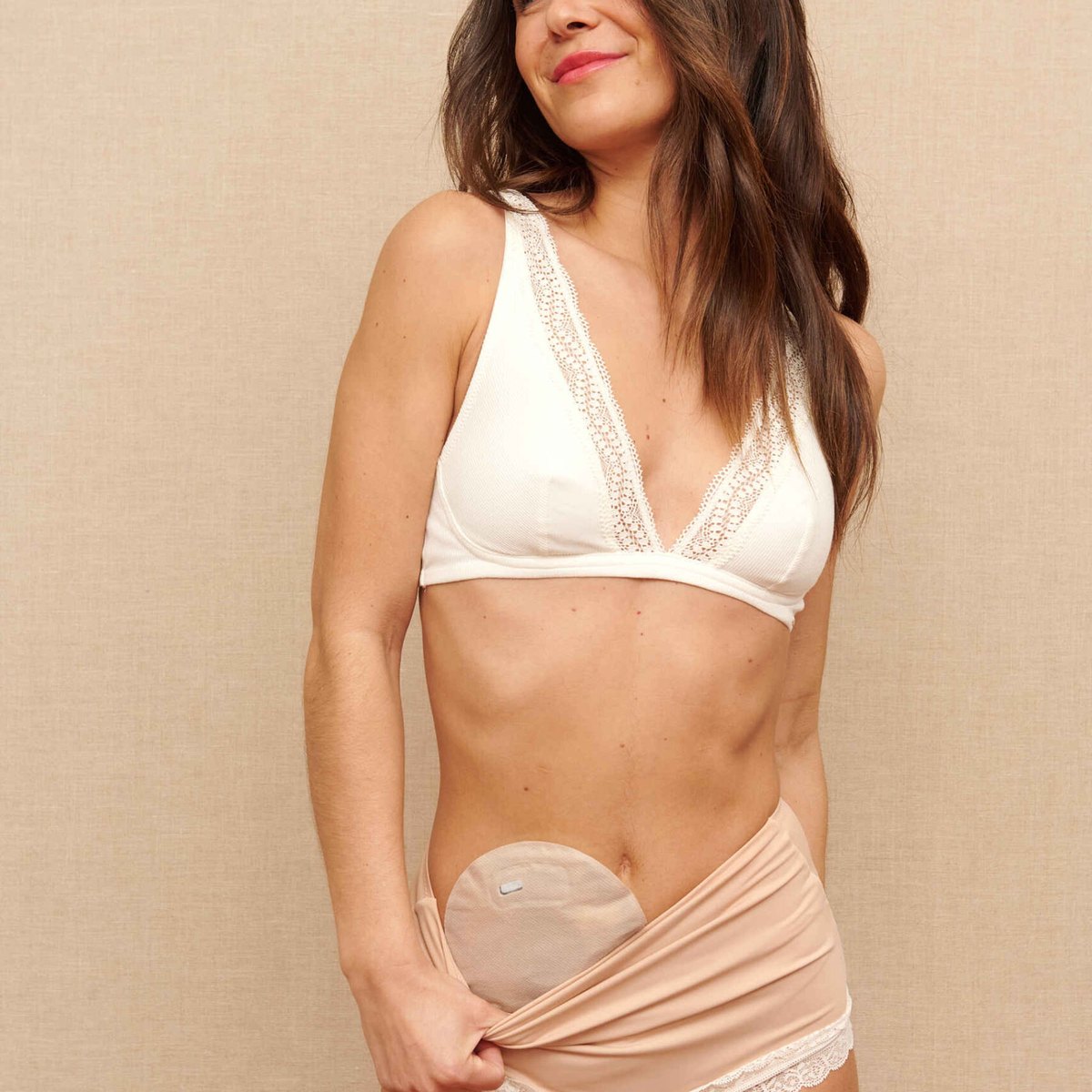
A one-piece bag has the pouch and the adhesive wafer joined as a single unit, so it sits flatter, goes on in one step and feels the most discreet. A two-piece system has a separate wafer that stays on your skin for days, with a pouch that clicks on and off, so you can swap, empty or check the stoma without peeling anything off your skin. Neither is better. One-piece usually wins on low profile and simplicity; two-piece usually wins on skin protection, flexibility and easy pouch changes.
How a one-piece and a two-piece bag work
Every ostomy bag has two jobs: stick securely around the stoma and collect output. What changes between systems is how those two parts are connected.
In a one-piece system the skin barrier (the adhesive wafer with its opening for your stoma) and the pouch are permanent partners. You peel the whole thing off and put a fresh one on, usually every one to three days for a colostomy and every three to five days for many ileostomy and urostomy setups.
In a two-piece system the wafer, also called the flange or baseplate, is applied first and stays on for several days. The pouch then attaches to it with a plastic ring that clicks together or with an adhesive coupling. When the pouch is full or needs refreshing you detach it and snap on a new one, while the wafer keeps protecting your skin.
The wafer
A soft adhesive barrier cut or pre-cut to the size of your stoma. It seals the skin and holds everything in place.
The pouch
The bag itself. Closed-end for formed output, drainable with a clip or velcro closure, or with a tap for urostomy.
The connection
One-piece: built in. Two-piece: a click-on ring or adhesive coupling that lets you swap the pouch without removing the wafer.
Free guide · A gift from SIIL
The SIIL Ostomy Diet Guide — yours, free
Practical information on food and hydration for everyday life with a stoma.
Prefer it as a PDF in your inbox? Get it by email.
One-piece vs two-piece, side by side
This table sums up how the two systems usually compare. Brands differ, so treat it as a starting point and try both if you can.
| One-piece | Two-piece | |
|---|---|---|
| Profile under clothes | Flatter and slimmer | Slightly thicker at the coupling |
| Putting it on | One step, faster | Two steps: wafer first, then pouch |
| Changing the pouch | Whole bag comes off with the adhesive | Detach the pouch; wafer stays put |
| Skin and adhesive changes | More frequent adhesive removal | Fewer wafer changes, which is gentler on sensitive skin |
| Checking the stoma | Peel back or change the bag | Unclip the pouch and look |
| Flexibility | One design per bag | Mix pouch types, sizes and colors on one wafer |
| Dexterity needed | Less: no coupling to line up | More: you have to align and click the ring |
| Cost | Often lower per change | Depends on how many pouches you use per wafer |
| Best for | Simple routines, a low profile, limited dexterity | Sensitive skin, frequent emptying, a flexible routine |
When a one-piece bag tends to fit best
Many people start with a one-piece because it is straightforward. There is nothing to line up and nothing to assemble, which helps if your hands are stiff, your vision is not great or you are still getting used to the routine.
It is also the favorite for anyone who wants the thinnest line under clothes. Without a rigid coupling ring, the pouch lies flat against the abdomen, and under a smooth layer like high-waisted underwear or a wrap it can almost disappear.
- You want the most discreet, flattest look under fitted clothes.
- You have a regular output pattern and change the whole bag on a schedule.
- Your skin tolerates adhesive well.
- You prefer a quick, one-step routine, or have limited hand strength.
When a two-piece system tends to fit best
Two-piece systems protect your skin by letting the wafer stay in place for days. Every adhesive removal is a small stress for the skin around the stoma, and fewer removals can mean fewer problems if that skin is sensitive or has been irritated.
They also give you flexibility. You can swap to a smaller pouch for the gym or swimming, a bigger one for a long trip or the night, and a closed pouch for a day out, all on the same wafer. And since you can unclip the pouch, checking the stoma or cleaning up after a leak is easier.
- Your peristomal skin is sensitive, red or easily irritated.
- You have an ileostomy or high output and empty or change pouches often.
- You like to switch pouch sizes for different activities.
- You want to look at your stoma regularly without peeling a wafer off.
- You use a convex wafer for a retracted or flush stoma and want it to stay put.
Closed, drainable and urostomy pouches come in both
The one-piece vs two-piece choice is separate from the type of output you manage. Both systems come in closed-end pouches (usually for colostomy, where output is firmer and the whole pouch is changed once or twice a day), drainable pouches (usually for ileostomy, emptied through a bottom opening) and urostomy pouches with a tap at the bottom for draining urine.
That means you can have a one-piece drainable bag or a two-piece closed one. Pick the output type first, then decide between a one-piece and a two-piece design. If you want the full routine for each, see how often to change and empty your ostomy pouch and our guide to ileostomy vs colostomy.
Does one system leak more than the other?
Not on its own. Leaks come from fit, not from the number of pieces. The wafer opening should match your stoma (about 1/8 inch or 3 mm of skin showing around it), the skin should be clean and dry, and the adhesive needs to be pressed in place for a minute so body heat can set it.
A two-piece coupling can fail if it is not fully clicked closed, and a one-piece can lose its seal at the edges if it is changed at the wrong angle. In both cases the fixes are the same: re-measure the stoma after surgery changes, press out creases, and support the weight of a full pouch. A belt designed for ostomy pouches takes the pull off the adhesive, which is where most edge leaks start.
How to try the other system without wasting supplies
Switching is normal. Many people use one-piece in the first weeks, move to two-piece when the stoma shrinks and the skin needs a break, and go back and forth depending on the season or activity.
Measure first
Your stoma shrinks for 6 to 8 weeks after surgery. Measure again before ordering a new box.
Order samples
Most manufacturers send free samples of both systems. Test one change of each rather than committing to a box.
Live in it for a week
Wear it through a workday, a workout, a shower and a night's sleep. That reveals more than the first hour.
Check the skin
Look at the skin under the wafer on removal. It should be pink at most, never raw, wet or painful.
Dressing with each system
A thin one-piece pouch is easier to hide under a fitted top, but a two-piece can look just as smooth when you hold the pouch flat. The trick is the layer on top of it.
High-waisted ostomy underwear with an inner pocket holds either pouch flat and close to the body. An ostomy wrap adds a smooth, gentle band over the pouch under a fitted top, and a soft ostomy bag cover hides the plastic and stops it from sticking to your skin or rustling in a quiet room. For swimming, choose ostomy swimwear with an inner pouch pocket; see swimming with a stoma for the checklist.
If you play sport or have kids who climb on you, a stoma guard takes knocks and seatbelt pressure off the pouch, whichever system you wear.
Frequently asked questions
Is a one-piece or two-piece better for a colostomy?
Both work. Many people with a colostomy choose a one-piece closed-end pouch because it is flat and quick to change once or twice a day. A two-piece is a good choice if your skin is sensitive or you like to change pouches without peeling off the wafer.
Which is better for an ileostomy?
Ileostomy output is liquid to pasty and needs frequent emptying, so a drainable pouch is the norm. Many people prefer two-piece because the wafer can stay on for several days while the pouch is changed, which helps protect skin that output can irritate.
Can I mix wafers and pouches from different brands?
Usually not. Two-piece couplings are brand-specific, so a wafer and a pouch need to come from the same manufacturer and the same flange size. One-piece bags have no mix and match.
Are two-piece systems bulkier?
Slightly, at the coupling ring. Under high-waisted underwear or a wrap the difference is hard to see, and many modern coupling rings are quite flat.
How often should I change a one-piece or two-piece bag?
Most wafers are changed every three to five days, sooner if they leak or itch. One-piece bags are changed as a whole on that schedule. With a two-piece you can also change just the pouch whenever you like. Your care team and the manufacturer give the range for your product.
Which one is cheaper?
It depends on your routine. A one-piece is often cheaper per change, while a two-piece can be cheaper if one wafer lasts several days and you use several pouches on it. Prices also vary by supplier and by what your insurance covers.
How do I know which one to pick?
Request samples of each and live in them for a week. The right one is the system that stays sealed, keeps your skin calm and does not make you think about it during the day.
Free guides
Every SIIL guide, in one place
Pick the topic you need today. Each guide is a free PDF with practical routines you can come back to.
Keep reading
SIIL Ostomy
Make either system look and feel better

SIIL Ostomy Belt
Holds the pouch snug and takes weight off the adhesive. For women and men, with an inner pouch pocket.
Shop the belt
Ostomy Underwear
High-waisted, with an inner pocket that keeps the pouch flat and covered.
Shop underwear