

 ES
ES EN
EN GB
GB DE
DE FR
FRNo products in the cart.
How to Hide an Ostomy Bag: Comfortable Outfits and Everyday Tips
Updated October 4, 2026 · SIIL editorial team
Quick answer: To make an ostomy pouch less noticeable, start with comfortable waistbands, fabric that skims your abdomen, and a pouching routine that suits your system. Optional underwear or a wrap can give you an extra clothing layer. Leave room for the pouch to fill and drain; squeezing it flat is not the goal.
One of the first wardrobe questions after ostomy surgery can be remarkably ordinary: “Can I wear my jeans?” Close behind it comes, “Will everyone be looking at my stomach?” You deserve practical answers without being told to become a completely different dresser.
Hiding your ostomy bag is a choice about privacy. Showing it is a choice too. You can prefer different things on different days, and neither decision needs a speech. Here is how to build an outfit around your pouch while keeping the part that matters most: feeling comfortable enough to get on with your day.
Start with comfort, then look at the silhouette
What makes a pouch outline more noticeable?
A full pouch, a rigid seam, or thin fabric stretched tightly over your abdomen may create an outline. That does not mean every other person can identify it. Try looking at your whole outfit from a normal conversational distance instead of inspecting one inch of fabric in the mirror. Nobody gets dressed for a magnifying glass.
The American Cancer Society notes that many colostomy pouches are fairly flat beneath ordinary clothes and that special clothing is not essential. An extra layer may be useful if you like the feel or appearance. Read its advice on clothing with a colostomy. A soft fabric layer such as ostomy bag covers is one way to add that extra layer.
Make room for a working pouch
Follow your nurse’s advice about emptying and the fit of your pouching system. For many drainable stool pouches, emptying around one-third to one-half full is a useful routine; the right approach depends on the appliance and your output. See our guide to emptying and changing a pouch.
Clothes should accommodate that routine. Do not fold the pouch over the stoma, force output back toward the seal, or change your appliance’s orientation just to fit a waistband. Ask your ostomy nurse or manufacturer about positioning if you are unsure.

Find the waistband that works on your body
Try the sitting test before buying jeans
The useful question is where the waistband lands relative to your own stoma and pouch. A high rise works for some people; a lower rise works for others. Labels such as “high-waisted” are only a starting point, because bodies and clothing cuts vary.
In the fitting room, sit, stand, bend gently, and reach forward. Check whether a button presses into the area, a seam rubs, or the waistband folds over the pouch. An outfit that looks lovely while standing still may have a very different opinion about a car seat.
Choose fabric with some breathing room
A soft waistband, a little stretch, or a longer top may help you find a comfortable combination. Structured cotton, textured knits, prints, and gently draped fabrics can soften an outline visually. You do not have to replace your wardrobe with oversized clothes unless oversized is already your thing.
Begin with one familiar pair of pants and change one layer at a time. That makes it easier to tell whether the improvement came from the rise, the fabric, or the underwear underneath. Save a phone photo of combinations you like so that tomorrow’s outfit does not become another research project.
Use an extra layer if you want one
Underwear, wraps, and belts are outfit options
Some people like a pocketed garment that accommodates the pouch; others prefer their usual underwear and a loose top. If you want to compare styles, our SIIL wraps and SIIL belt offer different ways to wear an extra layer beneath clothing. Check the individual size guide and the garment’s intended use.
The useful fit test is practical: can you sit comfortably, access the outlet, and allow the pouch to fill? A smaller size is not automatically more discreet. Remove or adjust a garment that digs in, pinches the outlet, or makes your pouching routine awkward.
A clothing change cannot repair a leaking seal
A fashion garment does not replace the adhesive barrier or an assessment of repeated leakage. Convex barriers are a pouch-fitting option to discuss with an ostomy professional, not a shortcut for creating a flatter outline. The WOCN skin assessment guide explains why fit, skin folds, and leakage need individual attention.

Build outfits for the day you are actually having
Work, errands, and long periods of sitting
Try your complete outfit at home for a little while, including the shoes and jacket. Check whether the top rides up when you reach or the pants become uncomfortable when you sit. A cardigan, overshirt, or jacket can add a layer without asking you to dress unlike yourself.
Keep a small change kit accessible when you go out. Knowing where it is may make it easier to focus on the meeting, shopping list, or coffee you came for. Choose a bag you like carrying; a practical kit does not have to look like a hospital supply cupboard.

Your free New Ostomy Patient Guide
Practical questions about routines, clothes, and everyday life to explore with your care team.
Get the free guide →Opens a short email form. Receive the guide and occasional emails; unsubscribe anytime.
Swimming, celebrations, and intimacy
For a celebration, test the outfit seated at a table, not only in front of a full-length mirror. For swimming, follow your care team’s guidance about returning to the water and use your pouching system as instructed. Prints or ruching can change how an outline looks; browse our swimwear collection if extra coverage suits your style.
For intimacy, choose the amount of coverage you want and talk about comfort at your own pace. A garment can be an option, not a requirement for being attractive or wanted. And you can change your mind halfway through getting dressed. The clothes work for you.
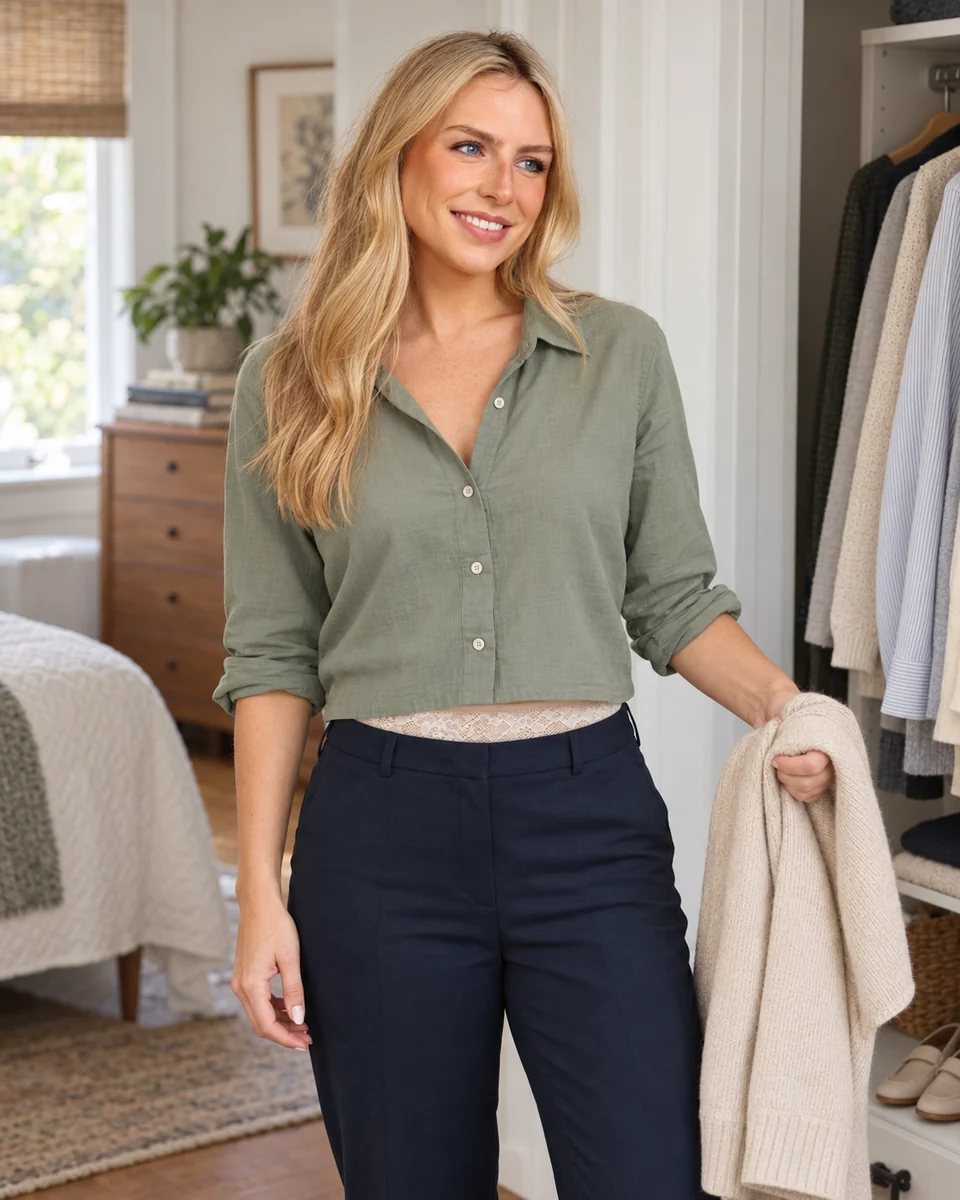
Four moves that make an ostomy bag more discreet under clothes
Most of the work comes down to four small choices: where your waistband crosses, what sits closest to your skin, where the pouch rests, and the color on top. None of them makes a pouch invisible, and none needs to. Together they give you an outline that reads as part of the outfit.
1. Decide where the waistband crosses
A waistband that runs straight across the middle of the pouch is the one most likely to leave a ridge or press on the outlet. Most people move it either above the pouch, with a higher rise that passes over it, or clearly below, with a lower rise and a longer top. Your stoma position decides which, not the label on the jeans; the sitting test above settles it.
2. Put a smooth layer closest to your skin
A first layer that holds the pouch close to your body stops it swinging or folding when you sit and move, and gives everything on top one smooth surface to fall over. That layer can be high-waisted ostomy underwear, the plain Basic wrap, the lace Mía wrap or the SIIL ostomy belt. Keep the room the pouch needs to fill and drain.
3. Give the pouch its own pocket
Pieces with an inner pocket, such as high-waisted ostomy underwear or the Basic wrap, hold the pouch in one place, so it does not slide toward a waistband or twist when you bend. They also keep the plastic off your skin. If you would rather keep your usual underwear, a fabric ostomy bag cover softens the plastic and stops it rustling.
4. Let color and print do the rest
Thin, pale, clingy fabric shows every line; darker colors, prints, texture and ruching break it up. The American Cancer Society gives the same tip for swimsuits: dark colors or busy patterns can help hide a pouching system. It works on a shirt too. An open shirt or cardigan over a fitted top adds a vertical line that draws the eye away from your waist.
| Outfit | A first layer that suits it |
|---|---|
| Jeans and tailored pants | The belt or the Basic wrap under the waistband |
| Dresses and fitted skirts | High-waisted ostomy underwear with an inner pocket |
| Crop tops and fitted knits | The Mía lace wrap, worn as part of the look |
| Leggings and workout clothes | The belt under a high waistband |

None of this makes a pouch disappear, and that is not the goal. The goal is an outfit you stop checking in every store window.
A three-minute outfit check before you leave
- Check the whole outfit at a normal distance. Look at the silhouette, then step away from the mirror.
- Sit and reach. A waistband should still feel comfortable when you sit in a car, bend gently, or reach for a shelf.
- Check access. Make sure you can empty the pouch without completely undressing and that fabric leaves room for output.
Change one thing if needed: the waistband, the top, or the layer underneath. You do not have to rebuild the outfit from scratch. For denim specifically, see our pants and jeans fit guide.
Privacy does not need a justification
You can share your ostomy story with a friend and still prefer to keep the pouch covered at work. You can wear swimwear with more coverage one summer and make a different choice the next. There is no visibility test for confidence.
If someone asks a question you do not want to answer, a short reply is enough: “It is a medical pouch; I am fine keeping the details private.” If you would rather talk openly, that is equally yours to choose. Our article on public figures who have discussed their ostomies offers different stories, not a standard you have to meet.
Questions about hiding an ostomy bag
Can I wear fitted clothes with an ostomy?
You may be able to. Try the full outfit while sitting and moving, allow room for the pouch to function, and avoid pressure on your stoma or outlet. The right fit is individual; fitted does not have to mean restrictive.
Do I have to buy special underwear?
No. Ordinary underwear works for many people. A pocketed garment, wrap, or other ostomy clothing can be an optional addition when you like its coverage, fit, or feel.
Can I turn my pouch upward to hide it?
Do not force a new position for the sake of an outfit. Your pouch must still collect output and drain as intended. Ask your ostomy nurse or manufacturer which positions are appropriate for your particular system.
When can I wear my usual jeans after surgery?
Ask your surgical team about pressure near healing incisions and your stoma. Comfort, swelling, wounds, and the operation you had matter more than a fixed number of weeks. Start with a gentle waistband when your team says it is appropriate.
Is it wrong to want my pouch hidden?
No. You choose your clothes and the information you share. Wanting privacy does not cancel your confidence, and an outfit does not have to make a statement.
What is the most discreet way to wear an ostomy bag?
For most people it is a combination: a waistband that passes above or below the pouch rather than across it, a smooth first layer that holds the pouch close, such as ostomy underwear, a wrap or a belt, and darker or patterned fabric on top. Leave room for the pouch to fill and drain.
What clothes help hide an ostomy bag?
High-rise pants or leggings that pass over the pouch, longer tops, open shirts and cardigans, textured knits and prints. Underneath, a wrap, an ostomy belt or high-waisted underwear with an inner pocket keeps the outline smooth.
Keep reading
More from the SIIL journal

Ostomy life & care library
Hartmann’s Procedure: Why It’s Done, Life With the Colostomy, and Reversal
Hartmann's procedure explained: why it's done for diverticulitis and emergencies, life with the end colostomy, recovery, and when …
9 min read

Ostomy life & care library
J-Pouch vs Ileostomy: How People Choose and What Life Looks Like With Each
J-pouch vs permanent ileostomy: how J-pouch surgery works, the stages, bathroom trips, pouchitis, who is a candidate, and what dai…
11 min read

Ostomy life & care library
Retracted Stoma: Why It Happens, How to Stop the Leaks and Live Comfortably
A retracted stoma explained: why it happens, how convex pouches, seals and belts help stop leaks, when to call your nurse and what…
12 min read

Welcome offer
Join the SIIL family.
Get 20% off your first order.
Stories, tips and exclusive drops — once a month, never spam. Your code lands in your inbox the moment you subscribe.
By subscribing you accept our privacy policy. Unsubscribe in one click, anytime.
Welcome — check your inbox for the code.