

 ES
ES EN
EN GB
GB DE
DE FR
FRNo products in the cart.
Ileostomy Guide: Diet, Care, Lifestyle & Confidence
An ileostomy changes your output — but not your life. This 2025 ileostomy guide covers diet, high-output management, clothing, travel, intimacy, and thriving long-term. Whether you’re new or experienced, this ileostomy resource has you covered.

Table of Contents
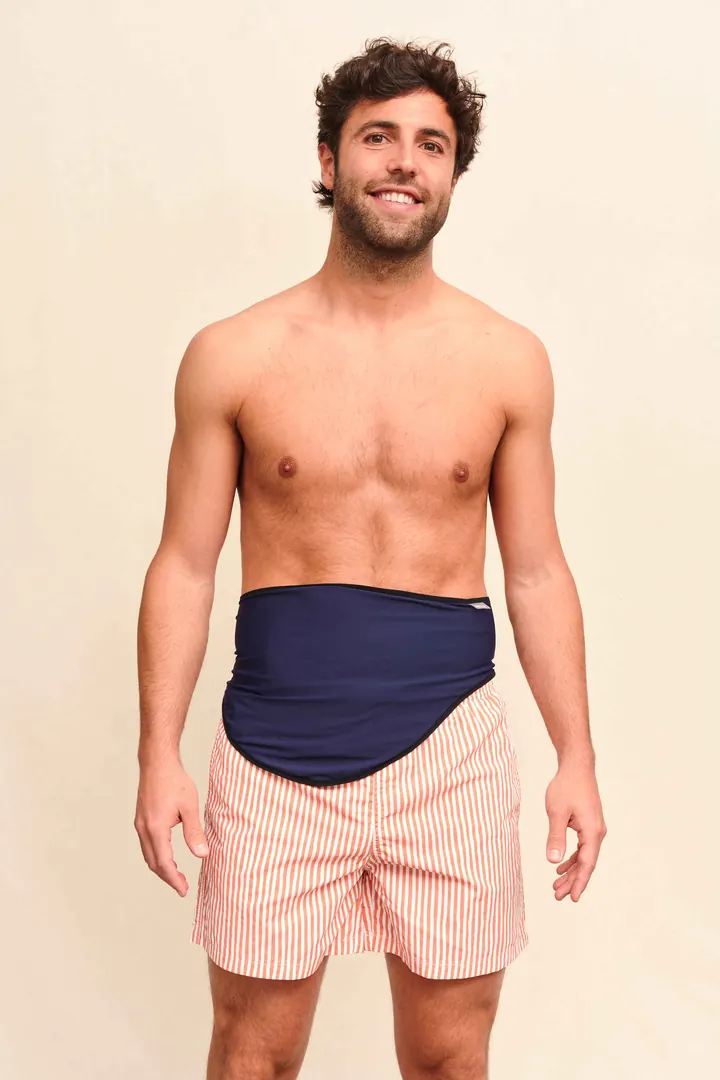 Ostomy BeltHernia support & leak prevention. Trusted by 50,000+ ostomates worldwide.Discover →
- What Is an Ileostomy?
- Types of Ileostomy
- Ileostomy Diet Guide
- High-Output Management
- Daily Pouch Care
- Clothing & Concealment
- Sports & Exercise
- Travel Tips
- Intimacy & Relationships
- Complications
- FAQs
Need support? Shop OSTOMY Clothing
Free guide · A gift from SIIL
The SIIL Ostomy Diet Guide — yours, free
Practical information on food and hydration for everyday life with a stoma.
Prefer it as a PDF in your inbox? Get it by email.
What Is an Ileostomy?
An ileostomy is a surgical opening in the ileum (last part of the small intestine) that diverts waste into an external pouch. It’s created when the colon is removed or bypassed due to Crohn’s disease, ulcerative colitis, familial adenomatous polyposis (FAP), or trauma.
Unlike a colostomy, an ileostomy produces liquid, enzyme-rich output because the colon — which absorbs water — is not involved. This requires different diet, hydration, and pouching strategies.
According to the Crohn’s & Colitis Foundation, over 100,000 Americans live with an ileostomy. Most adapt within 6–12 weeks.
Types of Ileostomy: Location & Output
There are two main types of ileostomy:
- End Ileostomy: May be temporary or permanent. Ileum is brought through the abdomen as a single stoma.
- Loop Ileostomy: Usually temporary, although reversal is not always possible. A loop of ileum is pulled out, creating two openings (one active, one mucus fistula).
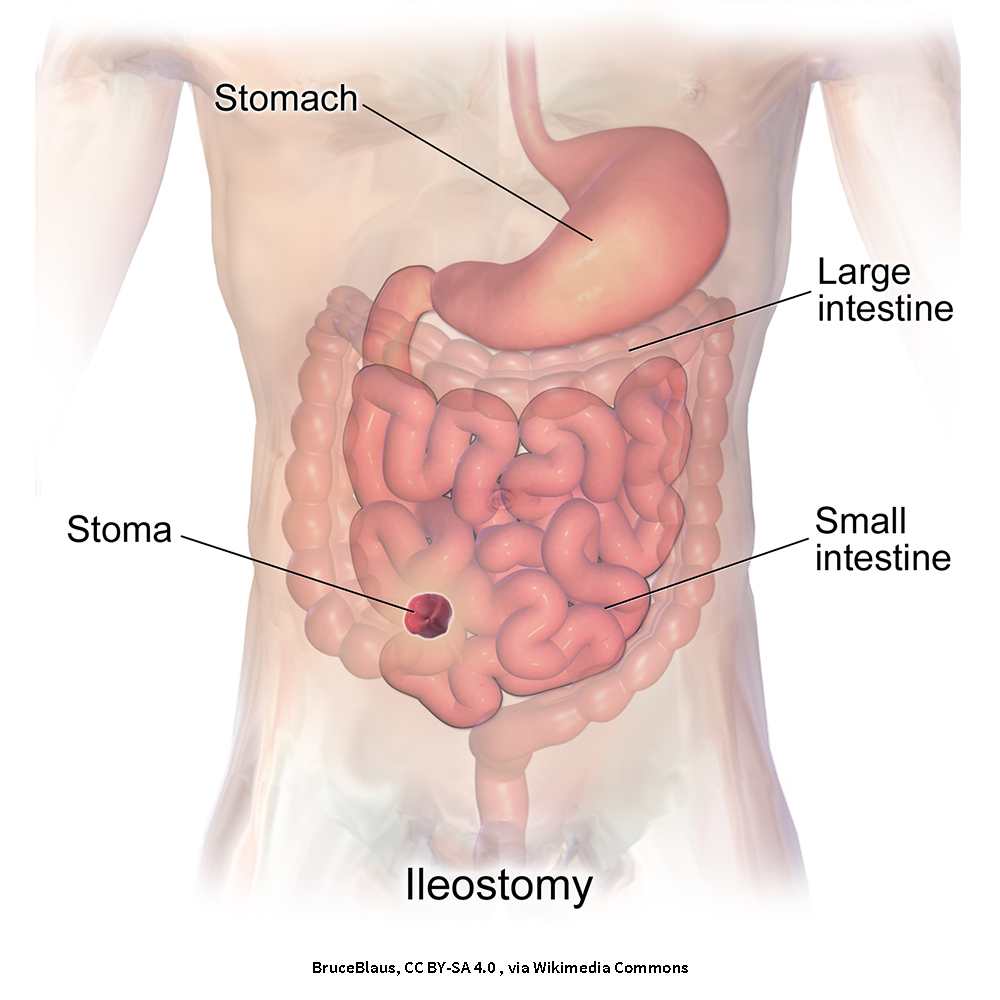
Output varies and can change after surgery. A large or watery output above your usual pattern needs advice because of the risk of dehydration.
Ileostomy Diet: Foods to Eat & Avoid in 2025
After 6–8 weeks, most foods are allowed with an ileostomy. The goal is to thicken output, prevent dehydration, and avoid blockage.
Key Rules:
- Follow the fluid plan agreed with your team. If output rises substantially, seek advice; simply drinking more plain water can worsen losses.
- Ask your team whether you need additional salt, taking your losses and medical conditions into account.
- Chew well to prevent food bolus obstruction
- Fluid type, amount and timing need an individual plan; there is no universal schedule.
| Goal | Eat | Limit |
|---|---|---|
| Thicken Output | Marshmallows, peanut butter, pasta, bananas, rice | Fruit juice, beer, caffeine |
| Prevent Blockage | Cooked veggies, peeled fruits | Celery, corn, mushrooms, nuts |
| Replace fluids and salts with high output | Oral rehydration solution recommended by your team | Sports drinks as a substitute for the prescribed solution |
High-Output Ileostomy Management
Large or watery output can cause substantial losses of water and salt. Contact your stoma team promptly to assess the cause and treatment.
Your team should specify the type and amount of drinks and an appropriate oral rehydration solution. Sports drinks do not replace a solution prescribed for high output.
Medicines and dietary measures need individual advice. Do not start or increase anti-diarrhoeal medicines on your own.
Seek urgent medical advice for marked dizziness, much less urine, vomiting, severe abdominal pain or worsening symptoms. Do not wait for dehydration to persist.
Daily Pouch Care & Skin Protection
Ileostomy output is caustic — protect skin:
- Change pouch every 3–5 days
- Use convex barriers for flush/retracted stomas
- Empty when 1/3 full
- Apply crusting for denuded skin
Clothing & Concealing Your Ileostomy
Wear anything! SIIL Ostomy underwear hides liquid movement and supports the pouch.

Sports, Work & Exercise
Resume after 8 weeks. Use hernia belt for lifting. Swimming is safe with waterproof tape.
Travel Tips with an Ileostomy
- Pack 3x supplies
- Bring ORS packets
- Use seatbelt pad
Intimacy & Relationships
Resume at 4–6 weeks. Empty pouch. Use mini pouches or covers.
Complications & When to Call Your Doctor
Call if: No output >6 hrs, severe cramps, dehydration signs.
Frequently Asked Questions
Can I eat normally with an ileostomy?
Yes — after 6–8 weeks. Focus on thickeners and hydration.
How do I manage high-output ileostomy?
Contact your stoma team if output rises substantially. You need an individual plan for fluids, oral rehydration and, if appropriate, medication. Do not adjust medicines or restrict fluids on your own.
Can I wear regular clothes with an ileostomy?
Yes — SIIL Ostomy underwear hides and supports.

Keep reading
More from the SIIL journal

Ostomy life & care library
Hartmann’s Procedure: Why It’s Done, Life With the Colostomy, and Reversal
Hartmann's procedure explained: why it's done for diverticulitis and emergencies, life with the end colostomy, recovery, and when …
9 min read

Ostomy life & care library
J-Pouch vs Ileostomy: How People Choose and What Life Looks Like With Each
J-pouch vs permanent ileostomy: how J-pouch surgery works, the stages, bathroom trips, pouchitis, who is a candidate, and what dai…
11 min read

Ostomy life & care library
Retracted Stoma: Why It Happens, How to Stop the Leaks and Live Comfortably
A retracted stoma explained: why it happens, how convex pouches, seals and belts help stop leaks, when to call your nurse and what…
12 min read

Welcome offer
Join the SIIL family.
Get 20% off your first order.
Stories, tips and exclusive drops — once a month, never spam. Your code lands in your inbox the moment you subscribe.
By subscribing you accept our privacy policy. Unsubscribe in one click, anytime.
Welcome — check your inbox for the code.
$52.99
$72.99
$72.99
$72.99
$41.99
$72.99
$41.99
$72.99
$72.99
$52.99
$72.99
$19.99