

 ES
ES EN
EN GB
GB DE
DE FR
FRNo products in the cart.
Stoma Bag Ballooning: Why Your Ostomy Bag Fills With Air and How to Stop It
Quick answer: Stoma bag ballooning happens when gas collects in the pouch faster than the filter can let it out. The usual causes are swallowed air, gassy foods and drinks, or a filter that got wet and stopped working. Eat slowly, skip straws and fizzy drinks in the evening, keep the filter dry, and burp the pouch before bed.
You wake up at 3 a.m. and the pouch is round and tight, like a small balloon taped to your stomach. Or it puffs up in the middle of a meeting and you can feel it pressing against your waistband. Ballooning is one of the most common things people with a stoma deal with, especially in the first months. It is rarely dangerous, but it is uncomfortable, it can pull on the wafer, and over time it can lead to leaks. The good news: most ballooning comes from a handful of causes you can actually change.
Key takeaways
- Ballooning = gas going into the pouch faster than the filter lets it out.
- Swallowed air (fast eating, straws, gum, talking while eating) is the most underrated cause.
- A wet or clogged filter turns a normal amount of gas into a balloon. Use the filter stickers when you shower or swim.
- Night ballooning is common: an earlier, lighter dinner and burping the pouch before bed help most people.
- Ballooning and pancaking are opposite problems with the same risk: a lifted wafer and a leak.
Why does my stoma bag balloon?
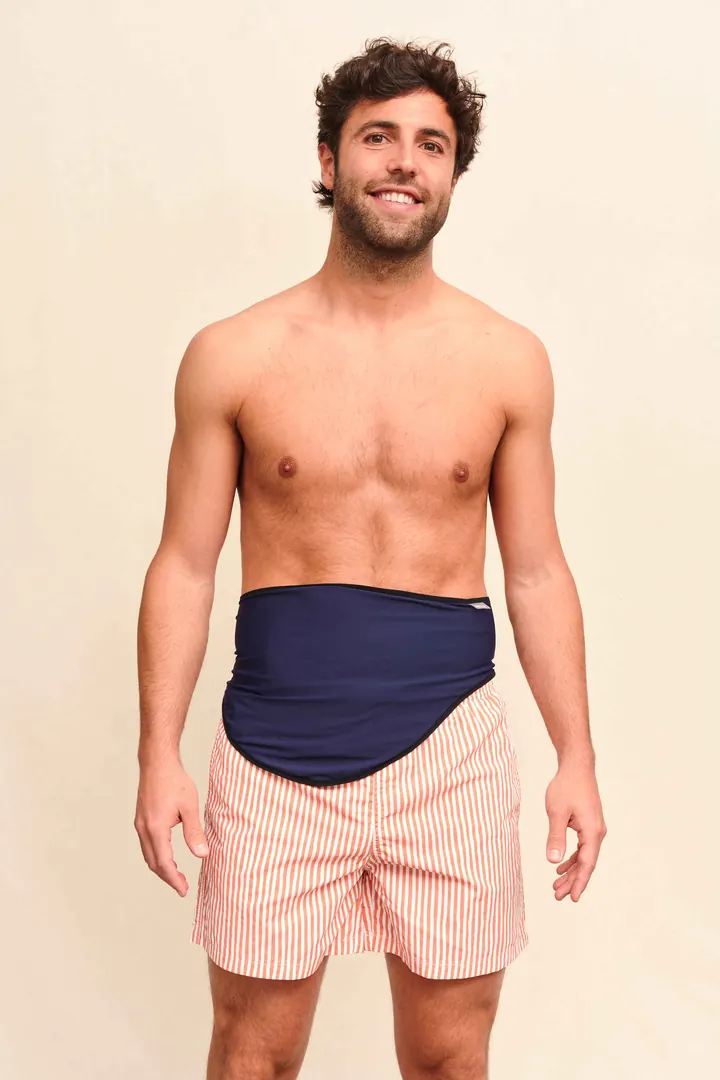 Ostomy BeltHernia support & leak prevention. Trusted by 50,000+ ostomates worldwide.Discover →
Your gut makes gas all day, with or without a stoma. Before surgery, that gas left the usual way. Now it leaves through the stoma, and the pouch catches it. Most pouches have a small charcoal filter that lets gas out slowly and filters the smell. Ballooning starts when one of these things happens:
| Cause | What it looks like | What usually helps |
|---|---|---|
| Swallowed air | Ballooning after meals, coffee breaks or long conversations | Eat slowly, chew well, skip straws and chewing gum |
| Gassy foods and drinks | Ballooning a few hours after certain meals | Keep a short food diary; go easy on beans, cabbage, onions and fizzy drinks, especially at dinner |
| Wet or blocked filter | Ballooning after a shower, a swim or a very liquid day | Cover the filter before water, change the pouch if the filter stays blocked |
| Fast transit (ileostomy) | Pouch fills with gas and liquid quickly | Regular meals, enough fluids, empty and burp the pouch more often |
| A pouch without a filter | Ballooning every day, no matter what you eat | Ask your stoma nurse or supplier about a filtered version of your pouch |
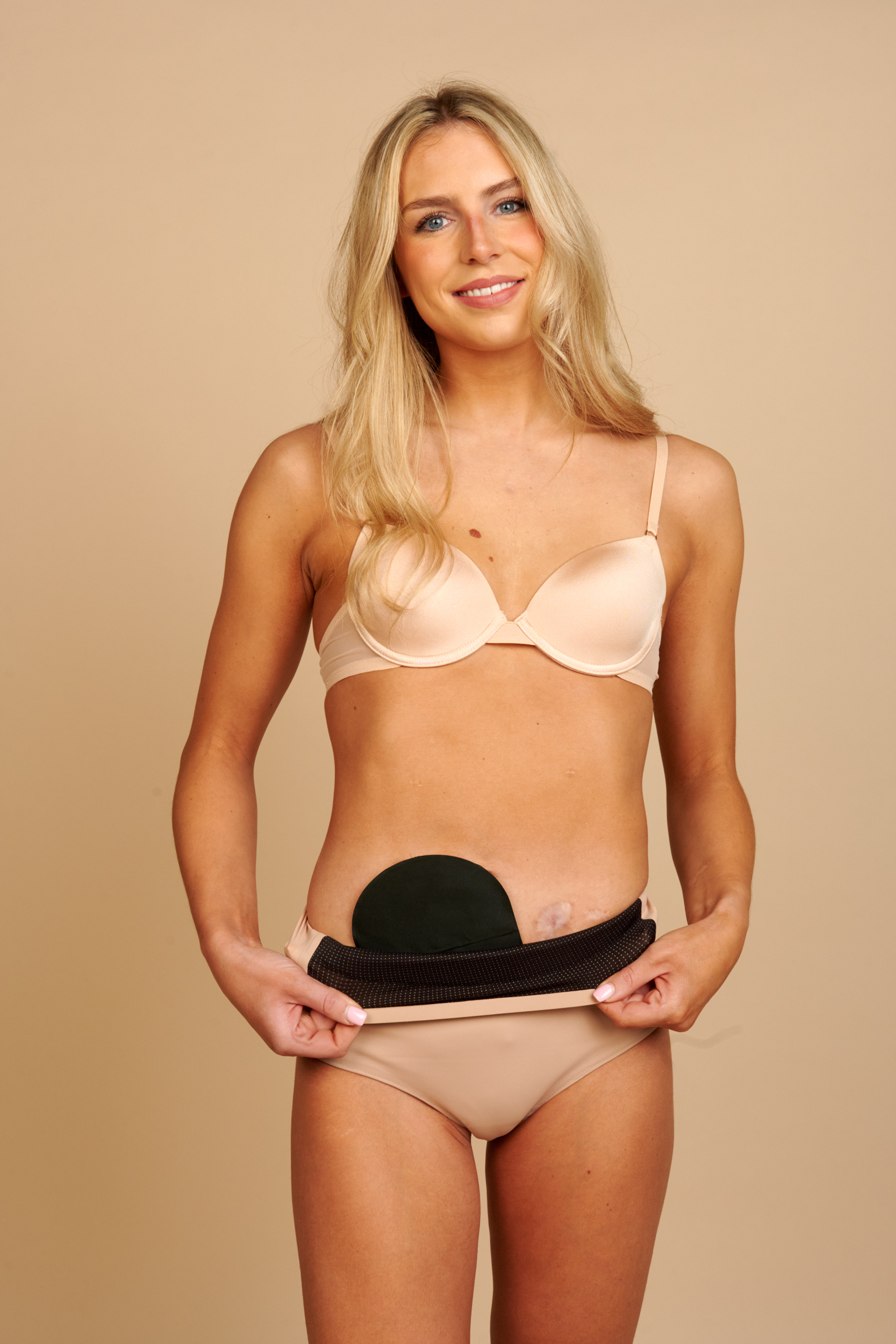
Stoma bag ballooning at night
Ballooning at night is so common it gets its own section. Your digestion keeps working while you sleep, you are lying still, and you are not emptying or burping the pouch for six or eight hours. If the filter is half-blocked, the pouch can be tight by morning. Sometimes it is tight enough to lift the edge of the wafer.
Best sleeping positions with a stoma
Sleeping on your back or on the side of your stoma lets the pouch rest on the mattress, with nothing pressing it into your stomach. Lying face down squeezes the pouch, and it pushes gas toward the wafer seal. A soft, high-waisted brief or a light wrap keeps the pouch close to your body, so it does not swing or fold when you turn over. More on this in our guide to sleeping positions and ostomy bag leaks.
What to eat (and skip) before bed
An earlier, lighter dinner is the change most people notice first. Give yourself two or three hours between your last meal and bed. In the evening, go easy on carbonated drinks, beer, beans, cabbage, broccoli, onions and very large portions. Everyone is different, so a one-week food diary tells you more than any list.
Burp the pouch before you sleep
Empty the pouch and let the gas out before bed. With a drainable pouch, open the outlet over the toilet. With a two-piece system, unclip a corner and press gently. It takes ten seconds and saves a lot of 3 a.m. wake-ups.
How to stop stoma bag ballooning
- Eat slowly and chew well. Less swallowed air means less gas in the pouch. Put the fork down between bites.
- Skip straws, chewing gum and talking with your mouth full. All three add swallowed air.
- Watch the fizzy drinks. Soda, sparkling water and beer go straight to the pouch. If you love them, let them go flat for a few minutes.
- Find your personal trigger foods. Beans, lentils, cabbage, onions, broccoli, eggs and very fatty meals are common ones. Cut one at a time, so you know what actually helps.
- Keep the filter dry. Put the filter sticker on before you shower or swim, and take it off afterwards.
- Eat regular meals. An empty gut tends to make more gas than a gut that gets small meals on a schedule.
- Burp or empty the pouch before it gets tight. A third full is a good rule for emptying, and the same goes for gas.
The role of the ostomy filter
The filter is a small charcoal patch near the top of the pouch. It lets gas out slowly and takes the smell out on the way. When it gets wet from the shower, a swim or very liquid output, the charcoal clogs and the gas stays inside. If your pouch balloons every time after a shower, the filter is almost always the reason. Some people with very liquid output find filters clog fast. A pouch with a different filter design is worth asking your nurse or supplier about.
Covering the filter: when to use the sticker
Most pouch boxes come with little filter stickers. Put one on before the shower, the bath, the pool or the beach, and peel it off once you are dry. Keep two or three in your wallet or gym bag. If you shower with the pouch on, our guide on protecting your ostomy bag in the shower has the full routine.
How to stop a stoma bag filling with air
If the pouch fills with air even on quiet days, start with swallowed air. Gulping a drink, eating on the go, talking while you eat, smoking, chewing gum and drinking through a straw all send extra air down. Sit down to eat when you can. Take smaller sips. If you wear dentures and they feel loose, get them checked: loose dentures make you swallow more air. Some people find that peppermint tea after a meal helps them feel less bloated. It is worth a try.
Ballooning vs pancaking
They sound related, but they are opposites. Ballooning is too much air in the pouch. Pancaking is too little: the pouch sticks to itself, so output stays around the stoma instead of dropping down. Both end the same way, though, with output pushing under the wafer and a leak. If you deal with both, read our guide on ostomy pancaking. A filter that works too well can make pancaking worse.
Why does my stoma bag fill up so quickly?
With an ileostomy, food moves through faster, so the pouch fills with gas and liquid sooner than with a colostomy. That is normal. If the pouch is filling fast and the output is very watery for more than a day, you can lose fluid and salts quickly. Our guide to high-output ileostomy explains what to drink and when to call your team. A colostomy usually gives firmer output and fewer surprises. A urostomy fills with urine all day, but gas is not usually an issue.
Running low on pouches? What to do if you run out of ostomy bags
Ballooning sometimes means more changes than planned, and the box empties faster than expected. If you are down to your last few, call your supplier or your stoma nurse first. A hospital or outpatient pharmacy can often match the product number on your box the same day. We put together a practical guide on where to find ostomy bags near you, with what to say at the counter. Always keep a small spare kit in the bag you carry every day.

What helps under clothes while you sort it out
No piece of clothing stops gas. What a good layer does is keep the pouch flat against your body, so a half-inflated pouch does not stick out under a T-shirt, swing when you walk or press on the wafer. Many of us wear high-waisted ostomy underwear with a pocket that holds the pouch. Some prefer an ostomy belt or a soft ostomy wrap under jeans and dresses. They work with any pouch you already use. They also take some of the worry out of the day while you find what causes your ballooning.
When to call your stoma nurse
Call your stoma nurse or doctor if ballooning comes with cramping pain, a swollen stoma, nausea or vomiting, or no output at all for several hours. Those can be signs of a blockage, and our guide to stoma blockage signs explains them. Call too if your pouch balloons every day despite these changes, or if gas keeps lifting the wafer and causing leaks. A different pouch, filter or wafer usually fixes it.
Stoma bag ballooning: questions people ask
Is stoma bag ballooning normal?
Yes. Everyone with a stoma passes gas into the pouch, and most people get some ballooning, especially in the first months after surgery and at night. It becomes a problem when it happens every day, wakes you up or starts lifting the wafer.
Why does my stoma bag balloon at night?
Your gut keeps making gas while you sleep, and you are not emptying or burping the pouch for hours. A late or heavy dinner, fizzy drinks in the evening and a filter that got wet in the shower make it worse. Eat earlier, keep the filter dry and burp the pouch before bed.
How do I release gas from my stoma bag?
With a drainable pouch, open the outlet over the toilet and let the gas out before closing it again. With a two-piece system, you can unclip one corner and press gently. With a closed pouch, rely on the filter, and change the pouch if the filter is blocked.
What foods cause the most gas with a stoma?
Common culprits are beans and lentils, cabbage, broccoli, cauliflower, onions, eggs, beer and fizzy drinks. Eating fast and chewing gum add swallowed air. Triggers are personal, so a one-week food diary is the quickest way to find yours.
Can a ballooning bag cause a leak?
It can. A tight pouch pulls on the wafer, and over time the seal can lift at the edge. Emptying or burping the pouch before it gets tight, and keeping the filter dry, protects the seal.
Does the filter cover really matter?
Yes. Water clogs the charcoal filter, and a clogged filter means the gas stays in. Put the sticker on before showering or swimming and take it off afterwards.
Will clothing stop my pouch from ballooning?
No, and nobody should promise that. A snug high-waisted brief, a wrap or a belt keeps the pouch flat and close to your body, so it is less visible and less likely to swing or fold while the gas finds its way out.
Written by María G. · hola@siilostomy.com · Last updated: October 20, 2026
Keep reading
More from the SIIL journal

Ostomy life & care library
Hartmann’s Procedure: Why It’s Done, Life With the Colostomy, and Reversal
Hartmann's procedure explained: why it's done for diverticulitis and emergencies, life with the end colostomy, recovery, and when …
9 min read

Ostomy life & care library
J-Pouch vs Ileostomy: How People Choose and What Life Looks Like With Each
J-pouch vs permanent ileostomy: how J-pouch surgery works, the stages, bathroom trips, pouchitis, who is a candidate, and what dai…
11 min read

Ostomy life & care library
Retracted Stoma: Why It Happens, How to Stop the Leaks and Live Comfortably
A retracted stoma explained: why it happens, how convex pouches, seals and belts help stop leaks, when to call your nurse and what…
12 min read

Welcome offer
Join the SIIL family.
Get 20% off your first order.
Stories, tips and exclusive drops — once a month, never spam. Your code lands in your inbox the moment you subscribe.
By subscribing you accept our privacy policy. Unsubscribe in one click, anytime.
Welcome — check your inbox for the code.
$44.99
$72.99
$31.99
$52.99
$39.99
$72.99
$52.99
$44.99
$44.99
$39.99
$52.99
$72.99