

 ES
ES EN
EN GB
GB DE
DE FR
FRNo products in the cart.
Living with an ostomy · Daily routine
How to Shower With an Ostomy Bag: The Honest, No-Stress Guide
Pouch on, pouch off or a shower cover: how to shower with an ostomy bag, dry it afterward, and what changes for baths, hot tubs and the pool.

Quick answer
Yes, you can usually shower with an ostomy bag on once your surgical team has cleared you to shower. Removing the pouch on change day is another option, but output can still appear. Empty the pouch first, follow the instructions for your particular filter, and pat it dry afterward. If you remove the system, dry the skin fully before fitting a new barrier. A shower cover is optional; it does not replace a secure seal or your wound-care instructions.
If you're newly out of surgery and staring at the shower like it's a science experiment, take a breath. Ask your team when your incision and any wound dressings can get wet. Once you're cleared, a little preparation can make showering feel ordinary again. There is no deadline for feeling confident about it.
Here's the honest version: there's no single "right" method. Some ostomates shower with the pouch on every single day and never think twice. Others love a bagless shower — that fresh, nothing-stuck-to-me feeling is genuinely great. Both are fine. Let's walk through all of it so you can pick what works for your body and your morning.
Key takeaways
- Once you are cleared to shower, water can run over the stoma; treat it gently and follow separate wound-care instructions.
- Pouch on: empty first, lukewarm water, pat the wafer dry after.
- Pouch off: output is still possible. Have the clean pouch and supplies ready before you start.
- A shower cover is optional. It is not a reason to extend wear time or cover up a leaking seal.
Can you shower with a colostomy (or ileostomy) bag on?
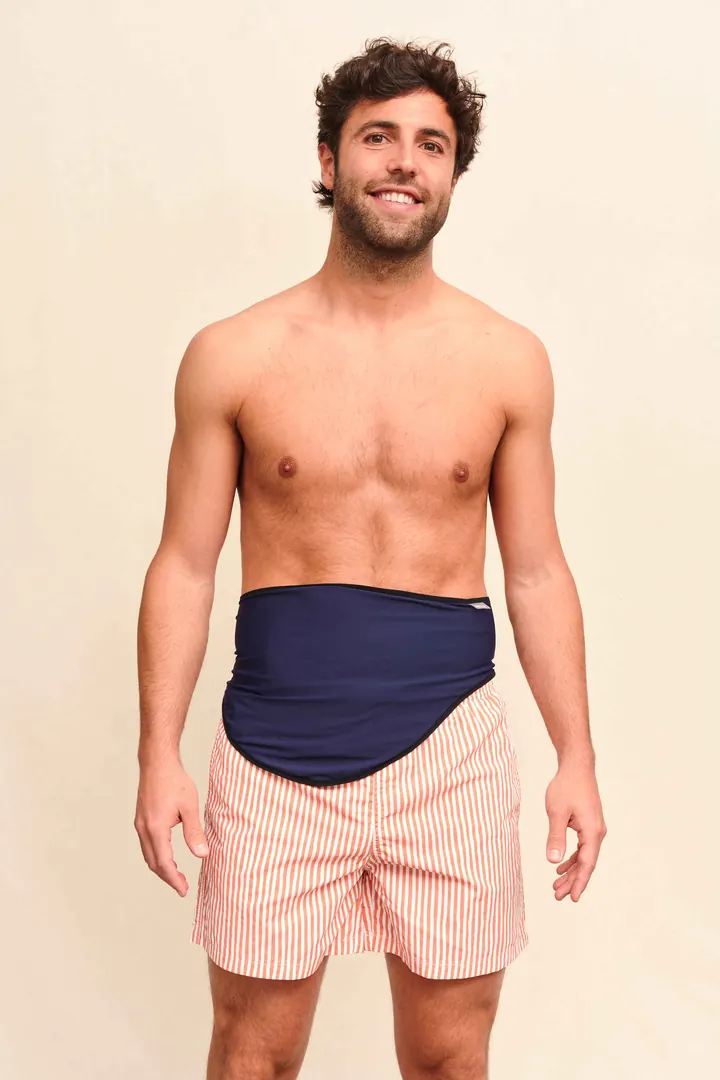 Ostomy BeltHernia support & leak prevention. Trusted by 50,000+ ostomates worldwide.Discover →

Short answer: usually yes, after your surgical team clears you to shower. The pouch can stay attached. A stoma can get wet, but it still needs gentle handling; the surrounding skin, incision and any dressings may need different care. Follow the instructions you were given at discharge.
Most pouching systems tolerate a normal shower. If the fabric backing stays damp, blot it with a soft towel. If water repeatedly gets beneath the barrier, or the skin feels sore, ask your ostomy nurse to review the fit and your routine.
Instructions can differ between pouch models, especially for filters. Check the leaflet for your own system rather than assuming every product from the same brand works the same way. With a two-piece system, remove or replace a pouch only as its instructions allow.
The step-by-step: showering with the pouch attached
This is the low-effort daily option. If you're not changing your pouch that morning, keep it on and go.
- Empty first. A lighter pouch sits flatter and won't tug while you move around.
- Comfortable water. Use a gentle shower at a comfortable temperature; avoid very hot water.
- Wash normally. You can let water and soap run right over the pouch. Just aim the direct spray at your body, not point-blank at the wafer edges.
- Pat, don't rub. Gently blot the pouch cover and accessible barrier edges with a soft towel. There is no need to aim hot air at the stoma or skin.
- Check the seal. Follow your usual change schedule. If output has leaked underneath, change the system; do not cover the leak with tape.
Does the filter need a sticker? That depends on your pouch. Use a filter cover only if its manufacturer instructs you to, and remove it afterward as directed. A fabric garment or shower cover is not a substitute for the filter instructions.
Pouch on vs. pouch off vs. shower cover — which is right for you?
Here's the whole thing side by side so you can pick without overthinking it.
| Method | Best for | Watch out for |
|---|---|---|
| Pouch on | Everyday showers when you're not changing that day; anyone who feels more secure with it attached | Very hot/long showers softening adhesive; a wet filter |
| Bagless (pouch off) | A planned pouch change; an opportunity to gently clean the skin | Output can appear at any time; keep tissues and the replacement system ready |
| Shower cover / shield | People who prefer to keep the outside of the pouch drier | Optional extra step; not needed if your seal is solid |
You can keep the pouch on for an ordinary shower and reserve a pouch-free shower for a planned change. Either routine can work. Choose the one that fits your care instructions and feels easiest to manage.

How to shower bagless (the "everything shower" without the bag)
A pouch-free shower is an option, not a task you have to master. If you prefer to keep the pouch on, that is completely fine. On a planned change day, lay out everything you need before removing it.
Plan for output, even during a quiet part of your day. You cannot switch a stoma off, and the timing varies. Keep tissues and your replacement system within reach. You do not need to skip food or drinks simply to try a pouch-free shower.
A few practical notes for going bagless:
- Use a plain, unscented, oil-free soap. Oils and heavy moisturizers leave a film that fights your adhesive later.
- Keep a few soft tissues right at the shower edge, just in case.
- Rinse the skin around your stoma well — no soap residue.
- Have your fresh barrier, scissors (if you cut-to-fit), and any accessories laid out and ready before you get in.
Before applying the new barrier, gently rinse away any soap and dry the skin thoroughly. There is no universal number of minutes to wait. Use powders, wipes or other skin products only as directed for your skin and pouching system.

Waterproof ostomy shower covers and shields: worth it?
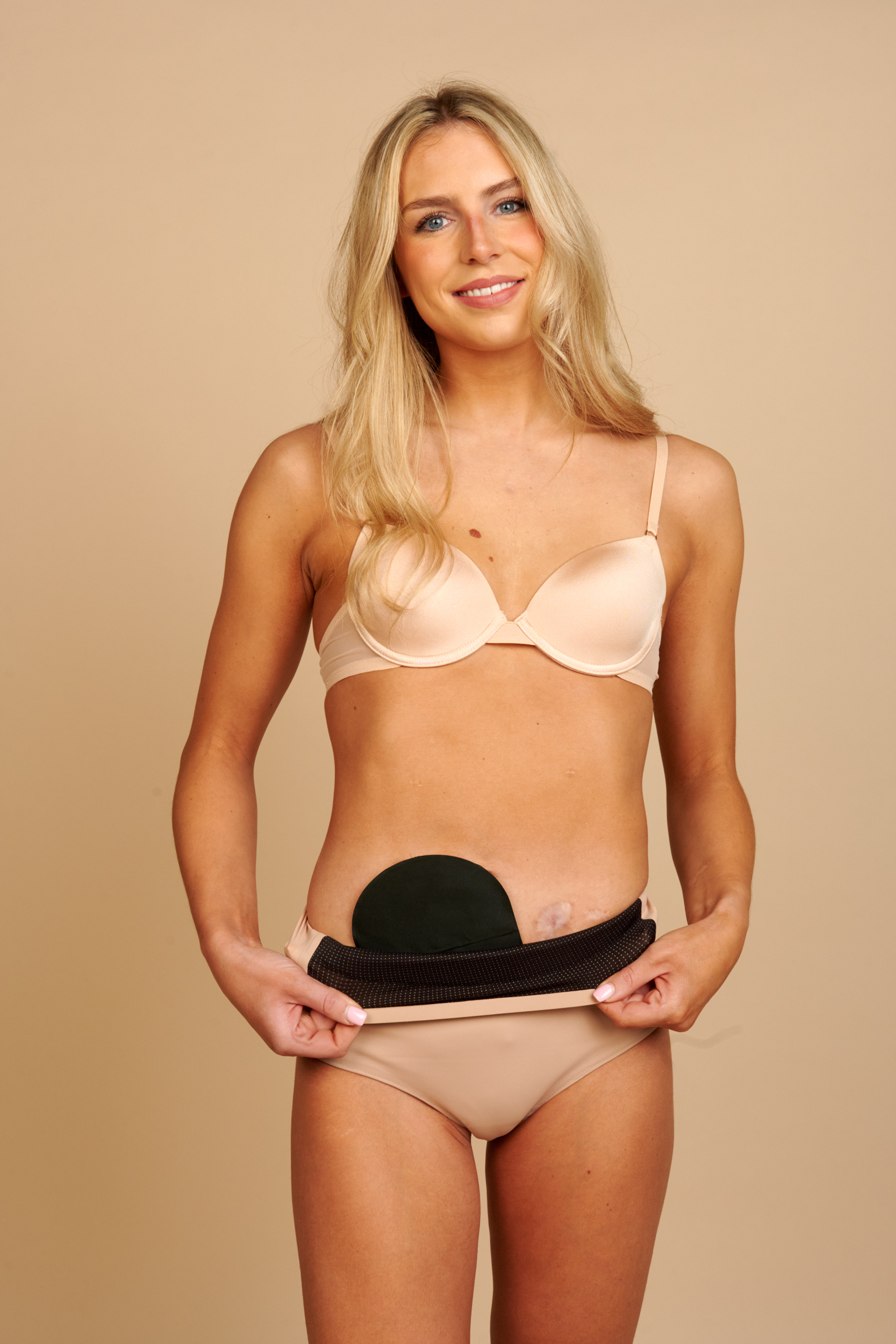
An optional shower cover may help keep the outside of a pouch drier. Whether you want one is a matter of preference and compatibility with your system. A separate cover is not generally required for an ordinary shower with a well-fitting pouch.
Do not use a cover to hide a lifting or leaking seal, or to stretch a change interval your ostomy nurse has recommended. If showering repeatedly disrupts the seal, ask for a fit review. The useful fix may be in the pouching system or routine, rather than another accessory.
For comfort after the shower, you may prefer a soft ostomy bag cover or clothing with a pouch pocket. These are clothing choices. Let the pouch and skin dry first, and leave space for output; the garment does not make the medical appliance waterproof.

Drying, re-sealing, and knowing when to change
Whether you showered with the pouch on or off, the after-part is the same idea: dry, then seal, then support.
- Dry fully. Blot damp fabric and accessible edges with a soft towel. If changing the system, dry the skin before fitting the new barrier.
- Follow the fitting instructions. Apply the barrier using the method recommended for your own system; there is no universal drying or warming time.
- Add support last. If you wear an ostomy belt or a support wrap, put it on once the seal feels solid and your skin is dry.
Ask your ostomy nurse about persistent skin irritation or changes in the seal. Change a system that is leaking rather than patching over it. Watch for:
- Output getting underneath the barrier or a seal that no longer holds
- Dampness that sits under the wafer instead of drying
- Any itching, soreness, or redness around the stoma
If you want the full breakdown on timing, we've got a whole piece on how often to change and empty your pouch. Pairing your change day with your bagless shower is the neatest routine most people settle into.

Baths, hot tubs and the pool
Everything above carries over from the shower to the bath: pouch on or off, empty it first, and dry it well afterwards. Once you've healed from surgery, the UOAA Medical Advisory Board puts it plainly: an ostomy is not an open wound, so you can bathe, shower, swim and even go into a hot tub, and your pouching system gives you a waterproof barrier.
For the pool or the sea, a few habits from UOAA's advice on bathing and swimming make it easy:
- Don't swim on a brand-new barrier. UOAA cites the WOCN Society's recommendation to allow 12 hours for a fresh barrier to adhere properly.
- Empty before you get in. If output worries you, eat a few hours before swimming rather than just before.
- Check the filter instructions. Use the supplied filter sticker for swimming only when the manufacturer directs you to.
- Not sure about your seal? Take a practice soak in your own bathtub first.

Ask your stoma nurse if
the barrier lifts or leaks after most showers, the skin under it stays red or sore, or you're not sure yet when you can shower or bathe after surgery. A different barrier, a better fit or a small change in routine usually solves it.
The good news you leave with
Once your care team has cleared you for the activity, you can find a shower or swimming routine that suits you. Some people prefer a discreet ostomy swimsuit; some like a pouch-free shower on change day. Neither choice is a confidence test. With practice, you can build a routine at your own pace.
Frequently asked questions
Do I need to cover my stoma or wafer if I shower without the pouch?
Once your team has cleared you to shower, you can usually let water run gently over an uncovered stoma. Be ready for output, avoid oily or perfumed products around the adhesive area, and dry the skin fully before fitting a new barrier. Incisions and other dressings may need separate protection.
Will the water pressure or a detachable showerhead hurt my stoma?
Use a gentle flow and avoid directing a forceful jet at the stoma, healing wounds or barrier edges. A stoma still needs careful handling even if it does not feel water as the surrounding skin does. Follow your team's wound-care instructions.
How long after surgery can I shower normally?
Ask your surgical team when you can shower and how to care for the incision and any dressings. Timing depends on the operation, healing and other treatment; there is no single day that is right for everyone. Permission to shower does not necessarily mean you are ready to soak in a bath or swim.
Can I use soap and shampoo like normal, or do they mess with the seal?
You can use soap and shampoo as usual. The one thing to avoid right at your wafer site is soap or body wash with added oils, creams, or heavy moisturizers, because that film can stop your adhesive from gripping. A plain, unscented bar or wash near the stoma keeps things simple.
Is a shower cover the same thing as a swim cover?
Check what the particular product is designed for. An ordinary ostomy pouch can usually be worn in the shower, and a separate cover is optional. Ostomy swimwear is clothing; it does not replace the pouch seal. Before swimming or soaking after surgery, get clearance from your care team and follow your system's instructions.
Sources and further reading
- Royal Free London: Colostomy discharge guide — bathing and showering
- Memorial Sloan Kettering: Urostomy care — showering and skin problems
- United Ostomy Associations of America: Bathing and swimming
- UOAA Medical Advisory Board: Swimming with an ostomy (statement, January 2025)
Written by María G. for SIIL Ostomy. Your own surgical and stoma care team knows your situation best; follow their advice where it differs.
Keep reading
More from the SIIL journal

Ostomy life & care library
Hartmann’s Procedure: Why It’s Done, Life With the Colostomy, and Reversal
Hartmann's procedure explained: why it's done for diverticulitis and emergencies, life with the end colostomy, recovery, and when …
9 min read

Ostomy life & care library
J-Pouch vs Ileostomy: How People Choose and What Life Looks Like With Each
J-pouch vs permanent ileostomy: how J-pouch surgery works, the stages, bathroom trips, pouchitis, who is a candidate, and what dai…
11 min read

Ostomy life & care library
Retracted Stoma: Why It Happens, How to Stop the Leaks and Live Comfortably
A retracted stoma explained: why it happens, how convex pouches, seals and belts help stop leaks, when to call your nurse and what…
12 min read

Welcome offer
Join the SIIL family.
Get 20% off your first order.
Stories, tips and exclusive drops — once a month, never spam. Your code lands in your inbox the moment you subscribe.
By subscribing you accept our privacy policy. Unsubscribe in one click, anytime.
Welcome — check your inbox for the code.
$52.99
$72.99
$72.99
$41.99
$50.00
$41.99
$52.99
$52.99
$44.99
$44.99
$41.99
$102.99