

 ES
ES EN
EN GB
GB DE
DE FR
FRNo products in the cart.
Barbie Butt Surgery: What Recovery, Sitting & Real Life Actually Look Like After Stoma Surgery
Quick answer: "Barbie butt surgery" is the community nickname for a proctectomy — when the rectum and anus are removed and the opening is closed up (leaving you smooth "like a Barbie doll"). It usually happens alongside a permanent colostomy or ileostomy. The healing part people talk about most is the closed area itself: sitting is uncomfortable for a while, you'll want a cushion, and full comfort takes patience over weeks, not days. It's a big change — and one plenty of ostomates say gave them their life back.
If you've just heard the words "Barbie butt" from your surgeon and immediately went home to Google it, welcome — you're exactly where most of us started. It's a strange, slightly funny nickname for something that feels anything but funny when it's your body on the calendar. So let's talk about it the way a friend who's been through it would: honestly, without the clinical fog, and with the practical stuff nobody tells you until afterward.
This isn't a medical guide, and I won't pretend to be your care team. What I can give you is the lived-experience version — what the recovery genuinely feels like, why sitting is the plot twist everyone underestimates, and how real life (clothes, travel, beach days, work) picks back up faster than the fear in your head is telling you right now.
Key takeaways
- "Barbie butt" = the rectum/anus is removed and the area is closed — usually paired with a permanent stoma, so no reversal down the road.
- The stoma itself heals like other ostomy surgery; the closed area is the part that changes how you sit, drive and sleep for a while.
- A good cushion, loose clothing and a "don't rush it" attitude do more for comfort than anything fancy.
- Riding a bike, swimming, and getting back to normal clothes all come back — just on a slower timeline than you'd like.
What "Barbie butt surgery" actually means
 Ostomy BeltHernia support & leak prevention. Trusted by 50,000+ ostomates worldwide.Discover →
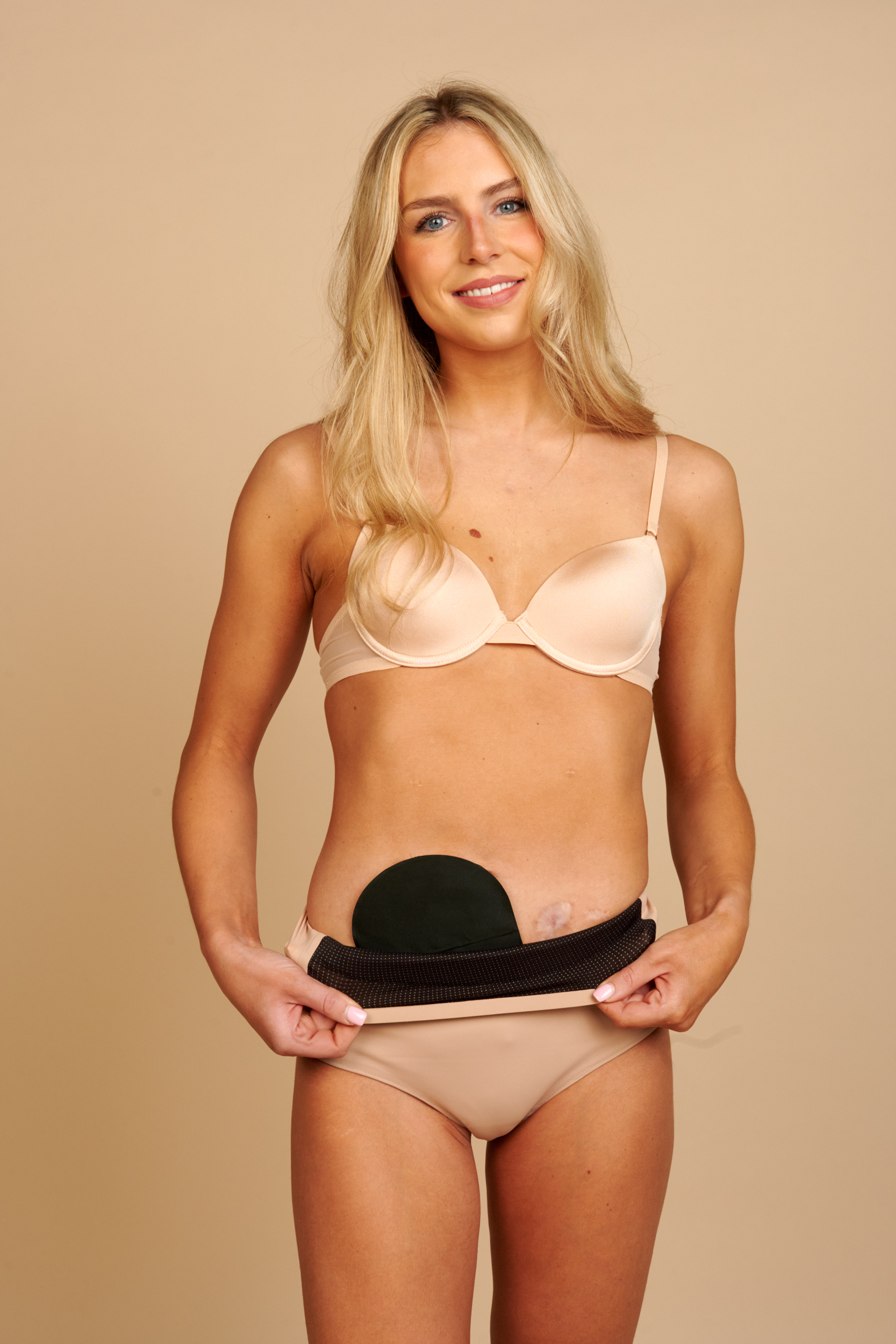
The name is pure community humor: once the rectum and anal opening are removed and the skin is closed over, that area is smooth — "like a Barbie doll." The medical world calls it a proctectomy, but nobody in the support groups says that. We say Barbie butt, and honestly it takes some of the intimidation out of it.
Here's the key thing to understand: this is almost always paired with a permanent stoma. When the rectum is gone, there's nothing left to reconnect to, so a reversal isn't on the table. That's a big emotional piece to sit with. Some people arrive here after living with a temporary loop stoma for a while; others go straight to it. Either way, the "this is permanent" part often lands harder than the surgery itself — and that's completely normal to feel.
It helps to separate the two things happening at once: there's the stoma (the part on your belly you'll wear a pouch over) and there's the closed area (the Barbie butt part). Different surgeries, different healing timelines, different day-to-day realities. Most people are surprised that the stoma feels manageable pretty quickly — it's the closed area that quietly runs the show for the first stretch.
How it compares to other ostomy surgeries
People search "colostomy surgery," "ileostomy surgery," "stoma surgery," "colostomy bag surgery" — often meaning slightly different things. Here's the honest at-a-glance version so you can place where Barbie butt sits in the family:
| Surgery term | What it usually means | Reversal likely? |
|---|---|---|
| Colostomy surgery | A stoma made from the large intestine; output tends to be thicker/more formed. | Sometimes — depends on your situation. |
| Ileostomy surgery | A stoma from the small intestine; output is looser and more frequent. | Sometimes, especially loop ileostomies. |
| Stoma / ostomy reversal | Reconnecting the bowel so the stoma is closed and output returns to normal. | It is the reversal. |
| Barbie butt (proctectomy) | Rectum/anus removed and closed, usually with a permanent stoma. | No — the stoma is permanent. |
Wondering which stoma type you'll have, or trying to picture the difference? Our plain-language ileostomy vs. colostomy breakdown covers it without the jargon, and if you're brand new to all of this, what an ostomy actually is is a gentle starting point.
A free gift from us to you
The New Ostomy Patient Guide — everything we wish we'd known
The practical stuff about those first weeks, first showers, first days back in real clothes — written by ostomates, no medical lecture, no fluff.
The recovery timeline (and why sitting is the real story)
Everyone braces for pain from the stoma side. The surprise for most Barbie butt folks is that the closed area is what dictates the first weeks. Because it's an area you sit on, drive on and sleep against, it makes itself known constantly.
Rough shape of how it tends to go (yours will vary — bodies aren't on a schedule):
- First couple of weeks: Sitting directly is genuinely uncomfortable. Most people lean to one side, use a cushion, or perch. This is the phase to be patient with — pushing it doesn't speed anything up.
- Weeks two to six: Gradual, real improvement. Longer sits become possible. Short walks feel good and help everything.
- Beyond that: The closed area can keep quietly improving for a good while. It's common to feel "mostly fine" long before you feel "forgot it happened."
The cushion question comes up in every support group. A donut cushion, a rolled towel, or the kind of gel cushion people use for long drives — whatever keeps direct pressure off. Loose bottoms are your best friend; nothing with a seam or waistband digging in. And a lot of us learn to sit slightly tilted for a while, which is not glamorous but absolutely works.

Clothing is where the recovery gets a lot more bearable, and this is our whole reason for existing. In those early weeks, anything that presses on your stoma or your midline is out — but that doesn't mean living in one pair of sweatpants. Soft, high-waisted ostomy underwear holds the pouch gently against your body without a seam landing on a sore spot, so you feel put-together instead of patched-together. A lot of people also lean on a light ostomy support belt once they're up and moving, because that reassuring bit of hold makes walking, bending and reaching feel steadier. If you're figuring out bottoms, the best pants for ostomates saves you some trial and error.
For the wound-care and healing side of things — how to keep the closed area clean, what's normal, what's not — lean on your own care team. That's their lane, not ours, and it's worth going to the people who know your case.
Getting back to real life: bikes, beaches and everything you're scared you've lost
This is the part I wish someone had put in front of me before surgery. The fear beforehand is almost always bigger than the reality afterward. In the support groups, the most repeated line from people six months out is some version of "I wish I'd done it sooner." A stoma genuinely does not put your life on hold.
The honest caveats: everything comes back, just on a slower ramp than you want.
- Cycling: "When can I ride a bike after ostomy surgery?" is a hugely common question — and for Barbie butt folks it's doubly relevant because a saddle presses on exactly the sore area. Most people wait a good while, then ease back with a padded seat and short rides first. Your surgeon gives you the real green light; don't rush the saddle.
- Swimming and the beach: Once you're healed and cleared, water is completely doable. Pouches are made to handle it. Ostomy swimwear is cut to hold and hide the pouch so you're thinking about the water, not your waistband.
- Lifting and core stuff: Slow to return — this is where a support belt earns its keep long-term.
- Intimacy and feeling like yourself: Comes back too, and pieces like ostomy lingerie help you feel like you again, not a patient.
If you need proof it's possible, our roundup of celebrities living openly with stoma bags is a nice gut-check that a pouch and a full, visible life are not opposites.
Recovery doesn't have to mean looking or feeling "recovering."
Our high-waisted ostomy underwear is designed to hold your pouch securely and comfortably while you heal — soft where you're tender, supportive where you need it, and cut to look like real underwear, not medical gear.
The emotional side nobody puts in the pamphlet
Being told the stoma is permanent is a grief of its own, even when you know the surgery is the right call. "Is it worth it?" is the question flooding every pre-op thread — and the answer from people on the other side is overwhelmingly yes, but it's fair to not feel that yet. You're allowed to be scared and relieved at the same time.
A few things that genuinely help in those first weeks:
- Give the "permanent" part time to become "normal." It does. Most people stop mentally flagging their stoma within months.
- Find your people. Online ostomy communities and support groups are full of people who've had this exact surgery and will answer the awkward questions honestly.
- Get the practical stuff dialed early — how to change and empty your pouch, which ostomy bags suit you, how to manage odor. Confidence in the basics quiets a lot of the fear.
Barbie butt, Barbie bum, Ken doll: the names people use
You'll see the same operation called different things, depending on who is talking:
- Barbie butt or Barbie bum: the community nickname, used in the US, UK and Australia alike. "Ken doll" is sometimes used by men.
- Proctectomy: removal of the rectum. When the anus is removed and closed too, surgeons may call it a completion proctectomy with anal closure.
- Abdominoperineal resection (APR): the name often used when the operation is done for low rectal cancer, together with a permanent colostomy.
Whatever the name, the result is the same: the back passage is closed, and stool leaves only through the stoma for life.
Who has Barbie butt surgery, and why?
It is usually done when the rectum can't be kept or keeps causing problems. The most common reasons are ulcerative colitis or Crohn's disease affecting the rectum (sometimes years after a first ileostomy, when the leftover rectum keeps bleeding or making mucus), low rectal cancer, and familial adenomatous polyposis. Some people choose it after a failed J-pouch. Our guide to J-pouch vs ileostomy explains that choice. If you are still deciding, ask your surgeon whether keeping the rectum is an option for you, and what the plan for your stoma would be. Our pages on colon cancer and ostomy surgery and living with an ileostomy are good next reads.
What to wear while you heal
For the first weeks, comfort wins: loose, soft bottoms with no seam pressing on the healing area, and a waistband that sits above or below the stoma instead of across it. Many people like a seam-free, high-waisted ostomy underwear brief that holds the pouch close without pressing anywhere tender. Once you're healed, most go back to the clothes they always wore. If you're also planning the first weeks at home, the ostomy recovery week by week guide covers sleep, walking and driving.
Frequently asked questions
What is a Barbie bum?
"Barbie bum" is the UK and Australian version of "Barbie butt": the nickname for surgery that removes the rectum and anus and closes the opening, leaving a smooth bottom. It comes with a permanent colostomy or ileostomy.
How long until I can sit normally after Barbie butt surgery?
Most people need a cushion and short sitting sessions for the first weeks, and many say it takes two to three months before long sitting feels comfortable. Healing of the closed wound can take longer, so follow your surgical team's advice.
Is Barbie butt surgery the same as an APR?
An abdominoperineal resection (APR) is the surgical name often used when the rectum and anus are removed for low rectal cancer. "Barbie butt" is the everyday nickname for the same result, whatever the reason for the surgery.
Can a Barbie butt surgery ever be reversed?
No. The whole point of the procedure is that the rectum and anal opening are removed and closed permanently, which is why it's paired with a permanent stoma. That's different from a colostomy or ileostomy done with a possible reversal in mind — those can sometimes be reconnected later. If a reversal is something you're hoping for, that's an important conversation to have with your surgeon before deciding on this route.
How long before I can sit comfortably at a desk again?
It varies a lot, but many people manage short desk sessions with a cushion within a couple of weeks and are noticeably more comfortable by six weeks. A donut or gel cushion, frequent little standing breaks, and tilting slightly off the tender area all make a big difference. If you're heading back to a desk job, easing in part-time or with a good chair setup beats gritting through full days too soon.
Do you always need a colostomy bag after diverticulitis surgery?
Not always. Some diverticulitis surgeries are done without any stoma at all, some involve a temporary one that's later reversed, and in certain situations a permanent stoma (sometimes with a Barbie butt closure) is the plan. It depends entirely on your individual case, so the honest answer is: ask your surgeon what applies to you, because "diverticulitis surgery" covers a wide range of outcomes.
Is a Barbie butt the same as a stoma reversal?
They're basically opposites. A stoma reversal reconnects the bowel so you no longer need a pouch. A Barbie butt closes off the rectum for good, which locks in a permanent stoma. If you've been living with a temporary stoma and are weighing options, our piece on stoma reversal considerations is worth a read before you assume reversal is automatically the "better" path — it isn't for everyone.
Can I wear normal clothes and swimwear after this surgery?
Yes — once you're healed, absolutely. During recovery you'll want soft, high-waisted, seam-free pieces that don't press on your stoma or the healing area. After that, most people wear whatever they wore before, plus ostomy-friendly underwear and swimwear designed to hold and conceal the pouch so it stays put and out of sight. Feeling dressed like yourself again is a genuine morale boost, not a vanity thing.
Written by María G. · hola@siilostomy.com · Last updated: October 20, 2026
Keep reading
More from the SIIL journal

Ostomy life & care library
Hartmann’s Procedure: Why It’s Done, Life With the Colostomy, and Reversal
Hartmann's procedure explained: why it's done for diverticulitis and emergencies, life with the end colostomy, recovery, and when …
9 min read

Ostomy life & care library
J-Pouch vs Ileostomy: How People Choose and What Life Looks Like With Each
J-pouch vs permanent ileostomy: how J-pouch surgery works, the stages, bathroom trips, pouchitis, who is a candidate, and what dai…
11 min read

Ostomy life & care library
Retracted Stoma: Why It Happens, How to Stop the Leaks and Live Comfortably
A retracted stoma explained: why it happens, how convex pouches, seals and belts help stop leaks, when to call your nurse and what…
12 min read

Welcome offer
Join the SIIL family.
Get 20% off your first order.
Stories, tips and exclusive drops — once a month, never spam. Your code lands in your inbox the moment you subscribe.
By subscribing you accept our privacy policy. Unsubscribe in one click, anytime.
Welcome — check your inbox for the code.
$41.99
$72.99
$39.99
$41.99
$41.99
$72.99
$92.99
$44.99
$52.99
$52.99
$72.99
$102.99