

Stoma care · Complications, calmly
Prolapsed Stoma: What It Is, What to Do and How to Live With It
A stoma that suddenly looks longer is unsettling. A prolapse is common, usually painless and often manageable without surgery. Here is how to recognize one, what helps, the signs that mean go now, and how to keep living well with it.

A prolapsed stoma is when part of the bowel slides further out through the stoma, so it looks longer than usual, anywhere from about 1 inch to more than 4 inches (2 to 10 cm). It is more common with loop colostomies and is usually painless. Lying down often lets it slide back, and your nurse may show you how to ease it in or use a cold compress or sugar to reduce swelling. It is an emergency if the stoma turns dark red, purple or black, becomes painful, stops working, or you are vomiting. Most prolapses are managed with a roomier pouch and support; surgery is an option if it keeps causing problems.
- 2–10 cmhow far a prolapse can extend (about 1 to 4+ inches)
- Loop stomasespecially transverse colostomies, prolapse most often
- 10–30 minlying flat often lets a prolapse slide back
- Go nowto the ER if it turns dark, hurts or stops working
What is a prolapsed stoma?
A prolapsed stoma happens when part of the bowel behind the stoma slides further out through the opening in your belly, so the stoma looks much longer than usual.
Most stomas sit just a short way above the skin. With a prolapse, the stoma can stick out anywhere from about 1 inch to more than 4 inches (2 to 10 cm or more), and it often looks wider and more swollen. It can change through the day: longer when you stand, cough or strain, and shorter again when you lie down. Because the bowel has no pain-sensing nerves, a prolapse usually doesn't hurt, though it can make the pouch hard to fit.
A prolapse can happen with any stoma, but it is more common with loop colostomies, especially in the transverse colon. It may appear in the first weeks after surgery or years later. And it is common: it is a well-known complication, not something you caused.
Prolapse, hernia or retraction?
These three get mixed up a lot, and they need different things:
| What you notice | What it is | |
|---|---|---|
| Prolapsed stoma | The stoma itself gets longer and sticks out further | Bowel sliding out through the opening |
| Parastomal hernia | A bulge in the skin around the stoma, often bigger when you stand or cough | Bowel pushing through a weak spot in the muscle beside the stoma |
| Retracted stoma | The stoma sinks to skin level or below, often causing leaks | The stoma being pulled inwards |
A prolapse and a hernia can happen together. If you have a bulge around the stoma, our parastomal hernia guide explains what helps.
Why does a stoma prolapse?
Anything that raises the pressure inside your belly, or weakens the wall around the stoma, can make a prolapse more likely:
- Straining and pressure: constipation, heavy lifting, a chronic cough or frequent hard sneezing.
- Weight changes: gaining weight after surgery, or pregnancy.
- Weak abdominal muscles, sometimes after several operations.
- How the stoma was made: loop stomas, a large opening in the belly wall and very mobile bowel are more prone to it, especially after emergency surgery.
Some of these you can influence, like constipation, lifting and coughing, which is why the habits further down really do help. Others are simply how your body and surgery worked out.
When is a prolapsed stoma an emergency?
Most prolapses are not dangerous. The risk is that the prolapsed bowel gets trapped and its blood supply is squeezed. These are the signs that mean you should go to the emergency room or call 911 straight away:
- the stoma turns dark red, purple, blue or black;
- it becomes painful, or you have sharp, cramping belly pain;
- nothing comes out of the stoma, not even gas, for longer than usual for you;
- you feel sick, are vomiting or lose your appetite;
- the swelling doesn't go down at all after lying flat for 30 minutes;
- there is bleeding that won't stop with gentle pressure.
Call your stoma nurse within a day or two, even if you feel fine, when you first notice a prolapse, when it seems to be getting bigger, when the pouch won't fit or keeps leaking, or when the stoma rubs and bleeds.
What you can do at home, with your nurse's guidance
If the stoma is pink or red, moist and working, these steps often bring a prolapse back down. Ask your stoma nurse which ones suit you before you try them.
Lie down and relax
Lie on your back with your knees bent for 10 to 30 minutes and let your belly muscles go soft. Gravity alone often lets the bowel slide back.
Cool the swelling
A cold compress or an ice pack wrapped in a cloth, held over the stoma for about 10 minutes, can reduce the swelling. Never put ice directly on it.
Sugar, if your nurse suggests it
Some nurses recommend sprinkling plain table sugar over the swollen stoma, enough to lightly cover it, for 15 to 20 minutes, then rinsing it off with warm water. Sugar draws fluid out and shrinks the swelling.
Ease it back, only if you've been taught
Lying down, with clean hands or a glove and a little water-based lubricant, apply gentle, steady pressure to the tip. Never force it, and stop if it hurts.
Refit the pouch
Measure the stoma at its biggest and use a flexible barrier and a pouch with plenty of room, so the bowel doesn't rub.
Support it
Once it's back in, a support garment or prolapse belt recommended by your nurse can help keep it there when you're up and about.

if the stoma is dark, purple or black, if it hurts, or if it isn't working. Those are signs it needs to be seen today.
Pouching tips for a prolapsed stoma
The right pouching system turns a prolapse from a daily battle into something you barely think about. These are the changes that usually help most:
| Problem | What usually helps |
|---|---|
| Stoma changes size during the day | Measure when it's at its largest and cut to fit the base; a stretchy seal ring can fill small gaps |
| Stoma rubs or bleeds inside the pouch | A longer, roomier pouch, and a little pouch lubricant so the bowel slides rather than rubs |
| Barrier presses on the bowel | A soft, flexible barrier; firm convex barriers can press on a prolapse |
| Leaks under the barrier | Seal rings or barrier strips, and a fitting check with your stoma nurse |
| Pouch fills and pulls quickly | Empty earlier, at a third full, and hold the pouch close with supportive underwear or a wrap |
Pouch makers offer free samples, so ask your nurse which larger or more flexible systems are worth trying with your stoma. If leaks keep happening, our guide to an ostomy bag that keeps leaking covers the other usual suspects.
Support garments, lifting and exercise
Support garments
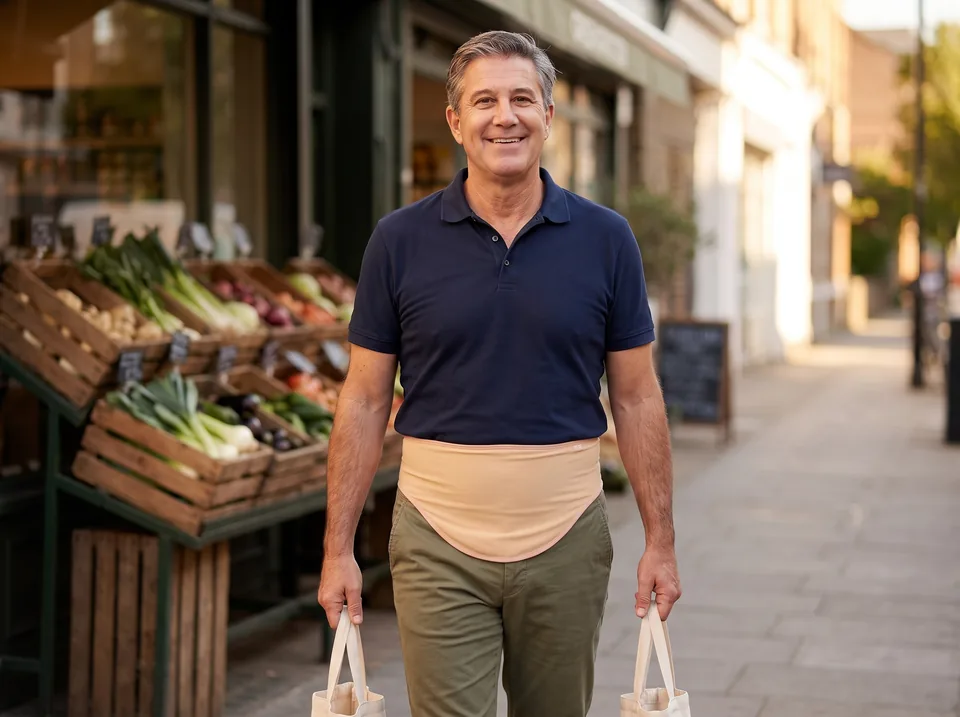
Your nurse may recommend a prolapse belt or hernia support garment, sometimes with a firm panel or a shield over the stoma, put on while you're lying down after the prolapse has gone back in. For everyday comfort, many people also like soft, high-waisted pieces that hold the pouch close without squeezing the stoma. SIIL's ostomy wraps and high-waisted ostomy underwear are made for that. They're everyday clothing, not a treatment, so if you've been fitted with a prolapse belt, wear that, and ask your nurse whether a SIIL piece is comfortable over or alongside it.
Lifting
Heavy lifting is one of the biggest triggers. Split shopping into lighter bags, use a trolley or a backpack, keep loads close to your body, bend your knees, and breathe out as you lift rather than holding your breath.
Exercise
Walking and swimming are usually great. A physiotherapist can teach you gentle core and pelvic-floor exercises that support the stoma area; avoid sit-ups and crunches unless they say otherwise. When you work out, wear your support garment, keep movements controlled and don't hold your breath while straining. And when you cough or sneeze, place a hand or a small pillow over the stoma to support it.

Treatment options for a prolapsed stoma
Many prolapses never need an operation. They're managed with the habits above, a better pouch and the right support. Surgery comes into the picture when the prolapse keeps getting stuck, causes repeated leaks, bleeding or pain, or simply makes daily life too hard.
- Closing the stoma. If your stoma was always meant to be temporary, reversing it fixes the prolapse too. Our guide to ileostomy reversal surgery explains what's involved.
- Local repair. The surgeon removes the extra length of bowel and remakes the stoma in the same place, often a smaller operation with a quicker recovery.
- Re-siting. The stoma is moved to a new spot on the belly, sometimes combined with repairing a hernia.
Even after a successful repair a prolapse can come back, so the lifting and constipation habits are worth keeping. If you're unsure whether to have surgery, ask your surgeon how much it's likely to improve your daily life and what recovery would look like for you.
Living with a prolapsed stoma
Plenty of people live with a small prolapse for years and barely think about it. These everyday habits make the biggest difference:
- Clothes with room. High-waisted, stretchy styles that sit above the stoma, rather than a firm waistband across it.
- Keep things soft. Constipation means straining, so drink well and add fiber gradually. With an ileostomy, chew well and go easy on high-fiber foods that can block.
- Showers are fine. Water won't hurt a prolapsed stoma; pat the barrier dry afterwards.
- Sleep on your back or side with a pillow under the pouch, so nothing presses on the stoma.
- Swimming is still on. Empty the pouch first and choose high-waisted swimwear that holds it close.

Prolapsed stoma: your questions
Is a prolapsed stoma dangerous?
Usually not. Most prolapses are painless and can be managed with a roomier pouch, support and good habits. It becomes an emergency if the stoma turns dark red, purple or black, becomes painful, stops working, or you start vomiting; then go to the emergency room straight away.
Can a prolapsed stoma fix itself?
It often slides back when you lie down and relax, but it tends to come out again when you stand, cough or strain. Support garments and avoiding heavy lifting can keep it smaller. A lasting fix, if you need one, is surgery or closing the stoma if it was temporary.
How do you push a prolapsed stoma back in?
Only if your stoma nurse has shown you how. Lie on your back, relax your belly, and with clean hands or a glove and a little water-based lubricant apply gentle, steady pressure to the tip. Never force it, and don't try if the stoma is dark or painful; get help instead.
How much sugar do you put on a prolapsed stoma?
If your nurse recommends it, sprinkle plain table sugar over the swollen stoma, enough to lightly cover it, leave it for 15 to 20 minutes, then rinse it off with warm water. It draws fluid out of the swollen bowel. Don't use it on broken skin or a dark stoma.
What is the difference between a prolapsed and a retracted stoma?
A prolapsed stoma sticks out further than usual because bowel is sliding out. A retracted, or recessed, stoma sinks to skin level or below, which often causes leaks. They need different pouching solutions, so ask your nurse to look.
Can I exercise with a prolapsed stoma?
Yes, with some adjustments. Walking, swimming and physio-led core exercises are usually encouraged. Avoid heavy lifting, sit-ups and holding your breath while straining, and wear a support garment when you work out.
Is showering bad for a prolapsed stoma?
No. Water doesn't harm a prolapsed stoma. Shower as usual, with the pouch on or off, and dry the barrier well afterwards.
What should I eat with a prolapsed stoma?
There's no special prolapse diet. Aim to avoid constipation and straining: drink plenty, add fiber gradually and keep meals regular. With an ileostomy, chew well and go easy on fibrous foods that can cause a blockage.
Does a prolapsed stoma hurt?
Usually not, because the bowel has no pain-sensing nerves. The skin around it can get sore from leaks or rubbing. Real pain, especially with a color change, is a warning sign that needs urgent attention.
How is a prolapsed stoma repaired?
Options include closing a temporary stoma, a local repair that removes the extra bowel and remakes the stoma, or moving the stoma to a new site. Your surgeon will suggest the approach that fits your stoma and your health.
Sources and further reading
- Cleveland Clinic: Prolapsed stoma
- NHS: Complications of a colostomy
- United Ostomy Associations of America: When to contact your stoma care nurse
- Surgical treatment of stomal prolapse: systematic review and meta-analysis (PubMed)
Written by María G. for SIIL Ostomy. Only use the home techniques above if your own stoma nurse agrees, and get urgent help for any of the emergency signs.


More from the SIIL journal

Living with an Ostomy
How to clean a stoma and the skin around it, how to clean a drainable ostomy or colostomy bag, whether to rinse the pouch and what…

Living with an Ostomy
Is stoma bleeding normal? Why stomas bleed, how to stop it, blood in the pouch vs bleeding around the edge, and when to call your …

Living with an Ostomy
Colostomy care step by step: emptying and changing the bag, cleaning the stoma and skin, food, odor, irrigation, clothes and when …

Welcome offer
Stories, tips and exclusive drops — once a month, never spam. Your code lands in your inbox the moment you subscribe.
By subscribing you accept our privacy policy. Unsubscribe in one click, anytime.