

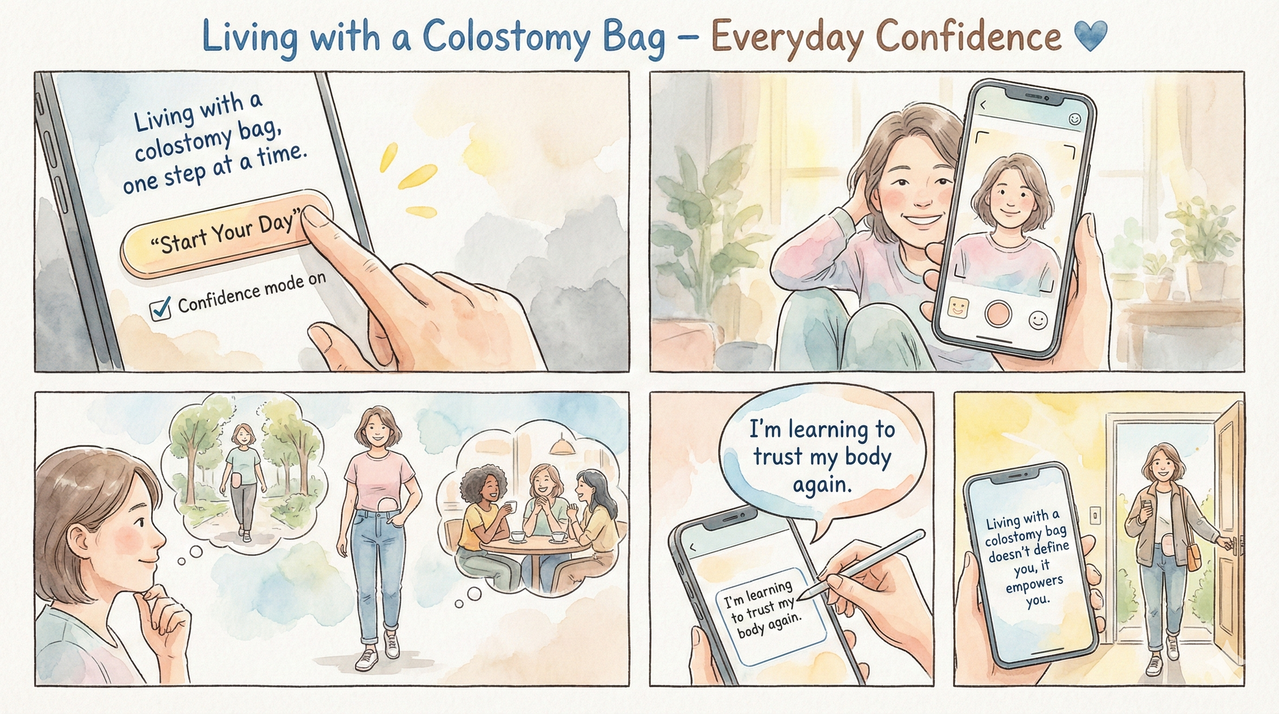
Living With a Colostomy Bag: Daily Life, Challenges and What to Expect
Living with a colostomy bag is a major life change, and it is completely normal to have questions, worries, and mixed emotions. Many people wonder how daily life will look, whether they will feel limited, and if they will ever feel like themselves again.
The reality is that living with a colostomy bag often becomes far more manageable than people expect. With time, routine, and support, most people return to work, social activities, travel, and hobbies while enjoying better health than before surgery.
The early days of living with a colostomy bag
What is it like right after colostomy surgery?
The first weeks after surgery are usually the hardest. Your body is healing, energy levels are low, and everything feels unfamiliar. Learning how to empty and change the bag while recovering physically can feel overwhelming.
How long does it take to adjust to living with a colostomy bag?
Adjustment happens gradually. Many people feel more confident within a few weeks, but full adjustment often takes several months as routines become second nature.
Is it normal to feel anxious or emotional?
Yes. Anxiety, sadness, or frustration are common and do not mean you are coping poorly. Emotional adjustment is a natural part of living with a colostomy bag.
The NHS highlights emotional recovery as an important part of colostomy care: https://www.nhs.uk/conditions/colostomy/
Daily life with a colostomy bag
Living with a colostomy bag in everyday life
Living with a colostomy bag in everyday life usually becomes routine. Emptying the bag takes only a few minutes and can be planned around meals or daily activities.
Can you work while living with a colostomy?
Most people return to work after recovery, including physically demanding jobs. Many coworkers are unaware someone has a colostomy unless told.
Can you go out socially and travel?
Social events, holidays, and travel are very possible. Packing extra supplies and planning ahead provide reassurance when away from home.
In daily life with a colostomy, polished outfits usually come from proportion and fabric choice—higher rises, matte layers, clean swim lines—more than from anything that looks like specialty gear.

Emotional and mental health while living with a colostomy
Does living with a colostomy bag affect confidence?
Confidence often dips initially, especially in social or intimate situations. Over time, many people regain confidence as they become comfortable with their body and routine.
How does a colostomy bag affect body image and intimacy?
Body image concerns are common. Support garments, covers, and open communication with partners help many people feel more secure.
Where can you find emotional support?
Connecting with others who live with a colostomy can be incredibly reassuring. Support groups provide shared experience and practical advice.
Community resources are available through the Crohn’s & Colitis Foundation: https://www.crohnscolitisfoundation.org/
Common challenges and how people manage them
How do you prevent colostomy bag leaks?
Leaks are most common early on while finding the correct fit. Working with a stoma nurse usually resolves these issues quickly.
How do you protect the skin around a colostomy?
Keeping the skin clean, dry, and protected is essential. Proper barrier products and good appliance fit help prevent irritation.
Do colostomy bags smell?
Modern colostomy bags are designed with odor filters. When used correctly, odor is rarely noticeable to others.
Does life improve over time with a colostomy?
When does living with a colostomy start to feel normal?
For many people, daily life begins to feel normal again within a few months as confidence and routine develop.
Is life better after colostomy surgery?
Many people report improved quality of life compared to living with pain, urgency, or chronic illness before surgery.
Medical guidance from the Mayo Clinic supports long-term adaptation: https://www.mayoclinic.org/tests-procedures/colostomy
Tips for living well with a colostomy bag
What products make living with a colostomy easier?
Support belts, well-fitted appliances, and reliable supplies reduce stress and improve confidence.
How important is patience during colostomy adjustment?
Adjustment is not linear. Allowing yourself time and compassion makes living with a colostomy bag much easier.
Explore supportive options here: ostomy belts and support options
What is life like with a colostomy bag? A typical day
Ask people who have lived with a colostomy bag for a year or more and most describe their days as ordinary, with a few small habits added. This is what a normal day tends to look like once the early weeks are behind you.
- Morning: a quick look at the bag when you get up, and an empty or change if it's due. Many people with a colostomy have a fairly predictable pattern, often after breakfast or coffee, and plan their change around it.
- During the day: work, errands, school pickups and the gym carry on as before. You empty a drainable bag when it's about a third to half full, or swap a closed bag once or twice a day. A small kit in your purse, backpack or desk drawer means you never have to think twice.
- Meals: most people eat a normal, varied diet. Chewing well, drinking steadily and noticing which foods give you more gas is usually all it takes.
- Evening and night: an empty before bed and a bag you trust mean most nights pass without a second thought.
For the practical side of that routine, from emptying and changing to skin care and supplies, our step-by-step guide to colostomy care at home walks through every part of it.
Can you live a normal life with a colostomy bag?
Yes. For most people, a colostomy changes how you go to the bathroom, not who you are or what you can do. People with a colostomy work full time, travel, swim, run, dance, date, marry and have children. Some things take a little planning; very few are off the table.
What usually stays the same
- Your job and your social life, once you have recovered from surgery
- Your clothes, with a few tweaks to waistbands and fabrics
- Sport and exercise, building up gradually
- Travel, including flying, with spare supplies in your carry-on
- Intimacy and relationships
What changes
- You empty or change a bag instead of using the bathroom in the usual way
- You carry a small kit of spare supplies
- You pay a little more attention to the skin around your stoma
- You avoid heavy lifting for a while after surgery, and lift carefully afterwards, to protect against a hernia
Living with a permanent colostomy bag
Some colostomies are temporary and are reversed after a few months. Others are permanent. Knowing your colostomy is for life can feel heavy at first, and it's normal to grieve the body you had before. Over time, most people stop treating it as an inconvenience to put up with and start treating it like any other part of their routine.
Can you live a long life with a colostomy bag?
A colostomy itself does not shorten your life. Your long-term outlook depends on the reason you needed surgery and on your general health, not on the bag. Our guide to living with an ostomy covers life expectancy in more detail.
Life after colostomy surgery: the first weeks
Recovery usually follows a similar pattern. In the hospital, a stoma nurse shows you how to empty and change your bag. The first two weeks at home are about rest, short walks and getting used to the routine. Most people are advised to avoid heavy lifting for around 6 to 8 weeks and to build back up to normal activity gradually; your surgeon and stoma nurse will tell you what's right for you.
Quality of life with a colostomy bag
Quality of life with a colostomy depends a lot on how the first months go: good support, a well-fitting bag and practical answers make an enormous difference. Many people say life is better than before surgery, especially if they lived with pain, urgency or a long illness. The things people mention most often:
- Security: a bag that fits well and doesn't leak is the biggest confidence booster. Some people add an ostomy belt for extra support during sport, sleep or long days.
- Clothes that feel like you: high-waisted ostomy underwear and smooth layers mean nobody notices the bag unless you tell them.
- Food: after the first weeks, most people eat almost everything. Our colostomy diet guide explains what to start with and what to bring back slowly.
- People who get it: support groups and online forums for people living with a colostomy are full of practical tips and honest stories.
Living with a colostomy bag: tips that make the biggest difference
- Empty a drainable bag when it's a third to half full, so it never pulls on the seal.
- Re-measure your stoma regularly in the first few months; it shrinks as it heals.
- Keep a small change kit with you: a bag, a few wipes, a disposal bag and an adhesive remover.
- Clean the skin around the stoma with warm water only and dry it well. Here's how to clean a stoma and the bag, step by step.
- Drink steadily through the day and chew food well.
- Choose waistbands that sit above or below the stoma, never across it.
- Lift carefully, and use support if your stoma nurse recommends it, to lower the risk of a hernia.
- Learn the few warning signs that need a call to your nurse, such as stoma bleeding that won't stop or a stoma that suddenly gets longer.
- Talk to other people who live with a colostomy; it shortens the learning curve.
- Give yourself time. Most people feel at home with their colostomy within a few months.
Just starting out? Our free New Ostomy Patient Guide brings the essentials together in one place.
Frequently Asked Questions
Is living with a colostomy bag hard?
It can feel difficult at first, but most people adapt and live full, active lives.
Can you live a normal life with a colostomy?
Yes. Most people work, travel, exercise, and socialize after recovery.
How long does it take to adjust?
Many people feel more confident within weeks, but full adjustment can take months.
Who can help if I am struggling?
Stoma nurses, doctors, and peer support groups are valuable sources of help.
Can you live a long life with a colostomy bag?
Yes. The colostomy itself doesn't shorten life. Your long-term health depends on the condition that led to surgery and on your general health.
What can't you do with a colostomy bag?
Very little. Heavy lifting needs care, especially in the first months, and contact sports may need extra protection for the stoma. Almost everything else, including swimming, travel and intimacy, is possible.
Is life with a permanent colostomy different from a temporary one?
The daily routine is the same. The difference is mostly emotional: with a permanent colostomy, many people find it helps to stop waiting for "after" and set up their routine, clothes and supplies for the long term.
Where can I talk to other people living with a colostomy?
Your stoma nurse can point you to local support groups, and there are active online forums and communities where people living with a colostomy share practical tips and real experience.
More from the SIIL journal

Ileostomy
What counts as a high-output ileostomy or stoma, the signs of dehydration, the food and drinks hospital teams suggest, and when to…

Ileostomy
What is an ileostomy? The small bowel brought out through a stoma: which part of the bowel, why it is done, loop vs end ileostomy,…

Colostomy
Colostomy surgery in plain words: why it is done, how to prepare, loop vs end colostomy, keyhole or open surgery, the hospital sta…

Welcome offer
Stories, tips and exclusive drops — once a month, never spam. Your code lands in your inbox the moment you subscribe.
By subscribing you accept our privacy policy. Unsubscribe in one click, anytime.
$72.99
$72.99
$52.99
$52.99
$41.99
$52.99
$49.99
$41.99
$72.99
$52.99
$72.99
$72.99