

What Is a Urostomy? Types, Surgery, Recovery & Living Well
Everything you need to know about urostomy care, recovery, and thriving after urinary diversion surgery

Living actively and confidently with a urostomy is entirely achievable with proper care and the right support products.
What Is a Urostomy?
 Ostomy BeltHernia support & leak prevention. Trusted by 50,000+ ostomates worldwide.Discover →
A urostomy is a surgically created opening (called a stoma) that allows urine to drain from your body into an external pouch. Unlike other types of ostomies, a urostomy deals exclusively with urine — not stool. This fundamental difference shapes everything about how you’ll manage your new appliance and daily life.
In a urostomy procedure, your bladder is removed and your ureters (the tubes that carry urine from your kidneys) are rerouted to create a new urinary diversion. The most common type, called an ileal conduit, uses a small segment of your small intestine to form a new pathway for urine. Your urine now flows continuously — day and night — into a pouch you wear on your abdomen, which you empty several times throughout the day and drain completely before bed.
If you’re reading this after a bladder cancer diagnosis, you may feel overwhelmed. That’s completely normal. The good news? While the surgery is major, most urostomy patients report that they adjust remarkably well and regain full, active lives. Many are surprised by how manageable their new routine becomes.
Key Distinction: Unlike an ileostomy or colostomy, your urostomy produces urine — not stool. This means no odor concerns (unless you develop an infection), different pouch systems, and unique hydration and kidney health considerations. It’s a completely different management approach.
Why Do You Need a Urostomy? The Bladder Cancer Connection
Approximately 90% of urostomies are created as treatment for bladder cancer. Understanding why your surgeon recommended this surgery can help you feel more confident in your treatment plan and recovery process.
Bladder Cancer and Radical Cystectomy
Radical cystectomy is the gold standard surgical treatment for muscle-invasive bladder cancer (stages T2–T4). During this procedure, your surgeon removes:
- Your entire bladder
- The prostate and seminal vesicles (in men)
- The uterus, fallopian tubes, and part of the vagina (in women)
- Nearby lymph nodes
While this sounds extensive, the goal is curative — to remove all cancer and significantly improve your long-term survival. For muscle-invasive disease, radical cystectomy often provides better outcomes than other treatments like chemotherapy or radiation alone.
When Is Radical Cystectomy Recommended?
Your surgeon likely recommended this surgery if you have:
- Muscle-invasive bladder cancer (MIBC): Cancer has grown into the muscle layer of your bladder wall
- High-grade non-muscle-invasive cancer: Despite repeat treatments, cancer keeps returning or has high recurrence risk
- Carcinoma in situ (CIS): Aggressive cancer cells lining the bladder that won’t respond to other treatments
- Severe complications from other treatments: Radiation damage to the bladder or severe interstitial cystitis unresponsive to therapy
The Pathology Report: What Those Stages Mean
Your pathology report will include a TNM staging (Tumor, Node, Metastasis) and a grade (how aggressive the cancer cells look). This information helps your oncologist determine if you need additional chemotherapy after surgery. Generally:
- Grade 1: Low-grade (slow-growing)
- Grade 2: Intermediate-grade
- Grade 3: High-grade (fast-growing, more likely to spread)
An important note: removing your bladder surgically offers your best chance at a cure. While the surgery is significant, most patients find the peace of mind — and the return to normal life — well worth the adjustment.
Other Reasons for Urostomy (Less Common)
While bladder cancer dominates, urostomies are occasionally created for:
- Neurogenic bladder: Spinal cord injury or spina bifida preventing normal bladder control
- Radiation damage: Bladder fibrosis from prior cancer treatment affecting another area
- Advanced bladder dysfunction: In rare cases where medical management has failed
Types of Urinary Diversion: Which One Will You Have?
Several surgical options exist for urinary diversion. Your surgeon will choose based on your cancer stage, kidney function, manual dexterity, and surgical anatomy. Let’s break down the most common types:
| Type | Description | Frequency | Best For |
|---|---|---|---|
| Ileal Conduit | A segment of small intestine creates a straight channel from kidneys to stoma. Urine drains continuously into external pouch. | 90% of cases | Most patients; simple, reliable, lower complication rates |
| Indiana Pouch | Segment of colon and small intestine form a reservoir. You catheterize (insert a tube) 4-6 times daily to empty. No external pouch. | 5-10% of cases | Motivated patients with good manual dexterity and kidney function |
| Neobladder (Orthotopic Diversion) | Surgeon creates a new bladder from bowel. You urinate through your natural urethra (nearly normal). Requires good kidney function and continent mechanism. | 5-10% of cases | Select patients (often younger, good renal function, excellent candidates) |
Most likely, you’ll have an ileal conduit. It’s the gold standard because it’s straightforward, has lower complication rates, and works reliably for nearly all patients. The following sections focus on managing an ileal conduit urostomy, though principles apply across all types.
Urostomy Surgery: What Happens During Radical Cystectomy
Understanding what happens during your surgery can reduce anxiety and set realistic recovery expectations. This is a major surgical procedure lasting 3-4 hours.
The Two-Part Procedure
Part 1: Bladder Removal (Radical Cystectomy)
Your surgeon makes an incision (usually vertical) to access your bladder and surrounding organs. They carefully remove your bladder, nearby lymph nodes, and reproductive organs. Your surgeon preserves your ureters (the tubes from your kidneys) so they can be rerouted. This is meticulous work — your surgeon is checking for any remaining cancer cells while protecting surrounding structures like your bowel and nerves.
Part 2: Creating the Urinary Diversion
Next, your surgeon isolates a 6-8 inch segment of your small intestine (ileum). They close off the intestine above and below this segment and disconnect it from normal intestinal flow. Your ureters are surgically attached to this intestinal segment, which becomes the new pathway for urine from your kidneys. Finally, your surgeon creates the stoma — a small opening (about the size of a dime to nickel) in your abdominal wall, bringing the bowel segment to the surface.
Recovery From Major Surgery
Expect a longer recovery than you might anticipate:
- Hospital stay: 5-7 days typical (longer if complications)
- Wound healing: Incision closes within 2-3 weeks; internal healing continues for weeks
- Bowel activity: May take 3-4 days to return; some post-surgical constipation is normal
- Activity restriction: No heavy lifting or strenuous activity for 6-8 weeks
- Full recovery: Most feel significantly better by 4-6 weeks; full healing takes 8-12 weeks
This is NOT a “back to normal in 2 weeks” surgery. Be patient and kind to yourself during recovery. This is major abdominal surgery with significant tissue trauma, even though it’s routine for your surgical team.
The First Month: Recovery After Urostomy Surgery
The immediate post-operative period brings unique challenges specific to urostomy creation. Here’s what to expect:
Ureteral Stents and Swelling
Your surgeon likely placed small stents (hollow tubes) in your ureters during surgery. These stents:
- Keep the ureteral-intestinal connections open while they heal
- Are typically removed 1-2 weeks after surgery during a brief outpatient procedure (cystoscopy)
- Don’t hurt to remove — it’s quick and usually painless
Until stent removal, your urine may appear cloudy or bloody — completely normal. After removal, give the sites another 1-2 weeks to fully heal.
Mucus in Your Urine: This Is Normal!
Your intestinal segment produces mucus naturally. You’ll notice mucus in your urine — it may look like a slimy string or cloud. This is not a sign of infection. Mucus production is:
- Completely normal from an intestinal conduit
- Usually heaviest in the first few weeks as the intestine settles
- Often improves over time
- Not a sign of UTI (though cloudy urine can indicate either infection OR mucus)
Drinking plenty of fluids helps dilute mucus and prevent buildup. If you develop fever, foul odor, or dark urine alongside mucus, contact your doctor — these suggest infection, not just normal mucus.
Drains and Catheters
You may have surgical drains (small tubes) in your abdomen, which your surgical team will remove before discharge or at a follow-up visit. Some surgeons place a catheter in your stoma initially to keep urine draining while tissues heal. Your nursing team will show you when and how this is removed.
Stoma Appearance: What’s Normal?
Your stoma will be swollen, dark red or purple, and possibly bleeding slightly in the first few weeks. This is all normal. Expect:
- Swelling: Peaks at 2-3 weeks, gradually reduces over 6-8 weeks
- Color: Gradually fades from deep purple to dark red to pink over weeks
- Bleeding: Small amount when touched is normal; contact your doctor if heavy bleeding occurs
- Final size: Reaches normal size (usually 3/4 to 1.25 inches) by 6-8 weeks
Your pouching system must be properly sized for your stoma’s current dimensions. This is why you’ll need pouch size adjustments during early recovery. Your ostomy nurse will guide you through this.
Hydration: Your Most Important Job After Urostomy
If you’ve read about other ostomies, you’ve probably heard about limiting fluids to prevent output. Urostomy is the opposite. You must drink MORE, not less. Hydration is your most powerful tool for preventing infections and protecting your kidneys.
Why Hydration Matters So Much
Here’s the science: When you’re well-hydrated, your urine is dilute (more water, less concentrated). This dilute urine:
- Reduces UTI risk: Dilute urine is less hospitable to bacteria
- Flushes the system: Continuous flow of urine prevents bacteria from establishing colonies
- Prevents mucus buildup: More fluid dilutes mucus, preventing it from clogging your stoma or pouch valve
- Protects your kidneys: Well-hydrated urinary systems have lower infection rates and better long-term renal function
Conversely, dehydration concentrates urine, making it an ideal breeding ground for bacteria. Many urostomy patients who experience frequent UTIs are simply not drinking enough.
How Much Should You Drink?
Aim for 2.5-3 liters (80-100 ounces) of fluid daily, or about 8-10 cups. Your individual needs may vary based on climate, activity level, and your surgeon’s recommendations. If you live in a hot climate or exercise regularly, drink even more.
This sounds like a lot — and it is, especially if you weren’t a big drinker before surgery. Build up gradually. Spread fluid intake throughout the day rather than drinking it all at once.
Best Fluids to Drink
- Water: Your best friend. Aim for at least half your daily fluid intake from water
- Unsweetened tea: Herbal and black tea are fine
- Diluted fruit juices: Mix juice with water to reduce sugar
- Low-sodium broths: Can help with electrolyte balance
- Milk and yogurt: Provide fluids plus calcium
Fluids to Limit
- Highly caffeinated drinks: Caffeine is a diuretic; it increases urine output but can be dehydrating
- Sugary drinks: Concentrate your urine and increase UTI risk
- Alcohol: Diuretic and dehydrating

Track your daily fluid intake to ensure you’re staying well-hydrated and protecting your kidney health.
Urine Color: Your Hydration Indicator
Check your urine color regularly. It’s your visual indicator of hydration status:
- Pale yellow or nearly clear: Well-hydrated (goal)
- Dark yellow: Drink more water
- Amber or tea-colored: You’re dehydrated; increase fluids now
The Cranberry Juice Myth
You’ve probably heard that cranberry juice prevents UTIs. Here’s the truth: While cranberry does contain compounds (proanthocyanidins) that make bladder infections less likely, the effect is modest. Diluting your urine through overall hydration is far more protective. If you enjoy cranberry juice, include it as part of your fluid intake, but don’t rely on it alone for UTI prevention. Focus on hydration first.
Your Hydration Goal: 2.5-3 liters daily. Watch your urine color — pale yellow means you’re hitting your target. This single change does more to protect your kidneys and prevent infections than almost anything else you’ll do.
UTI Prevention: The Urostomy Essential
Urinary tract infections are the #1 complication for urostomy patients. The good news? Most UTIs are entirely preventable with proper habits. Let’s talk about why you’re at higher risk and how to protect yourself.
Why Urostomy Patients Face Higher UTI Risk
Your ileal conduit creates a unique environment that bacteria enjoy:
- Non-sterile route: Your intestinal segment contains normal bacteria that can colonize the urinary tract
- Continuous moisture: The warm, moist pouch environment is ideal for bacterial growth
- Mucus production: Mucus can trap bacteria and reduce urine flow through the conduit
- Stasis risk: If your pouch isn’t emptied regularly or your conduit becomes kinked, urine pools — a perfect setup for infection
Understanding this risk profile empowers you to take action. It’s not inevitable — it’s preventable.
Prevention Strategy #1: Hydration (We Can’t Stress This Enough)
We discussed this extensively above, but it bears repeating: drinking 2.5-3 liters daily is your #1 defense against UTI. Dilute urine flowing continuously through your system is hostile to bacterial growth. Most urostomy patients with recurrent UTIs are simply not drinking enough.
Prevention Strategy #2: Maintain Acidic Urine
Bacteria prefer alkaline (less acidic) urine. Keeping your urine slightly acidic makes it less hospitable to infection:
- Vitamin C: Take 500-1000 mg daily or eat citrus fruits, berries, and tomatoes
- Cranberry: While not a miracle cure, it does help acidify urine
- Methionine: An amino acid that acidifies urine; discuss with your doctor if considering supplementation
Avoid alkaline-forming foods if you’re prone to infections: dairy, nuts, and some vegetables can raise urine pH.
Prevention Strategy #3: Pouch and Stoma Hygiene
- Empty your pouch every 2-4 hours during the day to prevent backup and bacterial overgrowth
- Drain your night bag completely before bed and in the morning
- Clean your night drainage bag daily with soap and water; rinse thoroughly
- Change your baseplate (wafer) every 3-7 days even if it’s not leaking
- Inspect your stoma weekly for signs of prolapse, retraction, or skin issues that could increase infection risk
- Wash the skin around your stoma gently during changes; pat dry thoroughly to prevent maceration (breakdown)
Prevention Strategy #4: Nighttime Drainage Routine
Before bed, attach your daytime pouch to a night drainage bag (a larger bag with a tube that lies beside you or hangs from your bedframe). This ensures urine doesn’t accumulate in your daytime pouch overnight, where it would be ideal for bacterial growth.
- Attach the night bag to your daytime pouch using the valve connector
- The night bag should hang below your bladder level to prevent backflow
- Empty the night bag first thing in the morning
- Disconnect and rinse before bed the next night
- Replace the night bag every 1-2 weeks
Prevention Strategy #5: Watch for Pouch Kinks and Blockages
If your pouch kinks or compresses, urine backs up — a setup for UTI. Be mindful of:
- Sleeping position — avoid lying directly on your pouch
- Tight waistbands or belts that compress your stoma
- Positioning of your night bag tubing so it doesn’t kink
Signs of UTI: When to Call Your Doctor
Most people associate UTIs with pain or burning urination. With a urostomy, you may not feel the typical burning. Watch instead for:
- Cloudy or dark urine: Though this can also be mucus or dehydration, dark urine + other symptoms = call your doctor
- Foul or strong ammonia odor: Different from your normal baseline
- Fever: Temperature above 100.4°F (38°C), especially if accompanied by other symptoms
- Flank or back pain: Pain in your sides or lower back
- Nausea or vomiting: Especially with fever
- Lethargy or feeling unwell: General malaise or fatigue out of proportion to your activity
- Blood in urine: Especially if new or in larger amounts
Don’t wait for a urine culture to come back before starting antibiotics if you have multiple symptoms. Early treatment prevents complications like sepsis or kidney damage. Your doctor may start empiric antibiotics based on your symptoms while awaiting culture results.
Remember: With a urostomy, you may have zero urinary symptoms of UTI and still have an infection. Fever, flank pain, or feeling unwell warrant a urine culture, even without dysuria (painful urination).
Urostomy Pouch Management: A Different System
If you have an ileostomy or colostomy experience, urostomy pouching is significantly different. Let’s break down how it works.
The Core Components
Your urostomy system has two parts:
- Baseplate (wafer): Adheres to your skin around the stoma
- Pouch: Attaches to the baseplate; collects urine
Some systems combine these into one unit; others are separate. Your nurse will show you which type you have and how they connect.
The Tap Valve: Your Key Feature
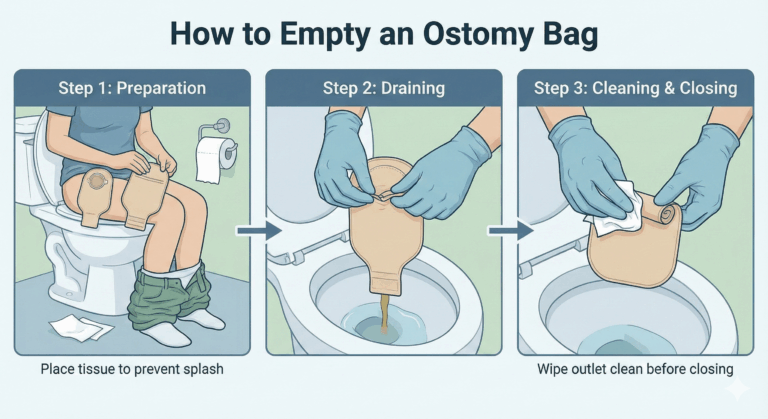
Unlike stool-collection pouches, urostomy pouches have a tap valve at the bottom. This valve allows you to release urine without removing the pouch:
- Open the tap valve every 2-4 hours to drain urine
- Hold the pouch over the toilet and let urine flow out
- Close the tap firmly to prevent leaks
- Pat the valve dry before closing to prevent urine dripping on clothes
This system allows you to keep the same pouch on for 3-7 days, emptying it multiple times daily. It’s far more economical than changing pouches constantly.
Nighttime Drainage Bag Setup
Your daytime pouch connects to a larger night drainage bag before bed:
- Attach a connection tube to your daytime pouch’s drainage connector
- Connect the tube to your night bag (usually with a click or screw-on connector)
- Position the night bag to hang below your bladder level (beside the bed or on a nightstand)
- Before bed, open your daytime pouch’s tap valve so urine drains into the night bag
- In the morning, empty the night bag, disconnect it, close your daytime pouch valve, and reconnect your daytime pouch alone
Anti-Reflux Valve: Why It Matters
Your pouch should have an anti-reflux valve at the bottom. This one-way valve prevents urine from flowing back up into your stoma when your pouch is full or if the connector bends. This is critical because reflux can damage your ureteral attachments and increase UTI risk. Always check that your pouch has this valve.
When to Change Your Baseplate
Change your entire baseplate-pouch system every 3-7 days, or sooner if:
- You notice leaking or wetness around the edge
- The seal feels loose or compromised
- You see redness or irritation developing around your stoma
- The adhesive begins to separate from your skin
Many patients change every 5-6 days on a regular schedule (e.g., Tuesday and Friday evenings) to prevent surprises. This routine makes it predictable and manageable.
Dealing with Mucus Buildup
Mucus in your pouch is normal, but excessive buildup can:
- Clog the tap valve
- Reduce your stoma’s ability to drain
- Trap bacteria
Prevention includes increased hydration and dietary measures (discussed in our Ostomy Diet Guide). If buildup occurs:
- Gently flush the pouch with warm water using a catheter or syringe (your nurse can teach you this)
- Increase your fluid intake dramatically for the next few days
- Consider a pouch designed to handle higher mucus production (your supplier can recommend)
Kidney Health & Long-Term Monitoring: Protecting Your Future
Your kidneys are now depending on your urinary diversion to function properly. Long-term kidney health is essential, and it requires ongoing monitoring. This is where you’ll see the value of your urostomy management — when it’s done right, your kidneys thrive for decades.
Why Your Kidneys Need Special Attention
Your ileal conduit is doing a job normally handled by a sophisticated bladder system. Potential risks include:
- Recurrent UTIs: Can ascend to kidneys (pyelonephritis), causing scarring
- Urine reflux: Urine backing up from the conduit into your ureters and kidneys
- Obstruction: Mucus, scar tissue, or conduit issues can block urine flow
- Metabolic changes: The ileal segment can absorb salts and ions, affecting your electrolyte balance
With proper care (hydration, infection prevention, regular monitoring), most urostomy patients maintain excellent kidney function lifelong.
Your Annual Kidney Health Checkup: What to Expect
Every year, you should have:
Renal Ultrasound
- Checks kidney size, shape, and structure
- Identifies any hydronephrosis (swelling from urine backup) or scar tissue
- Non-invasive and painless
- Often done at 6 weeks post-op, then annually
Blood Tests
- Serum creatinine: Indicates overall kidney function
- eGFR (estimated glomerular filtration rate): A calculated measure of how well your kidneys filter waste
- Electrolytes (sodium, potassium, chloride): The ileal conduit can alter these
- Bicarbonate: The ileal segment absorbs bicarbonate, potentially causing metabolic acidosis
Urine Culture
- Usually done annually or if you have symptoms
- Identifies asymptomatic bacteriuria (bacteria without infection symptoms) — though this rarely requires treatment in urostomy patients
Vitamin B12 Monitoring
Your ileal segment normally absorbs B12. Since this segment no longer participates in normal absorption, some patients develop B12 deficiency. Discuss B12 supplementation with your doctor — you may need:
- Annual B12 blood testing
- Oral supplements (high doses, since absorption is reduced)
- B12 injections (if oral absorption is poor)
B12 deficiency develops slowly and may cause anemia, fatigue, or nerve problems if untreated. Regular monitoring prevents this.
Metabolic Acidosis Awareness
The ileal segment absorbs electrolytes differently than the stomach and small intestine normally do. This can lead to chronic metabolic acidosis — a slight decrease in blood pH. Most patients have no symptoms, but it can contribute to kidney stone formation or, rarely, bone health issues. Your doctor will monitor this through bicarbonate levels. If acidosis develops, medications like sodium bicarbonate or potassium citrate can help.
Your Kidney Protection Plan: Stay hydrated, prevent UTIs, go to all your annual appointments, and get your ultrasound and blood work done. This three-pronged approach keeps your kidneys healthy for life.
Sexual Health After Cystectomy & Urostomy: Reclaiming Intimacy
This section is often overlooked in ostomy guides, but it’s crucial. Bladder cancer surgery affects sexuality and intimacy, and you deserve straightforward information and solutions. Many patients feel uncomfortable raising this with their doctors — we’re addressing it head-on here.
For Men: Erectile Dysfunction After Nerve-Sparing Surgery
Even with nerve-sparing techniques, radical cystectomy can damage nerves responsible for erections. The extent depends on:
- How aggressive your cancer was (larger tumors require wider surgical margins, potentially damaging more nerves)
- Whether your surgeon could perform a nerve-sparing procedure
- Your pre-operative sexual function and overall vascular health
Many men experience temporary erectile dysfunction immediately post-surgery, which often improves over 6-12 months as nerves recover. However, some experience permanent changes.
Treatment Options for Erectile Dysfunction
- Oral medications: Sildenafil (Viagra), tadalafil (Cialis), or vardenafil (Levitra) work for many men, especially if some nerve function remains
- Penile injections: Alprostadil injected into the penis increases blood flow; bypasses nerve involvement entirely
- Penis ring (constriction ring): Simple, non-invasive device that traps blood in the penis
- Vacuum erection device (penis pump): Creates negative pressure to draw blood into the penis; works even with severe nerve damage
- Penile implant: Surgical solution for men not responding to other treatments; provides reliable, on-demand erections
Start with your oncologist or a urology specialist if ED develops. Many men are surprised how well modern treatments work.
For Women: Physical and Emotional Changes
Cystectomy removes your bladder, uterus, ovaries, and part of your vagina. The physical changes include:
- Shortened vagina: This can affect comfort during penetration; communication with your partner is key
- Reduced vaginal lubrication: Especially post-menopause; water-based or silicone-based lubricants become essential
- Loss of bladder control sensations: Changes in arousal cues for some women
- Altered sensation: Depending on nerve involvement
Emotionally, losing your reproductive organs is significant — even if you chose this surgery. Grief, identity shifts, and body image concerns are all normal. Many women benefit from talking with a therapist or joining a cancer survivor support group.
Practical Solutions for Women
- Lubrication: Use generously. Water-based (Astroglide, K-Y Jelly) or silicone-based (Eros) lubricants are your friends
- Vaginal estrogen: If you’re post-menopausal, vaginal creams or pessaries containing estrogen improve elasticity and lubrication
- Extended foreplay: Give yourself more time for arousal and natural lubrication
- Communication: Tell your partner what feels good and what doesn’t. Comfort comes from honesty
- Alternative positions: If penetration is uncomfortable, explore other intimate activities
For All: The Urostomy Practicality
Beyond the physical effects of surgery, your urostomy adds a practical layer to intimacy:
- Timing: Empty your pouch before intimacy to reduce concerns about leakage
- Pouch coverage: Options include special pouch covers, abdominal binders, or simply wearing underwear or clothing during sex
- Night bag: If using a night bag, disconnect it during intimate time
- Confidence: As you adjust to your urostomy, comfort with your body naturally improves
The Emotional Component
Body image after cancer and major surgery is real. You’ve been through something profound — the threat of cancer, major surgery, permanent physical changes. All of this affects sexuality and intimacy. Some reflection points:
- Your partner loves you — your urostomy doesn’t define your worth or attractiveness
- Many cancer survivors report feeling deeper intimacy post-recovery as they prioritize what matters
- Therapy or support groups specifically for cancer survivors can help process emotional impacts
- Give yourself grace — healing takes time
You deserve satisfying intimacy after cancer. Talk openly with your healthcare team, communicate with your partner, and know that most concerns have practical solutions. Intimacy and sexuality are part of thriving — not just surviving.
Living Actively with a Urostomy: No Limits
One of the biggest surprises for new urostomy patients is how little their condition limits their activities. You can swim, exercise, travel, work, and pursue your passions. Here’s how:
Swimming and Water Activities
Yes, you can swim. Waterproof urostomy pouches exist and work well. Consider:
- Waterproof pouch options: Many manufacturers make swim-specific pouches designed to maintain a seal in saltwater and chlorine
- SIIL Ostomy Swimwear: Purpose-designed swimwear that provides discreet, secure coverage for your pouch while allowing freedom of movement. Available in styles for men and women
- Pre-swim routine: Use a fresh, well-adhered pouch before swimming; swim for shorter periods initially while you build confidence
- Post-swim care: Rinse thoroughly in fresh water and change your pouch afterward if it’s been submerged for extended periods

Purpose-designed swimwear combines style, comfort, and security for swimming and water activities.
Exercise and Sports
You can exercise — from walking to running to weightlifting. Recommendations:
- Secure your pouch: Wear a supportive SIIL Ostomy Belt during exercise; it prevents movement and reduces pressure on your seal
- Choose appropriate clothing: Ostomy-friendly clothing keeps your pouch secure and discrete
- Timing: Empty your pouch before exercise
- Hydration: Drink extra water during and after exercise
- Contact sports: Protect your stoma area; wear a padded guard if needed (your supplier can recommend)
Travel (Domestic and International)
Traveling with a urostomy requires planning but is entirely doable:
- Pack supplies: Bring more pouches, paste, and wipes than you think you’ll need — they’re hard to find in many locations
- Airport security: Your urostomy pouch is permitted through security. Bring a letter from your doctor explaining your condition if you prefer (though not required)
- Liquids note: While your actual urine in your pouch is allowed, medicated solutions (if you use them) may need documentation
- Time zone changes: If traveling across zones, continue your normal change schedule; don’t try to adjust pouch changes to align with local time
- Accommodation planning: Ensure you have private access to bathrooms during your stay
Work
You can work full-time in any field. Practical tips:
- Keep supplies in your desk or locker for discreet pouch changes
- Use restroom breaks for emptying your pouch (as you would for normal bathroom needs)
- Your employer must legally provide reasonable accommodations; you don’t need to disclose your specific condition unless you choose to
- Some occupations with extreme heat or heavy contact sports may require adjusted precautions, but restrictions are rare
SIIL Products for Urostomy Support
The right support products make living with a urostomy easier, more comfortable, and more confident. SIIL Ostomy specializes in premium accessories designed specifically for your needs.
Ostomy Belt
Provides secure support and compression during exercise, swimming, and daily activities. Prevents pouch movement and reduces pressure on your seal.
Shop BeltsOstomy Underwear
Discreet, supportive underwear that holds your pouch securely in place. Available in multiple styles and materials for all-day comfort.
Shop UnderwearSwimwear
Purpose-designed swimwear that provides secure coverage and confidence in water. Waterproof material and integrated pouch support for swimming and water sports.
Shop SwimwearHernia Support Belt
If you develop a parastomal hernia, this specialized belt provides targeted support and helps prevent further expansion.
Learn MoreBag Covers
Decorative and functional covers for your pouch. Protect your pouch from damage while keeping it discrete and stylish.
Shop CoversOstomy Clothing Guide
Comprehensive guide to choosing clothing that works with your urostomy. Tips for discretion, comfort, and style.
Read GuideRelated Resources & Guides
Urostomy is part of a broader ostomy landscape. These resources help you understand your condition in context and support your overall health:
- Ostomy Diet Guide: Nutrition strategies specific to urostomy patients, including foods that affect mucus production and hydration
- New Patient Guide: Everything a newly diagnosed patient needs to know, from surgery prep to returning home
- Troubleshooting Guide: Solutions for common ostomy problems like skin irritation, leaks, and odor
- Ostomy Bag Guide: In-depth information about pouch systems, comparing different brands and styles
- Ileostomy Guide: If you’re curious how your urostomy compares to ileostomy (bowel diversion)
- Colostomy Guide: Understanding the full spectrum of ostomy types
Frequently Asked Questions About Urostomy
Ready to Thrive with Your Urostomy?
Download our free New Patient Guide for comprehensive information about living with an ostomy, managing your pouch system, and returning to the activities you love.
Download Free Guide Explore SIIL ProductsMore from the SIIL journal

Urostomy
Complications of an Ostomy: Medical Guide to Recognising and Treating Problems 2026 Ostomy complications are alterations of the st…
Urostomy
Published on: 09/12/2025 Ileostomy Reversal Surgery Author: John Rainier Yumang For many patients who have lived with a temporary …

Urostomy
Written by: Elena Gea, Medical Content Specialist LinkedIn Reviewed by SIIL Ostomy Clinical Team Convatec Ostomy Supplies: Complet…

Welcome offer
Stories, tips and exclusive drops — once a month, never spam. Your code lands in your inbox the moment you subscribe.
By subscribing you accept our privacy policy. Unsubscribe in one click, anytime.
$72.99
$52.99
$52.99
$49.99
$72.99
$31.99
$122.99
$44.99
$41.99
$72.99
$102.99
$52.99