

 ES
 EN
 GB
 DE
 FR
No products in the cart.
Living with an Ostomy: Life Expectancy, Daily Life and What a Stoma Changes
Quick answer: An ostomy is an opening on the abdomen — a stoma — that lets output leave the body into an ostomy bag, also called a pouch. Colostomy, ileostomy, and urostomy differ mainly in what the pouch collects and how often you empty it. After a clumsy first stretch, most people work, swim, date, travel, and wear regular clothes. The pouch becomes a routine, not a spotlight. High-waisted layers and a pouch that stays put do more for confidence than any speech.
If you just heard the word ostomy in a hospital corridor, or you’ve had a stoma for years and still google it at 1 a.m., you’re in the same search as everyone else: what is this, and can life still look like mine? An ostomy is a change in plumbing, not a downgrade in who you get to be. The learning curve is real. So is the Tuesday when you empty the pouch, wash your hands, and get on with your day.
Key takeaways
- Ostomy is the setup; the stoma is the opening you can see; the ostomy bag (pouch) is the part you empty.
- Colostomy, ileostomy, and urostomy are not the same day to day — output and emptying rhythm are the differences that actually matter.
- The first months are a skills problem, not a personality test. Awkward bag changes are almost universal.
- Clothes, a pouch that seals, and a bathroom plan beat any pep talk.
What is an ostomy, in plain English
 Ostomy BeltHernia support & leak prevention. Trusted by 50,000+ ostomates worldwide.Discover →
People say ostomy, stoma, bag, and pouch for the whole setup, and that’s fine. Nobody is grading your vocabulary in a rest-stop bathroom. An ostomy is the opening on the abdomen that lets output leave into a pouch worn on the outside. The part you can see and feel is the stoma.
What you actually live with is a system: a wafer (the sticky part that sits on your skin), a pouch that collects output, and whatever makes that combination stay put on your body — tape, a belt, high-waisted underwear, a wrap. Hollister, Coloplast, and ConvaTec are the three names you’ll see in almost every bathroom cabinet. None of them is “the right one.” The right one is the pouch that doesn’t leak on a Thursday.
People also type “how long can you live with an ostomy bag” because the word sounds final. Lived reality: plenty of ostomates have had a stoma since their twenties and gone on to careers, kids, decades of ordinary Tuesdays, and very boring pouch changes. The ostomy is the workaround that let them keep going. It isn’t a countdown, and it isn’t a personality. The short answer on life expectancy is right below.

Does an ostomy shorten your life?
An ostomy does not tell you how long you will live. It changes how waste leaves the body. Your outlook depends on why surgery was needed, your overall health, recovery and any complications. Ask your care team what those factors mean for you; a stoma or pouch alone cannot provide a life-expectancy estimate.
That is worth saying plainly because “how long can you live with a colostomy bag” is one of the most searched ostomy questions in the U.S., usually typed late at night by someone who has just come out of the hospital. Between 725,000 and 1 million Americans live with an ostomy today (UOAA), and many have had theirs for decades: people who had surgery in their twenties and went on to careers, children and retirement with the same stoma.
Life expectancy with a colostomy bag
A colostomy may be needed because of colorectal cancer, diverticulitis, injury or another condition. With cancer, stage, treatment and follow-up are part of the outlook. With other conditions, recovery and general health still matter; a temporary colostomy does not guarantee a particular lifespan. The American Cancer Society colostomy guide explains the procedure and practical care.
Life expectancy with an ileostomy
An ileostomy may be part of treatment for inflammatory bowel disease or other conditions. Your operation and ongoing care depend on your diagnosis. Because fluid and electrolyte losses can be important, ask your team for an individualized plan and guidance on changes in output. Dizziness or much less urine deserves prompt medical advice. Surgery for Crohn’s disease does not mean the disease is cured.
Life expectancy with a urostomy
Most urostomies are created after bladder cancer, and then the outlook is the outlook of that cancer. Over the years the urostomy itself mainly asks for attention to the kidneys and to urinary tract infections, which is why regular check-ups and plenty of fluids matter more than anything you wear. The Cleveland Clinic urostomy overview covers the long-term follow-up.

What actually matters for the long run
- Fluids and salt, especially with an ileostomy or in hot weather.
- A pouch that fits. Skin problems and leaks are the most common long-term issues, and most are fixed by re-measuring the stoma and changing the barrier. A yearly visit with a WOC nurse helps.
- Hernia awareness. Parastomal hernias are common in the years after surgery. Ask your WOC nurse about lifting and core exercises, and whether a support garment such as an ostomy belt makes sense for you.
- Your follow-up plan for the underlying condition: cancer surveillance, IBD care, kidney checks.
- Your head. Anxiety and low mood are common in the first year. They are treatable, and peer support helps (more on that below).
Colostomy, ileostomy, and urostomy — the differences that actually matter
Search results love to split this into three separate essays. You don’t need that. You need to know what will be in the bag, how often you’ll empty it, and what that means for clothes, meals, and leaving the house. That’s the ileostomy vs colostomy question, plus urostomy, in one place.
| Type | What’s in the ostomy bag | Emptying, in real life | What people notice first |
|---|---|---|---|
| Colostomy | More formed stool. A colostomy bag is still “a bag of poop” some days — that’s the job, not a crisis. | Often a few times a day once you’re settled. Timing can feel more predictable than an ileostomy. | Diet and a morning routine matter more than constant emptying. |
| Ileostomy | Looser, more continuous output. An ileostomy bag works harder, and hydration shows up in how you feel by afternoon. | Empty more often — many people land around several times a day, plus whenever it hits a third full. | Capacity, filters, and drinking enough water become the daily skills. |
| Urostomy | Urine. A urostomy bag has a drainage tap, not a clip you empty into the toilet like stool. | Drain through the day. Plenty of people add a night setup so they’re not up every hour. | The tap, night drainage, and keeping the skin around the stoma honestly dry. |
A loop ileostomy is usually treated like an ileostomy in daily life: looser output, more emptying, extra fluids. For the full picture, read living with an ileostomy. The stoma can look different at first. The pouch still does the same job. All three types aim at the same outcome: a pouch that stays put, skin that isn’t angry, and an outfit that doesn’t advertise anything.

A little support for everyday life
Your free New Ostomy Patient Guide
Recovery, clothing and the first months with a stoma — practical questions to explore with your care team.
Get the free guide →Opens a short email form. You’ll receive the guide and occasional emails; unsubscribe anytime.
The first months — the honest timeline
Knowing the shape of the curve is more useful than being told you’re “so strong.” You’re not failing if week two feels messy. Almost everyone starts clumsy.
- Weeks 1–4. Bag changes feel like a craft project you didn’t sign up for. Output is still finding a pattern. Keep a change kit where you can reach it at 2 a.m.: spare pouch, wafer if you use two-piece, adhesive remover wipes, a small trash bag, a hand mirror. The first leaks are information, not a verdict.
- Months 1–3. You start recognizing your windows — after coffee, after a big dinner, before a commute. You find a wafer that likes your skin. You stop needing a pep talk to leave the house for groceries.
- After that. For a lot of people the ostomy recedes into background noise. Not because they became endlessly grateful. Because the routine got boring. Boring is the win.
If you’re still in the hard early weeks, you don’t need a transformation speech. You need a pouch that doesn’t leak, a bathroom plan, and one ordinary outing that goes fine. Stack those. The confidence is quiet, and it shows up after the reps, not before.

Ostomy bags, emptying, and the “full of poop” question
Let’s say the quiet part. People search “colostomy bag full of poop” because they’re scared of the smell, the weight, the public bathroom, or all three. Output is the point of the pouch. Empty when it’s about one-third to half full so it doesn’t tug, balloon, or announce itself under a shirt. A heavier pouch can pull on the seal and feel uncomfortable; use the emptying routine taught for your system.
How often you empty versus how often you change are two different jobs. Emptying is through the day, whenever the bag needs it. Changing the whole system — wafer and pouch — is less frequent and depends on your skin, your output, and the brand you’re on. Some people get several days from a wafer. Ileostomy output can be harder on adhesive, so those changes often come sooner. Urostomy pouches get drained, not “emptied” in the stool sense.
A small kit in a zip pouch beats a backpack of panic: one spare ostomy bag, wipes, a couple of plastic bags, and maybe a deodorant drop if odor bothers you. Filters on modern pouches do a lot. If a room still notices, that’s a product tweak, not a character flaw. Hospital discharge often hands you one brand and you assume that’s your forever. It isn’t. There is no prize for brand loyalty — test at home before a wedding. If you’re still hunting for a pouch that behaves, start with how ostomy bags actually differ in real bathrooms, not in the brochure.

Eating, moving, and swimming with a stoma
The stubborn myth is that an ostomy means a forever-bland diet. For most people, after the early weeks, that isn’t true. You learn your list, not a universal banned list. Chew the obvious troublemakers thoroughly — popcorn, mushrooms, fruit skins, nuts, coconut. Add new foods one at a time so you can tell what actually caused the balloon. Onions, cabbage, beans, and fizzy drinks make gas or odor for some people and do nothing for others. Eat the cookout. Notice what happens. Adjust the portion, not your entire social life.

Food and fluid advice should fit your operation and recovery. With an ileostomy, ask your team how to recognize dehydration and what to do if output increases. Simply drinking more plain water is not a universal solution for high output. Keep your own plan handy; the NIDDK guide to life after bowel ostomy surgery is a useful starting point for questions.
Swimming is an option for many people after recovery. Ask your team when you can return and follow the instructions for your pouching system. If you are having leaks or an uncertain seal, talk with your ostomy nurse before swimming. A swimsuit can help you feel comfortable with how the pouch looks; it does not fix a fitting problem. Our ostomy swimwear collection offers clothing choices for when you are ready.
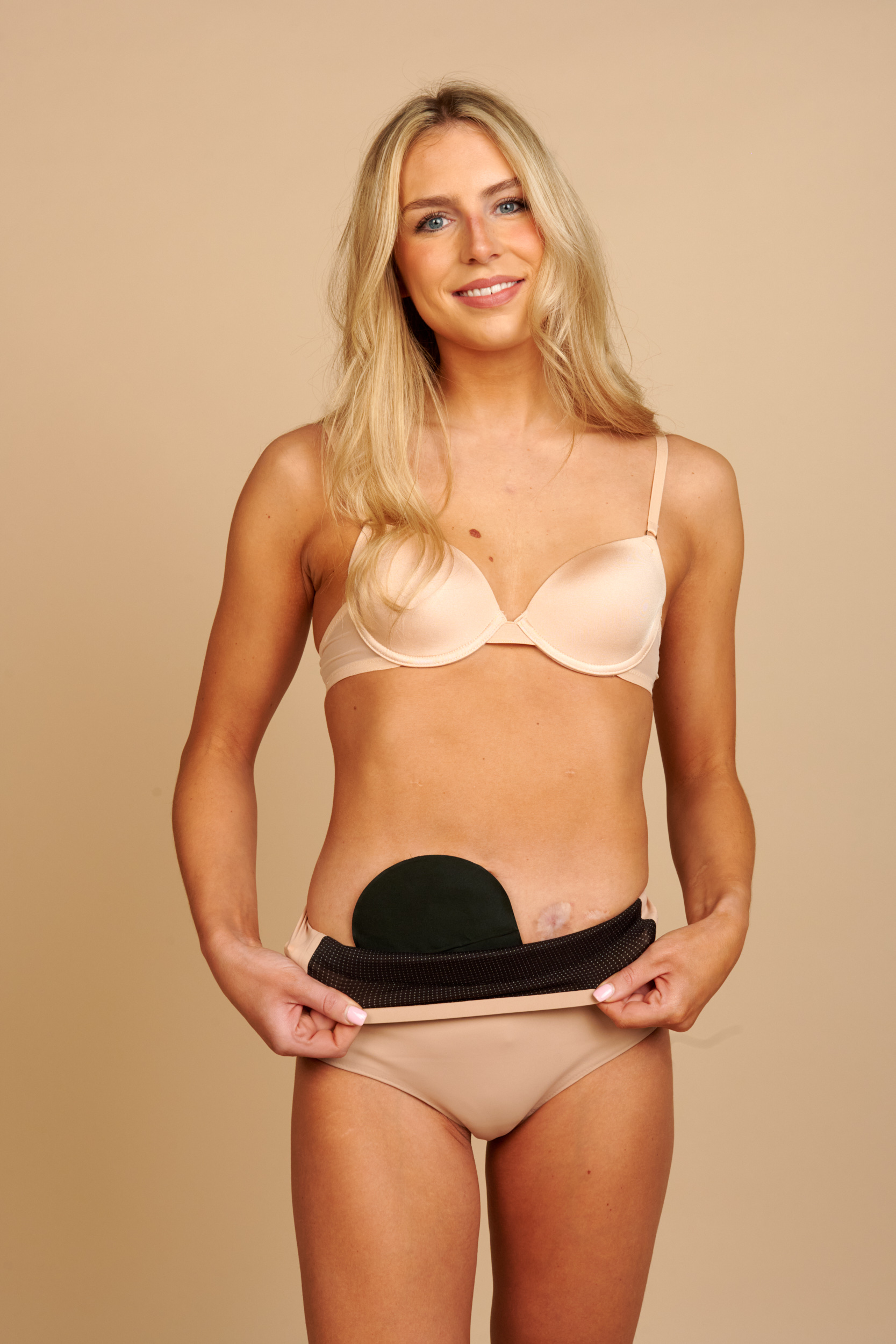
Running, lifting, yoga, cycling, pickup basketball — same story, with one extra piece a lot of people add once they start moving hard again. A snug ostomy support belt keeps the pouch from bouncing and pulling on the wafer. Some folks want max hold for heavy lifts; others want something that looks like actual clothing under a T-shirt. A stoma guard is the other add-on people reach for when a ball, a toddler, or a barbell is in play. The goal is the pouch staying put so you can think about the set, not the bag.
Clothes that don’t advertise the pouch
Low-rise jeans and a full pouch are a bad pairing. That’s not a fashion opinion; that’s physics. High-waisted underwear, stretch-waist pants, and a bit of firm fabric over the stoma do more for “does this show?” than any motivational quote. The pouch sits in a pocket of cloth instead of printing through a skinny waistband. Darker fabrics and a slightly longer shirt are the weekday version. For a fitted dress or a white tee, an ostomy bag cover takes the plastic shine off and makes the outline look like underwear, not hospital gear.
What you can wear: high-rise denim, tailored pants with a bit of give, bike shorts under dresses, wrap-style swim pieces, lounge sets, and lingerie that sits above the stoma instead of bisecting it. Ostomy panties and an ostomy wrap are the layers that were actually cut around a bag. What usually fights you: tight low belts right on the wafer, rigid waistbands, and anything that traps the pouch below the hip line. You don’t need a new wardrobe. You need a different rise — and if you’re still guessing at denim, what pants work with a stoma is the shorter version of this argument.

Work, travel, dating, and the reversal question
The social side is where a lot of the fear lives, and it’s also where the small wins stack up. At work, you already know where the bathrooms are. Empty before a long meeting. Keep a spare pouch in a drawer. You do not owe coworkers a TED Talk. “I wear a pouch — I’m fine” is a complete sentence if it ever comes up. Most of the time it doesn’t. If you do need something, such as easy restroom access or a short break to empty, the Americans with Disabilities Act covers conditions that affect bowel and bladder function, so you can ask for a reasonable accommodation.
Travel is logistics, not a personality test. Pack double the wafers you think you need, in your carry-on. TSA has seen ostomy bags; you can request a private screening if you want one. Empty before security so the bag is flat. Road trips: stop at one-third full, not when you’re desperate. Hotel rooms: a small toiletry kit by the sink turns 11 p.m. changes from a production into brushing your teeth.

Dating and intimacy are allowed to be awkward and still good. You can empty first, wear high-waisted something, dim a light, or say “I have a stoma, the bag stays on, I’m still very much here.” People who want you will work with that. People who don’t were going to be a problem anyway. You can swim on the first beach trip, sit through a long dinner, and go home with someone. The pouch is a detail. It is not the plot.
Ostomy reversal comes up constantly, especially with a loop ileostomy that was described as temporary. Some stomas are planned that way. Some stay. Reversal is its own chapter — it isn’t a reset button, it isn’t available to everyone, and it isn’t a moral upgrade over keeping the pouch. Plenty of people keep a permanent ostomy and build a life they actually like. If reversal is on the table, read it as one option among others, including the unglamorous realities after reversal, not as the only version of success.

Who pays for pouches in the U.S.: Medicare, Medicaid and private plans
Pouches, skin barriers and accessories such as barrier rings are a monthly cost for life, so it pays to set up coverage early.
- Medicare: Part B covers medically necessary ostomy supplies under the prosthetic device benefit, in the quantity your doctor says you need. After the Part B deductible you pay 20% of the Medicare-approved amount (Medicare.gov). Order through a supplier enrolled in Medicare.
- Medicaid: programs generally cover ostomy supplies too; which brands and how many per month depends on your state.
- Employer and marketplace plans: usually cover supplies as durable medical equipment, often with in-network suppliers and prior authorization. Call the number on your card before you switch brands.
- Free samples: the big manufacturers send samples, which is the cheapest way to test a new barrier before you change your prescription.
Your ostomy type changes what goes on the order: drainable pouches for an ileostomy, often closed pouches for a colostomy, a tap pouch and night bag for a urostomy. Our ileostomy vs colostomy supply comparison breaks it down. Clothing is the part insurance normally won’t pay for: high-waisted ostomy underwear, an ostomy wrap, an ostomy bag cover or ostomy swimwear comes out of pocket, so buy fewer, better pieces that you actually wear every day.
Support in the U.S.: WOC nurses, UOAA groups and people who get it
You don’t have to figure this out alone, and in the U.S. the help is organized.
- WOC nurses. A certified wound, ostomy and continence (WOC) nurse is the person to call about leaks, sore skin, a changing stoma or a hernia. Ask your surgeon’s office or hospital for the outpatient ostomy clinic; many clinics also do video visits.
- UOAA and its support groups. The United Ostomy Associations of America runs a support group finder with affiliated groups around the country, many meeting online, and a free New Ostomy Patient Guide.
- Condition-specific groups. The Crohn’s & Colitis Foundation for IBD and ileostomies, the Bladder Cancer Advocacy Network (BCAN) for urostomies, and the American Cancer Society for colorectal cancer and colostomies.
- Travel. TSA officers screen ostomy pouches regularly; you can ask for a private screening, and UOAA’s travel tips cover packing and security.
Want the pouch to disappear under real clothes?
High-waisted pieces, wraps, and swimwear built around a stoma — more everyday wardrobe than hospital drawer. Quiet confidence you can actually wear to the pool, the office, or a Tuesday.

Living with an ostomy, one ordinary day at a time
Living with an ostomy gets easier to picture when the question becomes smaller. Not “Can I do absolutely everything again?” but “What would make tomorrow morning less of a production?” Pick one routine, try it at home, and change whatever annoys you. Your bathroom does not need to become a warehouse. Your life does not need to become a before-and-after story, either.
A morning ostomy routine you can actually repeat
Keep the products you already use together and check your supplies before you are rushing out. A photo of the box label can save you from ordering something that looks almost right but has the wrong connection or size. Set aside a small kit with the items needed for your own system, using the routine your ostomy nurse has taught you. Then get dressed, sit down, stand up and see how the waistband feels. A mirror can answer the outfit question; your care team can answer a fit or skin problem. Neither requires a motivational speech before breakfast.

Your first outing with an ostomy bag
Make the first plan pleasantly unambitious: a coffee, a short visit, a familiar store. Know where a bathroom is, take your usual supplies and give yourself permission to leave when you want. If company helps, invite someone who will happily discuss anything other than your digestive system. Afterward, notice what actually happened: perhaps one item was awkward to reach, or you discovered that one extra pouch of supplies made the trip feel manageable. Keep the useful part. You are building your own routine, not passing a test set by someone on the internet.

An evening check-in without making the ostomy your whole evening
Put tomorrow’s essentials where you can find them and note any question you want to ask your nurse. If a particular pair of pants worked well, that is useful information. If something felt uncomfortable, that deserves attention too. The aim is to make your routine easier to repeat, not to promise that every night will go perfectly. For the practical distinction between draining a pouch and replacing a system, our guide to emptying and changing an ostomy pouch separates the two jobs.

Talking about your ostomy: you choose the words
You can be open, private, funny, matter-of-fact or still figuring it out. Having an ostomy does not make you the designated spokesperson for bowel surgery at every dinner. These are example phrases to adapt, not quotes from patients and not rules about when you must disclose anything.
Explaining an ostomy to a friend or coworker
Try the smallest explanation that does the job: “I have a stoma and wear a pouch. I might need a bathroom break, but I would still love to come.” Or simply: “I am recovering from surgery and may need to change the plan.” You can share the practical need without offering a medical history. If you want a colleague to help, be specific: covering a short break is easier to understand than guessing what support might mean. For questions about workplace accommodations, use a qualified local source or your employer’s process; one person’s experience does not settle another person’s rights.

Talking about an ostomy with a partner
A conversation can start with what feels comfortable today: “The pouch stays on. I would like to take this slowly.” A wrap or underwear with a pouch pocket can be a personal clothing choice; equally, you may prefer what you already own. Neither choice proves how confident you are. Ask your healthcare team about discomfort or concerns following surgery, and use our honest guide to everyday adjustment with a stoma bag if you need words for the less practical side of the change. There is room for affection, awkwardness and a laugh without pretending everything is easy.
Living with an ostomy bag as a woman, and as a man
The basics are the same for everyone. The questions people ask in support groups aren't always the same, though, so here are the ones that come up most.
Living with an ostomy bag for women
Clothes and intimacy top the list. High-waisted underwear, wrap-style swimwear and dresses with a little structure hide a pouch far better than most people expect, and ostomy lingerie cut to sit above the stoma helps intimacy feel like intimacy again. Output can change around your period, and a smaller pouch for evenings out is a favorite trick. Pregnancy with an ostomy is possible: plan it with your surgeon and stoma nurse, because the stoma changes shape as your belly grows. For the beach and the pool, ostomy swimwear does the work.
Living with an ostomy bag for men
Work, sport and lifting come up most. Men who lift for work or at the gym often worry about a parastomal hernia; building back gradually, bracing your core properly and wearing support such as an ostomy belt on heavy days all help. A belt or high-waisted briefs also keep the pouch flat under fitted shirts. Some bowel surgeries can affect erections; it's common, it's treatable, and your surgeon or doctor has heard the question many times. Men are often slower to look for support, but men-only ostomy groups exist, online and in person, and many men find them easier than mixed groups.
Small things that make a big difference
- Empty the pouch when it's a third to half full so it lies flat.
- Keep a change kit with you: pouch, wipes, disposal bag, adhesive remover.
- Learn what's normal for your stoma. Our guides on stoma bleeding and a prolapsed stoma explain when to call.
- Clean with warm water and dry well: how to clean a stoma, step by step.
- Plan your first outings, then stop planning so much. Most people find the worry fades faster than they expect.
Your next ostomy question: choose the right guide
You should not have to reread a complete overview every time one small problem comes up. Start with the question you have today. These guides cover different parts of ostomy life; the product pages explain optional clothing and accessories when you want to compare them.
| What is on your mind? | Where to start | What the guide helps explain |
|---|---|---|
| “What is different about my type of ostomy?” | Ileostomy vs colostomy | The anatomy, pouching differences and questions to discuss with your care team. |
| “I am going home after surgery.” | New ostomy patient guide | A place to organize the basics and return to questions as they come up. |
| “How do I organize my pouch routine?” | Ostomy pouch changes | The difference between emptying and changing, alongside the instructions for your own system. |
| “Which pants might feel comfortable?” | Pants and waistbands with an ostomy | Practical clothing choices to try while sitting, moving and getting on with your day. |
| “Something about the pouch or skin is bothering me.” | Finding ostomy nursing support | Who can help assess your individual concern instead of making you guess. |
| “I would like to compare clothing options.” | Ostomy belts, pouch-pocket underwear and ostomy swimwear | Fit, coverage and how a garment works with the clothes or activities you already enjoy. |
Looking for the community side? Explore No colon, still rolling and ostomy humor, IBD Warriors and finding your people, or everyday life after colorectal cancer treatment with an ostomy. Each takes a different route into the questions that go beyond the pouch.
Building confidence with an ostomy does not need a deadline
It is possible to feel proud of one outing and fed up with the next bag change. Both can be true. Use the practical guides for practical questions and reach out when you need someone who understands the emotional part. The UOAA support group finder is one route to peer support in the United States. You do not need to arrive with an inspiring story. “This week has been a lot” is quite enough to start a conversation.

Keep the ostomy advice that belongs to your situation
A person with a temporary ileostomy during cancer treatment may need a different plan from someone who has lived with a colostomy for years. A useful article helps you prepare better questions; it cannot see your stoma, your medicines or your surgical history. Keep the name of your system, your care team’s instructions and their contact details together. The NIDDK overview of life after bowel ostomy surgery explains the role of individualized support. Bring the part that concerns you to your own clinician.
Questions people ask after the basics
Does an ostomy shorten your life?
A stoma or pouch alone cannot predict life expectancy. The condition behind the surgery, your general health, recovery and complications all matter. Ask your care team for an outlook based on your own situation.
Does Medicare pay for ostomy supplies?
Yes. Medicare Part B covers medically necessary ostomy supplies in the quantity your doctor says you need. After the Part B deductible you pay 20% of the Medicare-approved amount, and you should use a Medicare-enrolled supplier. Ostomy clothing is normally paid out of pocket.
Where can I find an ostomy support group in the U.S.?
Start with the United Ostomy Associations of America (UOAA) support group finder at ostomy.org, which lists affiliated groups across the country, many with virtual meetings. Your hospital’s WOC nurse can also point you to local groups, and the Crohn’s & Colitis Foundation and BCAN run condition-specific communities.
Are ostomy, stoma, and ostomy bag the same thing?
No. Ostomy is the whole setup. The stoma is the opening on your abdomen. The ostomy bag — or pouch — is the part you empty. In conversation people use the words interchangeably, and that’s fine. When you’re shopping clothes or supplies, it helps to know which piece you mean: the stoma you protect, the pouch you hide, the outfit that makes both of them boring.
Can you hide an ostomy bag under normal clothes?
Yes. High-waisted briefs or panties, a bit of firm fabric over the pouch, and a rise that sits above the stoma do most of the work. Darker fabrics and a slightly longer top handle weekdays. For a white tee or a fitted dress, a bag cover knocks the plastic shine off. You don’t need a costume. You need a different waistline.
Will swimming wreck my pouch seal?
Many people swim after recovery. Ask your team when to return and follow your pouch manufacturer’s instructions. If you have leaks or trouble with the seal, get help from an ostomy nurse before swimming. Swimwear can cover the pouch but cannot repair a fitting problem.
Do I need a whole new wardrobe after an ostomy?
No. You need a different rise. Low belts on the wafer are the fight; high-rise denim, stretch-waist pants, and one layer actually cut around a bag are the fix. Keep the clothes you like. Retire the skinny waistband that prints the pouch. That’s the entire wardrobe brief.
What belongs in a day kit versus a full change kit?
Carry the supplies you need for your own system and the time you will be away, including enough for an unexpected full change. Ask your ostomy nurse what to include and follow product storage instructions. A small organized kit is easier to use than loose items at the bottom of a bag.
If reversal is possible, does keeping the ostomy mean I failed?
No. Some stomas are planned as temporary. Some stay. Reversal isn’t a reset button and it isn’t a moral upgrade over keeping the pouch. Plenty of people keep a permanent ostomy and build a life they actually like. Treat reversal as one option — with its own recovery — not as the only version of success.
Is living with an ostomy bag different for women and men?
The daily routine is the same. Women often ask most about clothes, lingerie, periods and pregnancy, and men about lifting, sport, hernia risk and intimacy. Both have good, practical answers, and your stoma nurse can help with the specifics.
Are there ostomy support groups for men?
Yes. Some groups are for men only, in person or online, and many men find it easier to talk there. Your stoma nurse or a national ostomy association can point you to one near you.
Sources & further reading
- United Ostomy Associations of America (UOAA): Mission & history (U.S. ostomy figures), New Ostomy Patient Guide, Support Group Finder, Traveling with an ostomy
- Medicare.gov: Ostomy supplies
- Cleveland Clinic: Ostomy, Ileostomy, Colostomy, Urostomy
- American Cancer Society: Ostomies
- Wound, Ostomy and Continence Nurses Society: wocn.org
This guide is general information written by the SIIL editorial team, not medical advice. Your surgeon and WOC nurse know your case; ask them first.
Keep reading
More from the SIIL journal

Ostomy life & care library
Hartmann’s Procedure: Why It’s Done, Life With the Colostomy, and Reversal
Hartmann's procedure explained: why it's done for diverticulitis and emergencies, life with the end colostomy, recovery, and when …
9 min read

Ostomy life & care library
J-Pouch vs Ileostomy: How People Choose and What Life Looks Like With Each
J-pouch vs permanent ileostomy: how J-pouch surgery works, the stages, bathroom trips, pouchitis, who is a candidate, and what dai…
11 min read

Ostomy life & care library
Retracted Stoma: Why It Happens, How to Stop the Leaks and Live Comfortably
A retracted stoma explained: why it happens, how convex pouches, seals and belts help stop leaks, when to call your nurse and what…
12 min read

Welcome offer
Join the SIIL family.
Get 20% off your first order.
Stories, tips and exclusive drops — once a month, never spam. Your code lands in your inbox the moment you subscribe.
By subscribing you accept our privacy policy. Unsubscribe in one click, anytime.
Welcome — check your inbox for the code.
$52.99
$72.99
$41.99
$31.99
$52.99
$44.99
$52.99
$52.99
$52.99
$52.99
$41.99
$102.99